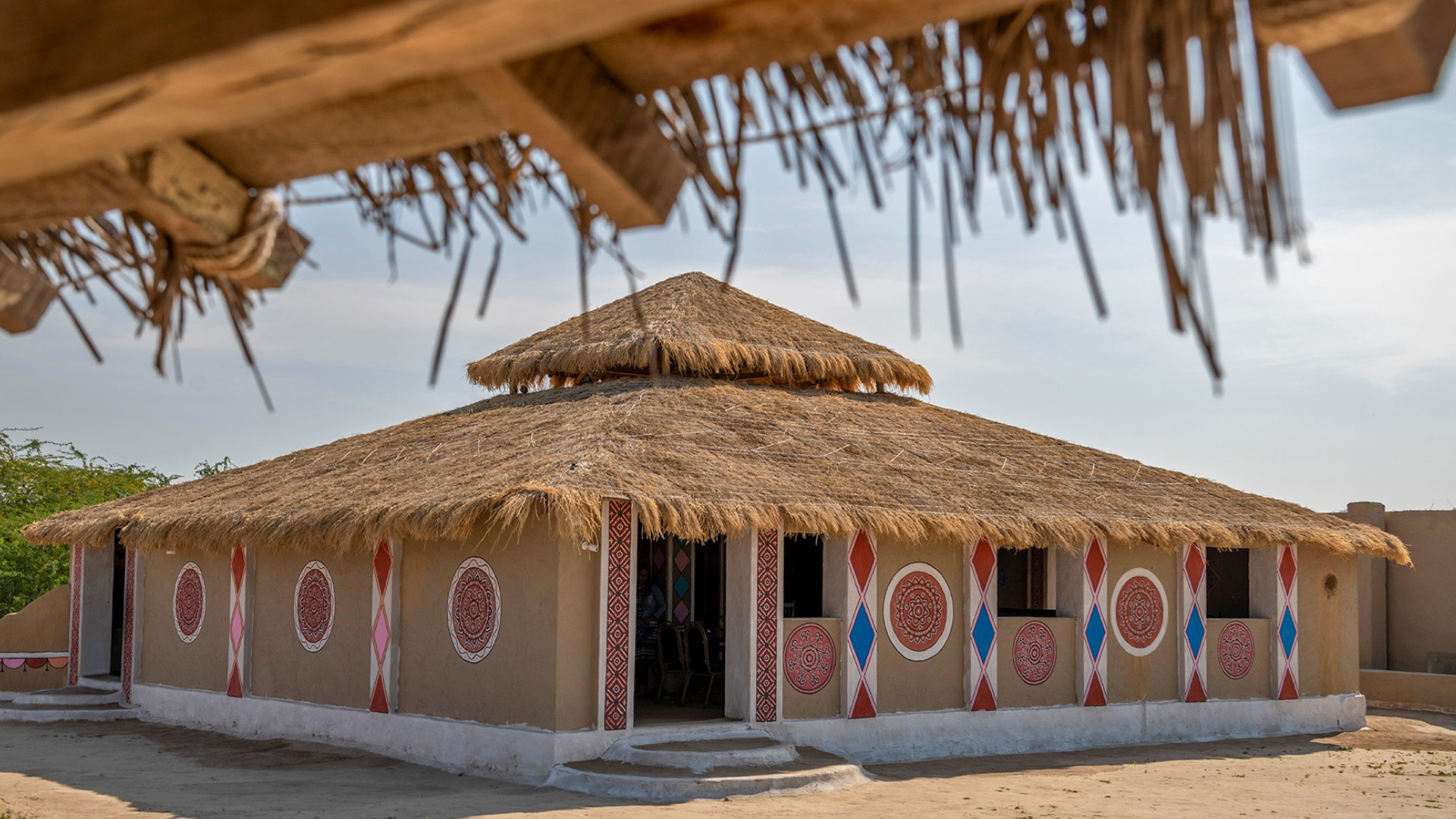
Hodka is well-known for its mud-built homes, designed thoughtfully with Lippan art (Photo: Incredible India)
Located about 63 km from Bhuj and just over an hour from Dhordo, Hodka is a small village on the edge of the Banni Grasslands near the Rann of Kutch. Unlike the more popular Rann festival areas, Hodka offers tranquillity, authentic interactions with locals and a slower pace of life.
Hodka is believed to have been inhabited roughly 300 years ago by the Halepotra clan, pastorals who migrated from Sindh in search of pasture lands. The village also includes the Meghwal community, traditionally leather craftsmen who settled here due to abundant livestock and grazing grounds.
With a small population, the village has retained its traditional lifestyle, with homes built in the bhunga style using mud walls that naturally regulate temperature and strong community ties that shape daily life.
Craft, Culture and Music
Hodka is a vibrant hub of traditional Kutchi crafts, where women create intricate embroidery on quilts, purses, wall hangings and clothing using designs passed down through generations.
Locals also practice pottery and mud art, shaping clay utensils and decorative items by hand, while many homes feature Lippan Kaam, a geometric mud-mirror design.
Leatherwork is another key craft, with belts, wall hangings and footwear blending utility and artistry. Evenings come alive with folk music and storytelling, performed in intimate settings that preserve the village oral heritage, sharing tales of the desert, migrations and community life.
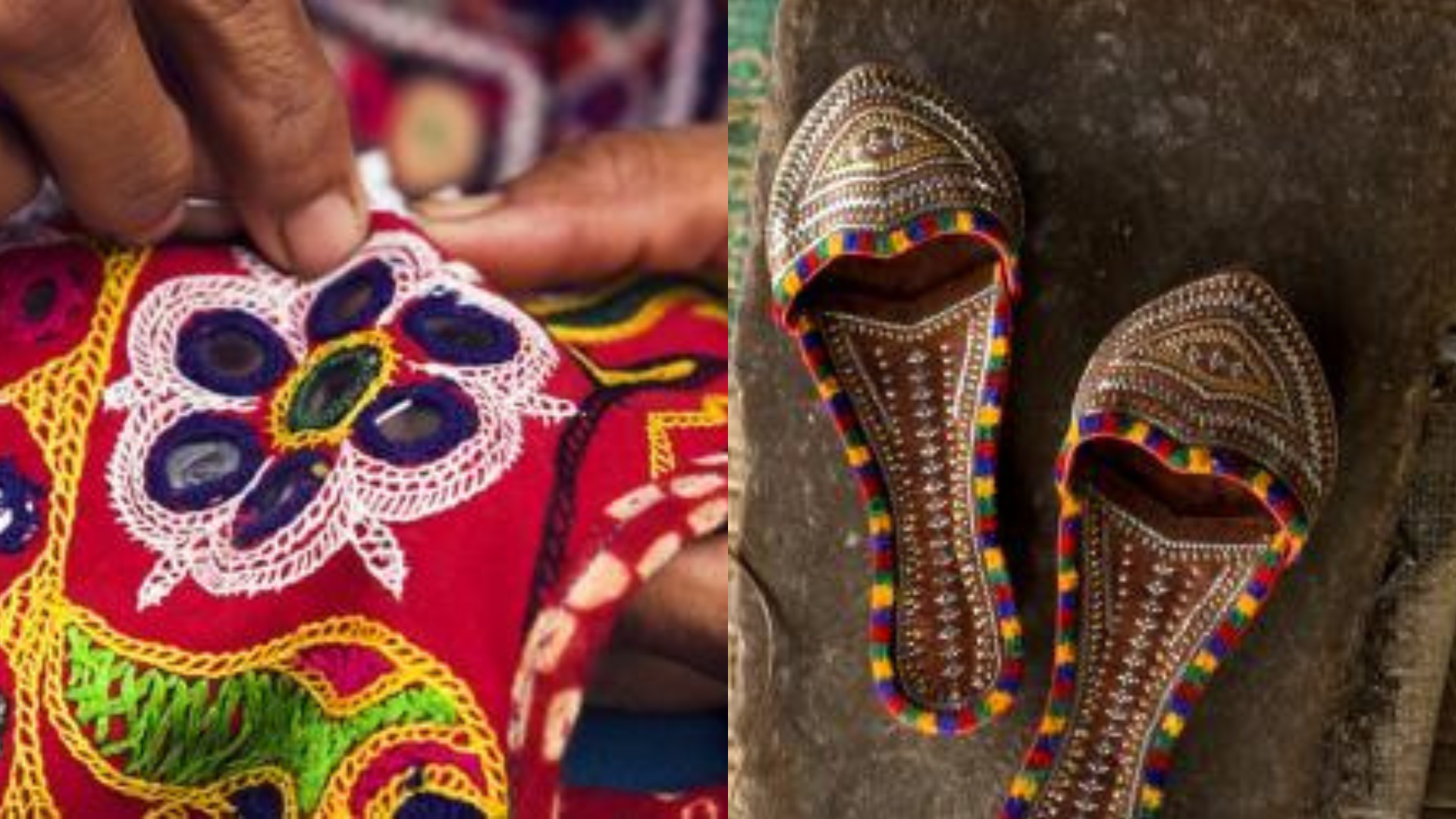
Traditional crafts, from intricate embroidery by women artisans and handcrafted leather footwear (Photos: Khamir)
Also Read: Jamnagar, an offbeat holiday in Gujarat
Exploring the Desert landscape
The remote location of village offers travellers a chance to experience the desert in a gentle, immersive way. Visitors can take camel safaris across desert trails and salt flats.
Travellers can also enjoy guided village walks through mud homes and artisan workshops as artisans sell their handcrafted goods directly from their huts, making the village itself a living craft market where visitors can learn processes and buy souvenirs, and marvel at the starlit night sky over the open desert. Surrounded by the Banni Grasslands and close to the Great Rann of Kutch, Hodka is perfect for those seeking smooth adventure and natural beauty without the crowds.
Culinary Traditions
Cuisine here reflects the dry environment and relies on locally available ingredients. Bajra na rotla or millet flatbread with buttermilk forms a staple, while Kutchi kadhi and vegetable dishes are prepared using seasonal produce, dried beans and gourds.
The village also offers unique local dishes such as Mangodi curry made with sun-dried lentil dumplings and Ghariyaa, a sweet made with millet and jaggery, found only in this region. Traditional sweets often feature jaggery, milk and grains rather than refined sugar.
Meals are usually communal, shared in homes and visitors have the opportunity to learn these local recipes directly from the community, gaining hands-on experience in traditional Kutchi cooking while enjoying authentic village hospitality.
Staying and Access
Despite its remote location, Hodka is accessible from Bhuj by road, with journey times of about 2 hours.
Travellers can stay in traditional mud huts, participate in craft workshops and experience local life firsthand.
Hodka remains largely undiscovered by mainstream tourism, offering an intimate experience of Kutchi culture. From learning embroidery and pottery enjoying folk music under the desert sky, to tasting traditional dishes, the village provides a quiet, meaningful travel experience. It is ideal for travellers seeking authenticity and immersion in a unique lifestyle.