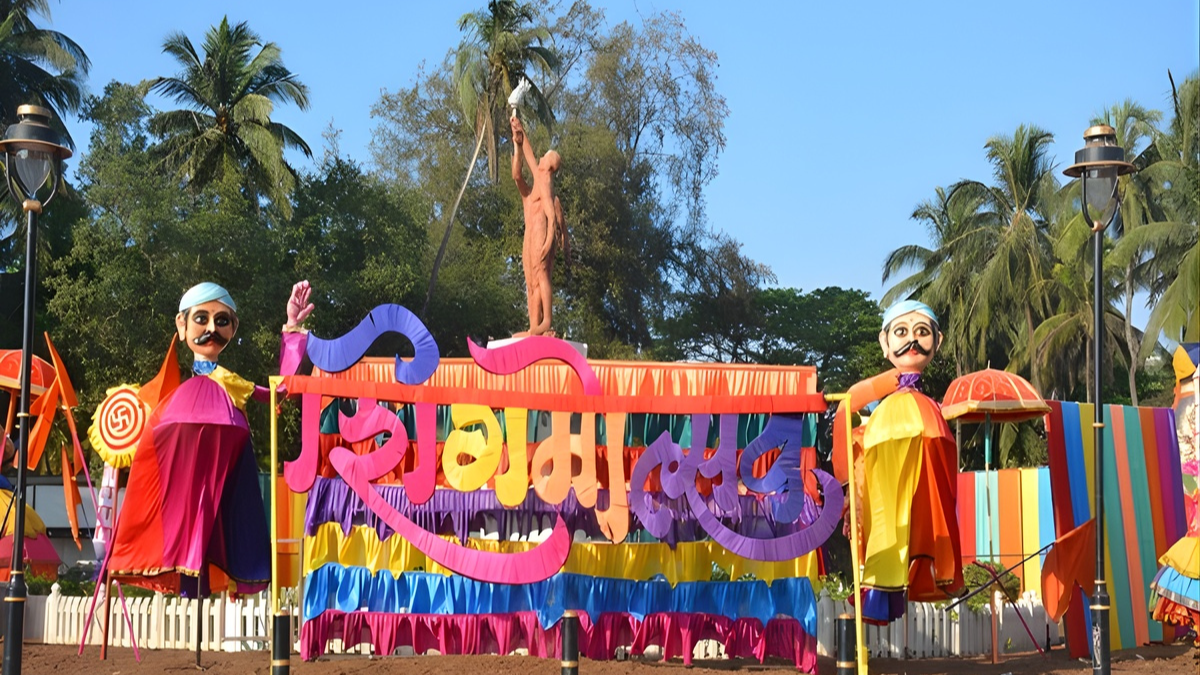
Shigmo Festival celebrates Goa’s rich cultural heritage and traditions (Photo: Incredible India)
Shigmo, celebrated across Goa every spring, is a vibrant festival that intertwines agrarian traditions, folklore and communal life. Over roughly two weeks, villages and towns come alive with processions, folk dances, music, colourful rituals and shared meals, preserving ancestral stories while uniting communities in joy and cultural continuity.
Though tied to the Hindu lunar month of Phalgun, the pattern of celebrations shifts slightly across Goa. Generally it starts around the 9th day of Phalgun and peaks on and after the full moon day, with parts of the festivities often overlapping with Holi.
The festival is celebrated primarily by Hindu communities in Goa, especially among agrarian groups such as the Kunbis, Gawdas and Velips, though its public parades and processions now draw participation from across Goa’s towns and villages.
Shigmo unfolds in two main forms. Dhakto Shigmo or small Shigmo, is village-centric, focussing on folk songs and dances performed in intimate community spaces. Vhadlo Shigmo, the big Shigmo, involves grand public celebrations with street processions, floats and performances that engage the wider population.
Also Read: Galdan Namchot: Ladakh’s landmark winter festival
Roots in ritual and history
The origins of Shigmo are layered. Folklore ties it to the farewell of warriors returning from battle, to mythic tales of Lord Krishna and even to the symbolic defeat of winter and darkness. In village settings, the festival begins with Naman, devotional songs to local gods and spirits sung on the maand (village stage) to the beat of traditional drums and percussion. This invocation is not a performance but a communal call to protection, prosperity and shared identity.
The processions, known locally as Romtamel, wind through streets carrying colourful flags, mythological pictures and symbolic models. Troupes perform folk dances such as Fugdi, Dhalo, Ghode-Morni and Veerbhadra, accompanied by traditional instruments including dhol, tasha, ghumat, kasale and flute.
Within villages, some groups perform unique rituals like Gadyachi Jatra, where participants enter trance-like states to invoke protective spirits, while in other areas, barefoot fire-walking and night dances brighten the festival with age-old folklore.
Colour also plays a role in Shigmo, with participants joyfully throwing gulal powders in the streets, blending elements of play, devotion and communal participation.
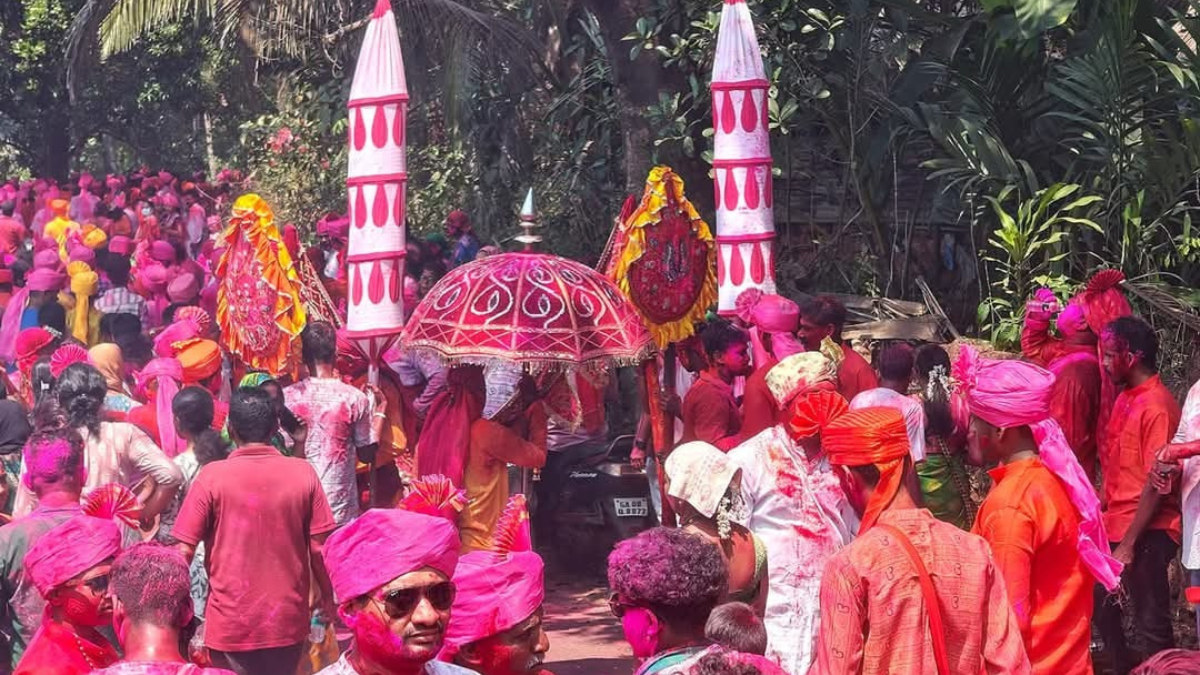
Vibrant Shigmo procession in Goa, with people celebrating by tossing colorful gulal (Photo: Department of Tourism, Goa)
Culinary traditions and shared meals
Food is central to the Shigmo experience, connecting celebration to Goa’s rich culinary heritage. During the festival, households and street vendors prepare an array of traditional delicacies.
Puran Poli, sweet flatbreads filled with jaggery and lentils, Neureos, deep-fried coconut and nut dumplings, Chana Usal, a spicy chickpea curry and Sannas, soft steamed rice cakes, are commonly shared.
Also Read: Exploring North East India’s music festivals
Sol Kadhi, a tangy kokum and coconut milk drink, refreshes participants during parades and dances, while local Goan classics like sorpotel, vindaloo, fish curries and feni compliment communal meals. Sharing food during Shigmo is as much a social act as a culinary one, bringing families, neighbours and festival participants together in conversation and celebration.
Cultural significance and continuity
Shigmo is more than a festival of colours and feasts. It embodies the cycles of agrarian life, reflecting the rhythm of sowing and harvest while marking the seasonal transition into spring.
For Goans, it is a moment to pass down folk songs, dances and oral stories, keeping ancestral traditions alive. The festival strengthens community bonds, preserves cultural identity and offers continuity in a rapidly changing social landscape.
Shigmo, with its vibrant parades, rituals and shared meals, stands as one of Goa’s most enduring cultural expressions. It unites generations, celebrates the land and its produce and ensures that the rhythms of Goan agrarian life remain visible and meaningful in contemporary society.