
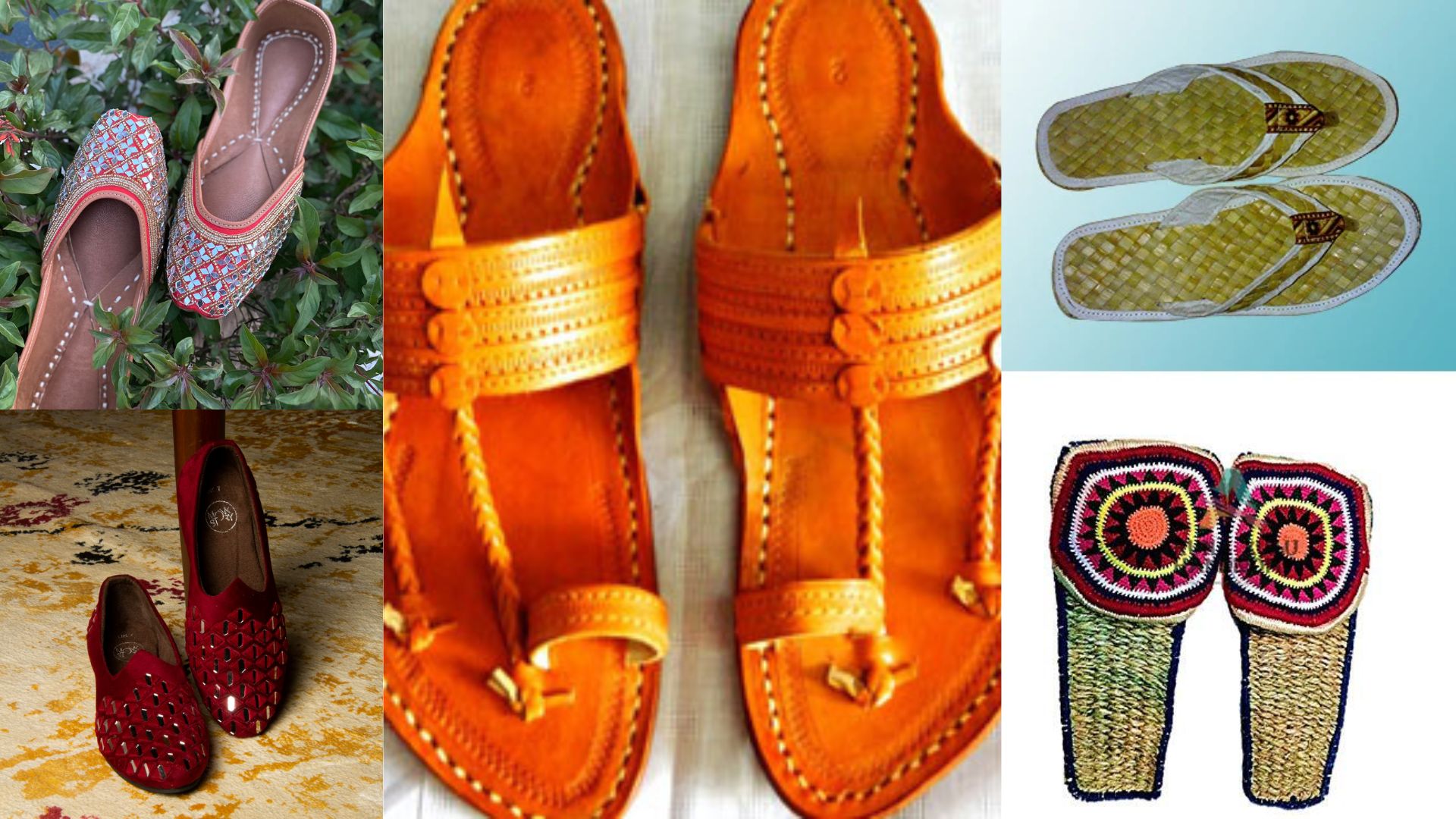
In India, footwear, in particular, quietly reflects the country’s climate, geography, craft traditions, and ways of living
When Indian culture is showcased, it is often through vibrant clothing, ornate jewellery, majestic architecture, colourful festivals, and, occasionally, films and television.
But there is one subtle, often overlooked element that also tells the story of India’s civilisation, it is footwear.
In India, footwear, in particular, quietly reflects the country’s climate, geography, craft traditions, and ways of living.
These shoes are far more than just functional, they carry with them centuries of tradition, regional identity, and remarkable craftsmanship. The skill behind Indian footwear is so distinctive that even global luxury brands cannot seem to resist “borrowing” a bit of inspiration. Take Prada, for example, which launched a leather design bearing an uncanny resemblance to the Kolhapuri chappal, an open-toe, T-strap sandal worn across India for centuries, though any reference to its origin appears to have been conveniently forgotten. But Prada’s ‘theft’ was quickly called out and forced the luxury label to acknowledge the artisans in Kolhapur who have preserved this age-old tradition.
In honour of such well-disguised tributes, here are six unique types of Indian footwear that quietly tell the real story of the land and its people, no label required.
Kolhapuri Chappals, Maharashtra
We begin the journey of Indian shoes with the Kolhapuri chappal, a style that existed long before Prada’s “new” leather sandal made headlines. These open-toe, T-strap sandals have been worn for centuries in Kolhapur and nearby regions, and proudly carry the name of the place they come from.
Made by skilled local artisans using traditional hand tools, Kolhapuri chappals are crafted from locally tanned leather, usually buffalo or cowhide. They are known for their comfort, as they slowly shape themselves to the wearer’s feet over time. The most common design includes a T-strap, a toe loop, and detailed braiding on the straps and upper part. Many artisans also add unique patterns or decorations based on what the customer wants.
Unlike what some global fashion brands might think, these chappals received official recognition in 2019, when they were granted a Geographical Indication (GI) tag. This tag was given to artisans in both Maharashtra and Karnataka, recognising their traditional skills and the unique design of the Kolhapuri chappal.
Here is a bit of trivia, these sandals go back to the 12th century. They were earlier known by many names like Kapashi, Paytaan, Kachkadi, Bakkalnali, and Pukri, depending on the village where they were made.
So while big fashion labels may only recently have “discovered” them, Kolhapuris have been making their mark for hundreds of years.
Namda wool slippers, Jammu & Kashmir
Handcrafted from felted sheep’s wool and embroidered with exquisite Kashmiri Aari work, Namda wool slippers are more than just a remedy for cold feet, they are a piece of living heritage. These cosy slippers trace their lineage to the broader Namda tradition, a felting craft originally used to create richly decorated wool rugs.
The creation of a Namda begins with carding wool, followed by the application of soap and water to bind the fibres. The wool is then rolled, pressed, and felted by hand, a labour-intensive process that transforms raw fleece into a durable, insulating fabric.
The roots of this art form stretch back to the 11th century, believed to have been pioneered by the nomadic tribes of Central Asia’s vast steppes. But its journey into the Indian subcontinent began under the Mughal Empire. Legend has it that Akbar’s treasurer, Nubi, once crafted a felt saddle cover for the emperor’s horse, intricately embroidered and designed for warmth. The piece was so admired that the technique earned the name Namda, in honour of Nubi’s craftsmanship.
Today, Namda artisans can still be found across India, especially in Kashmir, Himachal Pradesh, and Rajasthan.
While rugs remain a popular canvas for this art, the tradition has expanded into wearables like slippers, prized not just for their comfort and warmth in cold climates, but also for the cultural story they carry with every step.
Phulkari Juttis, Punjab
In the heart of Punjab, where mustard fields glow under golden sunlight and folklore echoes in every breeze, a vibrant craft blooms underfoot: the Phulkari Jutti. More than just footwear, these embroidered shoes are stitched with stories, culture, and centuries of artistry.
Known for their dazzling designs and rich colours, Phulkari Juttis are adorned with Phulkari embroidery, a technique that literally means “flower work.” Floral motifs, painstakingly hand-stitched in bright silk threads, blossom across the fabric like a garden in full bloom. Whether simple or ornate, these juttis are instantly recognisable by their rounded or slightly pointed toes, and often feature delicate embellishments such as beads, mirrors, zari, and sequins.
Although juttis, also known as mojari or khussa in other regions, are found across northern India, the Phulkari variant is uniquely Punjabi. Originally crafted using silk thread on coarse fabrics like khaddar, the art evolved over generations to include fine materials such as Chanderi, Georgette, chiffon, and even pure silk.
The origin of juttis traces back to Kasur town, now in Pakistan, during the Mughal era. It was in the royal courts of 16th-century Punjab that these shoes truly found their spotlight, embroidered with gold, silver, pearls, and gemstones, and worn by kings and courtiers alike.
Today, Phulkari Juttis remain a beloved cultural emblem, not just for their beauty, but for how they carry Punjab’s spirit with every step, bold, bright, and unapologetically proud.
Pulla, Himachal Pradesh
Tucked away in the high altitudes of Himachal Pradesh, where mountain air carries the scent of pine and prayer flags flutter against the sky, a humble yet iconic piece of footwear continues to hold its ground, Pulla. Also known as Kulluvi Pulla or Poodhe, these handcrafted woollen slip-ons are not just shoes, but a quiet tribute to the region’s resourcefulness and cultural pride.
Traditionally worn indoors, in temples, homes, and especially kitchens, Pullas are prized for their warmth, comfort, and lightness. What makes them truly special is their construction: the sole is made from hemp or bhang or woven grass, coiled and twisted into a firm rope base. The upper is crafted from sheep’s wool and hand-stitched in bright, geometric patterns, often in reds, greens, and yellows that mirror the colourful landscape of Himachali culture.
Functional and eco-friendly, Pullas are believed to offer gentle acupressure-like effects, thanks to their textured soles. Many locals swear by them for improving circulation and easing foot fatigue, especially in cold weather.
But beyond practicality, these slip-ons hold cultural weight. They are worn during festivals, ceremonies, and folk dances in the Kullu Valley, often paired with traditional Himachali attire. Passed down through generations, the art of making Pullas remains a community-driven skill, still practiced by artisans, many of whom are women in remote mountain villages.
In a world of synthetic sneakers and fast fashion, Pulla stands out, for its handmade authenticity, connection to nature, and ability to carry warmth not just around the feet, but straight to the heart.
Coconut leaf sandals, Kerala
Meanwhile, in the southern part of India, Kerala, a land known for its serene backwaters and lush green hills, was once home to a unique and eco-conscious form of footwear: the Coconut Leaf Sandal.
Commonly called palm leaf sandals, these were traditionally handcrafted using natural, locally sourced materials like coconut husks and coir or coconut fibre. The sole was made from coconut husk, providing a sturdy yet flexible base, while the straps were woven from coconut fibre, offering a snug and breathable fit.
The entire sandal was assembled using traditional weaving techniques, without any synthetic materials, making it both sustainable and biodegradable. Lightweight, airy, and comfortable, these sandals were ideal for Kerala’s tropical climate and were commonly worn for casual use in rural areas.
These sandals reflect state’s deep connection with nature and resourceful craftsmanship, turning everyday agricultural by-products into functional footwear. While their use has declined over the years, they remain a symbol of simple living and environmental harmony in God’s Own Country.
Leather Mojari shoes, Gujarat
Ending the journey in West India, the industrial state of Gujarat has long been associated with its own distinctive footwear, leather Mojari shoes.
Traditionally crafted from leather, these slip-on shoes are often distinguished by their pointed, upward-curving toes and are heavily adorned with embroidery, sequins, beads, and most notably, mirror work. The mirrors, delicately embedded into the design, are used to add a reflective brilliance that enhances the overall aesthetic, a feature especially cherished during festivals and celebratory occasions.
In regions like Gujarat and Rajasthan, these mirror-studded Mojaris are commonly worn, with the Kutch region being particularly known for its craftsmanship. Within the Meghwal community of Kutch, the work is typically divided, the leather is prepared and stitched by men, while the embellishments are added by women using intricate embroidery and mirror inlay techniques.
Historically, leatherwork in the region was used for practical items such as saddles, belts, and weapon sheaths. Over time, however, the utilitarian craft was transformed into an ornamental art form, with Mojaris becoming objects of beauty and pride, rather than just function.
As these six examples show, footwear in India is far more than a functional necessity, it is a mirror of the land, its people, and their ingenuity. Whether shaped by snow-clad mountains, sun-baked deserts, or tropical backwaters, each pair reflects the unique rhythm of its region.
