Sujata Bajaj concluded her exhibition ‘Spacescapes’ in Delhi presenting a cosmos-inspired body of abstract work
Spacescapes opened in New Delhi on January 29 at Galerie Romain Rolland, Alliance Francaise de Delhi, and concluded after a 17-day run. The exhibition was presented by Alliance Française de Delhi and Institut Francais India under the patronage of the Embassy of France in India, reflecting Sujata’s long-standing cultural dialogue between India and France and her exploration of cosmic inspiration.
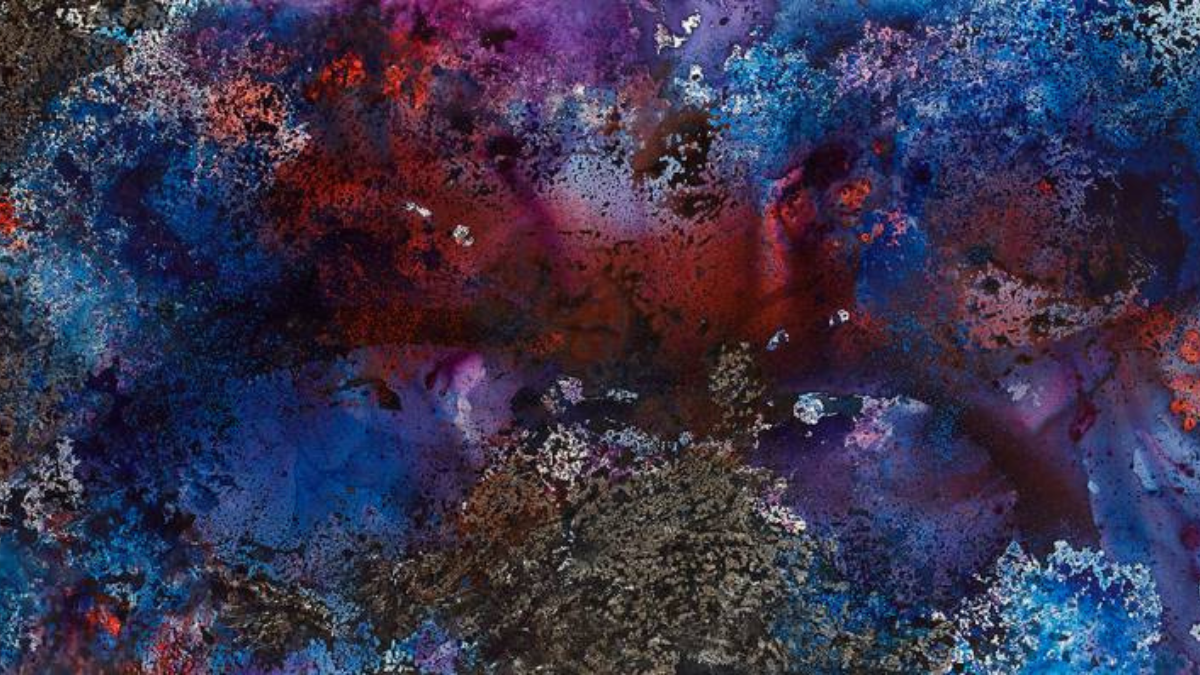
Spacescapes began not in a studio, but in the vastness of outer space or more precisely, with the images captured by the world’s most advanced telescopes
During the course of the exhibition, Sujata reflected on what it meant to bring Spacescapes to Delhi after such a long interval. For an artist who has spent decades between Paris and India navigating studios, exhibitions and audiences across countries the return to one of the cities that shaped her formative years carried a deeply personal resonance. Delhi, she acknowledged, was not merely another venue on the calendar; it was where her artistic language first gathered confidence and direction.
For Sujata, the journey to Spacescapes began not in a studio, but in the vastness of outer space or more precisely, with the images captured by the world’s most advanced telescopes.
“In 2019, I happened to come across a NASA image taken from the Hubble telescope showing the Andromeda galaxy. I connected with the photograph without knowing what it actually was. The seed of Spacescapes was planted,” Sujata adds.
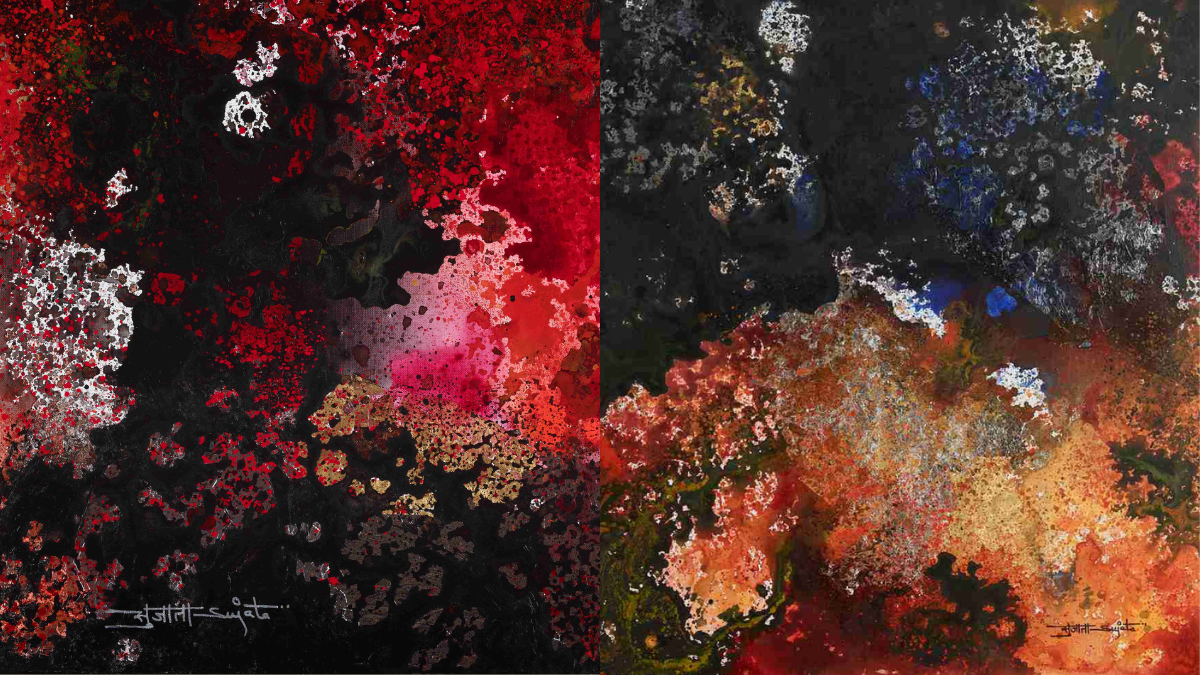
For viewers at Spacescapes in New Delhi, the effect was immersive and immediate
Her work has always bridged continents emotionally anchored in Indian sensibilities, technically informed by a European modernist language. But with Spacescapes, she embarked on a deeper reckoning with scale, asking: How can paint convey the immensity of space? How can brush and pigment capture wonder?
Over more than five years, Sujata allowed the cosmos to become her collaborator. Her canvases, developed between Paris, Dubai, and India other parts of the world, do not directly depict galaxies or nebulae. Instead, they interpret these references through layered colour fields, unstructured compositions and tonal transitions that create depth and a measured sense of spatial expanse.
For viewers at Spacescapes in New Delhi, the effect was immersive and immediate. Stepping into the gallery, one passed from the familiar threshold of everyday life into a visual field that suggested something larger, more elemental. Canvases dominated by limitless strokes of incandescent red, electric blue, molten gold and inky black seemed to pulse with the rhythms of distant cosmic phenomena stellar winds, expanding nebulae and luminous matter in motion.
Throughout the run of the exhibition, Sujata spoke of Spacescapes as a continuation rather than a culmination an ongoing dialogue between materiality, intuition, and the universal rhythm of things.Over the decades, Sujata has exhibited all over the world.
The exhibition reinforced her ongoing engagement, while drawing consistent visitor interest throughout its run. As it concluded the show reaffirmed her position within contemporary art and her continued artistic dialogue between India and France.
Alongside the exhibition, Sujata also unveiled a comprehensive monograph titled Spacescapes, published by Gallery Art & Soul, Namtech Fine Art and Galerie Patrice Trigano. The volume features over 100 full-colour plates along with essays by prominent figures including astrophysicist David Elbaz and art critic Girish Shahane, situating the series at the intersection of art, science and philosophy. It also carries rare reflections from leading artistic voices, including a tribute by M. F. Husain, who described Sujata as “the best colourist that India has.”