
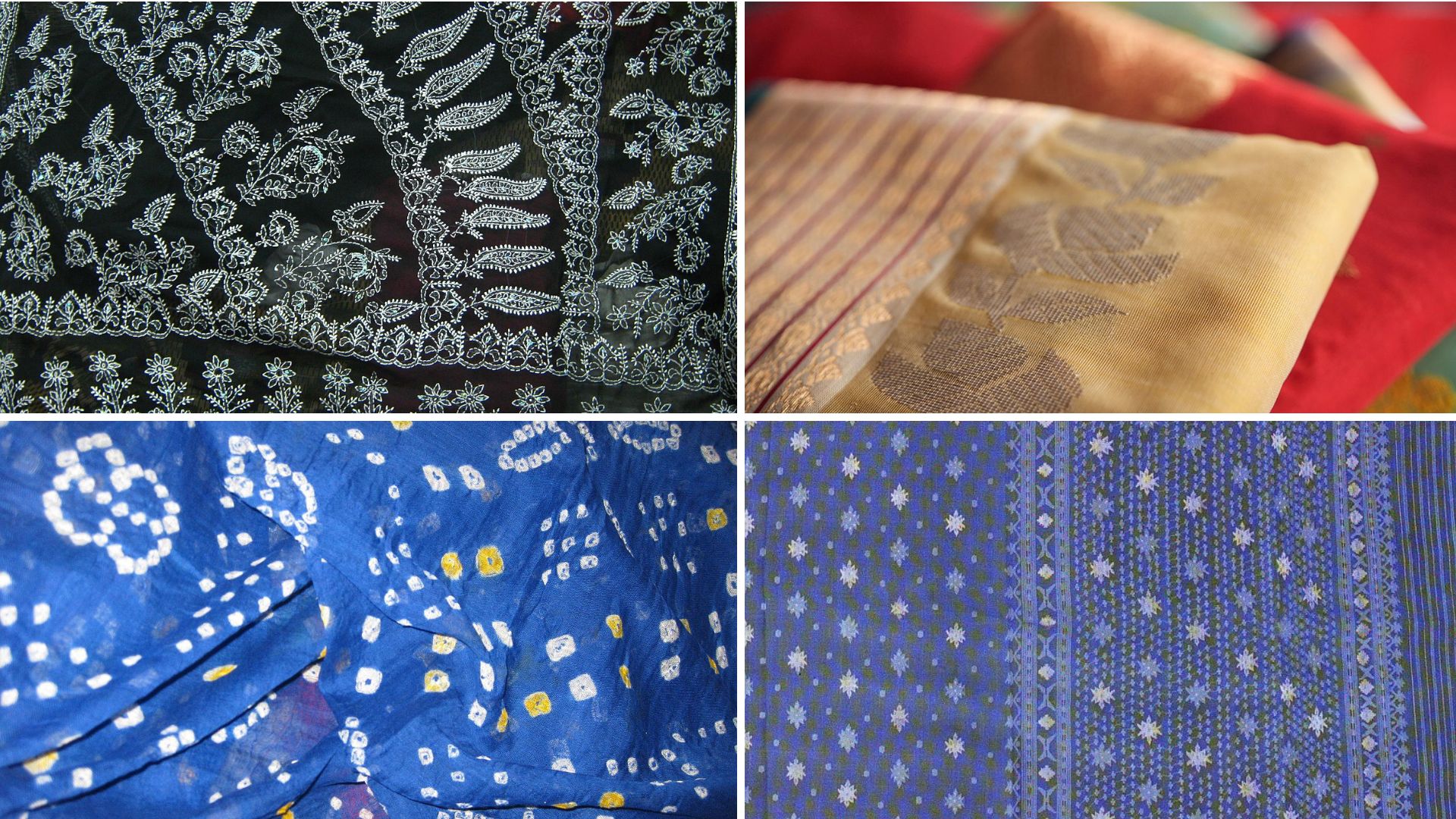
Here are five fabric styles that can be instinctively felt by touch and effortlessly capture attention
The term Indian ethnic wear itself signifies how a simple fabric, with exceptional quality, intricate designs, and vibrant colours can shape the identity of a nation.
With a legacy spanning thousands of years, Indian fabrics trace their origins to the earliest surviving cotton threads found at Mohenjodaro and Harappa, dating back to 2500 BC. This deep-rooted heritage reflects the timelessness and enduring charm of Indian clothing.
From sarees to kurtas, Indian fabrics, known for their exquisite material, artistic embroidery, and flawless draping, continue to thrive. These garments are proudly showcased in exhibitions, markets, malls, and now on online platforms.
Despite the growing preference for western attire like jeans, crop tops, and shirts, Indian ethnic wear remains deeply embedded in the country’s culture. Kurtas continue to be popular among women, while lehengas, ghagra cholis, stylised sherwanis, and bandhgalas see high demand, especially during weddings and festivals. In rural India, lightweight sarees and dhoti-kurtas are still widely preferred. Through tradition and evolving fashion trends, Indian ethnic wear continues to shape the country’s landscape.
But these ethnic garments are crafted from exquisite fabrics, meticulously woven by artisans, often originating from quiet corners of India. These regions, once humble, transform into thriving economic centres through their textile heritage.
To honour India’s incredible fabrics that define ethnic wear, here are five remarkable textiles that can be felt instinctively by touch and effortlessly grab attention.
Chikankari, Uttar Pradesh
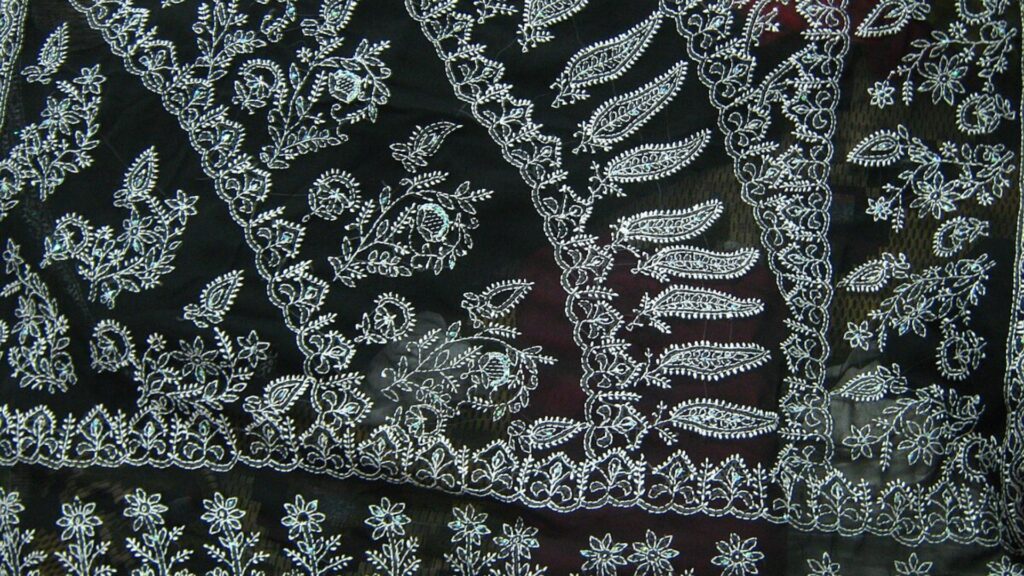
Chikankari style derives its name from the Persian word chikin or chicken (Photo: Wikimedia Commons)
Known for its delicate motifs, intricate designs, and fine threadwork on lightweight fabric, the ever-popular Chikankari style derives its name from the Persian word chikin or chicken.
This handmade embroidery traces its roots to the 17th century when Mughal Emperor Jahangir’s wife Nur Jahan introduced this Persian style to India.
Commonly seen in sarees, kurtas, and lehengas, this style is adorned with floral and plant motifs. Initially crafted using white yarn on colourless muslin, it has now expanded to include fine fabrics like chiffon, cotton and georgette for embroidery.
Originating in the state’s capital, Lucknow, this delicate fabric is also known for its shadow work—a technique where white-on-white motifs are embroidered from the back of the translucent fabric.
Due to its floral patterns, fine threadwork, and shadow work, it has become an integral part of modern fashion, expanding beyond traditional attire to include Western-style clothing like jumpsuits and co-ord sets, as well as home décor items such as cushion covers, pillow slips, and table linens.
Chanderi Silk, Madhya Pradesh
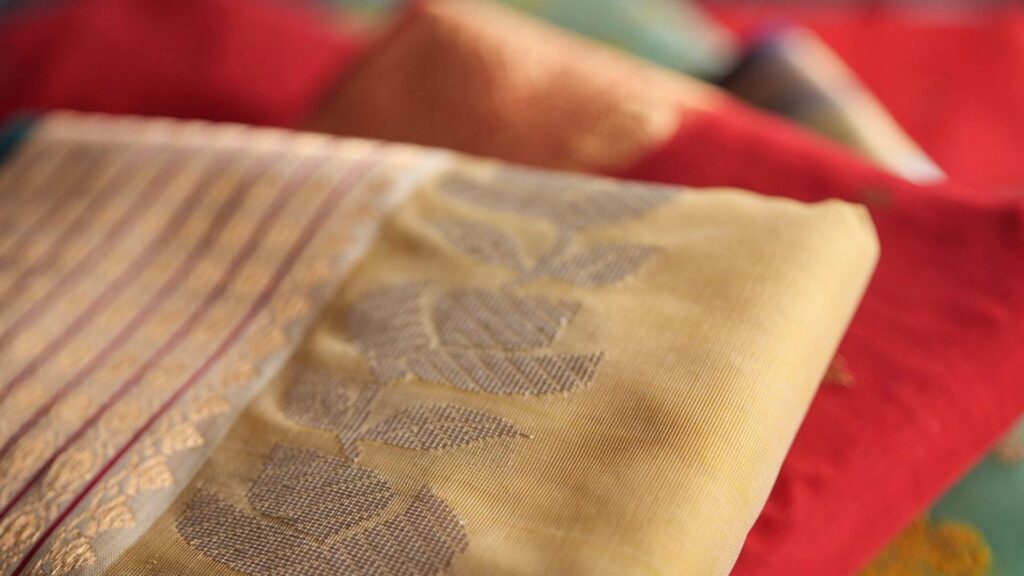
Chanderi silk unlike Lucknow’s motif-filled Chikankari is famous for its delicate sheen and transparent texture (Photo: Incredible India)
In the heart of India with a diverse landscape and a unique culture is home to a handwoven fabric, the Chanderi silk.
Deriving its identity from Madhya Pradesh’s ancient town with the same name, Chanderi silk unlike Lucknow’s motif-filled Chikankari is famous for its delicate sheen and transparent texture.
Crafted as early as the 2nd to 7th century, with the saree-weaving tradition established by Koli weavers in the 13th century, this fabric is renowned for its transparent texture, lightweight feel, and breathability, making it an ideal choice for weddings and special events.
Unlike other silk counterparts, it boasts a subtle sheen that enhances its elegant, flowing drape. Adorned with exquisite handwoven motifs, including geometric designs and floral patterns, Chanderi silk stands out for its intricate craftsmanship.
Due to its delicate texture, understated sheen, and graceful appeal, this fabric has become a favourite among global fashion designers. Renowned names like Anju Modi, Rohit Bal, and Sanjay Garg have incorporated Chanderi silk into their collections, creating dresses, sarees, and even pants!!
Kalamkari, Andhra Pradesh & Telangana
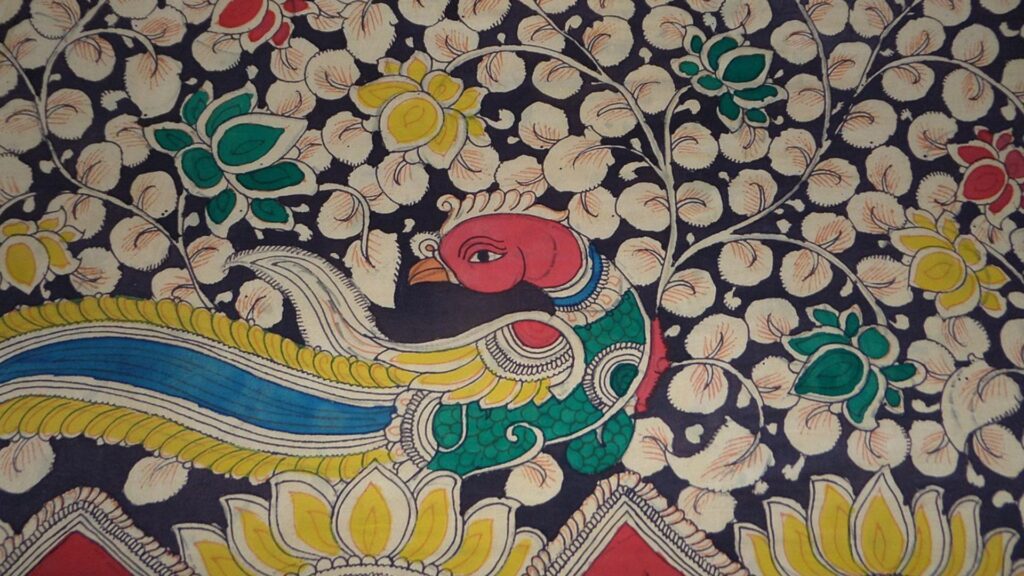
Kalamkari is a form of block printing on fabric (Photo: Wikimedia Commons)
If Madhya Pradesh is known for Chanderi, India’s southern region boasts a fabric that continues to captivate with its distinctive style and structure.
Unlike Chanderi and Chikankari, which are handmade embroidery styles featuring intricate motifs, Kalamkari is a form of block printing on fabric. Derived from two Persian words—Kalam, meaning ‘pen’ and Kari, meaning “craftsmanship” this art form is believed to have originated in the regions of Andhra Pradesh and Telangana.
Popularly associated with temple traditions, this style incorporates both hand painting and block printing techniques.
With a history dating back 3,000 years, Kalamkari has been patronised since the time of the Golconda Sultanate and the Mughal Empire. Artists use freehand techniques to draw intricate designs on fabric with natural dyes, employing bamboo and date palm sticks as their tools.
Notable for its fine lines and highly detailed designs, Kalamkari typically features themes inspired by mythological stories, epic narratives, and nature-inspired motifs. The art form is broadly divided into two styles, Srikalahasti and Machilipatnam.
The Srikalahasti style is distinguished by its intricate penwork, often depicting motifs of gods and goddesses, while the Machilipatnam style emphasises block printing, featuring bold designs with larger floral and geometric motifs.
Bandhani, Gujarat
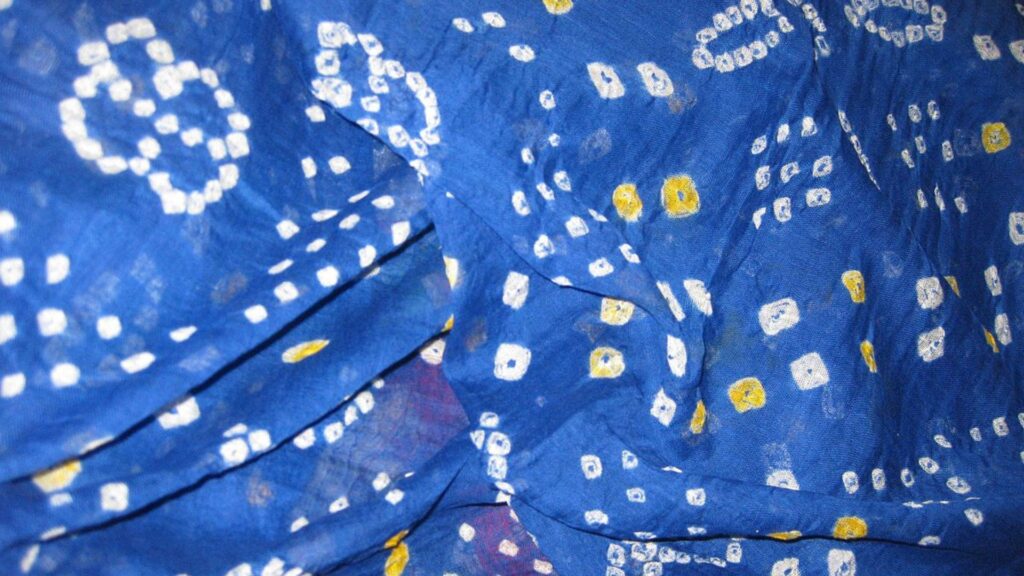
Bandhani, commonly known as Bandhej, is created by tying fabric with a thread to form intricate patterns such as Chandrakala, Bavan Baug, and Shikari (Photo: Wikimedia Commons)
In the western part of the country, notably in Gujarat, a particular fabric is pinched and tied to create small dots, this technique is known as Bandhani.
Derived from the Sanskrit word bandh, this tie-dye textile art is crafted in natural colours like Red, blue, yellow, green, and black.
Owing its origins to Kutch’s Khatri community, who are believed to have pioneered this textile style around 5,000 years ago, Bandhani, commonly known as Bandhej, is created by tying fabric with a thread to form intricate patterns such as Chandrakala, Bavan Baug, and Shikari.
Over time, this tie-dye technique has gained popularity among both the masses and the elite, becoming a symbol of status. Its prestige is evident in Bollywood, with actress Aditi Rao Hydari donning a Bandhani saree from Raw Mango at her designer Eka Lakhani’s engagement.
Beyond Bollywood, Bandhani continues to make a mark in high-profile events. At the recent wedding of billionaire couple Anant Ambani and Radhika Merchant, all the Ambani ladies adorned exquisite Bandhani sarees, further cementing the fabric’s timeless appeal.
Jamdani, West Bengal
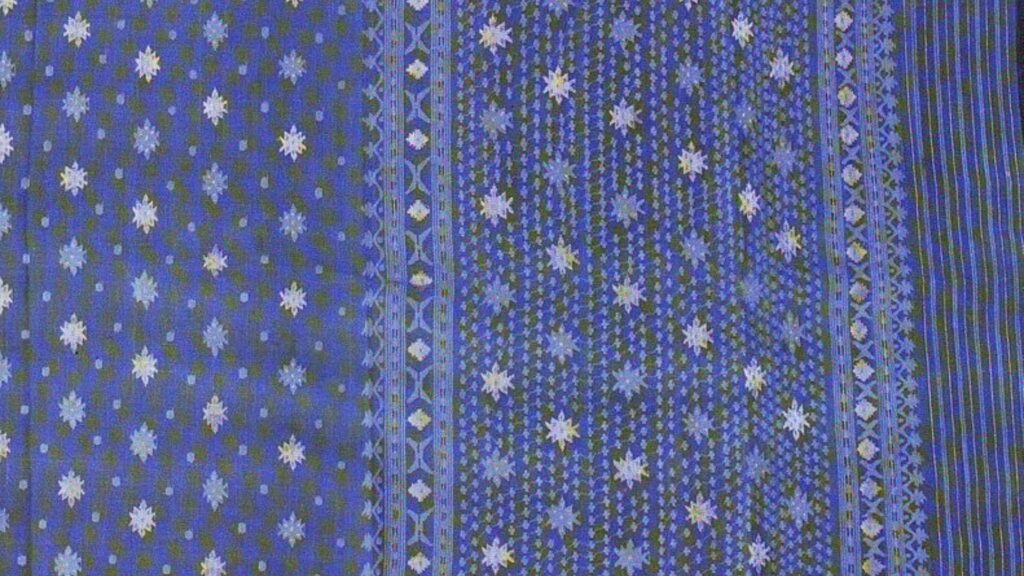
Considered the only surviving variety of traditional muslin, Jamdani is a time-consuming and labour-intensive craft that balances both style and practicality (Photo: Wikimedia Commons)
Concluding this journey is another type of fabric that has been buried among the classics that India has to offer, Jamdani from West Bengal.
Accompanied by vivid patterns and traditionally woven on handlooms, this cotton-based textile traces its roots to both Bangladesh and parts of West Bengal, with a history dating back to the 12th century.
Considered the only surviving variety of traditional muslin, Jamdani is a time-consuming and labour-intensive craft that balances both style and practicality. Known for its intricate floral and geometric patterns, it shares similarities with Chanderi in its lightweight structure, making it breathable and easy to wear.
Created using the supplementary weft technique, Jamdani is typically woven in muted and vibrant colours. While its traditional centre remains in Bangladesh, India also has notable Jamdani weaving hubs, particularly in the Nadia and Burdwan districts of West Bengal.
These fabrics reflect the example of a raw origin that possesses the ability to transform into beautiful clothes which makes people confident and provides a boost to personality. These fabrics reflect the fact that in India, fabrics not just makes you look good or confident, but they also remind you of your roots and who you are and where you belong.
