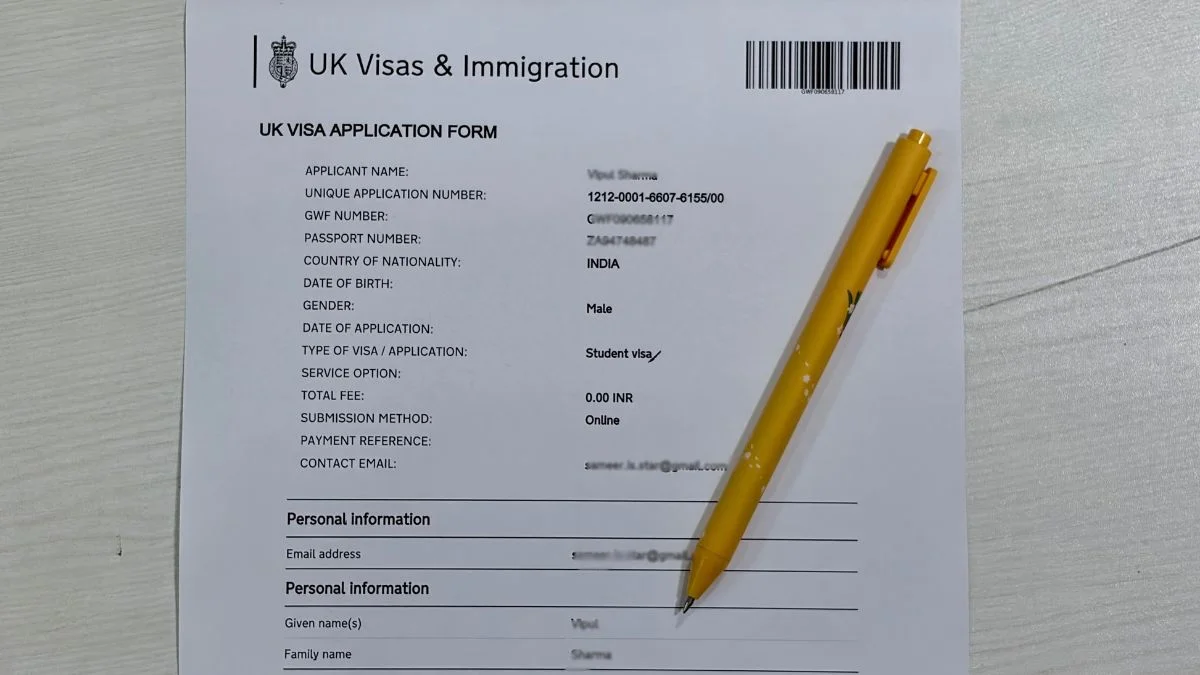
The decline in overall numbers was identical to the fall in the largest source market for British universities and colleges, India (Photo: Media India Group)
Applications for sponsored study visas to the United Kingdom from main applicants or students applying for the visa themselves, fell to 360,700 in the year ending August 2026, down 16 pc from 427,100 in the previous year, according to the UK Home Office. This means about 66,400 fewer applications were made compared with the previous year.
The decline in overall numbers was identical to the fall in the largest source market for British universities and colleges, India. The Home Office recorded 82,523 sponsored study visas for Indian main applicants in the year ending June, down 16 pc from the previous year. India remained the second-largest source of sponsored study visa recipients after China, which recorded 86,368 grants.
The decline has come amidst some changes in the rules governing foreign students in the UK, including higher costs and more restrictive conditions to earn while they learn. Under current Student visa rules, applicants studying outside London must show availability of funds of at least GBP 1,171 (USD 1550) per month for up to nine months, while those studying in London must show GBP 1,529 per month. Students must also show money for any outstanding tuition fees.
This means students may need to show up to GBP 10,539 for living costs outside London and GBP 13,761 in London, in addition to the money required for tuition fees. Applicants must also meet the Home Office rules on how long the funds have been held and provide acceptable financial evidence.
Also Read: On Day 7 of US-Iran war, Indian diaspora remains stranded in Iran
Restrictions on student dependants have further changed the UK study route for families. Since January 1, 2024, most students on taught courses have not been allowed to bring dependants. Exceptions include some postgraduate research students and certain government-sponsored students.
The impact can be seen in the visa data. The Home Office recorded 17,000 applications from student dependants in the year ending August 2026, down 22 pc from the previous year and 88 pc below the level recorded before the restrictions came into effect.
For Indian students with spouses or children, the restriction can make the UK a more difficult option because families have to consider separate living arrangements and additional costs while the student is studying.
The post-study work route is also becoming shorter. Students who apply for the Graduate Route before January 1, 2027 can stay for two years after completing an eligible bachelor’s or master’s degree. For applications made from January 1, 2027, the period will fall to 18 months. PhD and other doctoral graduates will continue to receive permission for work for up to three years.
Also Read: Words between worlds: Journey of Indian diaspora across generations
The UK government estimates that the shorter Graduate Route could reduce Student visa applications by around 12,000 a year in the long term. This is a government estimate and does not establish that students have already changed their plans because of the rule.
The change is particularly relevant for Indian students, as Master’s courses make up a large share of international study in the UK. Around 62 pc of sponsored students study at master’s level, while master’s-level visa grants fell from 311,286 in the year ending March 2023 to 234,992 in the year ending March 2026, a decline of 25 pc.
For students deciding where to study, the changes mean that the UK has to be considered not only on the basis of university and course quality, but also on the total cost, family arrangements and opportunities to work after graduation.