
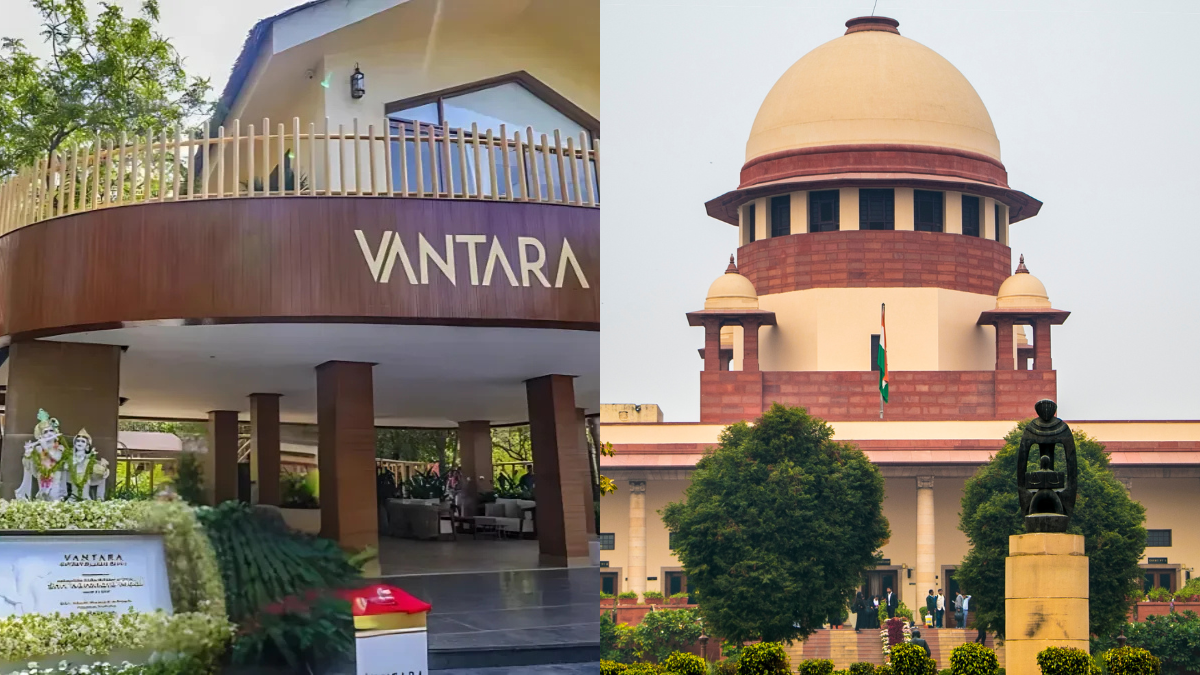
What makes the Vantara case more unusual is that this approach has now been used even in an environmental matter
Vantara, the self-styled wildlife rescue and rehabilitation centre run by the Reliance Foundation at Jamnagar in Gujarat, has recently found itself at the centre of an international controversy. Known as one of the most ambitious private conservation projects in India, the facility claims to house thousands of rescued animals, including elephants, big cats, and exotic species brought in from across the globe.
But in recent months, allegations began surfacing around the legality and ethics of its operations, ranging from improper acquisition of wildlife to violation of international treaties over transport of endangered species and misuse of natural resources.
“There are several ongoing concerns. Globally accepted practice in wildlife rescue is that rehabilitation should prioritise eventual release into the wild, but with Vantara the long-term plans for many rescued species remain unclear. A second issue is the absence of transparent, independent monitoring. Standards laid down by IUCN and the Central Zoo Authority require disclosure of mortality data, veterinary protocols, and breeding records, yet such information is not publicly available,” Kamna Singh, Environmentalist & Founder, Shubkamna Welfare Foundation (SKWF), an NGO based in Noida, tells Media India Group.
“There are also ecological implications. Concentrating animals outside their natural habitat and in limited space can heighten risks of disease transmission, reduce genetic diversity, and weaken the role these species play in their original ecosystems. While Vantara’s infrastructure is state- of-the-art, without stronger oversight and scientific accountability, questions will remain about whether it truly serves conservation or primarily functions as a captive facility,” adds Singh.
These concerns prompted multiple Public Interest Litigations in the Supreme Court, leading to the constitution of a Special Investigation Team, SIT in August 2025. Headed by retired Justice Jasti Chelameswar, the SIT was tasked with examining a wide array of accusations, including violations of the Wildlife (Protection) Act, non-compliance with zoo norms, breaches of international wildlife trade conventions like CITES, and the possible misuse of financial or environmental permissions.
Following weeks of inquiry, on September 12, the SIT submitted its findings in a sealed cover to the Supreme Court, accompanied by annexures and electronic data. Three days later, the court delivered its verdict: a full clean chit to Vantara, but without disclosing the basis on which it had reached the verdict as the investigation report continues to stay out of public view.
The bench declared that no laws had been broken and dismissed all outstanding complaints, further ordering that no additional proceedings based on the same allegations be entertained in any forum.
“The legal rationale for keeping certain documents sealed in the Vantara controversy primarily revolves around protecting sensitive information that could harm Vantara’s commercial interests and privacy rights. The Supreme Court, while accepting the SIT report that cleared Vantara of allegations, directed that the entire 25,000-page SIT report be “re-sealed and kept confidential,” allowing only a detailed public summary. This decision aims to balance transparency with protecting “commercially confidential information,” financial details, and sensitive investigative data which, if disclosed, could be prejudicial to Vantara or public interest. The court used sealed covers as an exception permitted under Rule 7 of Order XIII of the Supreme Court Rules, which allows certain documents to be kept confidential if publication is considered against the public interest,” explains Prafulla Sharma, a Supreme Court lawyer.
While this legal resolution appeared definitive, it sparked a new wave of debate, this time about the nature of transparency and public trust in high-profile environmental cases.
The Supreme Court’s decision to accept the SIT’s report in a sealed cover and to reseal the material post-verdict has raised eyebrows across civil society. While Vantara was granted access to the full report under an undertaking of confidentiality, the public was only provided with a brief summary of the findings. The court argued that the summary was “exhaustive” and sufficient to inform the public of the outcome without compromising sensitive or proprietary information.
Supporters of the decision, including senior counsel representing Vantara, have defended the sealing as a standard legal practice when sensitive data, such as internal veterinary protocols, facility layouts, or conservation strategies, might be exposed. They contend that unrestricted disclosure could jeopardise the security of the animals or even aid illegal wildlife traders by revealing technical details.
However, critics argue that this secrecy undermines the very principles of democratic accountability and transparency, particularly in a case involving environmental laws and the public interest. Wildlife activists and legal scholars have questioned whether the public has a right to see the basis upon which such a sweeping exoneration was granted, especially when prior allegations included smuggling, mistreatment of animals, and possible misuse of public environmental resources.
“I am not entirely satisfied with how the Supreme Court has handled the Vantara case. While the judgment provides legal closure, it falls short of addressing the core ecological and ethical concerns. Questions around habitat disruption, animal welfare in captivity, and the absence of independent ecological audits remain unresolved,” says Singh.
“A case of this magnitude required a more holistic approach, one that applies the precautionary principle, safeguards biodiversity integrity, and ensures transparent accountability mechanisms. Without these, the decision risks normalising private control over wildlife without fully evaluating its long-term environmental implications,” she adds.
Despite the closure granted by the Supreme Court, its judgment has left several concerns unresolved.
In recent years, Indian courts have come under growing criticism for using sealed cover documents, especially in cases related to national security, corporate interests, and civil rights. What makes the Vantara case more unusual is that this approach has now been used even in an environmental matter.
“The Supreme Court’s decision may have given Vantara legal clearance, but it does not mean that all concerns have been resolved. Environmental groups had highlighted issues such as long-term ecological impacts, welfare of animals in semi-captive conditions, and lack of independent scientific oversight. These remain largely unaddressed,” says Singh.
“What we have now is legal acceptance, but not necessarily ecological validation. Until there is independent monitoring, transparent reporting, and community-inclusive conservation frameworks, the skepticism of activists will continue to hold weight,” she adds.
