

Darjeeling, where rolling hills, tea gardens and misty mountains come together in quiet harmony
Afternoon was rainswept. Sometimes a tender drizzle, but mostly a torrential downpour. It had been raining incessantly for two weeks, so little could I imagine what was to follow. As the rains ceased, thick curtains of fog rose up to reveal a full moon night. Beneath was the moonlit, towering Mount Kanchendzonga, or Kanchenjunga, radiating in a fiery red iridescent glow, establishing its imposing presence over the quaint old hill town.
For anyone staying here, many such moments of rare wonder make up Darjeeling, the iconic town in the Himalayan region of West Bengal.
Smitten by King Khan’s romantic depiction of misty Darjeeling in Main Hoon Na, I had imagined my college life here would be no less filmy. Except that it was all the more magical. And nuanced.
Since times immemorial, for Bengalis, Darjeeling has reigned their hearts as a go-to vacation destination. So when I got a chance to experience the ‘Queen of Hills’ as a resident, I was over the moon.
‘Darjeeling,’ or the land of thunderbolts, refers back to its connection with the Tibetan words, dorje meaning thunderbolt, originally the sceptre of Indra, and ling a place or land.
Pulsating with a hip aura, Darjeeling, which used to be the summer capital for the Britishers, still retains much of its colonial charm blended with a mixed bag of cultures and their art. And especially for city-dwellers, time slows down as you enter these lush valleys. Hill people are peace-loving, and more than the incessant honking of cars, the ambiance is humming with gentle rustling of alpine trees under their dense canopy; sal, birch, oak, maple, pines and elm, sometimes trembling to gusty winds. Those on a treasure hunt in the nature can also find rare orchids growing wildly in these forests. And while native hill people are distinguished by their warm and welcoming demeanour, here I met people from various walks of life, each adding their distinct touch to the lively town.
A Mélange of Cultural Synergy
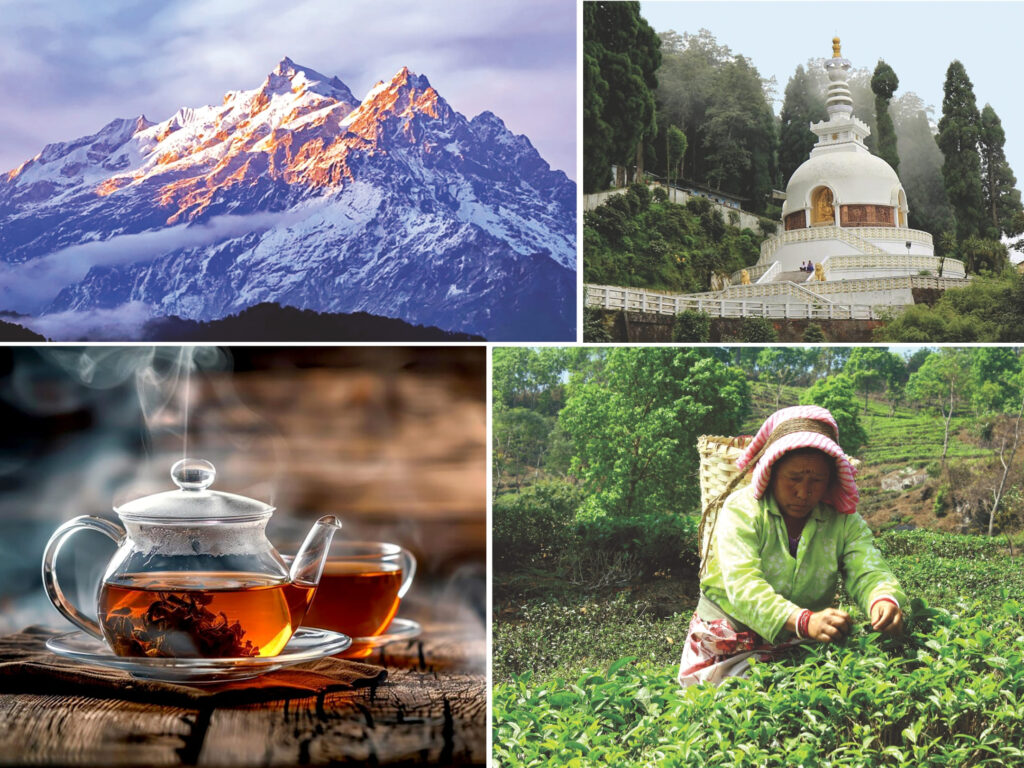
Darjeeling’s scenic hills dotted with tea gardens and a steaming pot of local brew
Live within the four walls and your mind becomes just as concrete. It is no wonder then that for the natives of this verdant hill town, the blooming beauty of nature has inspired in them diverse creative ingeniousness. And the communities are just as varied with Nepalese, Tibetan, Bhutanese, Lepcha, Bengalis and Anglo-Indians, all sharing the land as their common inheritance. Confluence of all these cultures through the centuries has created a demography as varied as the art forms it has shaped in many profound ways, culminating in an eclectic artistic identity.
Also Read: Beyond Darjeeling: Discover West Bengal’s hidden gems
Wandering around Darjeeling can bring you abruptly close to a myriad of pleasant surprises, from the bustling tea markets of Chitray to vine-laden, old book stores. The large Mall Road is lined with heritage shops selling antique wares and exquisite handicrafts, including the khukri, one of the primary weapons of the Gorkha clan, historic boarding schools and the mighty mountains surrounding it.
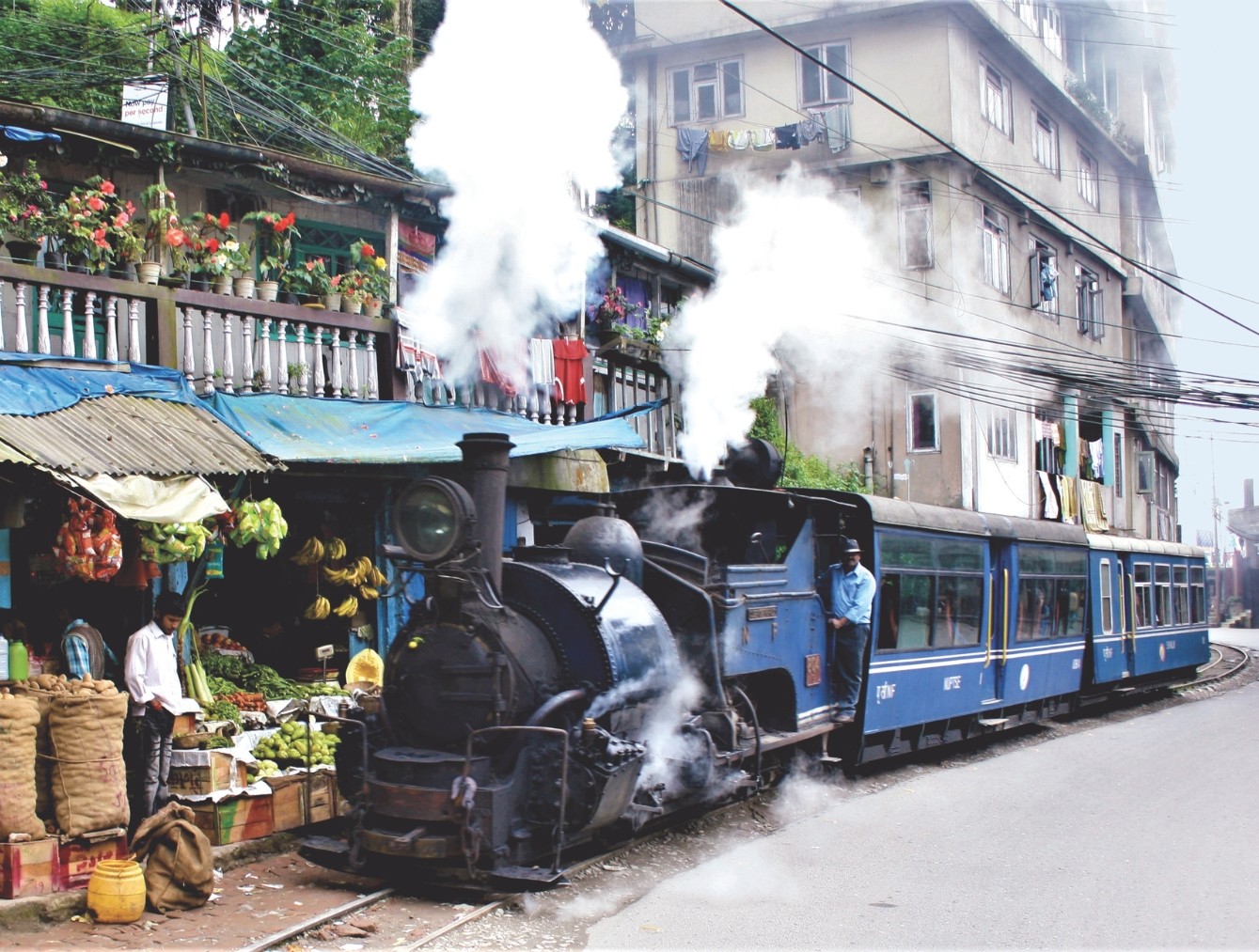
Iconic toy train winds through the scenic hills of Darjeeling, offering a timeless journey and immersive experience
And as you traverse the neatly laden footpaths, sometimes drawn to the ringing of Buddhist chants or gentle chimes of prayer bells, be sure to carry an umbrella as it mostly always has to be raining in some part of Darjeeling or the other. Fragrant aromas from nearby bakeries fill the air as you stroll around the steady streets. So will music, with mellow tunes greeting you from every other house around the corner.
Art is innate to these locals. Of my four years here, I barely remember meeting anyone who was not associated with one form of musical instrument or the other, mostly guitar. With a thriving community of skilled craftspeople who passed on their exquisite art through generations, art is more than just a means of livelihood; it is a way of life deeply rooted in tradition and culture.
Their work reflects a deep commitment to preserving these ancient customs in an era of rapid change.
For 35-year-old Samden Sherpa, a native of Darjeeling and one of the most prominent local artists, art has been a lineal passion and later on in his life, tattooing became his chosen medium to express his love and affection towards art. Sherpa says that the lush natural bounty of Darjeeling as well as its immense diversity have been his inspirations.
“Born and brought up in this beautiful place called Darjeeling, as a student I was inclined towards games, music and art, but with time I found my calling in pencil and paper. I realised I was very much drawn towards my own cultural patterns and colours as I could see it everywhere around my house, be it the living room or chanting room (a prayer room). Buddhist Tibetan compositions in Thangkas have very deep roots in art history. I, being a history student, was naturally drawn to explore the connection to its sources. Especially since my grandfather was, and my elder brother is, a monk, it mostly helped me to understand the rituals and performances,” Sherpa tells India & You.
Art & Spirituality
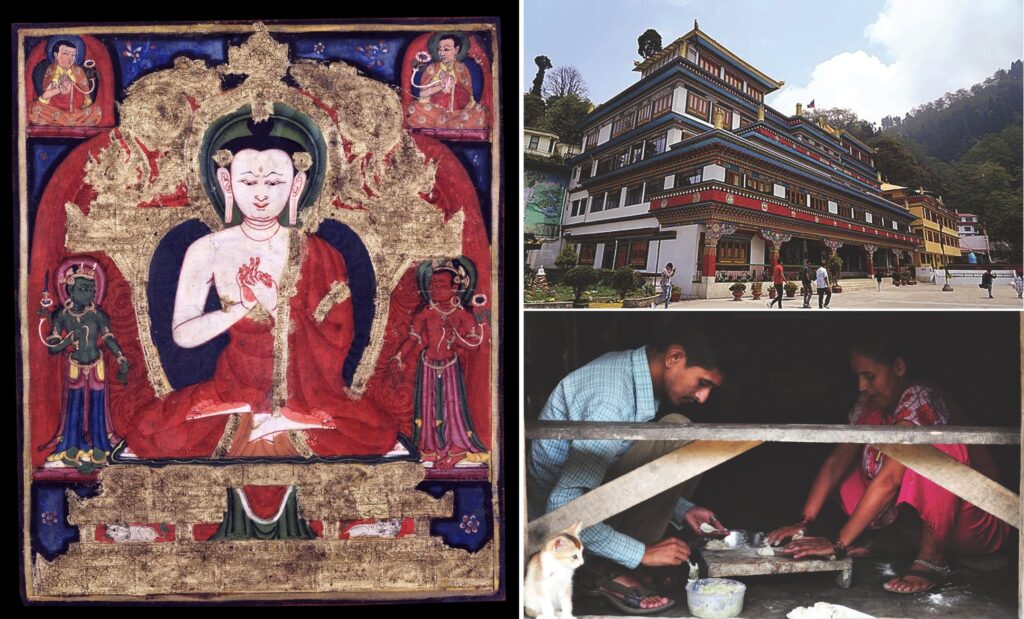
Buddha thangka painting and serene temple scenes capture the spiritual charm of Darjeeling
You are in the Himalayas, where people from all corners of the world, since times immemorial, have resorted to better understand spirituality as a pathway to peace. Morning ritual for residents here is to try and catch a glimpse of the towering Kanchenjunga, which they consider their guiding force, and pray. Spirituality and art are intertwined here more than anywhere else.
Take, for instance, the sacred Tibetan mandala art. It is a beautiful Thangka painting that tells the story of perseverance. Created by the monks through days, or even weeks, of toil with fine multicoloured sand, placed grain by grain from the centre to be worked up outwards into an intricate circle. This beautiful tapestry, however, is only transient, as soon upon its completion another monk takes a paintbrush only to destroy the entire mandala, serving as a reminder of the impermanence of life. The coloured sand is then swept up into an urn and dispersed into flowing water, a way of extending the healing powers to the whole world.
Also Read: Discover Tinchuley: North Bengal’s hidden Himalayan paradise
Tibetan refugees who settled in Darjeeling brought with them the colourful Tibetan Thangka paintings; a form of religious scroll paintings that depict Buddhist deities, mandalas, or scenes from the life of Buddha. Traditionally painted on cotton or silk, these artworks are highly symbolic and are often used as tools for meditation. Characterised by strict iconographic rules and a deep emphasis on spiritual meaning, it also incorporates a certain local flavour in the colours, themes and sometimes even artistic techniques to reflect the hill town’s unique Himalayan aura.
“As I belong to the Rai community, we have our own distinct culture, be it in food, traditions, beliefs and folklore. Yet, throughout the years, they have blended seamlessly with the other communities residing here to create a common sense of belonging and that is what makes up the essence of Darjeeling. For instance, when Tibetan refugees came to seek shelter in Darjeeling, they brought with them their rich and exotic traditional art forms and ways of living, which can be viewed in the many monasteries here today,” Aliza Chamling Rai, a 25-year-old native of Darjeeling and a flight attendant with Cathay Pacific, who now lives in Hong Kong, tells India & You.
With the Nepalese community forming the backbone of Darjeeling’s demographic, the traditional Nepali crafts have a dominant presence in the region’s art scene. Woodcarving, a hallmark of Nepali craftsmanship, have skilled artisans carve intricate designs into furniture, religious icons and decorative objects that use natural motifs such as flowers, animals and Hindu deities. Statues of Buddhist and Hindu deities, ritualistic implements, and ceremonial knives khukri are common displays. Each piece, painstakingly crafted, embodies a blend of Nepali tradition and the region’s Himalayan ethos.
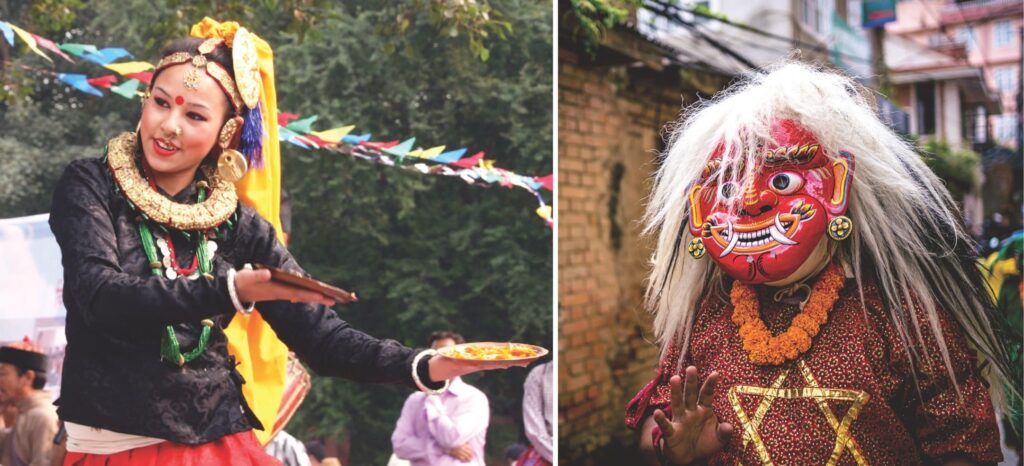
Per se, the Maruni dance, a vibrant traditional performance from Darjeeling that reflects local culture and heritage
Folk music and dance form the heartbeat of Darjeeling’s cultural expression, with each community contributing its own distinct rhythm and movement. Per se, the Maruni dance is one of the most popular folk dances of the Nepalese community in Darjeeling. Performed during festivals and celebrations, it is a colourful and lively performance that involves intricate footwork and energetic movements. The Maruni dance reflects a wide range of themes, from Hindu mythology to the daily lives of people, accompanied by a Mridanga or drum player, sarangi, a string instrument and a Dhatuwaray, meaning prankster.
For the natives, weaving is of much significance, particularly the traditional Nepalese ‘Dhokra’ that is a handmade metal weaving technique to create intricate, tribal-style figurines and designs. In Lepcha handloom, an essential part of its identity, Lepcha women use traditional backstrap looms to create textiles adorned with geometric patterns, bright colours, and nature-inspired motifs, including rivers, mountains, and animals. The contemporary Lepcha weaving is undergoing a renaissance with modern interpretations being used to create scarves, shawls and home decor items that appeal to a global audience.
Contemporary Art: A Tapestry of Fusions
In recent years, contemporary art has been burgeoning in Darjeeling, fuelled by young, cosmopolitan artists who draw inspiration from the town’s rich cultural mix. Artists from different ethnic backgrounds, Nepali, Tibetan, Bengali and others are coming together to create a new visual language that reflects their multicultural identities. Many contemporary artists explore themes of identity, migration, and the changing socio-political landscape of the region. The art in Darjeeling today is not just an homage to tradition but also a conversation with the globalised world.
“Despite being a small place, we have multiple cultures and many forms of artistic genres here. I see and respect artists with different styles and try to learn a lot from them too. This is why you can see the combination of multiple elements in my composition. I specialise in Tibetan forms of art and Japanese styles. It has been 15 years that I have been practicing my art and yet it feels like I’m learning every day in my life, and, most importantly, thoroughly enjoying it to the core,” Sherpa adds.
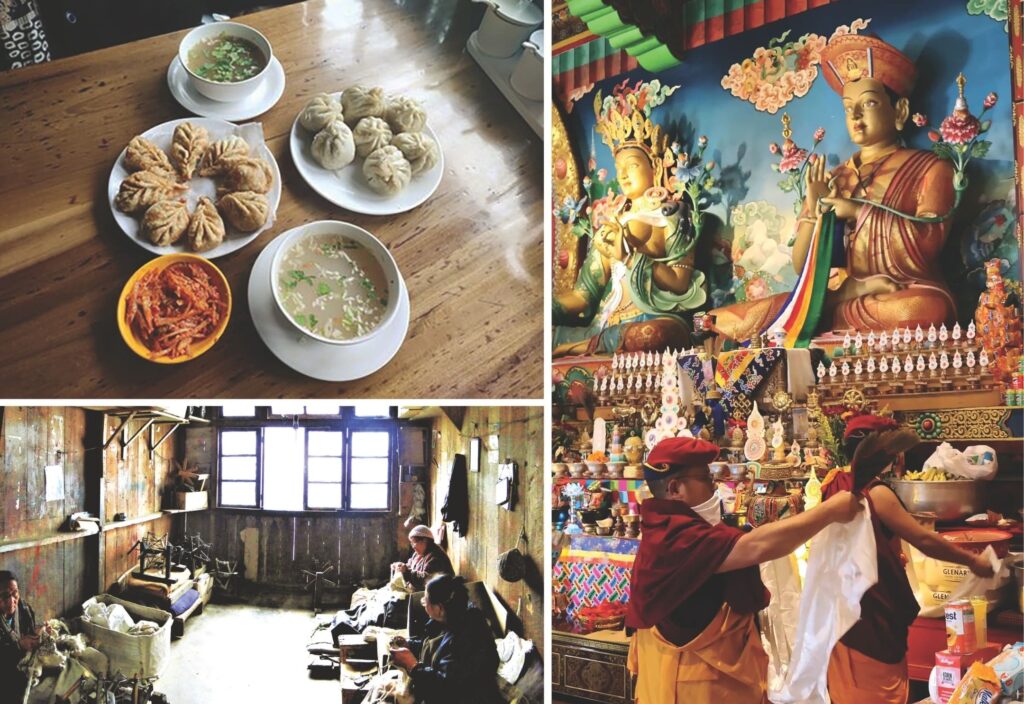
Vibrant markets, traditional cuisine and women doing their work showcase the everyday life and cultural charm of the region
Touched with a colonial charm, paintings, especially watercolour, often depict the rolling tea gardens, snowcapped Kanchenjunga and the quaint architecture of colonial homes. This tradition is still alive today, with many local artists adopting the medium to capture the serene beauty of Darjeeling’s landscapes. The influence of British naturalism, combined with local subjects and motifs, has now resulted in a unique style that couples Western techniques with Himalayan aesthetics.
Also Read: Indian Railways: Journey through the heart of India
The Lepchas are also known for their soulful music, often sung in praise of nature. Their instruments, such as the Tungbuk or bamboo flute and Puntong or horn, are crafted from natural materials and produce soothing, earthy sounds often accompanied by slow, graceful dances that mimic the movements of birds and animals.
In Darjeeling, the deeply spiritual Tibetan opera Lhamo is a unique form of performance that blends music, dance, and drama, often performed during Tibetan New Year and other cultural festivals in Darjeeling. Another popular Tibetan performance art is the mask dance, performed by monks during religious festivals like Losar, meaning Tibetan New Year. These dances, featuring elaborate costumes and masks, represent deities, demons, and animals and are performed to ward off evil spirits.
But in the digital age, the traditions seem to be dissipating as the younger generation seems to be barely aware of Darjeeling’s rich cultural tapestry. Like many other natives, Rai echoes a sense of fear of cultural loss due to an overpowering Western influence.
“Much of youth today, like myself, is barely aware of our traditional treasures. Within just our Rai community itself, there are native languages with multiple dialects. Forget about knowing it, most do not know about its very existence. All of that is becoming a thing of the past. Likewise, most are more attracted to Western culture and its dance forms. Rarely would you find someone who practices Maruni, which is like our main folk dance,” Rai adds.
But while the art and traditions stay alive, as you meander through the charming streets of Darjeeling, rest assured that you will take home lot stories and charming moments of tea, trails and tantalising views as your everlasting souvenirs.
