
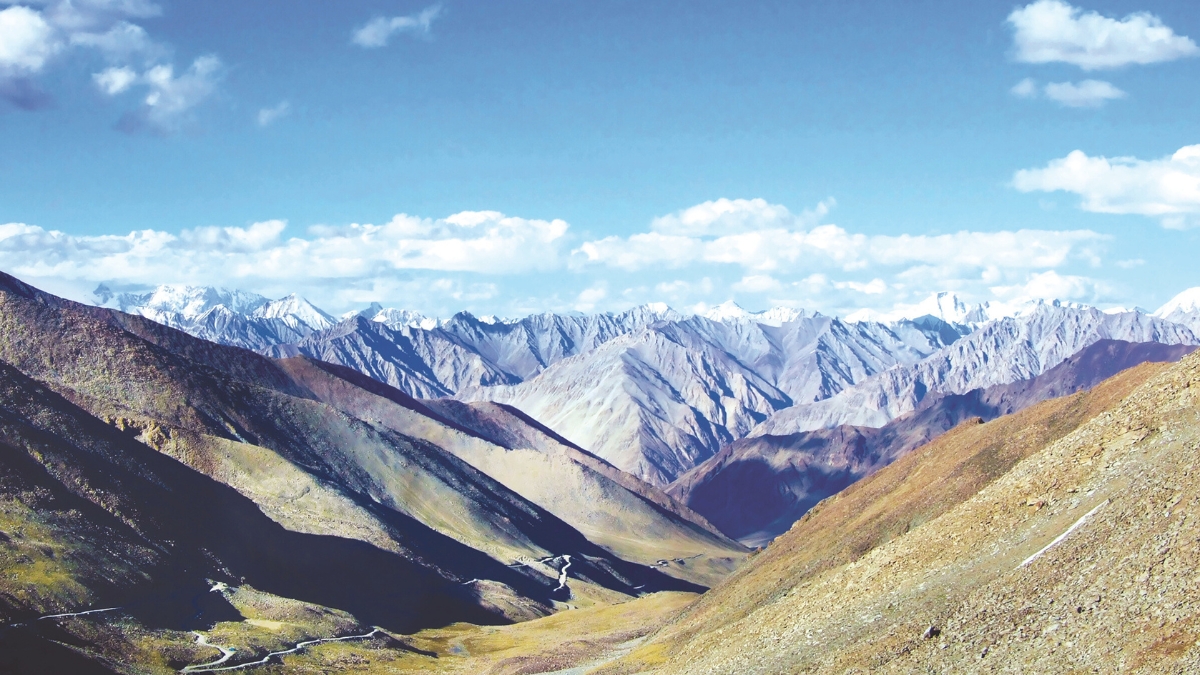
Rezang La, Ladakh, where the stark Chushul highlands stand as a tribute to the courage and sacrifice of the 1962 battle
In the morning of January 1963, with temperatures fluctuating between -10°C and -20°C, the environment was so quiet that even predatory animals seemed to think it was too early and too cold to hunt. Amidst this stillness, a Ladakhi shepherd wandered through the cold desert of Ladakh. There, he came across dozens of bodies of men frozen to death, with their weapons still clutched and pointing eastward. These were the bodies of Indian soldiers, who appeared to have stood in trenches, ready to defend their land from enemies, who intended to seize it.
These were the fallen soldiers of Charlie Company under the 13 Kumaon Battalion. This 120-strong unit faced an estimated of over 3,000 Chinese soldiers during the 1962 Indo-Chinese War at an altitude of almost 4,900 m. Rezang La stands as a testament to the bravery and valiant fight displayed by the Indian soldiers in that fated place.
Situated 41 km from the Merak at the pristine Pangong Lake, Rezang La, a strategic mountain pass located in the Chushul sector of the Union Territory of Ladakh, derives its name from the Tibetan word for pass. During the war, it held significant strategic importance due to its proximity to the airstrip in Chushul village in 1962.
Despite the war taking place 63 years ago, the voices of the fallen soldiers still echo through the barren and cold mountain pass of Rezang La. Their presence is commemorated through a memorial dedicated to these brave Ahir soldiers, the Rezang La War Memorial.
Also Read: Galdan Namchot: Ladakh’s landmark winter festival
Rezang La war memorial
Standing at an elevation of about 4,600 m, this war memorial stands as a solemn tribute to the 114 fallen soldiers of the Kumaon Regiment, who fought in the legendary Battle of Rezang La in 1962. Surrounded by the vast, cold desert of Ladakh, this enduring monument honours their sacrifice, commemorating the courage of those who stood their ground until the last man fell.
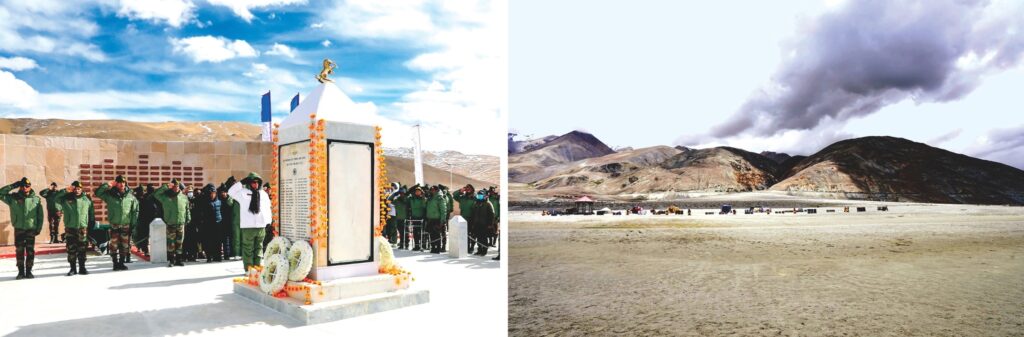
Rezang La War Memorial and surrounding Chushul pass, where stark Ladakh landscapes echo the legacy
Constructed one year after the war by all the ranks of the 13th Kumaon Regiment in the Chushul plains, the Rezang La War Memorial serves as a poignant tribute to these soldiers. Visitors are greeted by an inscription of Thomas Babington Macaulay’s Horatius, which reads: “How can a man die better, than facing fearful odds, for the ashes of his fathers and the temples of his gods?”
These couplets from Babington’s poem reflect the courage and bravery with which the Ahir soldiers fought the battle, despite overwhelming odds. Under their leader and Param Vir Chakra awardee Major Shaitan Singh, they halted the further advance of the Chinese People’s Liberation Army, despite suffering heavy casualties in both men and equipment. The battle was so intense that an inscription following Babington’s poem captures the events of that fateful day on the battlefield, reading: “To the sacred memory of the heroes of Rezang-La, 114 martyrs of 13 Kumaon, who fought to the last man last round against hordes of Chinese on 18 November 1962.”
Moreover, while passing along the Chushul-Tsaga road, which connects At the end of the gallery, a screen comes to life, guiding visitors through the China-India border to the Tsaka La Pass, one of the highest mountain roads in India, this memorial stands out with the towering Indian flag behind the inscription of Ahir Dham. The flag flutters proudly in the chilly winds of Ladakh, a region known for its thin air and low oxygen levels.
On the left side of the memorial, is a museum-cum-gallery, where the story of the Battle of Rezang La is narrated through displays on screens. These exhibits showcase the region’s topography, the weapons used in the battle, and graphic illustrations of each hero of the regiment with their names, designations, and native places highlighted.
While strolling through the gallery, visitors can view displays of the weapons used by the Indian army during the 1962 Battle of Rezang La, where soldiers fought with three-inch mortars, rifles, bayonets, and even their bare hands. Despite lacking aerial and artillery support, the soldiers fought with these weapons and managed to kill around 1,000 Chinese soldiers, all while enduring the attack of bullets, shrapnel, and splinters.
The museum also features a topographical map, with areas marked in red, depicting Chinese control since 1962.
On the right side of the gallery, a graphical display honours 13 soldiers who gave their lives in the war, with their names, designations and native places highlighted. At the centre of the museum stands a bust of Major Shaitan Singh, who, despite being at a disadvantage, moved from one platoon post to another, boosting the morale of his soldiers and overseeing the operation to defend the pass, safeguarding Chushul from the Chinese advance.
Also Read: Yaya Tso: A birdwatching paradise in the heart of Ladakh
At the end of the gallery, a screen comes to life, guiding visitors through the entire battle of Rezang La. The story unfolds from start to finish, accompanied by striking visuals and an emotional voiceover that brings the courage and sacrifice of the soldiers to life.
Thus, whenever tourists visit Ladakh to experience its raw, breathtaking nature and unique landscape, characterised by high altitudes and low oxygen levels, many make it a point to visit the Rezang La War Memorial, which lies along their journey.
After visiting this memorial, tourists are often left emotional and numb, deeply moved by the hardships and sacrifices soldiers endure to protect their country and its people. This memorial symbolises the sheer love for the nation and the courage displayed in the toughest of circumstances. It serves as a testament to how soldiers, without hesitation, face death in battle, proving that a person’s true character is revealed in the most challenging situations.
In this region, where it is essential to keep food intake light due to the challenging conditions, the memorial offers a poignant reminder of the courage and sacrifice made by Indian soldiers during the 1962 battle.
Ladakh beyond Indo-China war
Despite its challenging past, Ladakh, with its rugged terrain and surrounding cold deserts, featuring high plains, deep valleys, and rivers, offers much to explore as a union territory. One such place is Chushul, which is often associated with a series of standoffs between the Indian Army and its Chinese adversaries
Located approximately 230 km southeast of Leh, Chushul is nestled in the southeastern region of Ladakh. This remote village is a haven for nature enthusiasts, offering breathtaking views of towering Himalayan ranges, vast barren landscapes, and pristine, pollution-free blue skies.
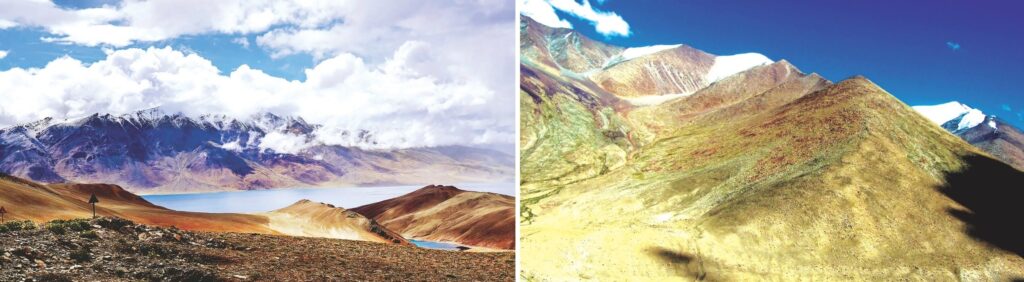
Pangong Tso and Ladakh’s rugged mountains, where high-altitude desert meets crystal waters
Nestled near Chushul, Pangong Tso is a breathtaking high-altitude lake shared by India and China. It stretches 134 km long and 5 km wide, but what truly makes it special is its crystal-clear, pollutionfree blue waters. As the light changes, so does the lake’s colour, creating a magical contrast against the backdrop of the majestic Himalayan mountains. It is no wonder this place is a favourite among nature lovers and photographers. Whether you are there to soak in the views or enjoy camping by its shores, Pangong Tso promises an unforgettable experience.
Another beautiful lake often overshadowed by its famous sister, Pangong Tso, is Tso Moriri Lake. Unlike Pangong Tso, whose salty water prevents most plant and animal life from thriving, Tso Moriri is home to various bird species. It lies within a 4,500m high wetland conservation reserve. Surrounded by snow-capped mountains, the lake offers breathtaking views that are truly a sight to behold!
Also Read: Nubra Valley: A hidden paradise in Ladakh
If you are looking to explore spirituality or take a break from nature’s rugged embrace, where cold winds bite even in April and May, Chushul Chakzam, commonly known as Chushul Monastery, is worth a visit. Overlooking Chushul village and Ladakh’s easternmost border with China, this serene monastery is devoted to preserving the practices and traditions of Tibetan Buddhism. While small in size, its walls and sacred relics speak volumes about the unwavering devotion of generations, committed to keeping their heritage alive.
But, if you are looking for a different kind of escape, head to Chumathang Hot Springs in Ladakh. Nestled between rugged mountains and the Indus River, this desert oasis is renowned for its hot sulfur springs. The warm, mineralrich waters are believed to have healing properties, particularly for skin ailments, making it a unique and rejuvenating destination.
If you want to honour the courage of our soldiers stationed in this harsh, cold region, take a moment to visit the war memorial in Chushul, dedicated to the 8th Gorkha Rifles and the 13th Field Regiment. These brave men made the ultimate sacrifice during the Battle of Srijap in 1962, where they stood their ground against Chinese forces. Led by Major Dhan Singh Thapa, but despite their valour, they were tragically overrun due to the enemy’s numerical superiority. The memorial serves as a powerful reminder of their sacrifice and bravery.
