Hanle’s clear night skies make it a prime destination for stargazing (Photo: Department of Forest, Ecology and Environment, Union Territory of Ladakh)
While the skies in most of India remain covered with dust and city lights, there are a handful of places that offer amazing dark sky experiences, tailor made for star gazing.
Situated in the remote southeastern part of Ladakh is Hanle, a tiny village where daily life unfolds against snow-capped mountains and high-altitude plains. With the Indian Astronomical Observatory and its dark sky reserve, it offers world-class stargazing, while Changpa communities, monastery traditions and seasonal wildlife create a quiet, authentic blend of culture, nature and science.
The dry, high-altitude air, minimal atmospheric moisture and near-zero light pollution create conditions ideal for observing the Milky Way, constellations, planets and even faint cosmic phenomena that are all but impossible to see in urban or lowland settings.
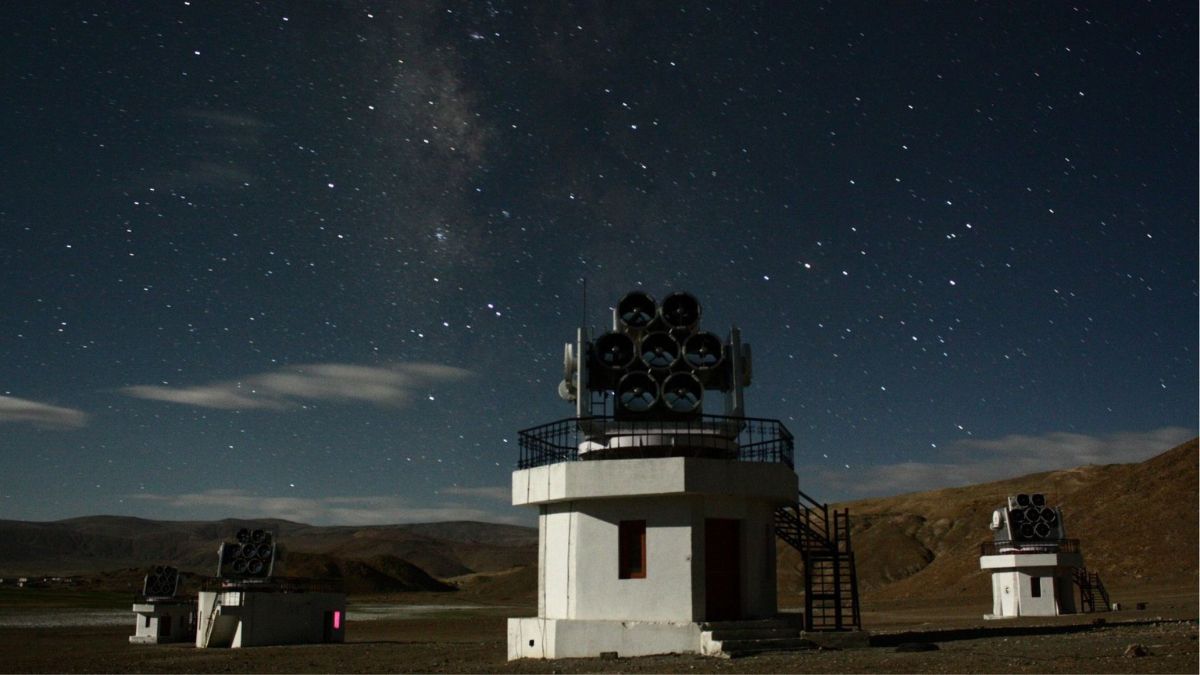
Clear skies and the Indian Astronomical Observatory offer stunning celestial views (Photo: Department of Forest, Ecology and Environment, Union Territory of Ladakh)
Hanle’s skies are so dark that amateur astronomers report observing zodiacal light and other subtle features with just their eyes or small telescopes sights that are usually the preserve of professional observatories and remote wilderness outposts.
The village offers travellers the rare chance to witness the Milky Way, constellations and planetary movements with exceptional clarity, set against vast high-altitude landscapes and snow-capped peaks.
Hanle is a sparsely populated settlement where traditional village life and science coexist. The surrounding terrain of rugged plains, small streams and distant mountains shapes daily routines, while skies dominate the experience for visitors rather than conventional tourist infrastructure.
Also Read: Galdan Namchot: Ladakh’s landmark winter festival
Unlike many travel destinations that rely on flashy attractions or commercial infrastructure, Hanle’s appeal lies in its quiet authenticity and understated beauty. The village has no bustling tourist hubs, neon signs or resort-style offerings. Instead, the experience is shaped by small family homestays, open plains stretching to distant horizons, and nights when the stars seem so close you could almost touch them.
Life here moves at a measured pace, shaped by the rhythms of the land, the weather, and centuries-old traditions of the Changpa community, whose livelihood revolves around animal husbandry, small-scale farming and the production of pashmina wool.
Village rhythms are marked by herding, prayer and communal activities, giving visitors insight into a way of life attuned to both environment and tradition.
The Indian Astronomical Observatory, one of the world’s highest optical observatories, anchors Hanle’s scientific significance.
More recently, in December 2022, the area around the village encompassing six hamlets within the Changthang Wildlife Sanctuary was officially declared India’s first Dark Sky Reserve, a protected zone where artificial lighting is minimised and sky quality preserved. This designation was the result of a collaborative effort between the Union Territory administration of Ladakh, the Ladakh Autonomous Hill Development Council and the Indian Institute of Astrophysics.
The reserve covers roughly 1,073 sqkm and strict measures such as restricted outdoor lighting, warm-coloured bulbs and blackout curtains help maintain the pitch-dark skies that make Hanle a global stargazing hotspot.
The growing astro-tourism initiative has trained local residents as ‘astro-ambassadors,’ equipping them with telescopes and basic astronomy knowledge so they can guide visitors. This effort has created sustainable income, empowered women and youth, and strengthened community ties. During star parties and guided sessions, visitors can learn about celestial objects while hearing traditional Ladakhi star lore.
Also Read: Hemis Festival: Ladakh’s vibrant celebration of faith and culture
Beyond astronomy, the Changthang Wildlife Sanctuary surrounds the village, offering glimpses of kiang, the Tibetan wild ass, blue sheep, marmots and migratory birds. Open plains and mountain backdrops make Hanle a destination for photographers, nature enthusiasts and travellers seeking remoteness.
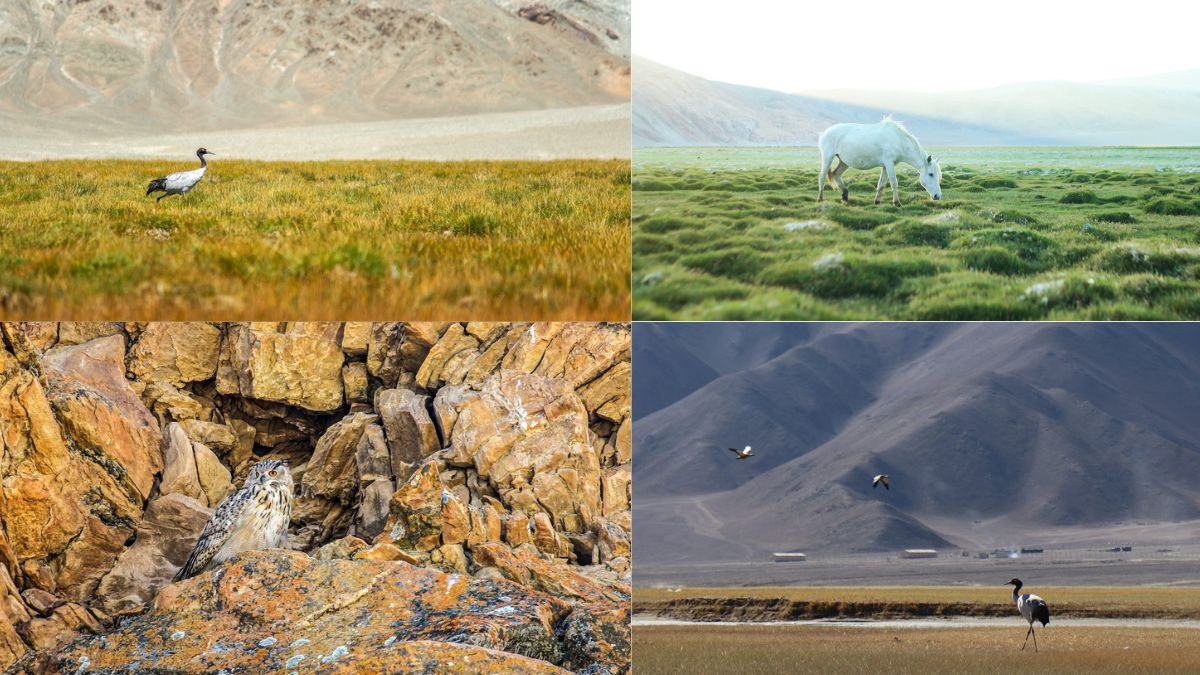
Changthang Wildlife Sanctuary’s remote landscapes support unique Himalayan fauna and migratory birds (Photo: Incredible India)
The Hanle Monastery, a 17th century Drukpa Kagyu Buddhist centre, is a focal point of spiritual and cultural life. Festivals like Losar that marks Ladakhi New Year, and local monastery celebrations bring the community together through rituals, music and dance, blending religious devotion with social cohesion.
Traditional crafts, storytelling and music are integral to cultural expression. Residents produce items such as pashmina textiles, yak cheese and handcrafted tools for local use rather than commercial markets, preserving skills passed through generations.
Hanle has no formal tourist attractions, yet its appeal lies in understated experiences.
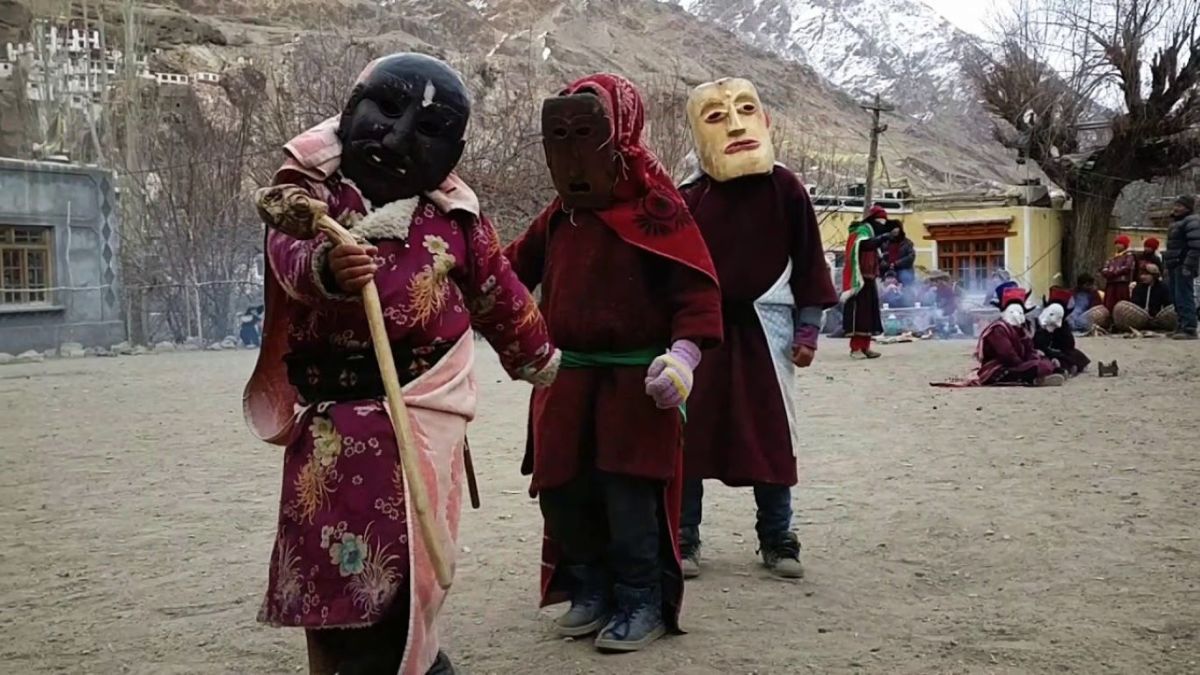
Celebrating Losar in Hanle, the Ladakhi New Year, with vibrant rituals, music and community gatherings (Photo: Utsav)
Wandering along narrow lanes reveals everyday life, small workshops and herding practices, while expansive highland plains provide opportunities for scenic photography, wildlife observation and quiet observation.
Food in Hanle reflects high-altitude adaptation, with staples such as thukpa, a noodle soup, momos steamed or fried dumplings, butter tea, skyuu and khambir bread, often prepared with locally sourced vegetables, barley, yak dairy and minimal spices.
Also Read: Yaya Tso: A birdwatching paradise in the heart of Ladakh
Meals are hearty, functional and deeply tied to seasonal and environmental availability. Life in Hanle moves slowly, governed by altitude, weather and community routines. Limited infrastructure, minimal commercial activity and strong social familiarity create a sense of immersion rather than entertainment, allowing visitors to observe village life, watch herds move across the plains, or sit beneath star-filled skies.
The best time to visit Hanle is from March to October, when skies are clearest and temperatures are manageable. The winter months bring extreme cold, while summer offers accessibility along scenic high-altitude routes from Leh.
Acclimatisation in Leh or nearby settlements is recommended due to the village’s elevation. Hanle shows a new kind of Indian tourism, one that combines astro-tourism, nature and cultural heritage, offering travellers a rare glimpse into life at the roof of the world under some of the clearest skies on Earth.