Omar Abdullah inaugurated the sprawling floral attraction today (Photos: Omar Abdullah X)
With thousands of colourful tulip bulbs in full bloom, the Indira Gandhi Memorial Tulip Garden in Srinagar, recognised as Asia’s largest tulip garden, opened for the season as Omar Abdullah, Chief Minister of Jammu and Kashmir, inaugurated the sprawling floral attraction today. The annual bloom in the garden also marks the beginning of Kashmir’s spring tourism season.
Located on the foothills of the Zabarwan Range and overlooking the Dal Lake, the tulip garden is one of Kashmir’s most visited seasonal attractions. Every year, its blooming fields draw thousands of tourists from across India and abroad, signalling the arrival of spring in the Valley and the start of the peak tourism season.
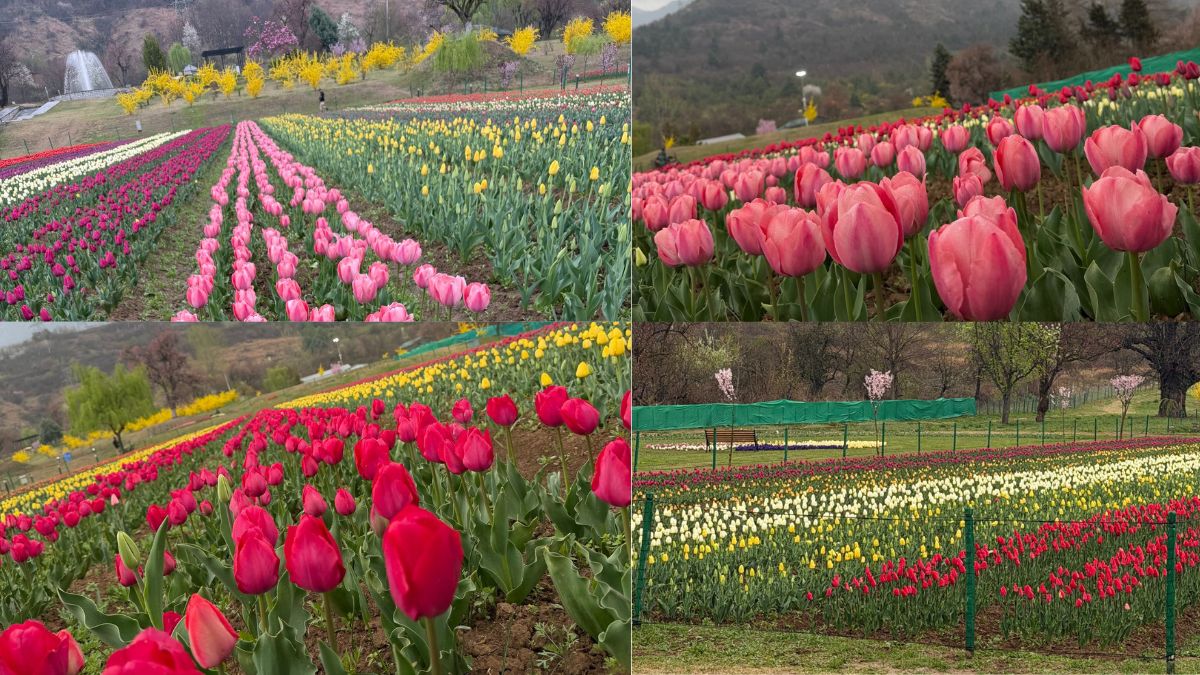
The tulip garden was among several tourist locations that were temporarily closed last year following the 2025 Pahalgam tourist attack
During the inauguration ceremony on Monday, Abdullah was accompanied by cabinet colleagues and legislators of the Jammu & Kashmir National Conference. Officials said the opening of the garden is expected to give an early boost to tourism and related businesses that depend heavily on spring travel in Kashmir.
Also Read: Tulip Gardens of Kashmir: A Riot of Colours
Speaking to media after inaugurating the garden, Abdullah said the new tourism season offered hope to those associated with the travel industry, many of whom went through a difficult period last year. Tourism in Kashmir supports a wide network of livelihoods including hotel owners, houseboat operators, taxi drivers, guides, handicraft sellers and small vendors. For many of them, the tulip bloom traditionally marks the beginning of a busy season.
The opening also comes after a challenging year for the region’s tourism sector. The tulip garden was among several tourist locations that were temporarily closed last year following the 2025 Pahalgam tourist attack. The closure of multiple destinations across the Valley affected travel bookings and slowed tourist arrivals during the peak months.
Authorities say the garden has opened this year after a security review, with officials hoping that improved conditions will encourage more visitors to return to the Valley.
Spread over terraced slopes facing Dal Lake, the tulip garden is widely regarded as Asia’s largest of its kind. Established in 2008 by the Jammu and Kashmir Floriculture Department, the garden was developed to promote floriculture and extend the tourism season in Kashmir by attracting visitors during early spring.
Over the years, the site has become one of the most photographed locations in Srinagar during March and April. Rows of brightly coloured tulips arranged across landscaped terraces create a striking visual display against the backdrop of the mountains. Besides tulips, several other spring flowers such as hyacinths, daffodils and ranunculus are also grown in the garden.
Officials said more than 70 varieties of tulips have been planted this year, with over 1.5 million bulbs blooming across the garden’s vast expanse. The display is expected to reach its peak in the coming weeks as the flowers fully blossom.
The Floriculture Department has also increased the density of bulbs in several sections to give the garden a richer and more vibrant appearance for visitors. Walking pathways across multiple terraces allow tourists to explore the garden from different vantage points while enjoying panoramic views of Dal Lake and the surrounding landscape.
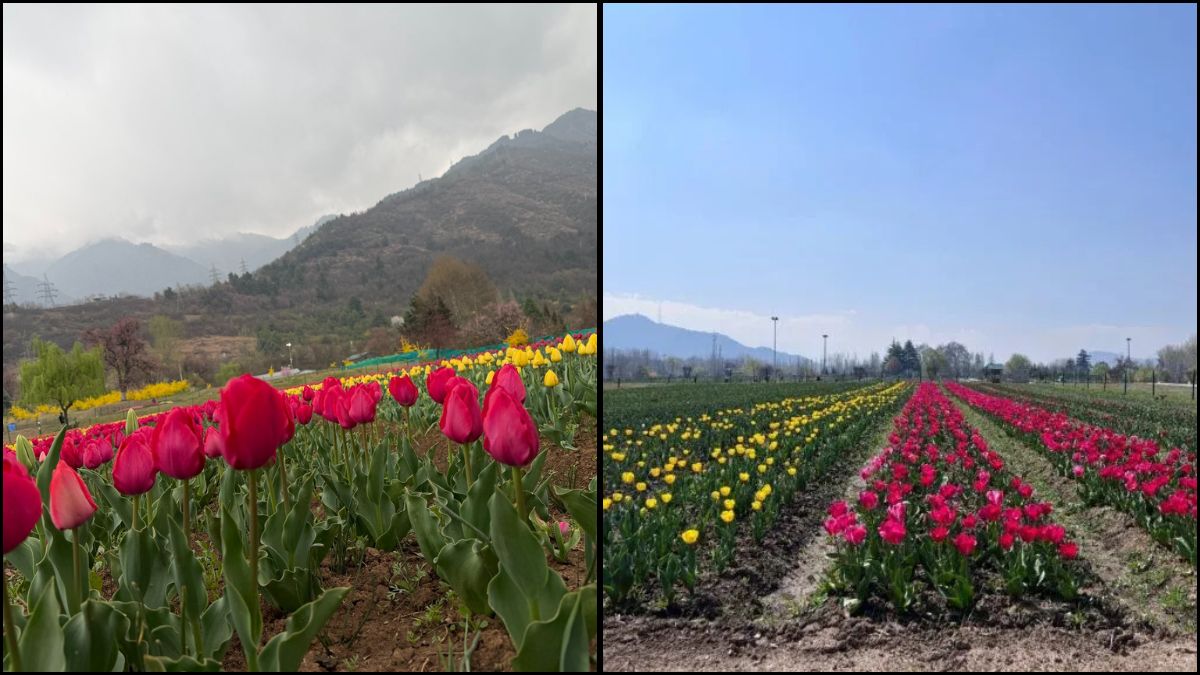
The tulip garden is widely regarded as Asia’s largest of its kind
Interestingly, the garden opened earlier than usual this year. Traditionally, it opens in the last week of March when the tulips begin to bloom. However, warmer weather in the Valley led to early flowering, prompting authorities to advance the opening date so visitors could see the blooms at their peak.
For hours before the official inauguration, a large numbers of tourists and local residents were seen waiting outside the gates of the garden on Monday morning. Many had arrived early to witness the first day of the tulip season, which has increasingly become a major attraction in Kashmir’s tourism calendar.
Also Read: Tulip Festival in Srinagar
In addition to the floral display, the government has also planned cultural programmes and events during the tulip season to attract more visitors. These activities typically include music performances, exhibitions of traditional handicrafts and stalls showcasing Kashmiri cuisine, offering tourists a broader cultural experience.
Apart from tourism, the government is also looking at ways to expand floriculture as an economic sector in Jammu and Kashmir. During the inauguration, Abdullah said authorities are exploring ways to develop floriculture into a commercial venture by exporting flowers grown in the Valley to markets across India.
According to officials, one of the major challenges currently facing the sector is the lack of a reliable cold-chain system. Without adequate refrigerated storage and transport infrastructure, it becomes difficult to preserve flowers during long-distance transport.
Abdullah said that once a proper cold-chain network is established either through rail or air transport the floriculture sector could expand significantly. This would not only benefit flower growers but could also create new employment opportunities across the region.
He said that the government was also exploring the possibility of developing tulip bulbs locally. At present, many of the bulbs used in the garden are imported from the Netherlands, one of the world’s leading producers of tulips. Developing local bulb production could reduce import costs and help strengthen the region’s floriculture industry.
Officials said that if the necessary infrastructure and expertise were developed, Kashmir could gradually reduce its reliance on imported bulbs while expanding commercial flower cultivation.
Meanwhile, security arrangements have also been strengthened at tourist destinations across the Valley. Abdullah said that authorities responsible for maintaining security would ensure their presence at major tourist locations so that visitors can travel safely and comfortably.
Tourism remains one of the most important sectors of the economy in Jammu and Kashmir. Each year, millions of visitors travel to the region to experience its landscapes, culture and seasonal attractions. The tulip garden, in particular, has emerged as a major draw during spring.
As the first visitors walk through the colourful terraces of tulips this season, tourism stakeholders across Kashmir are hoping that the bloom will signal a strong revival for the Valley’s travel industry and encourage more travellers to rediscover one of India’s most scenic destinations.