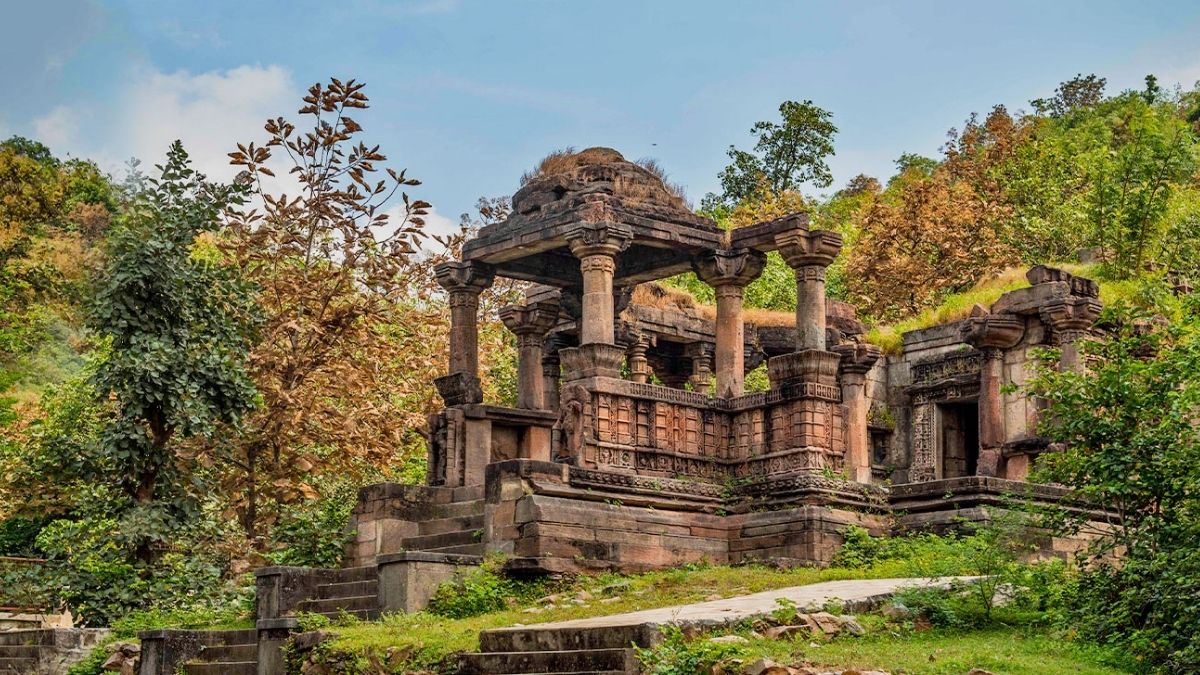
Scattered temple ruins in Polo Forest mark its Hindu and Jain past (Photos: Gujarat Tourism)
Polo Forest, located in the foothills of the Aravalli Mountains in northern Gujarat, is a tranquil blend of dense forests, flowing rivers and the ruins of centuries-old temples. Hidden within its landscape are the ruins of a once thriving village, now quietly reclaimed by nature, creating a historic and unspoiled atmosphere.
The name of the forest has nothing to do with the eponymous sport, instead it is derived from a Marwari word, Pol, meaning a gateway since the forest is literally located on the border of Rajasthan and Gujarat. Tourists can best experience this attraction at a leisurely pace, walking along forest trails and bike paths, birdwatching and spending time by rivers, rather than planned or commercial tourism.
Situated around 150 km north of Ahmedabad, it offers a beautiful getaway, away from the hustle and bustle of the city. The landscape is characterised by teak forests, rolling hills and seasonal streams, creating a vast and intimate atmosphere.
Polo Forest is characterised by scattered ruins of temples dating from the 10th to 15th centuries. Once a thriving settlement under local dynasties, the area now contain the remains of Hindu and Jain temples, stepwells and carved stone structures. Places like Sharneshwara Shiva Temple and Surya Mandir are cues of a forgotten past and blend in with the surrounding wildlife.
Also Read: Jamnagar, an offbeat holiday in Gujarat
Away from the usual tourist rush, Polo Forest moves at its own pace. Most visitors spend their time walking under dense tree cover, wandering through old ruins without a fixed plan or simply sitting by the river. It is not a place built around checklists but one that gradually reveals itself through its landscape and history.
One add-on that can enhance the experience is the forest’s biodiversity, with more than 450 varieties of medicinal plants, 30 species of mammals and over 250 species of birds.
Experiences here is about nature and keeping it sustainable. Trails are carved through dense greenery uneven terrain, opening up to quiet viewpoints and scattered heritage remains. Cycling has also picked up, especially along routes that pass through forest stretches and run parallel to the river, offering a more grounded way to explore the area.
Birdwatching brings a steady flow of visitors, especially in winter when migratory species arrive. More than 250 types of birds have been recorded here, so it draws both casual visitors and serious birders. Wildlife is less obvious but still present. Hyenas, jackals and smaller mammals move through the forest.
The Harnav River runs through the forest and shapes much of the experience. Its calm and quieter stretches are often used for picnics or short breaks, while wider sections are perfect for photography or simply sitting by the water. Not far away located the Harnav Dam which offers broader views, particularly after the monsoon when everything turns greener and more open.
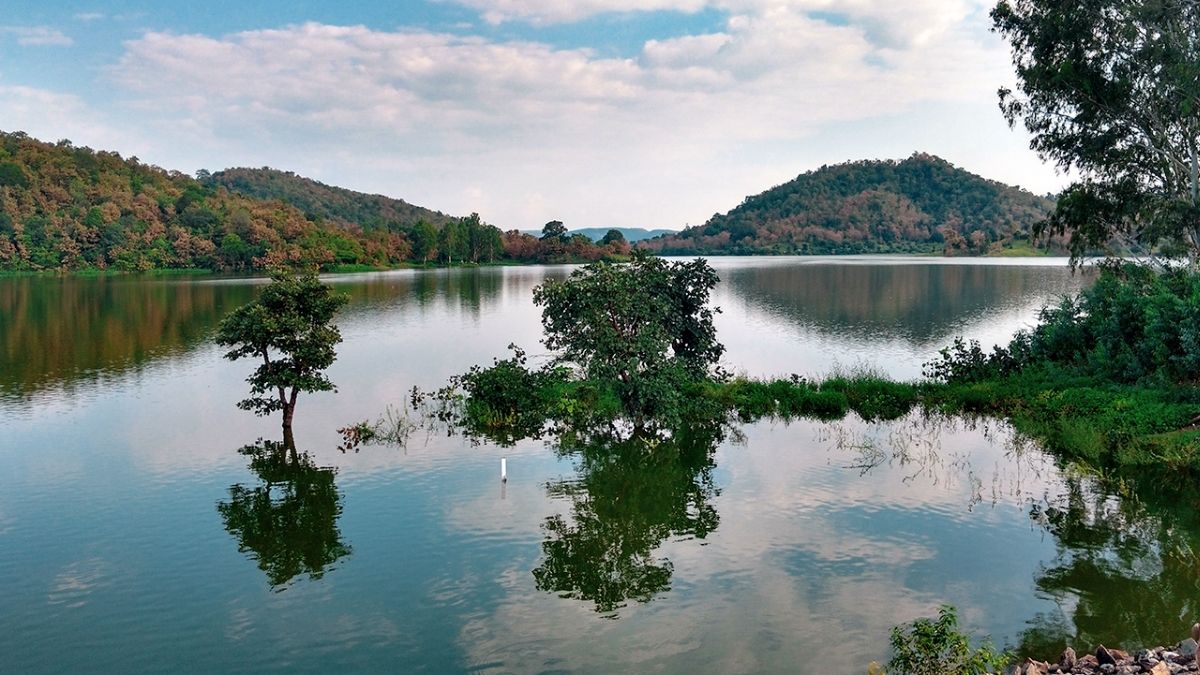
Harnav River offers a tranquil break to visitors
The forest looks and feels different depending on when you visit. During the monsoon, it becomes thick and green, with streams running full, though the paths can be slippery and harder to navigate.
The period just after the rains and into winter is usually the most comfortable, with clearer trails, milder weather and plenty of bird activity.
Also Read: Exploring Gujarat and its different dimensions
Summers are warmer, but visitors prefer this time for the quieter atmosphere and shaded walks.
Each season brings its own mood, from misty mornings and dense greenery to soother months when more of the terrain and scattered ruins become visible.
Polo Forest is not only about its natural surroundings. It also carries the remains of what was once a settled region known as Polo. Locals believed that it has been established by the Parihar kings and expanded by the Rathores, later. Over time, invasions and political conditions led to its decline, leaving behind structures that sit quietly within the forest.
Stepwells, carved temple remains and fragments of old ramparts appear along the trails. Visitors can come across them as they walk, which makes the experience feel more personal.
Since Polo Forest is spared heavy tourist traffic, the forest lends itself to slow and unplanned exploration. Development is limited, which preserve its natural character. Places to stay are simple, including small eco-resorts, camps and homestays around the area.
Nearby tourist spots like Vijaynagar and Taranga Hills can be added to a longer trip, linking the forest with other cultural and natural sites in this part of Gujarat. Camping and guided walks are also available for those who want to spend more time understanding the landscape.
Even if easy to access from Ahmedabad or Udaipur, which is just 135 km northwards, Polo Forest feels removed from city life. It offers space to slow down, without fixed itineraries or crowded attractions. For those who want a mix of nature, history and time outdoors, it works well as a low-key destination.