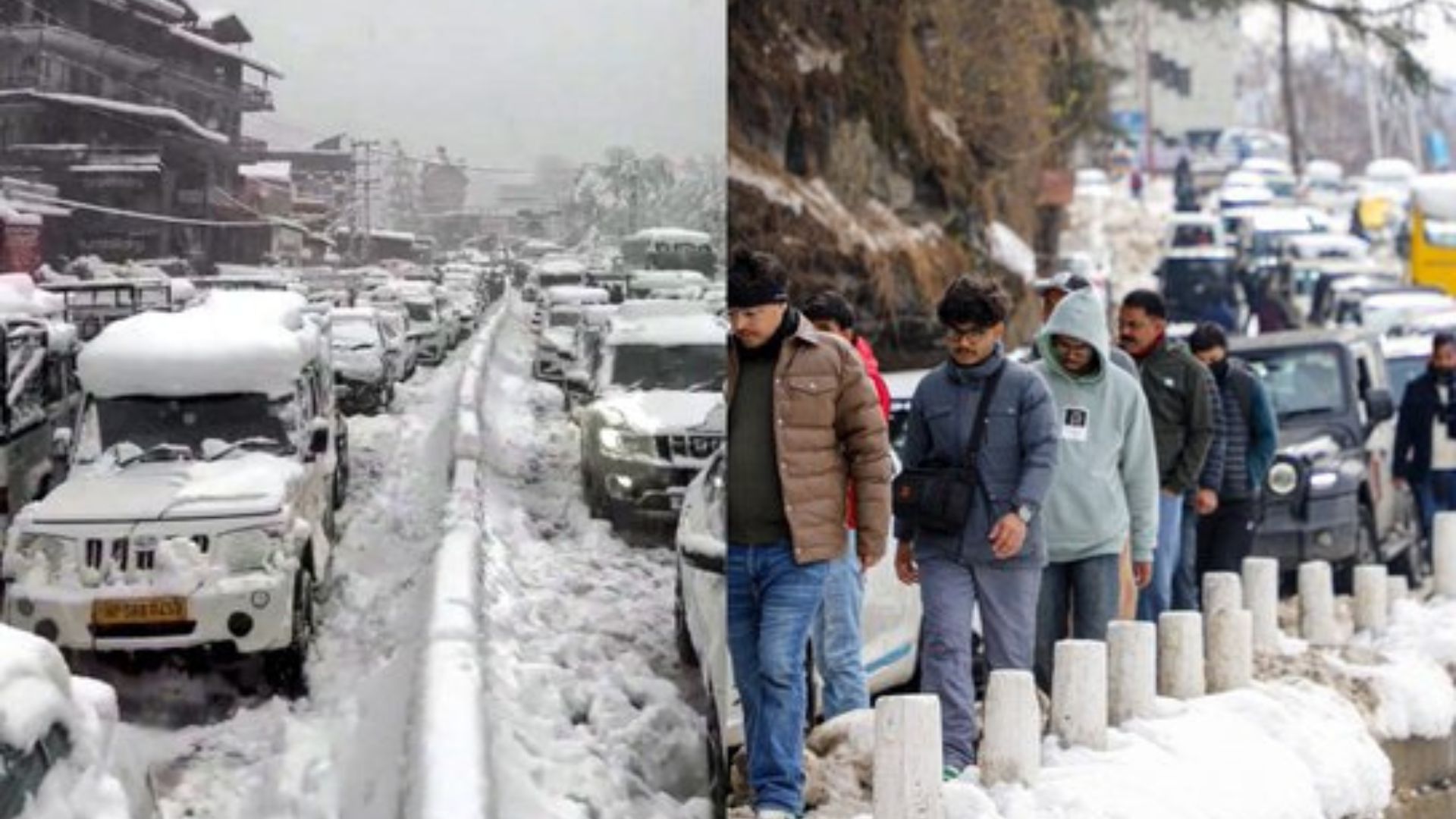
Heavy snowfall and avalanches have paralysed transport, stranded tourists, and blocked key routes (Photo: Ankit Patnaik/X)
The high Himalayas have been gripped by severe winter weather, disrupting life across northern India’s mountain states. After a long dry spell for over two months and which threatened to derail the economies that are dependent upon agriculture and tourism, the entire Himalayan range has been receiving heavy to extremely heavy snowfall for the past few days.
In some areas, notably in Jammu and Kashmir, Himachal Pradesh and Uttarakhand, heavy snowfall and avalanches have paralysed transport, stranded tourists, and blocked key routes from Manali in Himachal Pradesh to the Jammu–Srinagar National Highway in Jammu & Kashmir, while Uttarakhand’s high-altitude districts face mounting avalanche risks. With road and air travel halted, essential services disrupted, and emergency infrastructure stretched thin, the late-January snow has exposed vulnerabilities in preparedness, infrastructure and crisis management, leaving residents and travellers alike struggling to cope with the harsh conditions.
Jammu & Kashmir
In Jammu & Kashmir, relentless snowfall brought daily life to a near-standstill and triggered a powerful avalanche in the Sonamarg tourist resort. Late on Tuesday night, a massive wall of snow thundered down from the heights, engulfing buildings and vehicles in seconds. Remarkably, officials confirmed there were no casualties, but the event left roads blocked and travel disrupted across the region.

Relentless snowfall brought daily life to a near-standstill in Sonmarg (Photo: MIG)
Snow accumulation soon forced the closure of National Highway 44 (NH-44) the arterial lifeline linking Jammu to Srinagar for the third consecutive day, as snow piled up near key stretches such as the Navyug Tunnel at Qazigund and Banihal. The closure effectively cut off overland access to the valley, leaving hundreds of travellers and tourists stranded with limited options for exit or entry.
The disruption extended to the air. At Srinagar International Airport, all 58 scheduled flights, including 29 arrivals and 29 departures, were cancelled over successive days due to continuous snowfall that made the runway unsafe for aircraft operations. This combination of blocked highways and suspended flights trapped visitors in the valley with uncertain timelines for departure.
Also Read: Kashmir’s Snow Trails: A Guide to the Best Winter Treks
With traffic immobilised and no immediate clarity on reopening highway, many travellers were forced to remain on the highway for extended periods. During this period, frustration mounted as stranded tourists faced steep price hikes along the route, with roadside shopkeepers, dhabas and even hotels sharply increasing the cost of food, drinking water and accommodation. The inflated prices of basic essentials, even amid emergency conditions, intensified distress among those stuck on the highway, particularly as supplies became scarce and access to alternative services remained cut off in freezing weather.
Avalanche alerts issued in Uttarakhand
To the east, Uttarakhand’s higher reaches were not spared from the winter onslaught. Districts such as Uttarkashi, Chamoli, Rudraprayag and Pithoragarh were placed under weather alerts as fresh snowfall raised the spectre of avalanches over deep and unstable snow cover. Accumulations in high mountain passes like Tyuni–Chakrata–Mussoorie–Maletha resulted in nearly three feet of snow, blocking the highway and cutting off communities and travellers alike for days.
The situation became critical when nearly 80 tourists were found stranded for three days on the snow-bound national highway near Lokhandi. Rescue operations involving heavy snow-clearing machinery eventually carved a path through the massive snow, allowing the tourists to be evacuated safely.
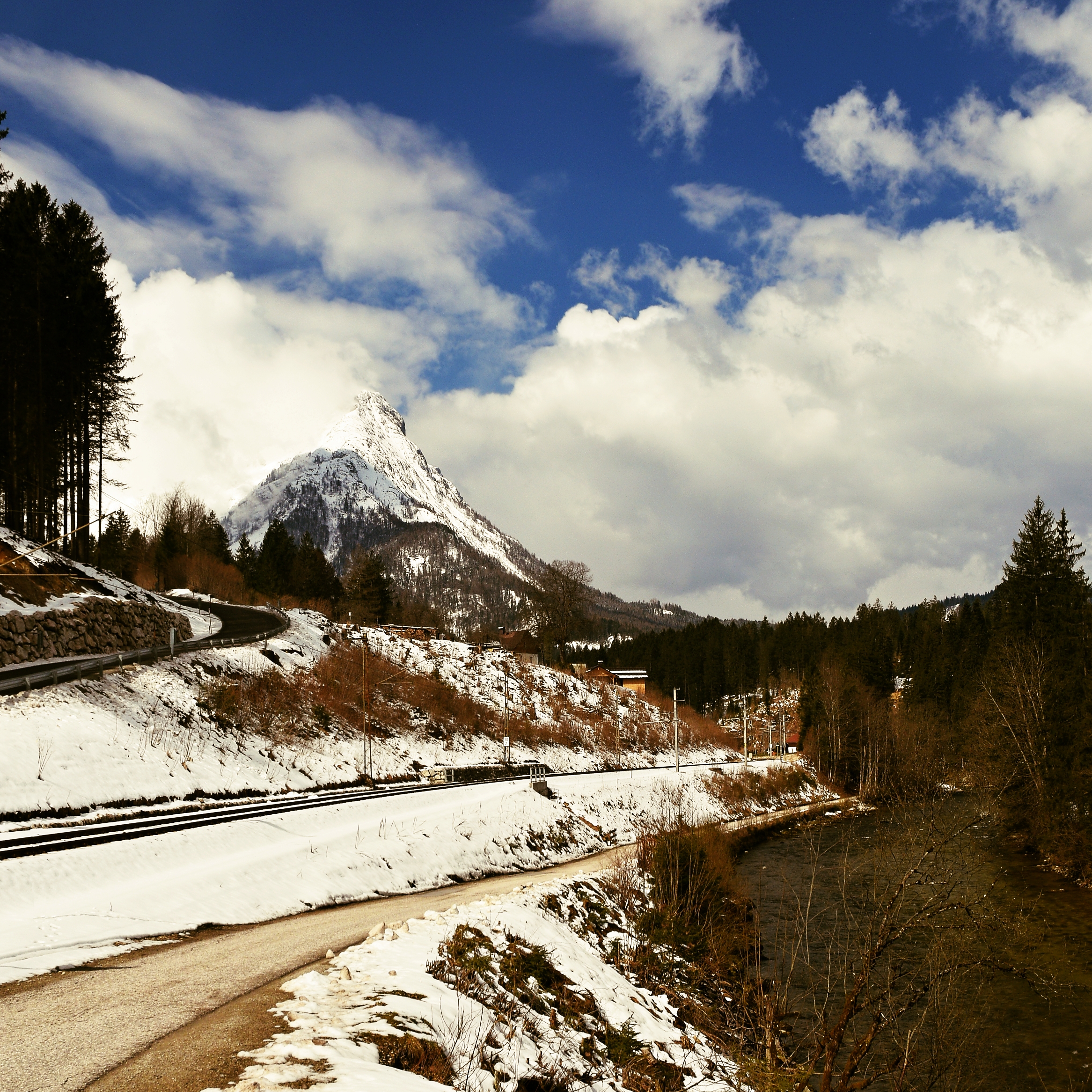
Uttarkashi, Chamoli, Rudraprayag and Pithoragarh are placed under weather alerts as fresh snowfall raised the spectre of avalanches (Photo: Freepik)
As per a warning issued by the Defence Geoinformatics Research Establishment (DGRE) on Wednesday, the districts of Uttarkashi, Chamoli and Rudraprayag are again placed under the Orange Category (Category-3), indicating a heightened avalanche risk across Uttarakhand’s higher reaches. The classification signifies the presence of deep and unstable snow on most avalanche paths, substantially increasing the probability of natural avalanches in these areas.
According to the warning, avalanches triggered under such conditions could be of medium magnitude and may reach valley floors, posing a serious threat to settlements, road corridors and human activity. Movement in these regions was advised only along selected, relatively safer routes and strictly with extreme caution, as any activity on snow-laden slopes carries a high risk of triggering slides.
Following directions issued earlier by the Secretary, Disaster Management and Rehabilitation, the State Emergency Operations Centre instructed District Magistrates of the affected districts to maintain continuous local monitoring and heightened vigilance in avalanche-prone and sensitive zones. Authorities were also directed to ensure the timely dissemination of information and advisories to the public to prevent avoidable exposure to risk.
Also Read: Darma Valley: Tourism shaped by borders and seasons
Residents and travellers were advised to avoid unnecessary movement in snow-covered and avalanche-prone areas during the warning period. Additional precautions included refraining from stopping below steep slopes during or immediately after snowfall and regularly removing accumulated snow from rooftops of houses, temporary shelters and cattle sheds to reduce the risk of structural damage.
The advisory further noted that in cases where people are compelled, due to unavoidable circumstances, to remain in high-altitude areas experiencing heavy snowfall, it would be prudent to temporarily relocate to safer, lower-altitude locations for one to two days, depending on prevailing weather and snow conditions.
Snowfall, tourist rush disrupt power, water supply in Himachal Pradesh
For years, Manali in Himachal Pradesh has been a magnet for winter tourists seeking snow-covered vistas, ice-tipped rooftops and a chance to experience sub-zero temperatures. But this season, the snow came not as a gentle backdrop for holiday photos but as a relentless storm that turned a long weekend into a logistical nightmare.
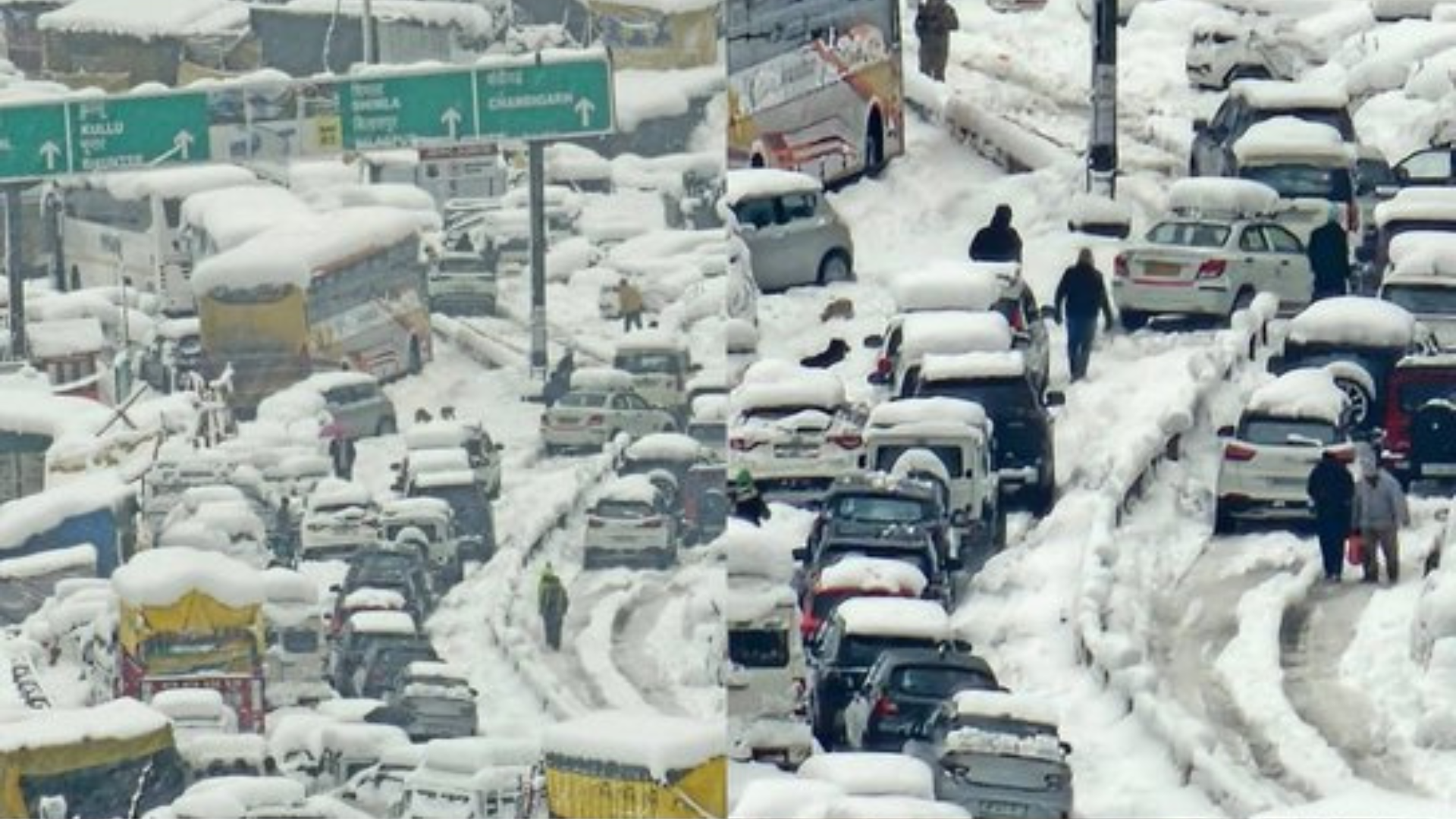
Nearly 8 to 10 km of the national highway approaching the town remained blocked (Photo: Ankit Patnaik/X)
As residents from different parts of India drove towards the hills seeking a brief escape, Manali offered anything but respite. What awaited them instead were blocked highways, packed hotels and a town paralysed by heavy snowfall. The sudden surge of vehicles combined with worsening weather conditions brought daily life in the popular hill station to a complete standstill, leaving hundreds of tourists stranded in freezing temperatures.
Snow accumulation of up to two feet on roads halted movement across key highway stretches leading into Manali. Nearly 8 to 10 km of the national highway approaching the town remained blocked, forcing traffic to come to a complete stop. With vehicles unable to move forward or turn back, many tourists were compelled to abandon their cars and continue on foot, trudging through deep snow in search of shelter and basic facilities.
The disruption quickly escalated into a humanitarian challenge for those stuck overnight on the roads. With no access to toilets, food outlets or heated shelters, families including those travelling with children spent long hours inside stationary vehicles as temperatures dipped below freezing. Food supplies ran dangerously low, with many travellers surviving on packaged snacks and limited drinking water while being trapped for more than a day without rest or proper meals.
Also Read: Travel inspired by Bollywood: A new era of tourism
For several tourists, reaching Manali town meant undertaking exhausting treks of 10 to 20 km, hauling luggage through snow-covered roads that had become impassable for vehicles. The chaos was not confined to inbound traffic alone. Tourists attempting to exit the hill station were equally affected, with massive traffic jams reported along the Manali–Patlikuhl stretch, effectively sealing the town from both directions.
The crisis in Manali mirrored a wider breakdown across Himachal Pradesh’s road network. State authorities reported that around 835 roads across the state remained closed due to snowfall, cutting off access to multiple high-altitude regions. Meanwhile, the India Meteorological Department warned that another western disturbance was likely to bring fresh snowfall to higher reaches, issuing a yellow alert for the entire state.