Snowfall has long been the emotional and economic centrepiece of Kashmir’s winter (Photo: MIG)
Kashmir’s winter tourism season, usually defined by snow-laden landscapes and packed hotels, has unfolded differently this year. The prolonged absence of snowfall across key destinations has disrupted travel plans, dampened visitor sentiment and impacted businesses that rely heavily on the Valley’s winter rush. As Chillai Kalan, Kashmir’s harshest 40-day winter period, enters its final phase with nearly 24 days already gone the lack of snow has emerged as a decisive factor shaping tourism trends this season.
Snowfall has long been the emotional and economic centrepiece of Kashmir’s winter. Destinations such as Gulmarg, Pahalgam and Srinagar depend on winter travellers seeking snow experiences, whether through skiing, sightseeing or houseboat stays against a frozen backdrop. However, erratic weather patterns and weak western disturbances this year resulted in dry spells during what is typically the peak snowfall period, forcing tourists to delay or cancel travel plans altogether.
Also Read: Kashmir’s Snow Trails: A Guide to the Best Winter Treks
For many visitors, the disappointment has been personal. Saurabh Mahajan, an Indian Air Force officer and his wife, Alpika Mahajan, based in Delhi, visited Kashmir for the first time this winter with one clear expectation.
“It was our first visit to Kashmir and we came mainly to experience snowfall. We planned our trip around Gulmarg, tracked weather updates and waited every morning hoping it would snow. But it didn’t happen. We returned without seeing snowfall, which was disappointing,” Alpika Mahajan, tells India & You.
Mahajan echoes the sentiment, adding that while the Valley’s beauty left a lasting impression, the absence of snow changed the experience.
“When people think of Kashmir in winter, they imagine everything covered in white. That is what we came for,” she says.
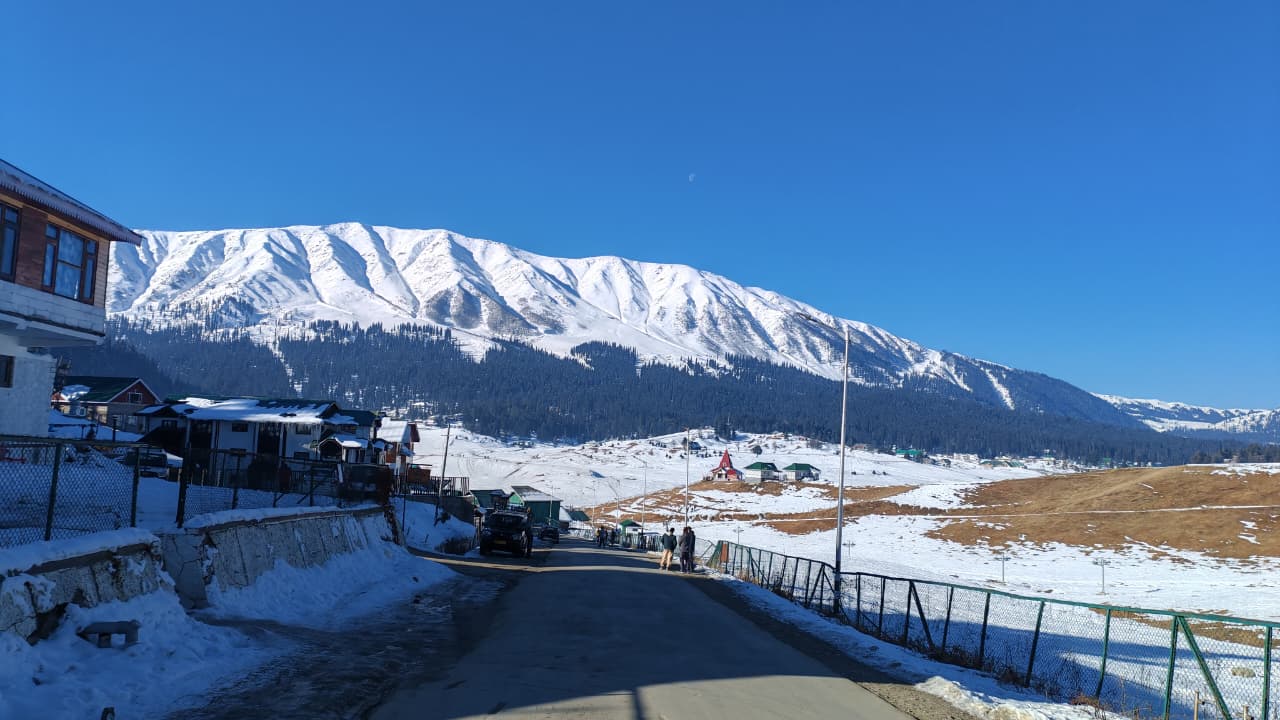
Eratic weather patterns and weak western disturbances this year resulted in dry spells during what is typically the peak snowfall period (Photo: MIG)
Their experience reflects a broader trend observed by tourism stakeholders this season. Several bookings were either postponed or cancelled as tourists waited for confirmation of snowfall before finalising travel plans. Winter sports activity, particularly skiing and snowboarding, also suffered during the dry spell.
A hotelier in Gulmarg says that inquiries were strong initially, but uncertainty around snow led to hesitation among travellers.
Also Read: Poor snowfall in Kashmir hits tourism & agriculture
“People would call repeatedly asking only one question has it snowed if the answer was no, they would delay or cancel. Snow decides everything in winter tourism,” Farooq Khan, Manager, Hilltop Hotel, Gulmarg tells India & You.
In Pahalgam, the impact has been equally visible, despite the destination not being traditionally marketed as a winter sports hub. Muzaffar Ahmed, Manager at Riverside Luxury, a hotel in Pahalgam, says expectations around snowfall have altered tourist behaviour even in areas without snow-based activities.
“Pahalgam is not a winter destination in terms of snow activities. But still, we are seeing fewer tourists and fewer bookings this season. Whenever we receive queries, the first thing people ask is when will it snow,” Ahmed tells India & You.
According to hoteliers in the region, winter footfall in Pahalgam has dropped compared to previous years. Many travellers, Ahmed says, associate Kashmir’s winter solely with snowfall and when that expectation is not met, they prefer to wait or choose other destinations.
The slowdown is also evident on Dal and Nigeen Lakes in Srinagar where Kashmir’s iconic houseboats and shikara wooden boats have seen a quieter season. Shikara owners report that winter occupancy, which usually remains steady due to honeymooners and leisure travellers, has declined sharply this year.
Wali Mohammad, a shikara owner on Nigeen Lake says that people this winter are nearly half of what they would typically expect.
“Tourists come to Kashmir for snowfall. Without snow, they don’t feel it is the right time to come,” Mohammad tells India & You.
The impact of reduced tourist arrivals extends beyond hotels and houseboats. Tourism supports thousands of livelihoods in Kashmir, including taxi drivers, tour guides, pony handlers, shikara operators and handicraft sellers. With fewer visitors, many associated sectors have experienced reduced earnings during what is usually a dependable season.
Also Read: Gurez Valley: Trekkers’ untouched haven in Kashmir
Tour operators say there has also been a noticeable shift in booking behaviour. Unlike earlier years, tourists are increasingly opting for last-minute bookings, closely monitoring weather forecasts and snowfall reports before committing. While recent snowfall in higher reaches has revived interest and led to a spike in inquiries, stakeholders say the season has already lost momentum.
Experts attribute the erratic snowfall pattern to changing climate conditions and weakened western disturbances, which play a crucial role in Kashmir’s winter precipitation. While snowfall did arrive later in parts of the valley, the delay proved costly for tourism businesses that depend on early-season bookings.
As Chillai Kalan approaches its conclusion, the tourism industry remains cautiously hopeful that continued snowfall will help salvage the latter half of the season. However, the winter has underscored a growing vulnerability Kashmir’s winter tourism is deeply dependent on a weather pattern that is becoming increasingly unpredictable.