

From June to September, trekkers will find paradise in the Sahyadri range
During the monsoon season, Maharashtra becomes a verdant paradise. From June to September, trekkers will find paradise in the Sahyadri range, which runs parallel to the Arabian Sea and is dotted with historic forts, foggy peaks and lush forests. These treks are easily accessible for weekend getaways because they are close to major cities like Mumbai and Pune and most of them being less than 200 km away from either. Here are five must-do Maharashtra monsoon treks, with each one offering a special fusion of adventure, natural beauty and history.
Bhimashankar: Wildlife, waterfalls and sacred forests
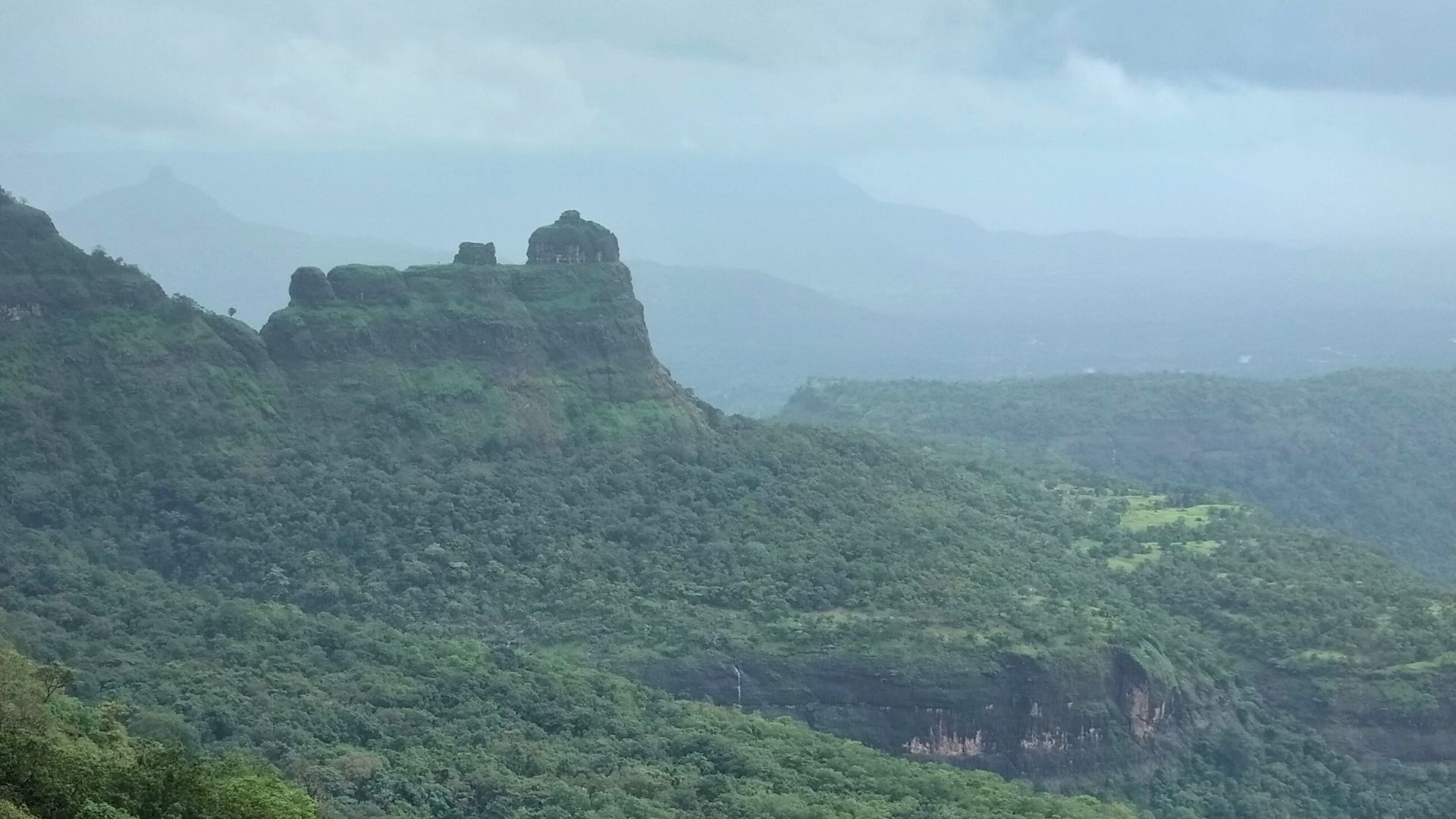
There are two primary routes for the trek, the more difficult Shidi Ghat (cross check) and the easier Ganesh Ghat (Photo: Wikimedia)
Bhimashankar trek is a popular destination for adventurers and nature lovers and it is roughly 110 km from Pune and 220 km from Mumbai. The trail meanders through the centre of the Bhimashankar Wildlife Sanctuary, which is well-known for its abundant biodiversity and for seeing a wide range of birds, langurs and the Malabar Giant Squirrel (Shekru).
The forest comes to life with rushing streams, tumbling waterfalls and a dense canopy of trees covered in mist during the monsoon season.
There are two primary routes for the trek, the more difficult Shidi Ghat (cross check) and the easier Ganesh Ghat. The well-marked Ganesh Ghat trail is appropriate for novice and intermediate hikers because it winds through rocky areas, fields and dense forests. The base village, Khandas, is accessible via Karjat or Neral railway stations, followed by a short drive. The trek culminates at the ancient Bhimashankar temple, one of the 12 Jyotirlingas or holiest sites for devotees of Shiva.
Harishchandragad: The cliff of clouds
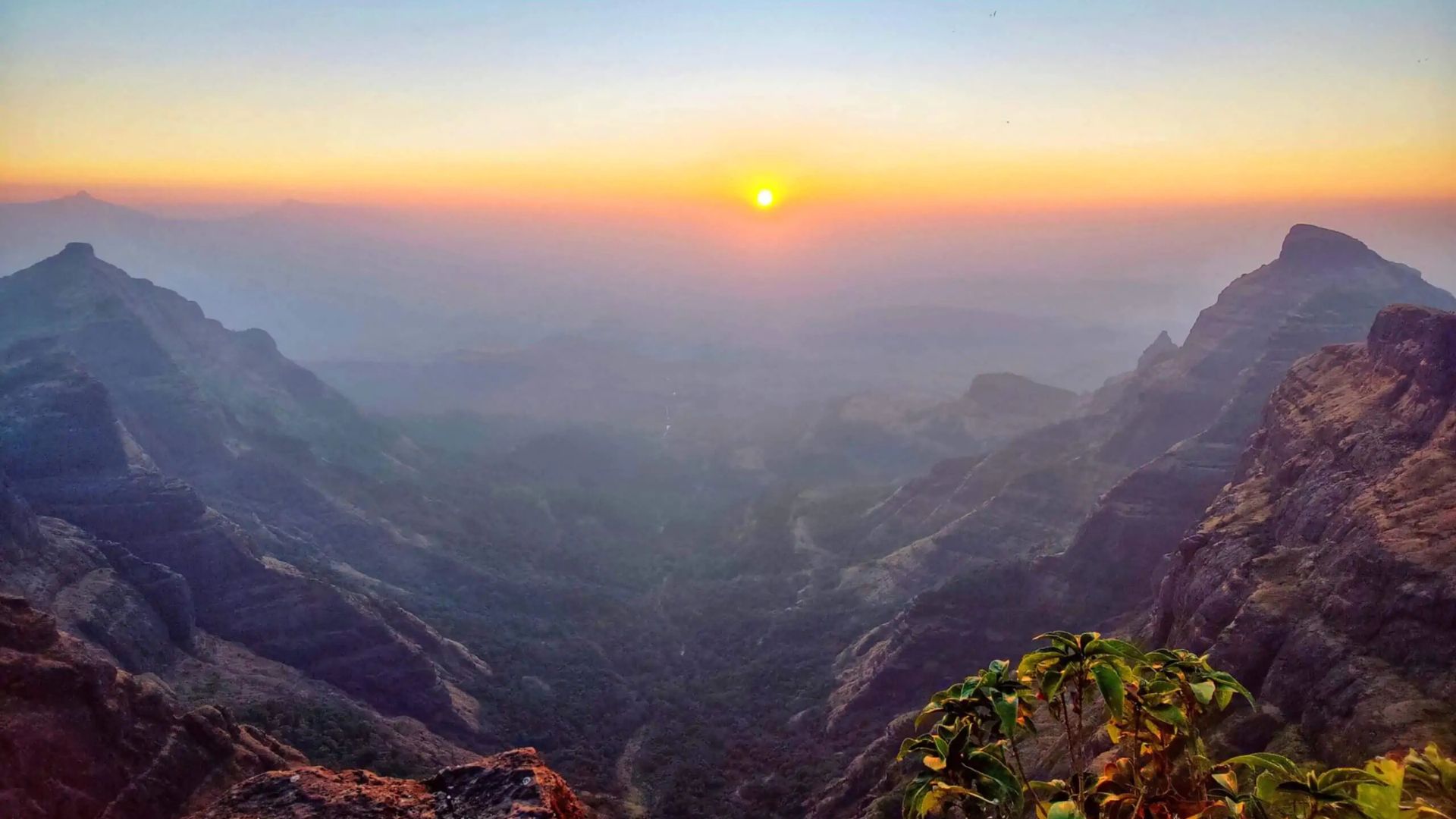
For those looking for a weekend getaway, the trek is perfect (Photo: Harishchandragad)
Located in the Ahmednagar district, roughly 120 km from Pune and 200 km from Mumbai, Harishchandragad is well-known for its historical significance and breathtaking scenery. For those looking for a weekend getaway, the trek is perfect because it is moderately difficult and usually takes two days. The Konkan Kada, a 548.6 metres vertical cliff with stunning views of the cloud-filled valleys below, is the most well-known feature.
The trail winds through dense forests, temples and old caves. There are various routes available from the base villages of Kireshwar, Pachnai or Walhivale, each with its own unique charm. The Khireshwar trail is more picturesque but more difficult than the Pachnai route.
Kalsubai: Walking in the clouds on Maharashtra’s highest peak
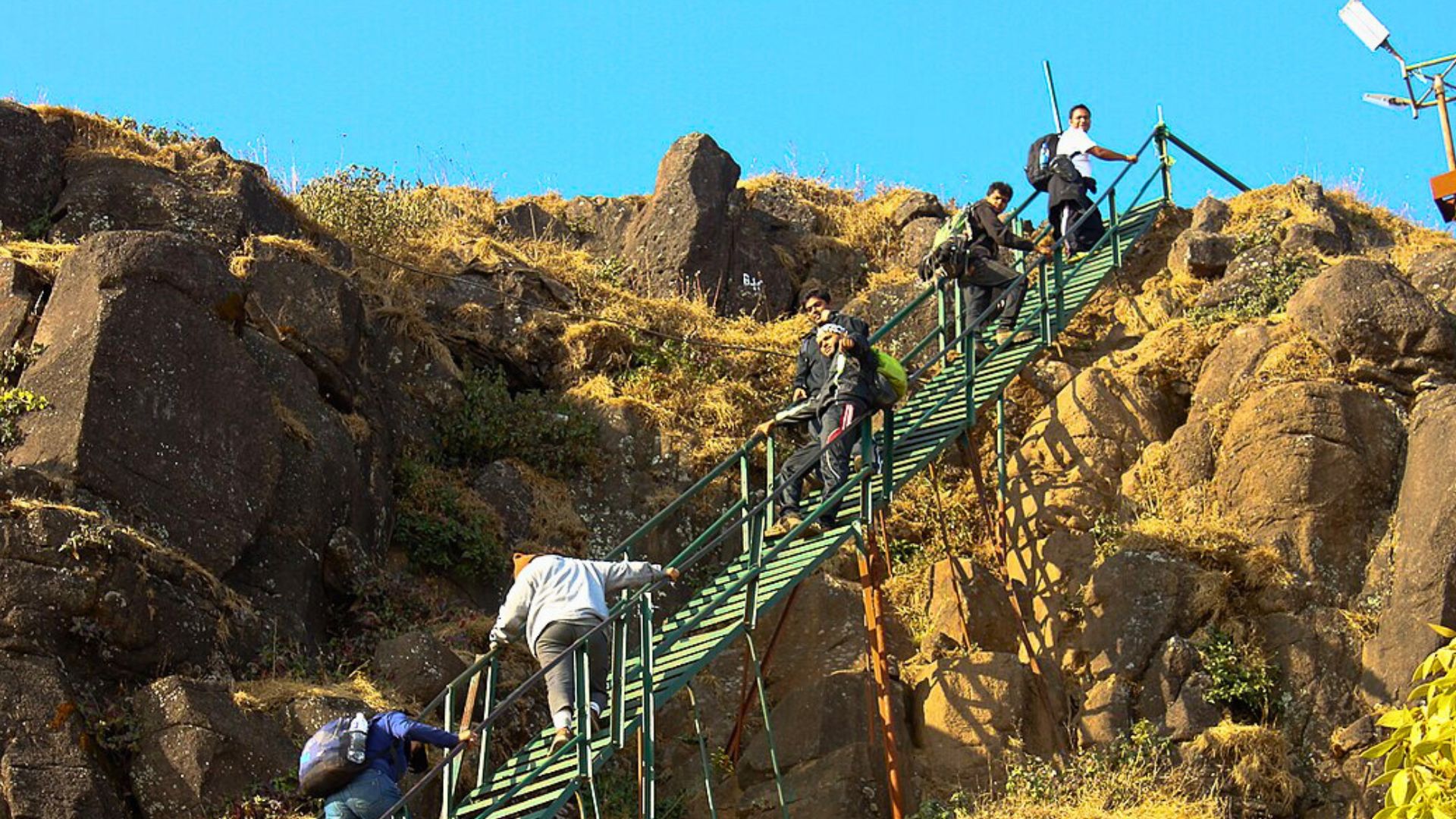
It is situated close to Bari village, about 155 km from Mumbai (Photo: Wikimedia)
At 1,646 metres, Kalsubai is Maharashtra’s highest peak and a popular destination for hikers. Iron ladders placed at steep parts make the moderately challenging trek easier. It is situated close to Bari village, about 155 km from Mumbai and 60 km from Nashik. Trekkers frequently find themselves literally walking through clouds as the peak is covered in thick fog during the monsoon season.
The well-marked trail winds through small streams, rocky areas and meadows. Views of the surrounding Sahyadri ranges, including forts like Alang, Madan and Kulang, are available from the summit. Bari village, which is reachable by road from Kasara railway station, is usually where the trek begins.
Rajmachi and Lohagad: Twin forts of the monsoon
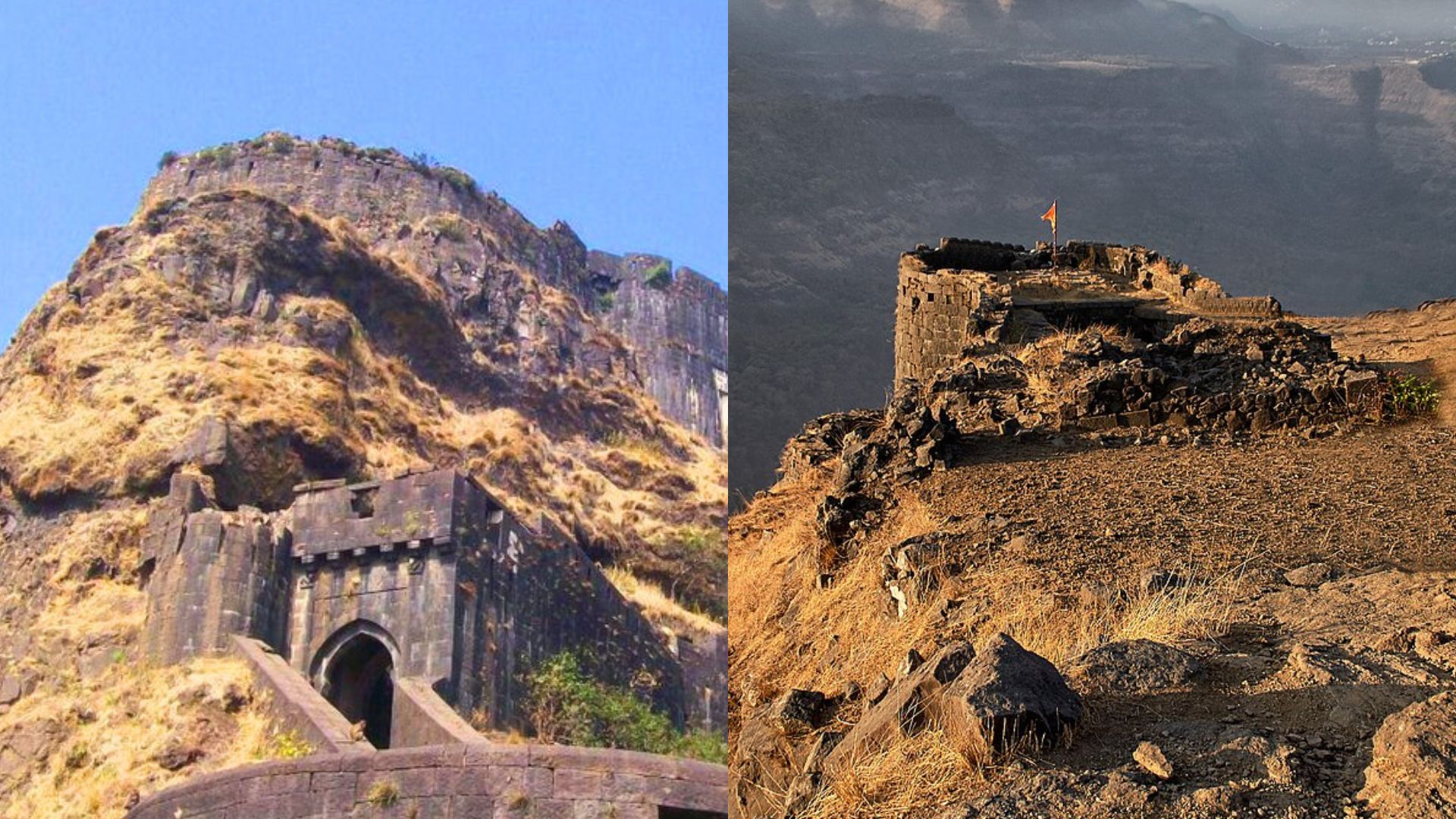
From Lonavala, it is simple to reach the base villages of Bhaje for Lohagad and Udhewadi for Rajmachi (Photo: Wikimedia)
Among the most well-liked monsoon destinations, particularly for novices and families, are the Rajmachi and Lohagad treks, which are close to Lonavala, that is almost mid-way between Mumbai and Pune. During the rainy season, the path to Rajmachi Fort comes alive with waterfalls and verdant surroundings as it winds through dense forests, bubbling streams and rustic villages. From Lonavala, it is simple to reach the base villages of Bhaje for Lohagad and Udhewadi for Rajmachi.
Rajmachi provides great camping opportunities and is well-known for its two citadels, Shrivardhan and Manaranjan. Known for its “Iron Fort” structure, Lohagad is attached to Visapur Fort and has a distinctive rampart in the shape of a scorpion’s tail. When covered in monsoon mist, the forts’ expansive views of the Sahyadri hills and the backwaters of the Pawna and Shirota dams are particularly mesmerising.
Torna Fort: The birthplace of the Maratha Empire
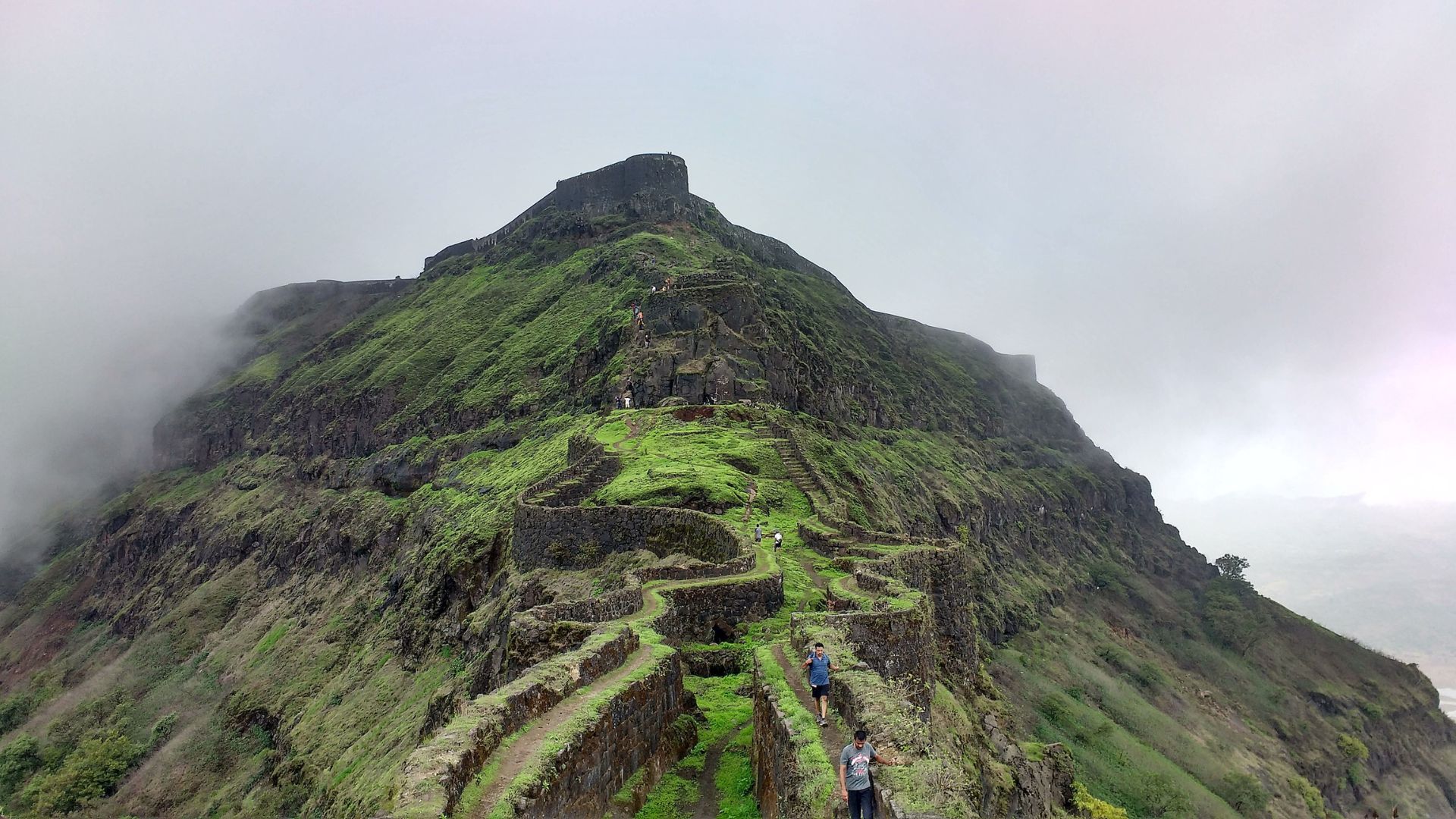
Clouds frequently cover the fort’s ramparts during the monsoon (Photo: Wikimedia)
Situated roughly 50 km southwest of Pune, Torna Fort, also known as Prachandagad, holds historical significance as the first fort to be taken by Chhatrapati Shivaji Maharaj when he was just 16 years old. With a steep climb through thick forests, slick boulders, and colourful meadows, the walk is moderately difficult. Clouds frequently cover the fort’s ramparts during the monsoon, and tiny waterfalls and wildflowers dot the surrounding area.
Although the well-marked trail begins in Velhe village, hikers should exercise caution due to leeches and slippery terrain. With its numerous bastions, temples and water cisterns, the expansive fort itself provides sweeping views of the surrounding valleys and the backwaters of the Mulshi dam.
