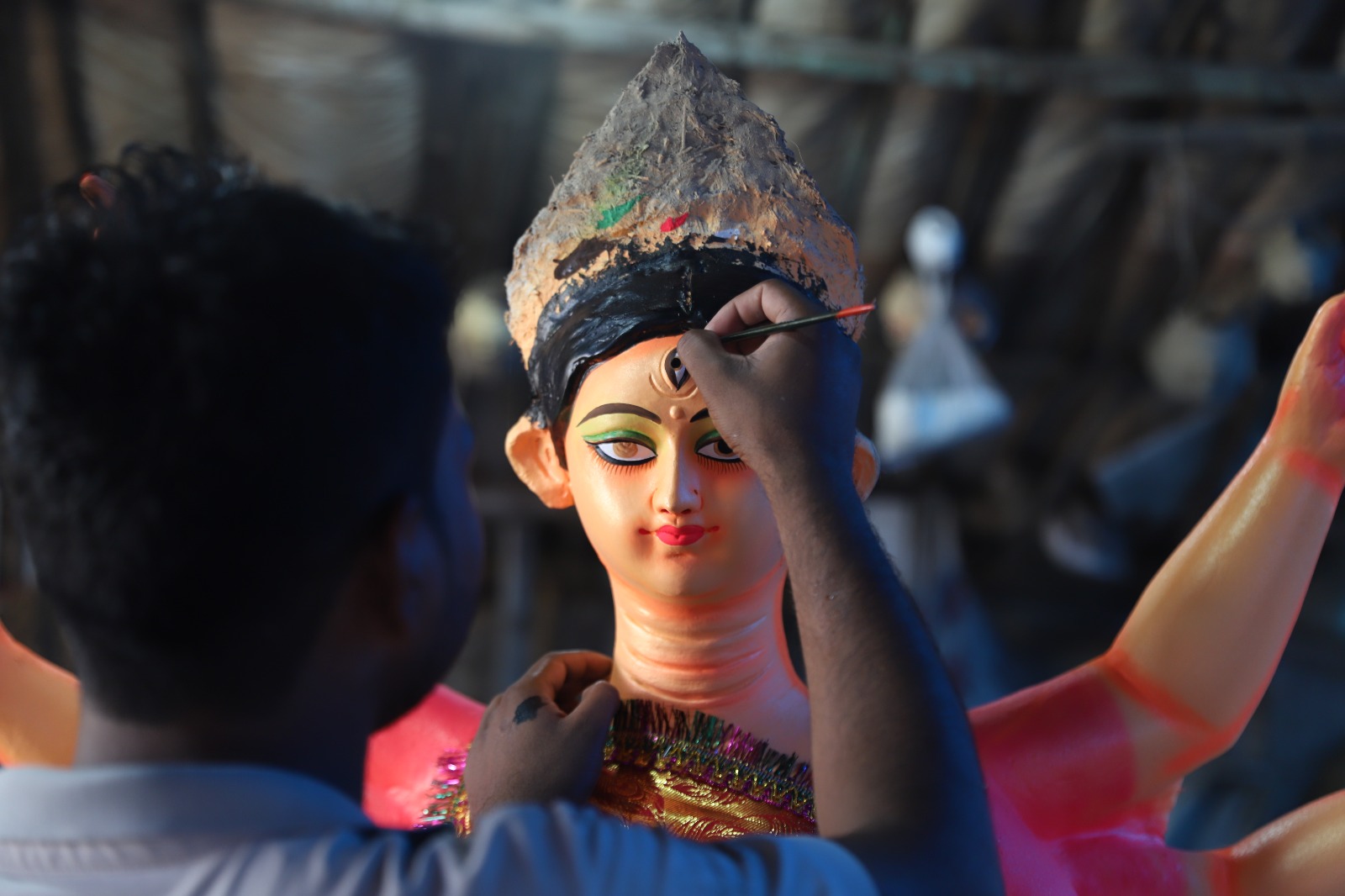
For these craftsmen, it is not just work, it is a living tradition passed through generations (Photos: Aman Kanojiya)
With barely a day to go before C R Park, a residential colony in south Delhi, receives its favourite guest of the year, the whole area wears a festive look.
Often called Delhi’s “Mini Bengal,” each year, during the Durga Puja, C R Park transforms into a hub of creativity and devotion. A number of pandals have already been erected and well-decorated, awaiting the arrival of Goddess Durga for its annual sojourn.
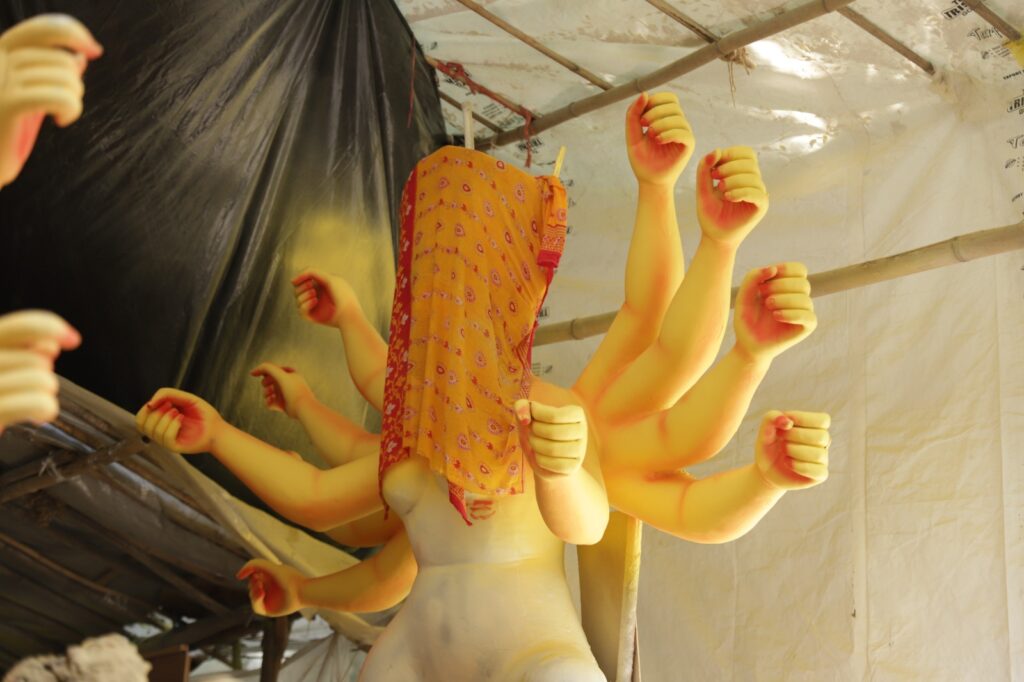
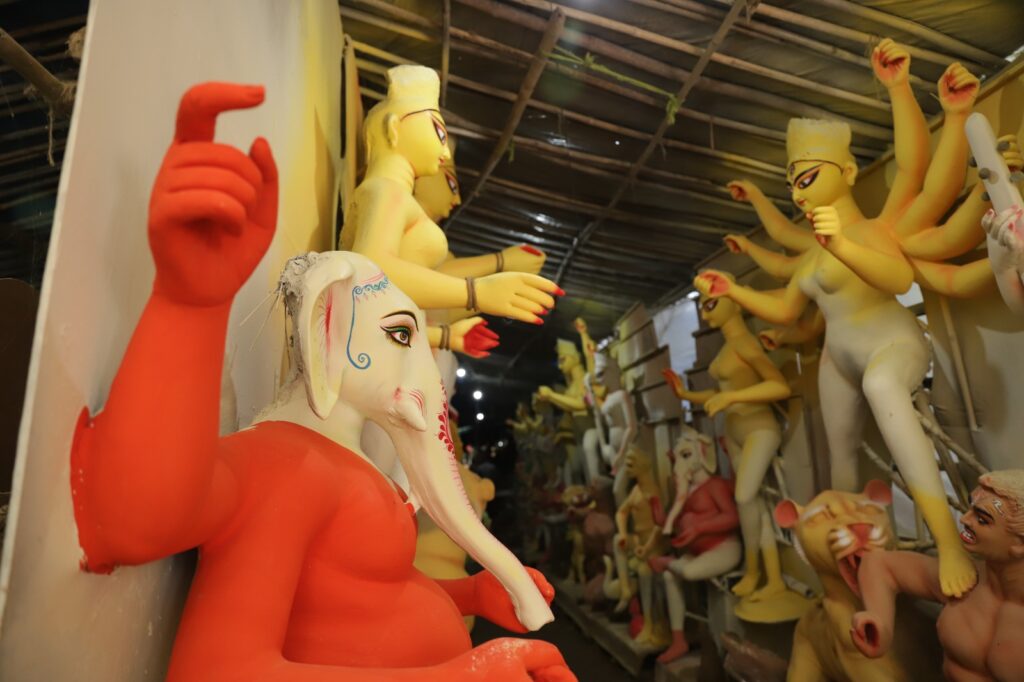
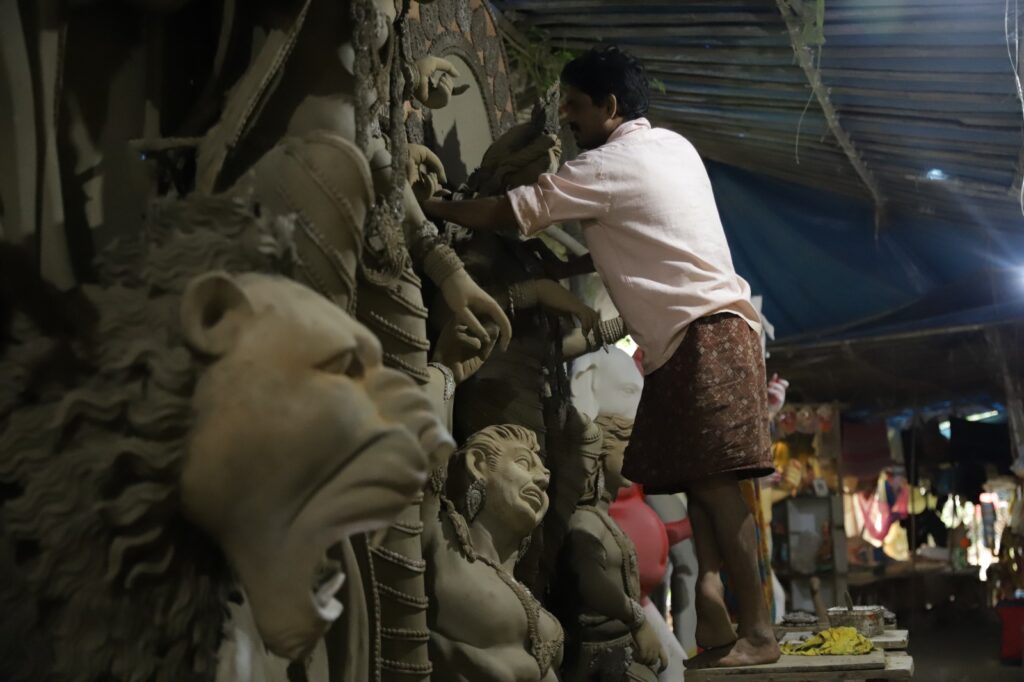
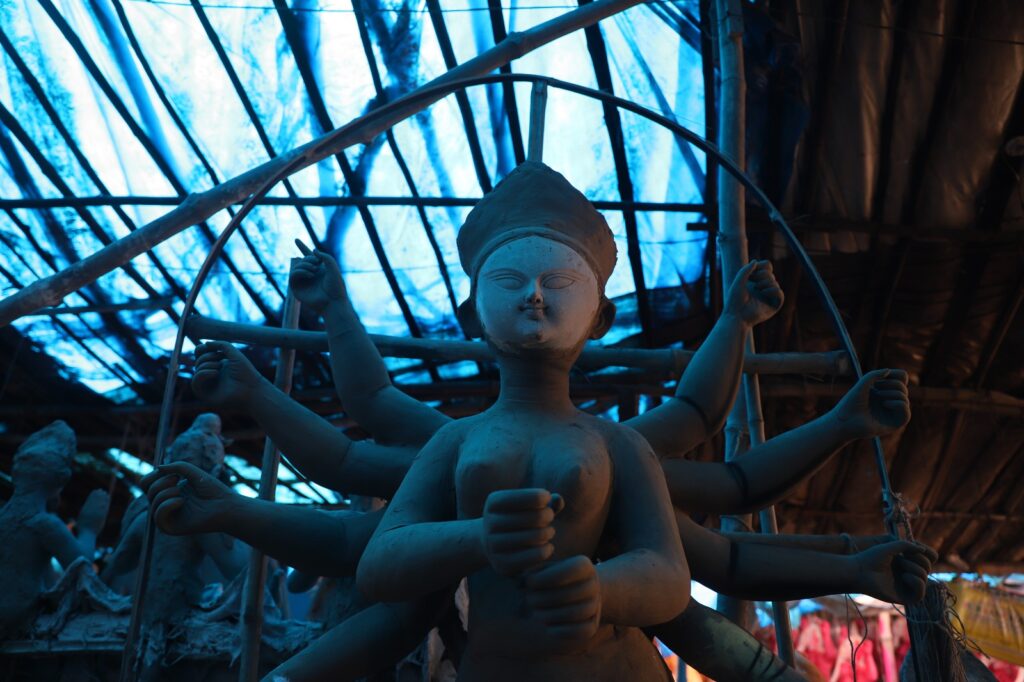
Not far from the pandals, in a small compound within C R Park, dozens of artisans and sculptors are working at a frenetic pace, hoping to meet the deadline for delivery of dozens of Durga idols that have been ordered by various pandals and other devotees. The compound is lined with wet clay, bamboo and vibrant colours as artisans meticulously craft idols of Goddess Durga.
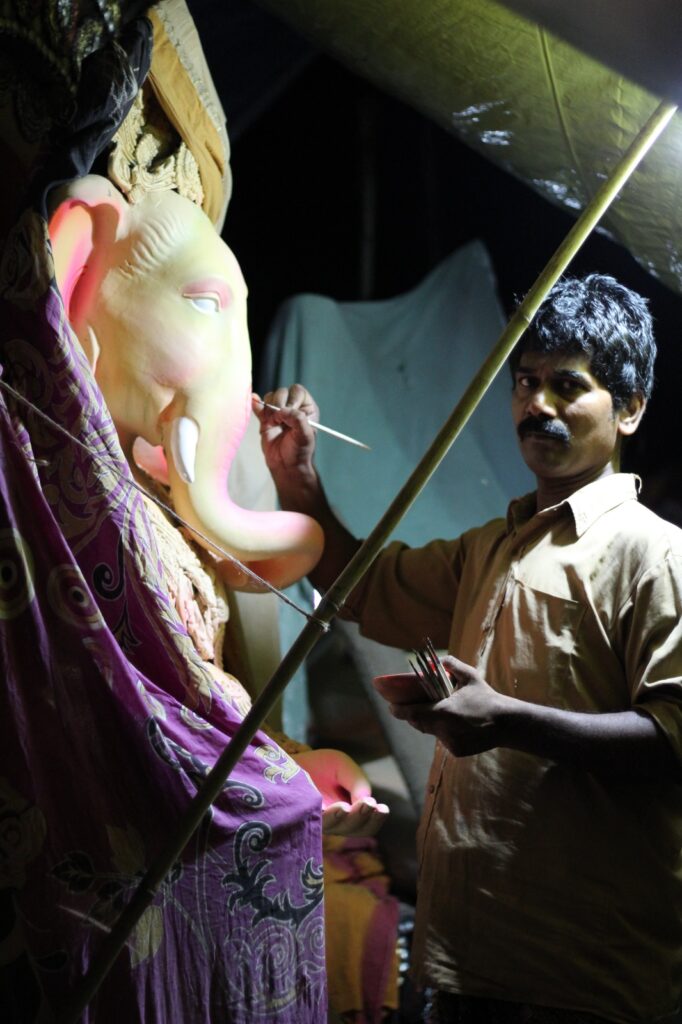
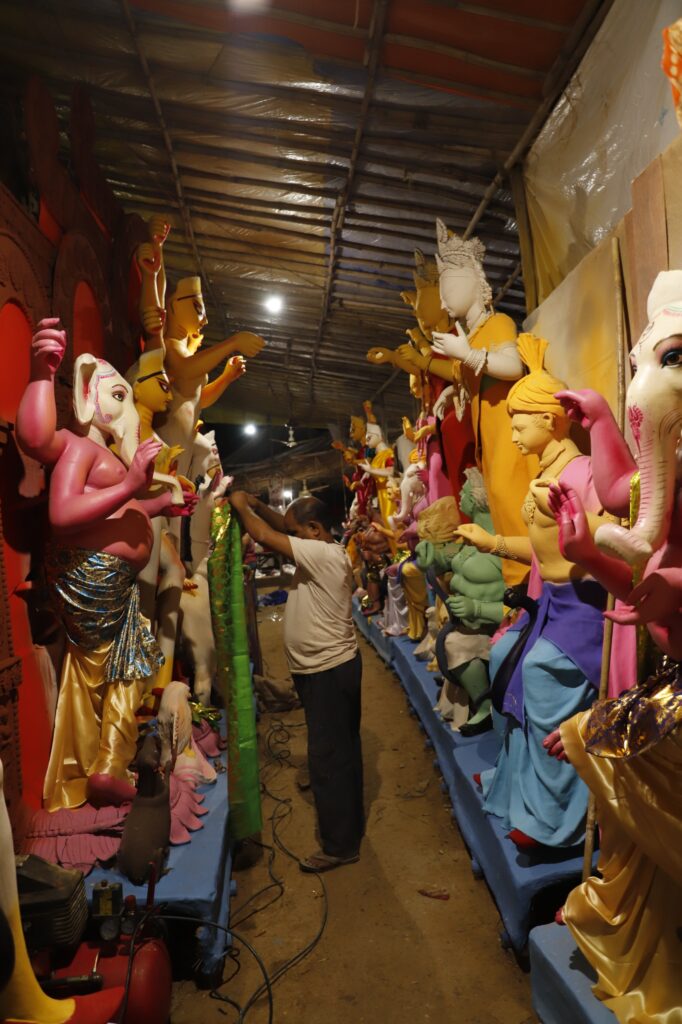
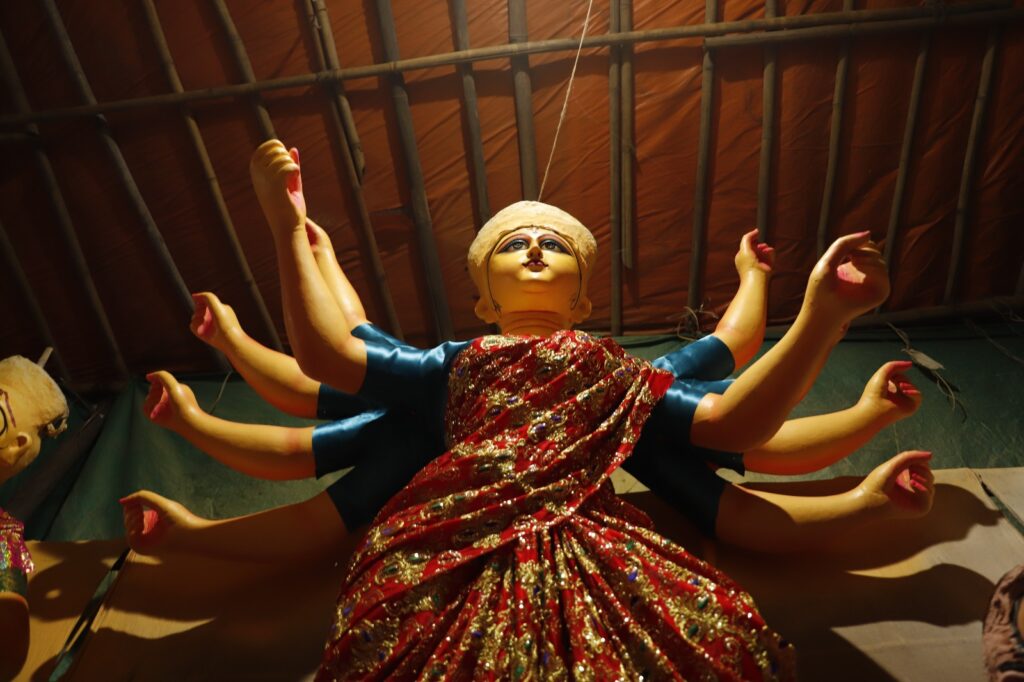
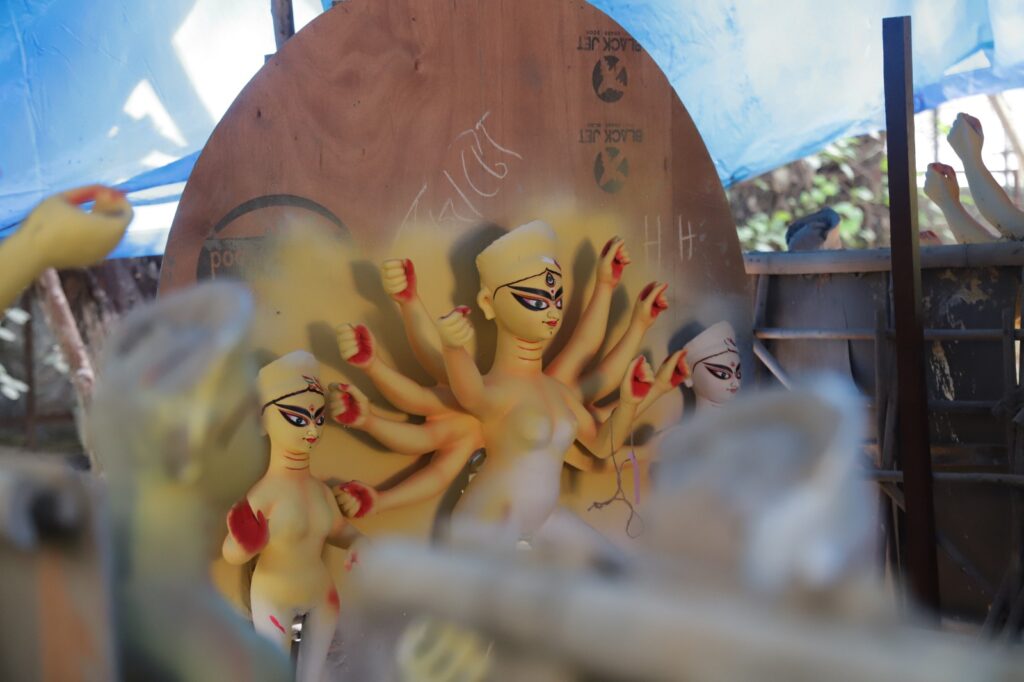
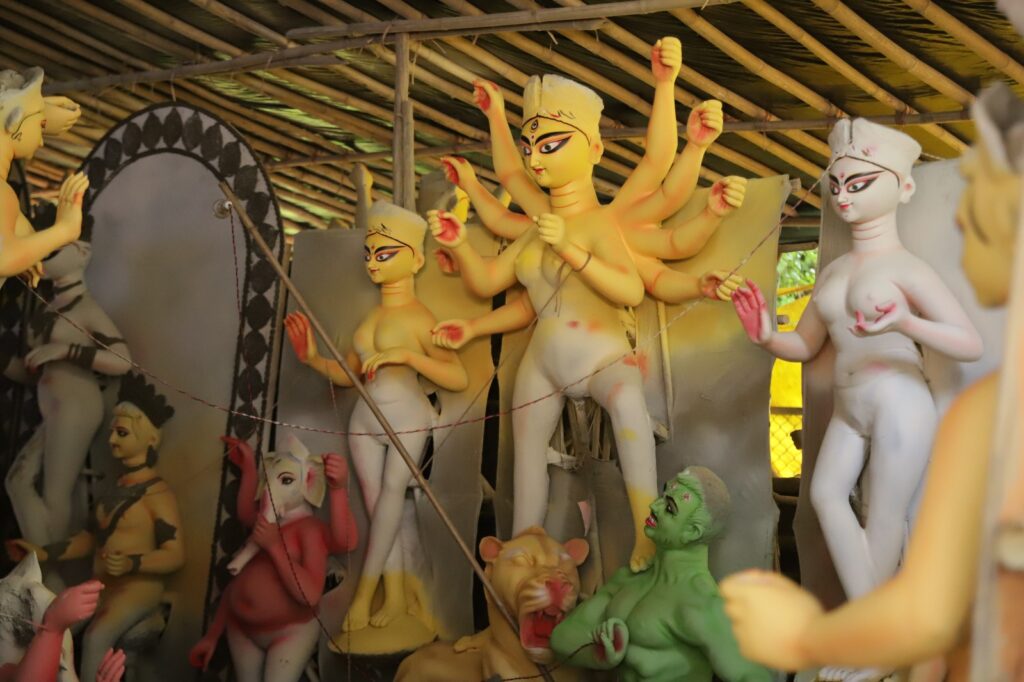
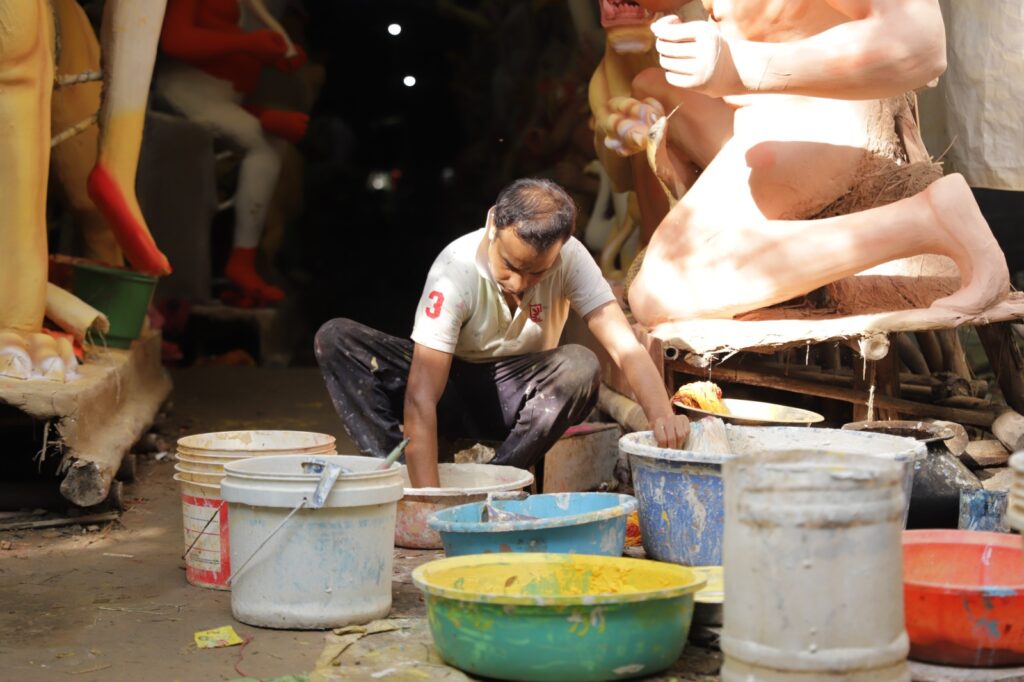
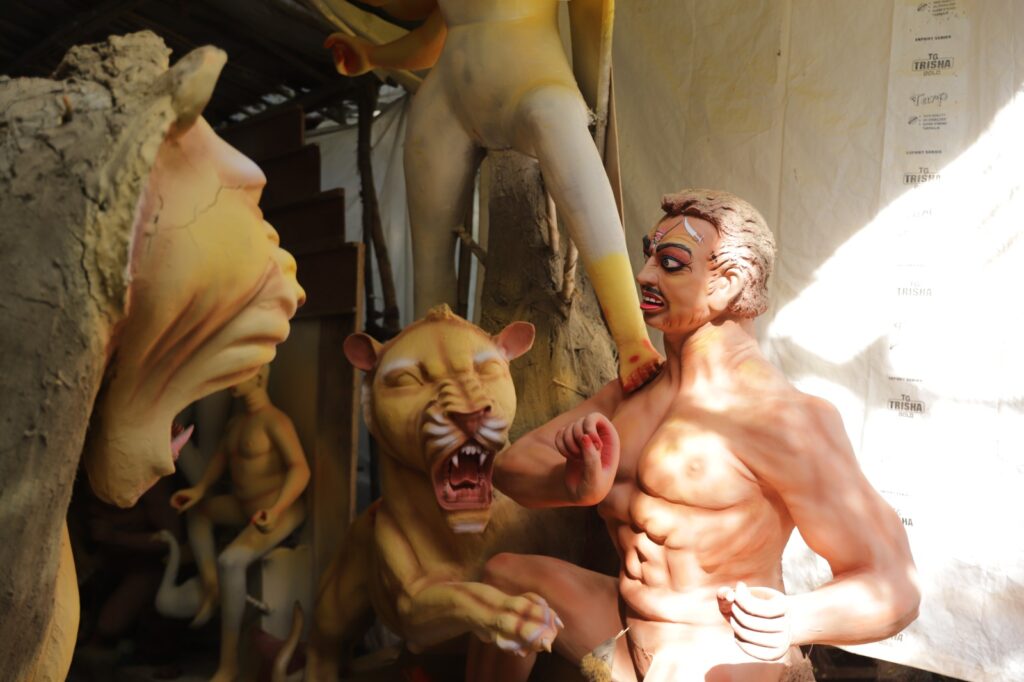
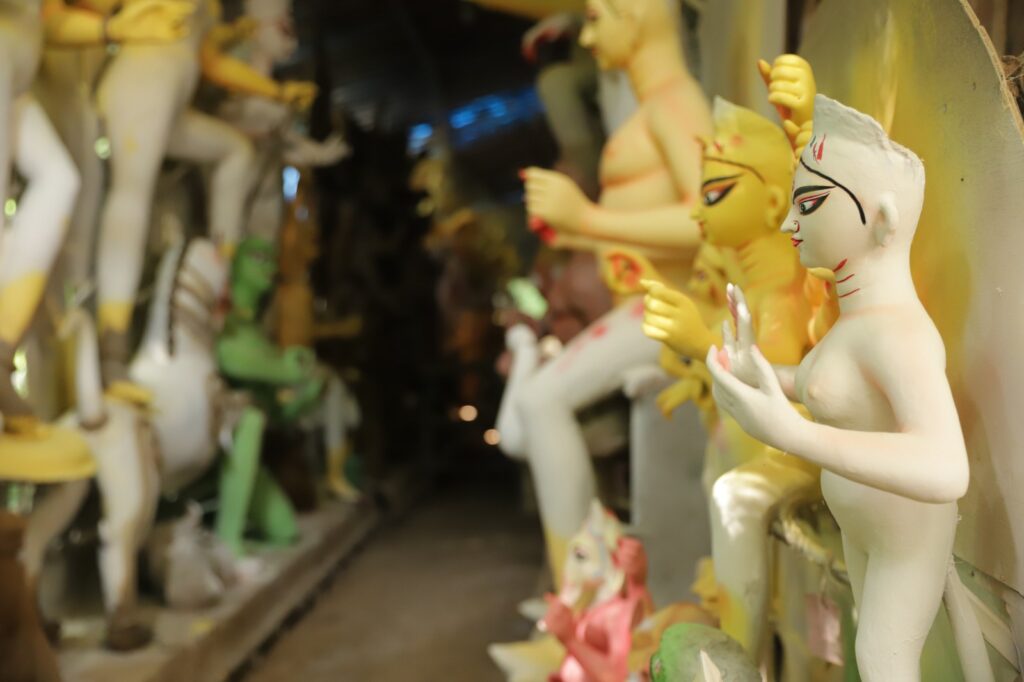
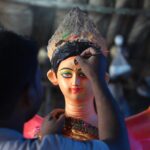
For these craftsmen, it is not just work, it is a living tradition passed through generations. Meet Manik Pal, a skilled idol maker from Krishnanagar, West Bengal.
“I have been making idols for years, following the family tradition. Our base materials, clay, bamboo and grass, come from Delhi NCR, while the crowns, costumes, and other decorative items are brought from Kolkata to maintain authentic Bengali style,” Pal tells Media India Group.
The process of creating an idol is both challenging and intricate. “The most difficult part is preparing the base and building the structure. Only after the clay is applied layer by layer can we decide the final look, size, and design of the idol,” explains Pal.
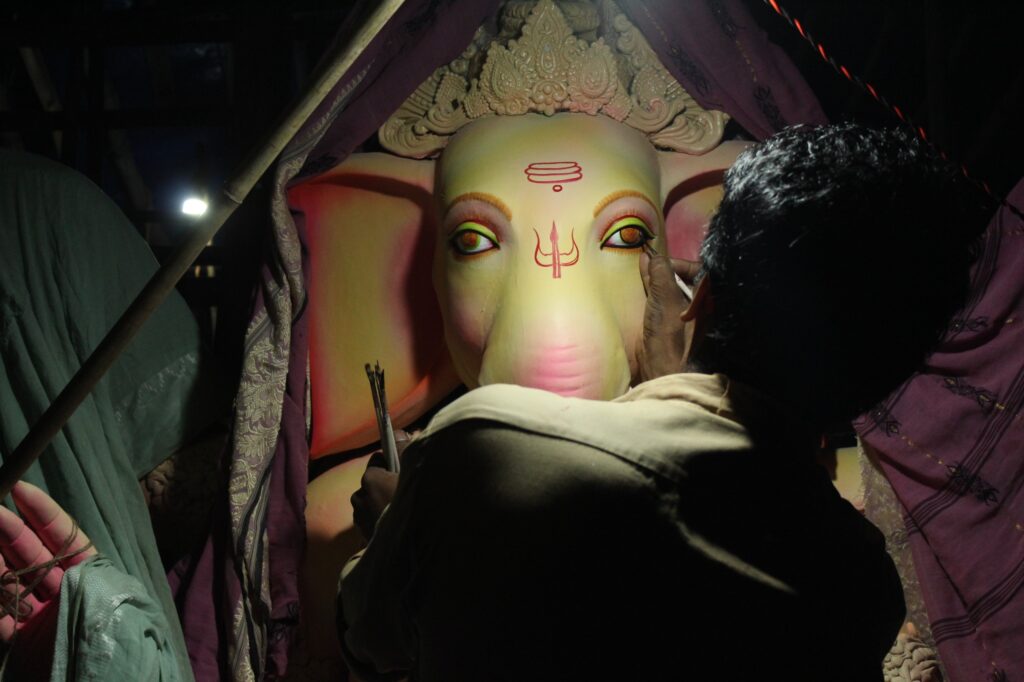
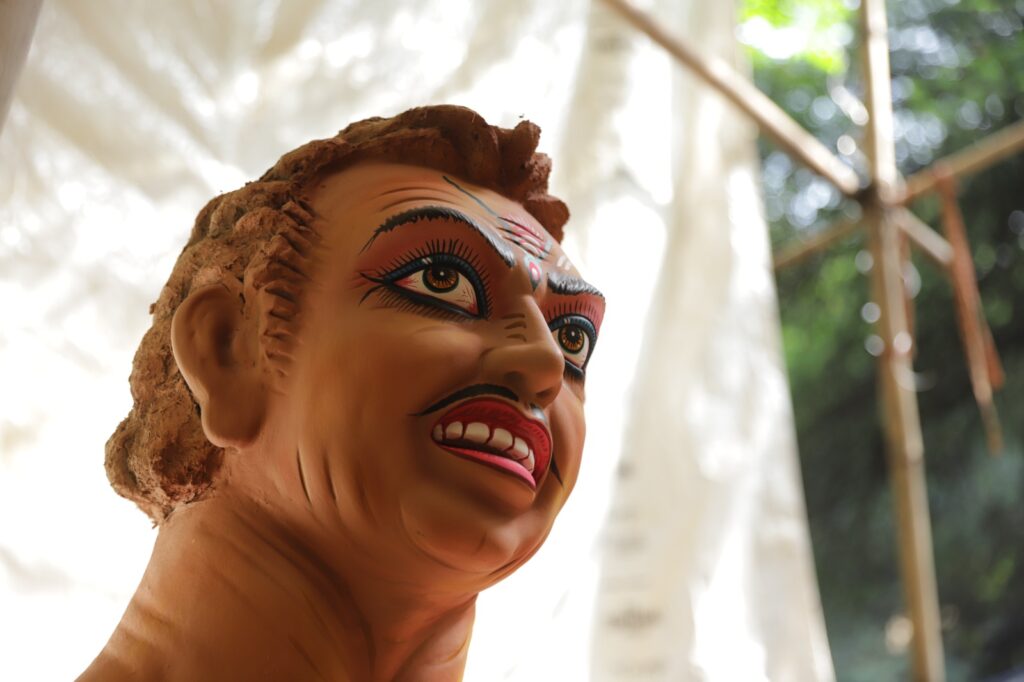
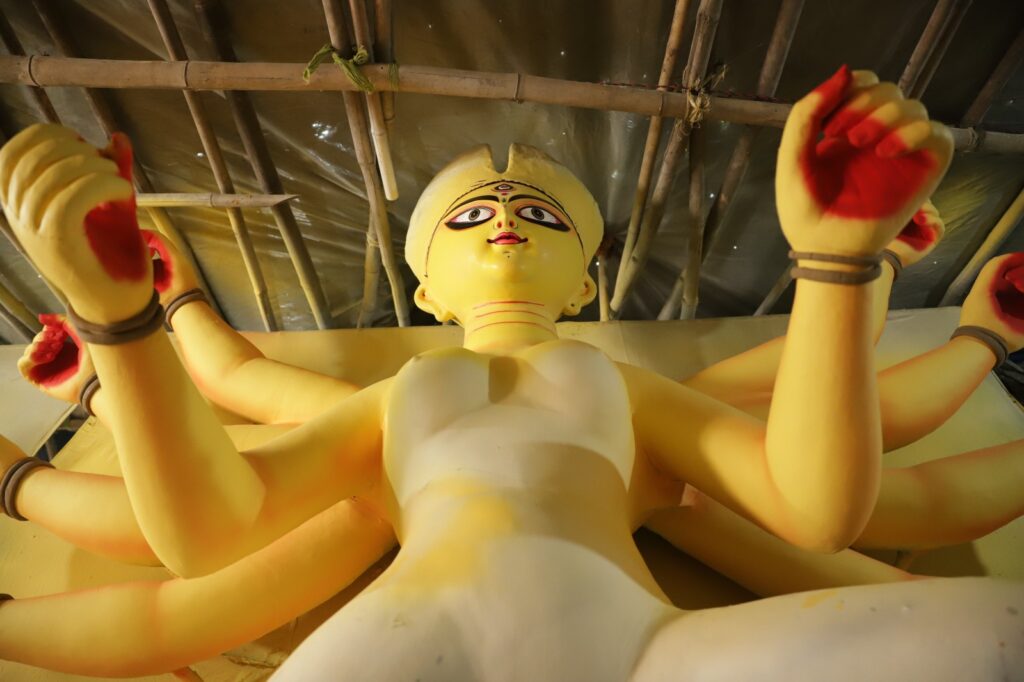
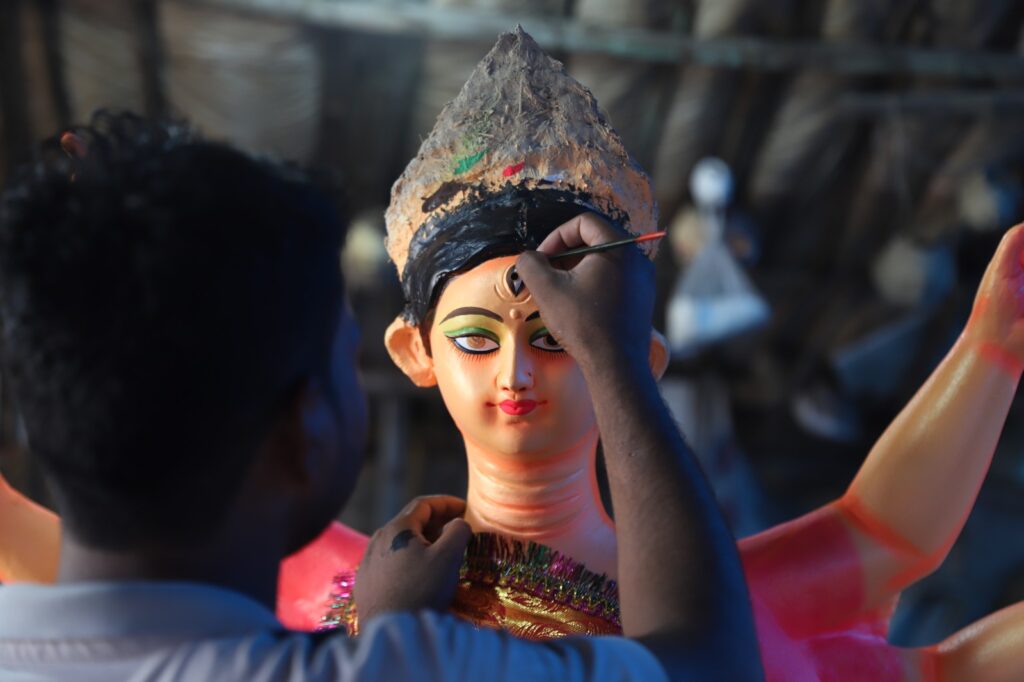
Each idol is typically around 2 metres tall and takes at least one week for two craftsmen to complete, including the finishing touches. The most delicate work, he adds, is the face, especially the eyes.
“The eyes are the soul of the idol. They must be beautiful and detailed to bring life to the sculpture,” adds Pal.
Even as they manage to get all Durga idols sent on time, the artisans shift their focus to creating idols for Kali Puja. Sometimes, the unsold Durga idols are repurposed for Kali Puja to save both time and materials.
For Manik Pal, the busiest and most rewarding time of the year is Durga Puja, followed by Ganesh Chaturthi.
“These are our main selling seasons, and they keep our traditions alive,” he says.
At CR Park, the art of idol-making is more than a livelihood, it is a heritage, preserving Bengali culture in Delhi and contributing to the city’s rich cultural tapestry.