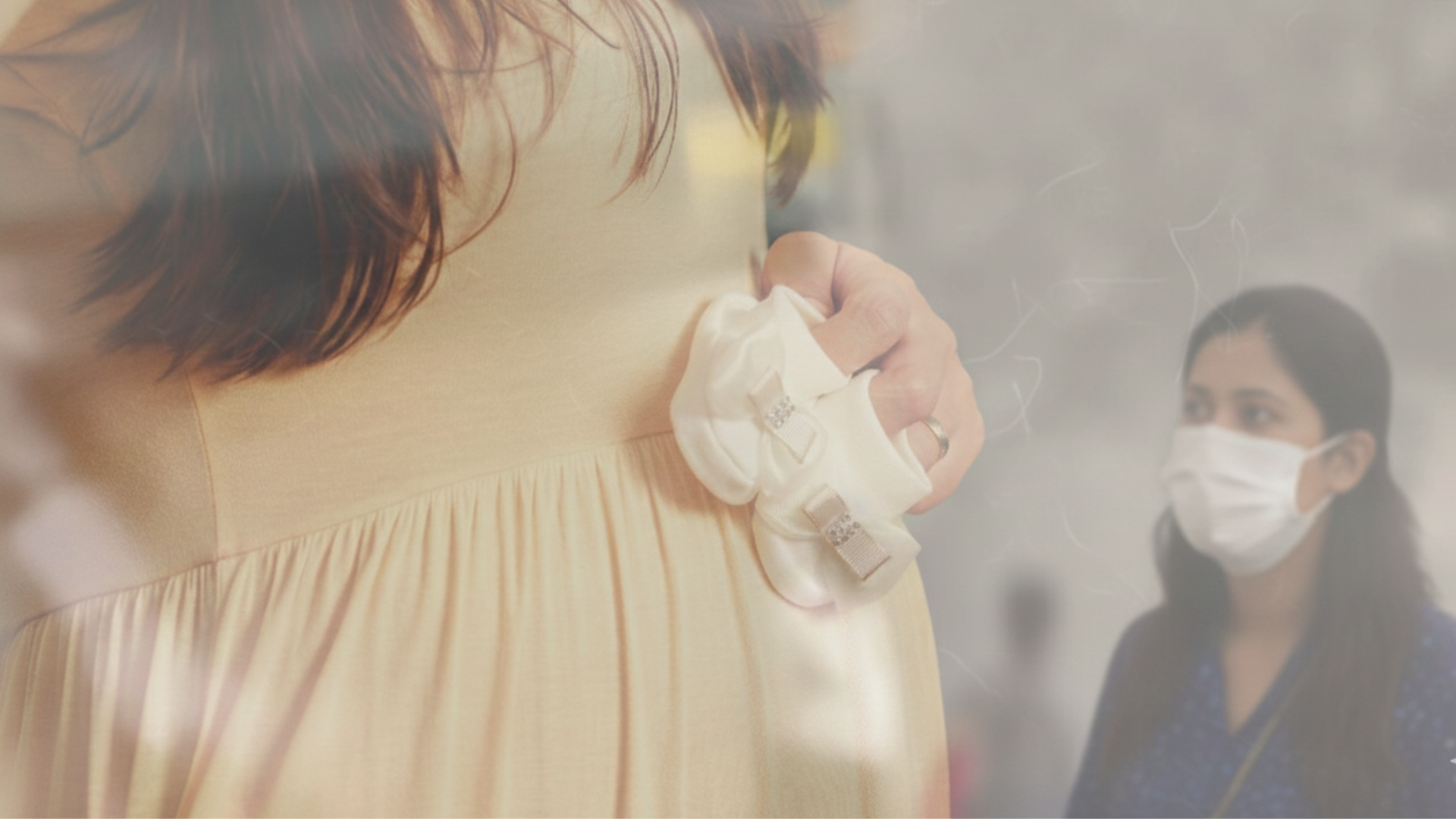
Medical experts warn that the reproductive system is particularly vulnerable to environmental stressors
Air pollution has long been recognised as a silent aggressor infiltrating lungs, straining hearts and shortening life expectancy. But emerging scientific evidence suggests its reach extends far beyond the respiratory system, quietly influencing women’s reproductive health, including the severity of menstrual pain. Recent research indicates that exposure to polluted air may be linked to a higher risk of painful menstrual periods, hormonal disruptions, and inflammatory responses, pushing menstrual health into the broader conversation on environmental justice and public health.
According to the World Health Organisation, menstrual pain, or dysmenorrhea, affects an estimated 50 to 90 pc of menstruating women worldwide, for many, it is more than a monthly inconvenience, interfering with work, education and overall wellbeing. While hormonal fluctuations and uterine contractions have traditionally been cited as primary causes, environmental factors particularly air pollution are now emerging as significant contributors.
One of the most comprehensive studies examining this link was published in Frontiers in Public Health in 2021. The large-scale longitudinal study analysed health and air-quality data from 296,078 women and adolescent girls over an average follow-up period of nearly 12 years, tracking new diagnoses of dysmenorrhea among participants. During the study period, 12,514 women (around 4.2 pc) developed dysmenorrhea. Researchers assessed long-term exposure to key air pollutants, including PM2.5, nitrogen oxides (NOx), nitrogen dioxide (NO₂), nitric oxide (NO), and carbon monoxide (CO). The findings showed that women living in areas with the highest levels of air pollution faced a significantly elevated risk of developing painful menstrual cycles compared to those in cleaner environments.
When compared across exposure quartiles, the adjusted risk of dysmenorrhea was found to be 16 to 33 times higher among women in the highest-exposure group, with PM2.5, NO₂ and NOx showing particularly strong associations. Researchers suggest that chronic exposure to polluted air may trigger systemic inflammation and oxidative stress, disrupting endocrine function and amplifying prostaglandin activity, the hormone-like compounds responsible for uterine contractions and menstrual pain.
Supporting this, a study indexed on PubMed examining menstrual cycle characteristics found that exposure to particulate matter and gaseous pollutants was associated with changes in hormonal phases of the menstrual cycle, particularly shortening of the luteal phase, which plays a crucial role in reproductive health and fertility. While cycle length itself remained largely unchanged, these internal hormonal shifts may have long-term implications.
The Air Quality Index (AQI) is a standardised metric that communicates how polluted the air is on any given day by converting concentrations of key pollutants including PM2.5, PM10, nitrogen dioxide (NO₂), sulphur dioxide (SO₂), carbon monoxide (CO) and ozone (O₃) into a single number that reflects potential health risks.
In India, AQI values are widely categorised as Good (0-50), Satisfactory (51-100), Moderate (101-200), Poor (201-300), Very Poor (301-400) and Severe (401-500). During winter, many northern Indian cities regularly record AQI values above 300, with urban centres such as Delhi and neighbouring NCR towns frequently breaching the 400 “Severe” threshold, driven by stagnant weather, crop residue burning and vehicular emissions, and at times recording PM2.5 levels well above the national safe limit of 60 µg/m³.
Prolonged exposure to such polluted air means women inhale fine particulate matter and toxic gases day after day, triggering systemic inflammation and oxidative stress that extend beyond the lungs. Over time, this chronic inflammatory load may contribute to disturbances in hormonal balance and more intense inflammatory responses in reproductive tissues, potentially worsening menstrual pain and other aspects of reproductive health.
Medical experts warn that the reproductive system is particularly vulnerable to environmental stressors because of its reliance on finely balanced hormonal signalling.
“Air pollutants can interfere with the endocrine system by inducing oxidative stress and chronic inflammation. This disruption can affect ovarian function, alter hormone levels and intensify inflammatory responses in the uterus, which may manifest as more painful or irregular menstrual cycles. Over time, such exposure can also have implications for fertility and pregnancy outcomes,” Dr Pallavi Vasal, a gynaecologist practicing at Gurugram in Haryana, tells Media India Group.
Vasal adds that reproductive cells are highly sensitive to environmental toxins, making long-term exposure particularly concerning for adolescent girls and women of reproductive age.
The connection between air pollution and women’s reproductive health becomes even more critical during pregnancy. Multiple studies have linked poor air quality to adverse maternal and foetal outcomes.
Research involving institutions such as IIT Delhi and the International Institute of Population Sciences (IIPS) has shown that pregnant women exposed to high levels of PM2.5 face a 40 pc higher risk of delivering low-birth-weight babies and up to a 70 pc increased risk of preterm birth. The data also suggests that for every 10 µg/m³ increase in PM2.5 concentration, the risk of preterm birth rises by approximately 12 pc.
Air pollutants are believed to impair placental function by reducing oxygen and nutrient transfer to the foetus. The same inflammatory pathways implicated in menstrual pain are also associated with pregnancy complications such as gestational hypertension, preeclampsia, miscarriage and stillbirth.
Health advisories during periods of severe AQI often include pregnant women among high-risk groups, recommending reduced outdoor exposure. However, for women living in highly polluted urban or industrial areas, avoidance is not always feasible, raising concerns about chronic exposure and cumulative risk.
The growing evidence linking air pollution to menstrual and reproductive health challenges underscores a larger public health concern. Menstrual health has historically been under-researched and under-prioritised, particularly in environmental health policy. Yet painful periods contribute significantly to absenteeism, reduced productivity and diminished quality of life.
According to global estimates, menstrual-related issues account for billions of lost work and school hours annually. When environmental pollution exacerbates these conditions, it disproportionately affects women in lower-income communities who are more likely to live near traffic-dense roads, construction zones, or industrial areas.
From a policy perspective, experts says that women’s reproductive health must be integrated into air quality and environmental impact assessments. Clean air initiatives are often framed around respiratory or cardiovascular benefits, but the emerging data suggests their benefits extend much further.
The link between polluted air and painful periods reframes air quality as not merely an environmental or respiratory issue, but a reproductive health concern. As research continues to uncover the systemic effects of air pollution, it becomes increasingly clear that clean air is fundamental to women’s health across life stages from adolescence to pregnancy.