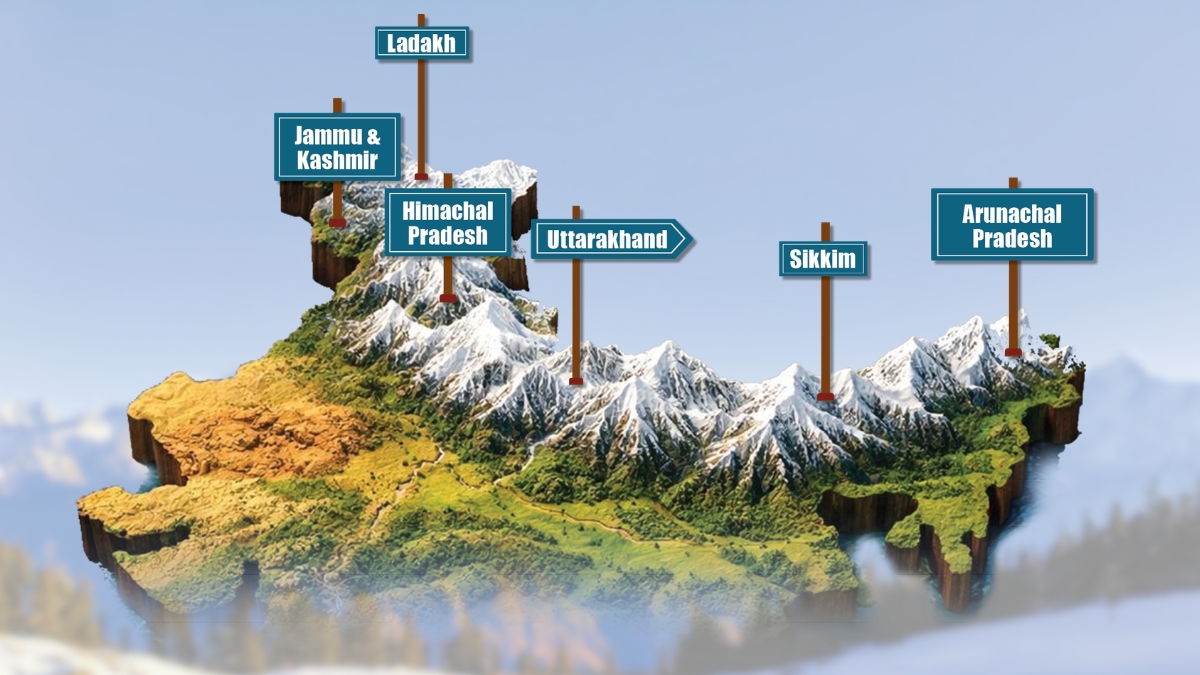
The serene offbeat snow trails winding through the Himalayas in winter
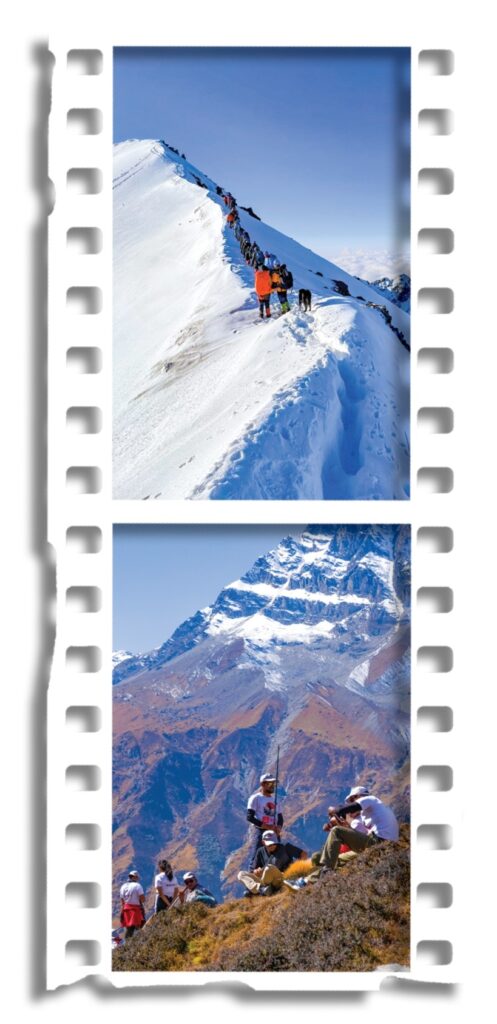
Trekking through untouched snow-covered mountain trails (Photo: Uttarakhand Tourism Board)
Over the past several years, it has become almost part of the winter ritual to have social media platforms flooded with images and videos of immense traffic jams, stretching for dozens of kilometres all along the routes to key tourist destinations, especially in the Himalayas, that leave thousands of travellers, often families with young children or elder parents, stranded on the roads for several hours.
Winters in popular destinations like Kullu-Manali or Shimla in Himachal Pradesh, Gulmarg and Pahalgam in Jammu and Kashmir and Nainital, Mussoorie or Kausani in Uttarakhand are now synonymous with overpriced and overbooked hotels, hundreds of visitors trying to get the same selfie at the same spot or some men trying to prove their masculinity by moving around topless in snow.
Winters in these destinations have also come to symbolise prolonged shortages of water and recurrent power cuts, making the vacation a toss-up between pleasure and pain.
These unpleasant developments have seen the rise of numerous off-beat snow trails all over India that many tourists are now turning to and the very characteristics of these destinations that had kept them off the popular maps, such as remote location making access extremely difficult or absence of adequate accommodation options and little awareness about them, have now become the biggest attractions, at least for the discerning visitors, from India and even overseas.

Arshdeep Anand
Adventure travel industry veteran Arshdeep Anand is Co-Founder and Director of Holiday Moods Adventures, a new Delhi-based travel company focussed on adventure travel. Anand is also the Vice President of Adventure Tour Operators Association of India (ATOAI), the nodal body of adventure travel industry in India.
Anand says that there is indeed a growing shift in favour of off-beat destinations in the Himalayas.
“Yes, there is a clear and growing demand for offbeat snow trails in India. Travellers today are moving beyond crowded hotspots and seeking immersive, quieter winter experiences. As traditional hubs like Manali and Gulmarg face over-saturation, travellers are pushing deeper into the Himalayas,” Anand tells India & You.
Listing the destinations that are emerging as strong magnets for tourists, Anand says that notable trails where her company is seeing a surge in include Western Himalayas in Himachal Pradesh and Ladakh where beyond the Atal Tunnel, Sissu and the Lahaul Valley have become accessible yet remain ‘off- grid’ in character. In the Kinnaur region, the Chitkul and Kalpa circuits offer raw, high-altitude snow experiences. In Ladakh, while the Chadar Trek remains iconic, there is growing interest in winter snow leopard trails in the Hemis National Park, she says.
“Other destinations that are emerging strongly include places in Uttarakhand such as Munsiyari, the gateway to the Panchachuli peaks, and Chopta, which are primary offbeat alternatives to Auli. The Brahmatal and Dayara Bugyal treks are also gaining traction as beginner- friendly winter meadow experiences In the Eastern Himalayas, notably Sikkim and Arunachal Pradesh, the Zuluk/Silk Route in Sikkim offers unique, winding snowscapes, while Tawang and Mechuka in Arunachal Pradesh provide a rare blend of Buddhist culture and untouched snowfields,’’ says Anand.
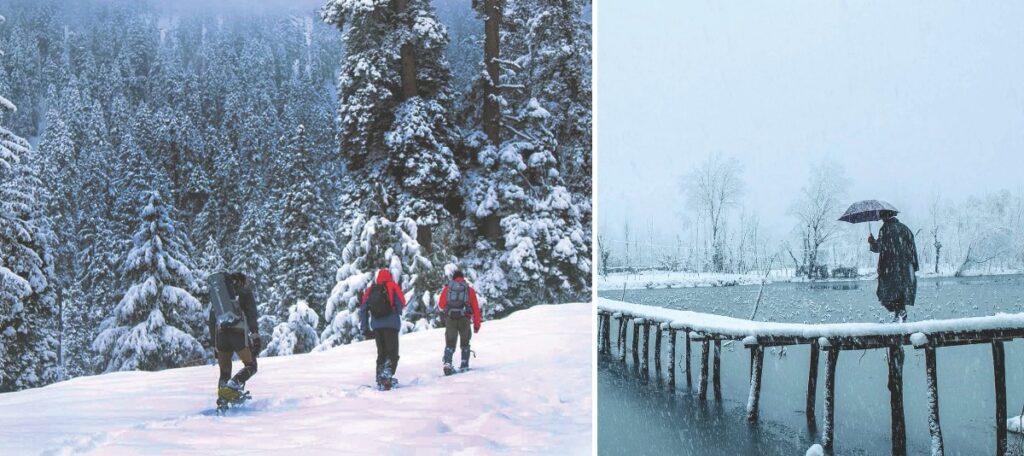
Visitors enjoy walking along scenic, snow-covered mountain trails
According to her, the growth is being driven by a combination of factors such as post-pandemic preference for open spaces, social media discovery, and a desire for authentic, experience-led travel.
She says that the typical traveller is well-informed, experience-driven, and willing to trade luxury for authenticity. Many are repeat travellers who have ‘done’ the popular circuits and are now seeking solitude, cultural immersion, and unique wildlife experiences, such as snow leopard tracking in the Spiti Valley.
“We categorise the primary seeker as the ‘Conscious Adventurer’ typically Gen Z or Millennials, who are driving 60 pc of bookings who are digitally savvy but seek a ‘digital detox’. They prioritise ‘bragging rights’ of discovery, sustainable community interaction, and physical challenge over luxury. We also see a rise in solo female travellers as well as ‘active families’ who are moving away from sightseeing to skill-based travel such as learning basic snowcraft,’’ says Anand.
Jammu & Kashmir: Go beyond Gulmarg
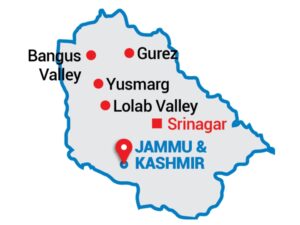
Offbeat snow trails in Jammu & Kashmir
For almost a millennium, Jammu and Kashmir, notably Kashmir, has been a dream destination for people not just from other parts of the India, but also from across the world. Notable among those in love with Kashmir was Mughal Emperor Jehangir who once famously described Kashmir as the paradise on earth, a fitting sobriquet that has stayed since then and which continues to be a fitting description of the region that continues to be a top draw for tourists from every part of the country as well as around the world.
Irrespective of the season, an overwhelming share of the visitors typically head to the capital Srinagar and its surroundings, notably Gulmarg, Sonamarg and Pahalgam, with their snow-covered peaks, pasteurs, lakes and gardens, being amongst the star attractions.
But in the peak winter season, towards the end of December when the snowfall is particularly heavy, the rush of the tourists is enormous with long queues for the famed gandola rides at Gulmarg to the top of Mountain, a shoulder of nearby Affarwat Peak, which at 3980 m is the world’s highest ski station. Skiers and others head here for the magnificent views of the upper Himalayas and for the lucky few, a glimpse of the world’s second highest peak K2, which stands tall at 8,611 m, lying just beyond the Line of Control (LoC), which serves as the current border between India and Pakistan.
Also Read: Kashmir’s Snow Trails: A Guide to the Best Winter Treks
Similarly, every day thousands of tourists head to other popular destinations like Dal Lake in Srinagar which freezes over for about 40 days in the period of most severe cold, called chillai kallan in Kashmiri, or the dream destinations of Sonamarg and Pahalgam which figure regularly on the silver screen due to their captivating beauty which outclasses even the most chic Swiss resorts.
Emergence of Gurez Valley, Yusmarg
But as these destinations become overcrowded, tourists are turning to discover other locations in Kashmir valley, which is blessed with dozens of spots that offer excellent snowbased experiences, including trekking. Outstanding among them is Gurez Valley which has begun to attract an increasing number of visitors seeking uncrowded, open vistas with spectacular views of the part of Himalayas that remain untarnished by tourism.
Situated near the LoC, which is effectively the border between India and Pakistan, Gurez Valley is an untouched winter destinations that is known for its snow-covered wooden houses, overlooking the Kishanganga River that dominates the valley and is often frozen in peak winter. From Gurez Valley, one can enjoy scenic views of towering peaks like Habba Khatoon Mountain, a pyramid-shaped peak, which stands at 4,380 m high.
With the entire valley covered in deep snow, Gurez Valley is emerging as a favourite spot for couples, including newly-married ones, and of course families and nature lovers and photographers. Though it is only about 130 km from Srinagar, there are no direct buses to Gurez, but one can take a bus to Bandipora, which at about 70 km, is almost half-way to Gurez and from Bandipora one can take a shared taxi.
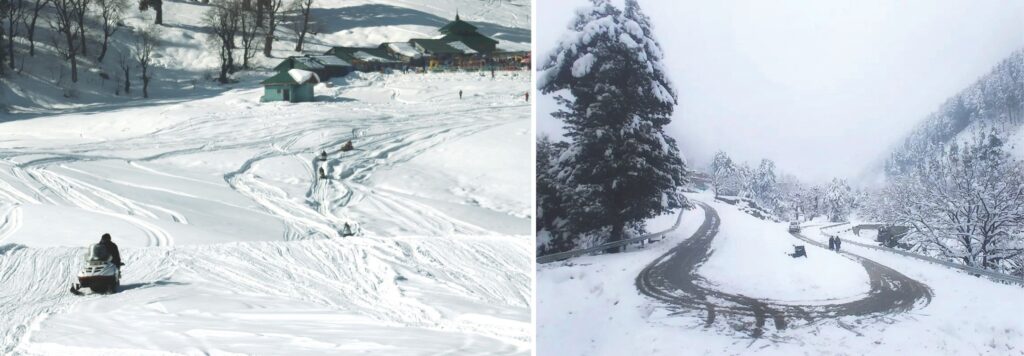
Travellers riding snowmobile across pristine snow trails, blending adventure with scenic winter landscapes (Photo: Firdous Parray)
Direct taxis are also available from Srinagar and cost about INR 15,000 for a two-day trip, with a drop at Srinagar Airport included in the fare. One can also of course drive one’s own vehicle, though the roads can be treacherous in peak winters, especially during the periods
of heavy snowfall or when sudden temperature variations take place which can lead to avalanches.
Another offbeat snow trail in Kashmir is Yusmarg, a vast meadow, surrounded by dense pine forests, that makes a postcard-perfect picture in winters, when it is lush green or pure white, when blanketed in snow. Situated about 50 km southwards of Srinagar in Budgam district. Though it is becoming more popular in summers, with its lush green meadows, in winter it is more secluded and quiet. Besides some hikes in the surrounding areas, one can also go horse riding in deep snow here. For the spiritually-inclined, Charar-e-Sharief shrine, constructed in the honour of 15th century sufi saint Nund Rishi, whose tomb lies here.
Also Read: Making memories in mountains: Gurez Valley
Besides Gurez Valley and Yusmarg, some other areas that have emerged as alternative, off-beat winter destinations in Jammu and Kashmir include locations within Kupwara in northern Kashmir which is home to untouched places like the Lolab Valley and Bangus Valley, both of which offer panoramic Himalayan views and untouched snow fields.
Another lesser-frequented destination in Kashmir is Doodhpathri, called the Valley of Milk, a pristine and tranquil valley in Budgam district, about 45 km south of Srinagar, which is completed blanketed by snow through winter. Its star attractions include untreaded meadows, frozen streams and rolling snow-covered hills.
Ladakh: Opening new snow trails for visitors
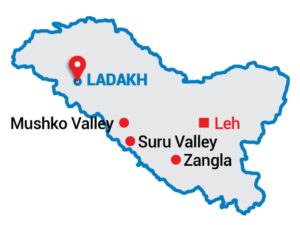
Offbeat snow trails in Ladakh
For long part of Jammu and Kashmir, Ladakh was carved out into a separate Union Territory in 2019 when Article 370 was abolished and Jammu & Kashmir was divided into two union territories, Jammu & Kashmir and Ladakh. Though they have a shared heritage, the growth of tourism in the two has been very different. Due to its high altitude, relatively low oxygen content in the air and the hardy terrain, the tourism flow into Ladakh had remained very low, staying focussed in and around the capital Leh until about 15 years ago, when tourists began exploring newer areas especially around Pangong Tso, notably after the heavenly lake, part of which is occupied by China, featured in Raj Kumar Hirani’s blockbuster hit film 3 Idiots (2009). Tourism into Ladakh has grown several fold following the film and gradually, it opened up new vistas for visitors to explore.
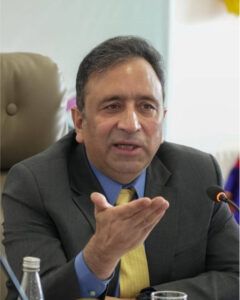
Tsering Paldan
“In recent years, several destinations in Ladakh have begun to gain popularity for winter travel and snow-based activities. Leh remains a major hub, while Drass and Zanskar in the Kargil district are increasingly drawing visitors interested in snow landscapes and winter adventures. Pangong Lake, which became widely known after the filming of the Bollywood movie 3 Idiots, has also emerged as a winter attraction when its waters freeze completely. In the past few years, local organisers have even hosted marathons on the frozen lake, adding a unique adventure element to Ladakh’s winter tourism offerings,’’ Tsering Paldan, Director of Tourism for the Union Territory of Ladakh, tells India & You.
Though it is by far the coldest region in the country, with even peak summer temperatures remaining below 20°C, Ladakh has seen a boom in winter tourism over the past few years, when the water bodies here freeze over and the largely arid desert wears an entirely different look and Paldan says that the region is seeing a strong demand for visits in peak winter as well when temperatures are often 20°C below the freezing point.
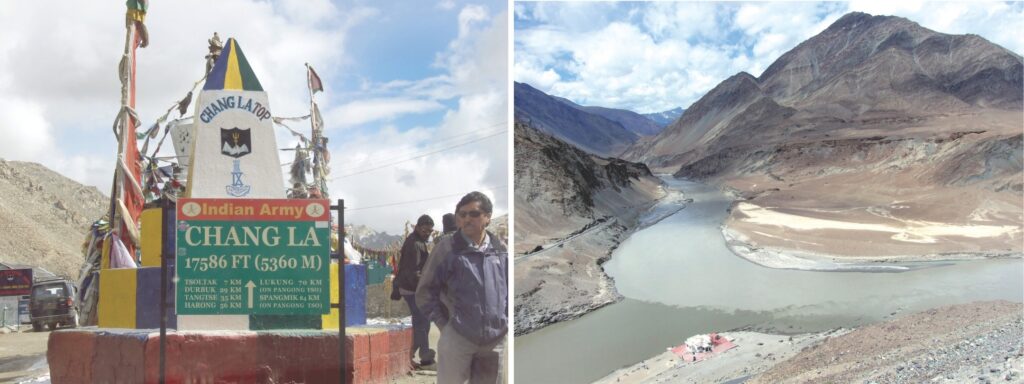
The offbeat trails at Chang La and the rugged mountains (Photo: MIG)
“Snow tourism has emerged as an important segment for Ladakh’s tourism industry, particularly as authorities and local stakeholders try to attract visitors beyond the busy summer months. Tourism in Ladakh formally opened in 1975 and since then the number of visitors has steadily increased every year. Initially, most travellers to the region came from European countries, but by the late 1990s and early 2000s domestic tourism began to grow significantly. Today, Ladakh receives around 300,000 to 400,000 tourists annually on average, with the majority still arriving during the summer season. However, winter tourism driven by snowfall, frozen rivers and lakes, and adventure sports holds enormous untapped potential for the region,’’ says Paldan.
“Winter sports have played a significant role in boosting interest in the region during the colder months. Government initiatives and sports departments have organised activities such as ice hockey tournaments and winter sports events, including programmes under the ‘Khelo India’ National Games. The development of sports infrastructure in recent years has made it possible to host such events, helping attract athletes, spectators, and tourists alike. As a result we are witnessing a noticeable rise in winter tourism in Ladakh,’’ he adds
According to Paldan, another emerging aspect of winter tourism is the growing interest in snow trails and skiing routes across the region. Several snow trails in Suru Valley in Kargil, Mushko Valley in Drass, and the Lingshed, Zangla in Zanskar Valley are now accessible for visitors seeking offbeat winter experiences. These areas offer pristine snow-covered landscapes and relatively unexplored terrain, making them attractive for adventure travellers looking for alternatives to more commercial ski destinations, he says.
However, Paldan also highlights the challenges that winter in Ladkah can pose to visitors. Despite the growing interest, developing winter tourism in Ladakh also presents several challenges.
Also Read: Hemis Festival: Ladakh’s vibrant celebration of faith and culture
“The region experiences extremely harsh winters, with temperatures dropping to -15°C to -20°C. Due to these conditions, most hotels and guesthouses close after October or November as maintaining running water, heating systems, and comfortable indoor temperatures becomes difficult, meaning only a limited number of accommodations remain open during the winter months, while the government is promoting winter tourism through infrastructure projects and marketing initiatives often with support from the Ministry of Tourism and the Ministry of Sports, private investment in winter- friendly hospitality infrastructure is equally important,’’ says Paldan.
According to Ladakh Tourism Department, international visitors are also showing interest in Ladakh’s winter offerings. Paldan says that although exact figures are not available, tourists from Europe and the United States form a significant share of foreign travellers visiting the region during winter. “We are actively promoting Ladakh in international markets through participation in global travel fairs and tourism platforms, including events in Europe and other major destinations,’’ he says.
Himachal Pradesh: Biggest victim of overtourism
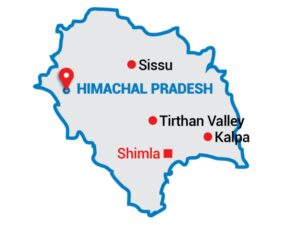
Offbeat snow trails in Himachal Pradesh
Due to its relative proximity to New Delhi, Punjab and Haryana and thanks to fairly reasonable motorable roads, over the past decade or so Himachal Pradesh has seen an unprecedented boom in the number of tourists and often in peak vacation periods like the school break in summers or around Diwali and also the New Year, the state is a regular victim of the worst effects of overtourism as thousands of motorists, many of them indisciplined, drive to the state and due to their unruly behaviour create massive jams where it can take hours to drive even 4-5 km.
Besides the difficulty of access and mobility locally due to traffic, the main destinations are also almost always sold out in the peak period, leading to hotels and other local tourism stakeholders like taxis charging astronomically high tariffs, with little or poor service, leading to higher dissatisfaction amongst visitors who are let down when they see that the experience does not match their expectations.
With overtourism becoming a regular feature in every major travel period, some tourists have begun to look for newer, offbeat destinations in the state, as elsewhere in India.
One such spot is a village called Chitkul, in Kinnaur district, in north- eastern part of Himachal Pradesh, which is said to be the last village of India on this route as it is on the border with China. It is about 250 km away from the capital Shimla, which can take about eight hours to drive.
Each winter, Chitkul turns into a fairyland, covered with a soft, white blanket of snow and as the land is remote and at times cut off from other parts of the state and the inhabitants move to lower regions of the state. The village is located on the banks of the Baspa River, which often freezes during extreme winter.
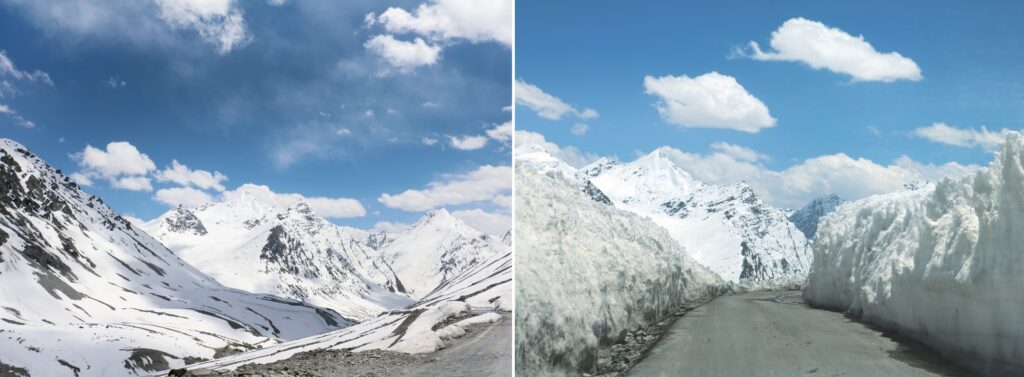
Snow covered mountains with winding trails invite adventure beyond the usual routes (Photo: MIG)
According to a recent study by the Indian Institute of Technology (IIT) Delhi, Chitkul has the cleanest air in India and hence it is one of the best spots in the country for amateur astronomers or those interested in Dark Sky tourism.
Another offbeat destination in Himachal Pradesh which is becoming popular is Sissu in Lahaul Valley in northern part of the state. Lying close to the Atal Tunnel, Sissu is a quiet village that stays under snow throughout January and February. The Chandra River, frozen waterfalls, and picturesque surroundings make it ideal for photographers and nature lovers. Though no longer offbeat, two more destinations in Himachal Pradesh have emerged strongly on the pathway of tourists seeking something different in the state.
Also Read: Offbeat destinations to explore in Himachal Pradesh
One is Jibhi village in Seraj Valley, that is known for its serene riverside setting. It is a village that offers tranquillity, scenic views, and beautiful winter landscapes. It is perfect for those looking to escape to nature while still having easy access to basic amenities.
Another spot is Kalpa village, about 240 km from Shimla, that is set against the majestic Kinner Kailash range in the backdrop and offers a magical winter retreat. With proximity to the upper Himalayan reaches, Kalpa is one of the earliest places to receive snow and also one of the few where snow continues till late in March, offering a relatively prolonged period of winter.
Also in Himachal Pradesh, known for its crystal-clear river, Tirthan Valley is a peaceful escape in the heart of the Great Himalayan National Park, about 200 km from the state capital.
Uttarakhand: Seeking peace in Land of Gods
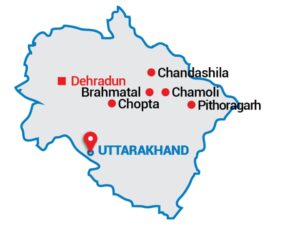
Offbeat snow trails in Uttarkhand
Called ‘Devbhoomi’ or Land of Gods, Uttarakhand, like its neighbour Himachal Pradesh, is a major victim of overtourism, pretty much for the same reasons, proximity to Delhi and ease of access. The state tourism department says that the winter is an important aspect of tourism in Uttarakhand.
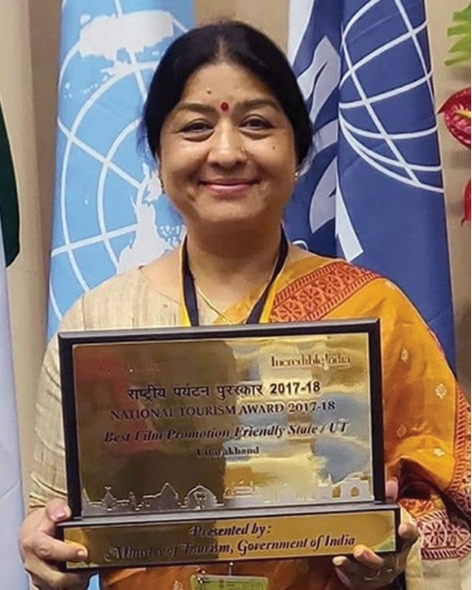
Poonam Chand
“Snow tourism plays a very important role in strengthening Uttarakhand’s winter tourism economy. With its vast Himalayan landscape, the state offers spectacular snow-covered mountains, alpine meadows and frozen lakes that attract adventure seekers and nature lovers. Snow tourism also helps extend the tourism season into the winter months, benefiting local communities through homestays, guiding services and winter trekking activities,” Poonam Chand, Additional Director, Uttarakhand Tourism, told India & You at SATTE, a leading travel and tourism exhibition in India.
Chand says that as part of its strategy to curb overtourism, the state is promoting alternative, off-beat destinations to tourists.
“Along with well-known destinations, several new regions have emerged for snow tourism in recent years. Areas such as Darma Valley, particularly the villages of Dantu and Duktu, are gaining attention for winter trekking and snow experiences. The trek to Panchachuli Base Camp offers breathtaking views of the snow-clad Panchachuli Peaks and pristine Himalayan landscapes. These areas are also rich in biodiversity, and occasional sightings of rare wildlife such as the Snow Leopard add to their appeal for nature enthusiasts. Kedarkantha, Kedartal Trek, Dayara Bugyal, Khalia Top, Chainsheel in Uttarkashi, Gulabi Kantha, Kuari Pass Trek and Brahmatal to Ranthakharak are among the many beautiful treks that visitors can explore during the winter season,’’ adds Chand.
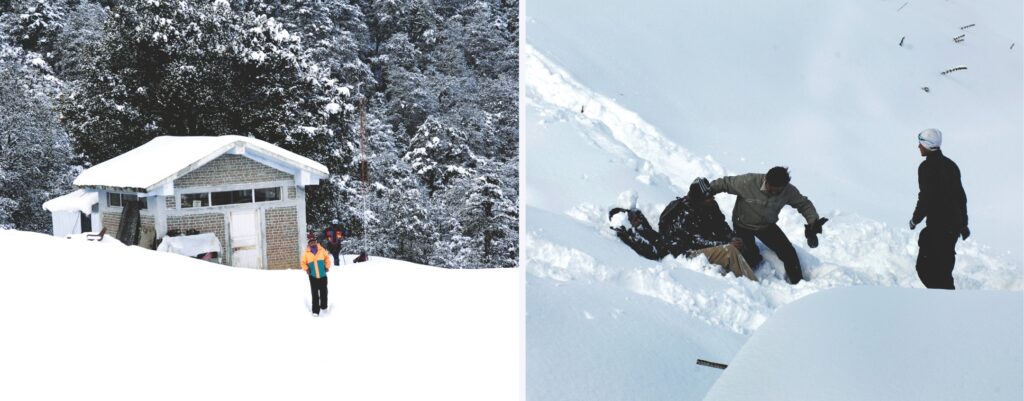
Cozy homestay nestled in snow, with travellers enjoy playful winter fun (Photo: MIG)
The state government’s efforts to promote new destinations and experiences seems to be working as the state has registered a growth in tourist numbers in the winter.
“Winter tourism in Uttarakhand has been steadily increasing over the past few years. Popular snow trekking routes and winter destinations generally witness a significant rise in visitors, with tourism increasing by around 20 to 30 pc during peak snowfall months, particularly in destinations known for winter trekking and snow-based experiences. The state government is actively working to promote winter tourism through awareness campaigns, participation in international travel fairs and digital promotions highlighting snow destinations. We are also focussing on community-based tourism by supporting homestays and conducting nature guide training programmes in remote Himalayan villages. This enables local youth to guide visitors safely while sharing knowledge about the region’s ecology, wildlife and culture,’’ says Chand.
According to her, among the most popular activities being promoted are snow trekking, winter camping, skiing, snow photography, wildlife observation and village tourism. The state also has numerous winter treks such as Kedarkantha Trek, Brahmatal Trek and the route to Panchachuli Base Camp, which offer unique opportunities to experience the snow-covered Himalayan landscape.
Also Read: Tehri Lake Festival to boost tourism to Uttarakhand
Most of Uttarakhand’s major snow trekking destinations are accessible through well-connected road networks from cities such as Dehradun, Rishikesh and Kathgodam.
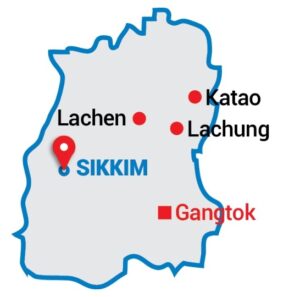
Offbeat snow trails in Sikkim
“From these hubs, travellers can reach base villages by road and begin guided treks. Saur and Sankri–Osla villages of Uttarkashi are particularly beautiful and serve as base camps for nearly 24 trekking routes. The state is also promoting unique events to highlight its high-altitude destinations. For instance, the Adi Kailash Parikrama Run High Altitude Marathon was organised by Uttarakhand Tourism, and now the Niti Extreme Marathon is being organised in the Niti Valley on May 30–31. At the same time, the government is improving trekking infrastructure and promoting homestays to enhance accessibility and comfort for visitors,’’ adds Chand.
According to Uttarakhand Tourism Department, the tourists arriving in the state are not just from across India, but also from different parts of the world. International tourists form a growing segment of Uttarakhand’s winter tourism market. While domestic travellers still make up the majority, international visitors especially adventure travellers are increasingly exploring the state’s snow trekking routes, high-altitude valleys a Himalayan villages, it says.
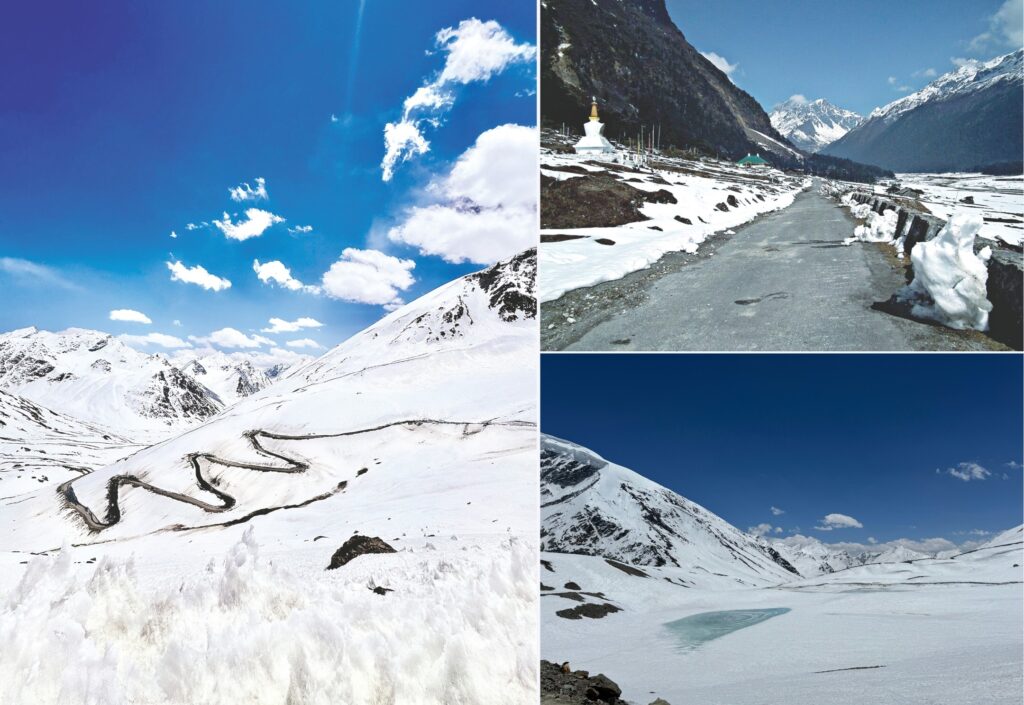
Snow-covered mountains and trails in a serene winter landscape (Photo: MIG)
Among international markets, European countries, the United Kingdom and the United States remain some of the largest source markets for snow tourism and trekking in Uttarakhand, with travellers from these regions particularly interested in adventure trekking, cultural experiences and wildlife exploration in the Himalayas, says Chand.
Arunachal Pradesh: Emerging winter destination
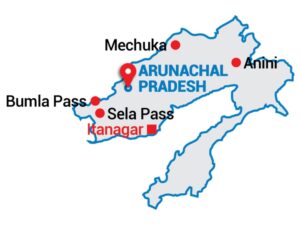
Offbeat snow trails in Arunachal Pradesh
Though the Himalayas stretch all along the northern border of India, most of the north-eastern states remain free of overtourism, with perhaps the sole exception of some areas of Sikkim and northern West Bengal, notably Darjeeling, the Queen of Eastern Himalayas.
Located away from typical source cities for domestic and international tourism, north-eastern India is only now emerging on the list of Indian tourists seeking winter adventures.
Arunachal Pradesh, called the Land of Rising Sun, as it is the eastern-most state of the country, is one such relatively unexplored destination that is becoming increasingly popular for winter tourism.
Aware of the potential of tourism as a major economic actor, the state government is proactively promoting the destination in India and overseas, for all seasons and notably for winter.

Pasang Dorjee Sona
“Snow trails, which are across Arunachal Pradesh, are not limited to just one destination. On the western side we have Sela Pass, Bum La Pass near Tawang for snow trails. Then if you go east, Anini is there. If you go to the central part, Mechuka is there. At the same time, it is not only about snowfall tourism; it comes as part of a larger package. When people travel, they are also looking for cultural tourism or adventure tourism, and while experiencing those, they also get to see snowfall,” Pasang Dorjee Sona, Minister of Tourism of Arunachal Pradesh, tells India & You.
The Minister admits that the state had not fully realised the potential of winter tourism, but is now becoming aware of how important it can be for boosting tourism in the state.
“For us, snowfall has not been a very big product because we see snow so often that it does not feel like a big thing for us. But if snow fascinates people, then maybe we can highlight more snowfall pictures and videos from these destinations. In fact, we are already running a small campaign, though not on a very large scale. At the Bangkok airport, there is already a snowfall campaign featuring destinations like Mechuka and Tawang. Through this, we are reaching out to places like Bangkok, which is one of the hottest destinations and where many tourists are looking for places like ours where snowfall is happening,’’ Sona adds.
Anand of Holiday Moods Adventures says that the governments need to do more to curb overtourism by promoting off-beat trails.
“While states are beginning to promote these destinations, the effort is still at a nascent stage. Compared to established destinations like Kullu-Manali and Gulmarg, offbeat snow trails lack structured promotion and, more importantly, infrastructure. A key concern is that India currently does not have robust infrastructure to support snow trail tourism at scale. Basic systems such as rescue centres, trained mountain response teams, satellite communication, and heli-evacuation networks are limited or absent in most regions. Accommodation is largely dependent on homestays, which, while offering comfort and authenticity, are not always equipped for extreme winter conditions,’’ she says.
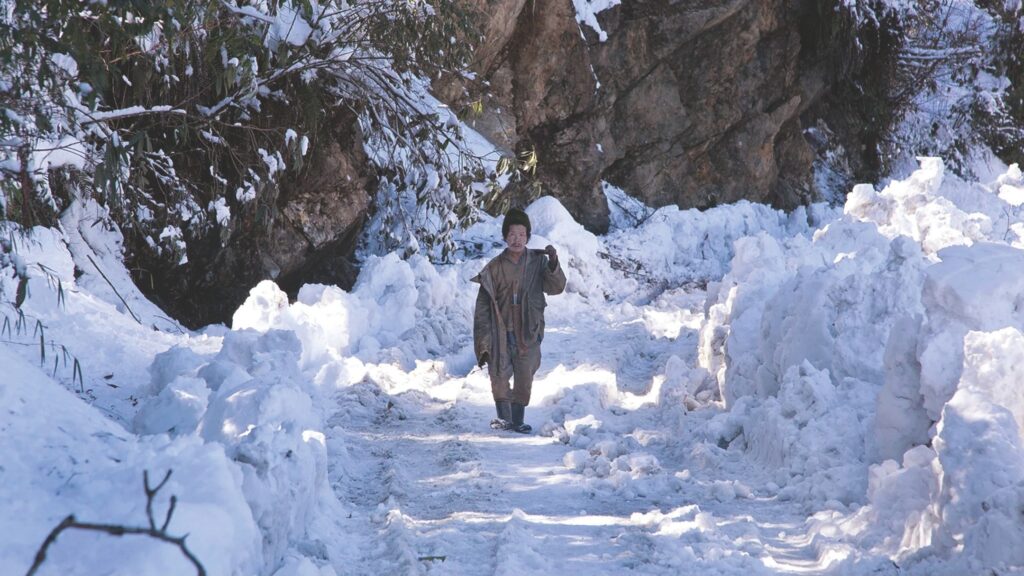
Walking through offbeat snow trails, surrounded by pristine winter scenery (Photo: Arunachal Pradesh Tourism Board)
“In contrast, countries like Nepal have well-established tea house trekking systems, supported by clear trail infrastructure, communication networks, and evacuation protocols. Similarly, destinations in Switzerland and Canada manage snow trails with marked routes, avalanche forecasting, rescue systems, and strict carrying-capacity regulations,’’ says Anand.
She adds that to avoid overtourism, India must focus on several measures including defining carrying capacities for snow destinations, creating basic safety and rescue infrastructure, training local communities in winter operations, establishing clear trail mapping and signage and promoting responsible travel practices early, before mass tourism sets in.
Even as the governments crawl towards tackling overtourism, the responsibility has been taken up by tour operators such as Holiday Moods Adventures and the association, ATOAI.
“ATOAI members and our company play a proactive role in shaping these experiences. While we do respond to traveller queries, there is a strong emphasis on curating and recommending lesser-known destinations responsibly. Until infrastructure evolves, responsible curation, smaller group sizes, and strong local partnerships remain the key to delivering meaningful and safe snow trail experiences in India,’’ she says.