
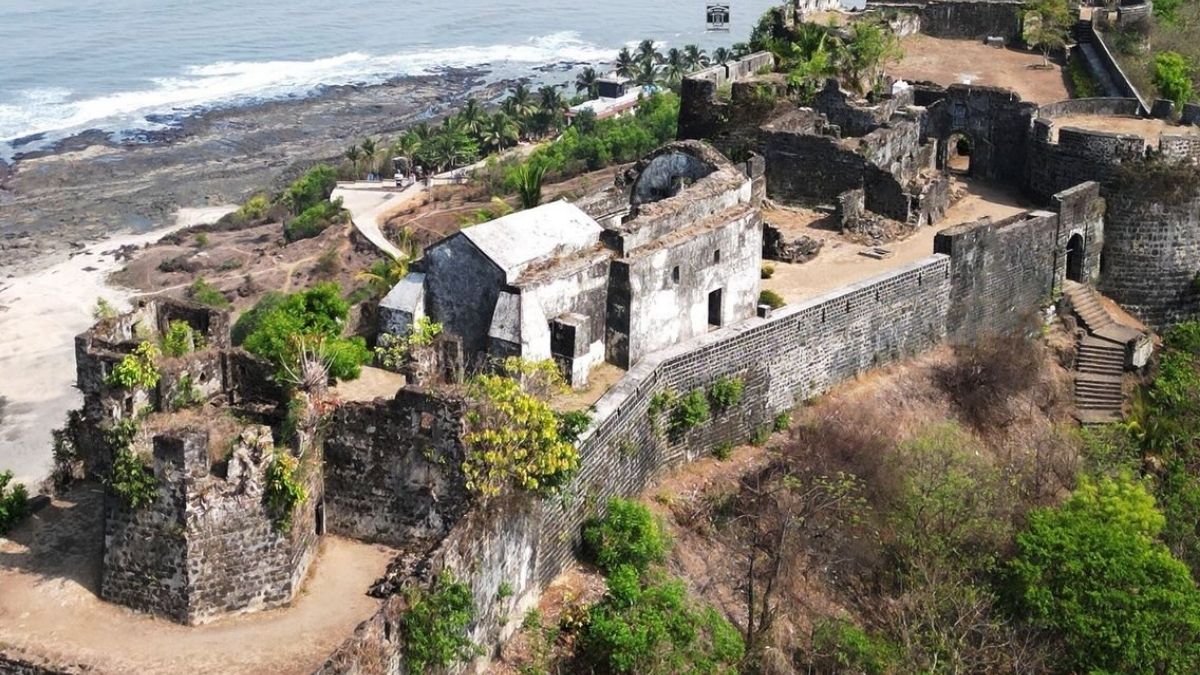
Many settlements became fortified positions to protect Portuguese trade and control key maritime routes (Photos: Archaeological Survey of India)
Away from the better-known coastal attractions of Alibag in Raigad district of Maharashtra, Korlai stands as a small village with a history shaped by centuries of Portuguese presence. Once a strategic military outpost, the village still preserves traces of its colonial past through the ruins of Korlai Fort, its distinctive creole language and cultural traditions that have endured for generations.
The history of the village is closely linked to the Portuguese presence along the western coast of India. In the 16th century, the Portuguese established Korlai as a strategic outpost overlooking the Arabian Sea. Its location gave it importance in controlling maritime routes and protecting Portuguese interests in the region.
Also Read: Sarmoli: Uttarakhand’s women-led tourism model empowers communities
The rise of Portuguese power
The western coast of India is lined with ports, forts and settlements that preserve memories of centuries of maritime trade, political rivalry and cultural exchange. From the Malabar in the south to the Konkan coast, local rulers and European powers competed for strategic control. The Portuguese were the first Europeans to establish a lasting maritime presence in India after Vasco da Gama reached Calicut, known today as Kozhikode, in 1498, opening a direct sea route between Europe and India.
Many locals can understand standard Portuguese, speakers of the European language may not always understand the Korlai variety
Following this breakthrough, the Portuguese gradually built a chain of settlements along the western coast, extending from Kochi in Kerala to Diu in Kutch region of Gujarat. Kochi, then known as Cochin, Goa, Korlai, Chaul, Mumbai, Vasai, Daman and Diu emerged as some of their important centres. These settlements were not merely trading posts, many of them also developed into fortified positions that allowed the Portuguese to protect their commercial interests and maintain control over vital maritime routes.
Also Read: Kishangarh: Waste heap turns into tourism hotspot
Language forged by coastal encounters
The Portuguese Creole spoken in Korlai is a distinctive local dialect that has evolved over generations, blending Portuguese with words and influences from Marathi and Konkani languages. Although many locals can understand standard Portuguese, speakers of the European language may not always understand the Korlai variety. Shaped by centuries of cultural interaction, isolation and adaptation, the dialect has developed a character and identity uniquely its own.
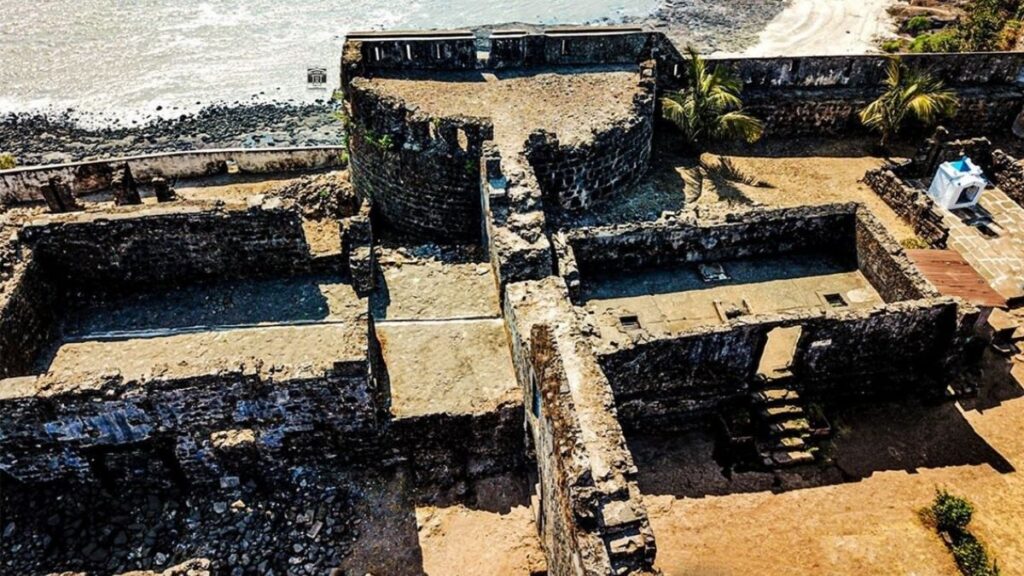
The Marathas eventually took control of Korlai in 1739 and held it until 1818
Korlai once functioned as a stopover for Portuguese sailors travelling along the western coast. Its distinctive creole is thought to have emerged from sustained contact between the local Marathi-speaking population and Portuguese merchants and soldiers who established themselves in the area.
Korlai Fort: Guardian of the Konkan
The Korlai Fort stands as a striking reminder of the Portuguese presence along the Konkan coast. The fort was built in 1521 with permission from the Ahilyanagar Sultanate, that held sway over the area in the 16th century, to strengthen the Portuguese defensive network along this strategically important stretch of coastline.
It soon became the centre of a struggle for control. After an initial Portuguese attempt to seize it, a truce returned the fort to the Sultanate, leaving only a wooden cross as a reminder of Portuguese rule.
Also Read: Hunderman: Exploring Borderland Legacy of Ladakh
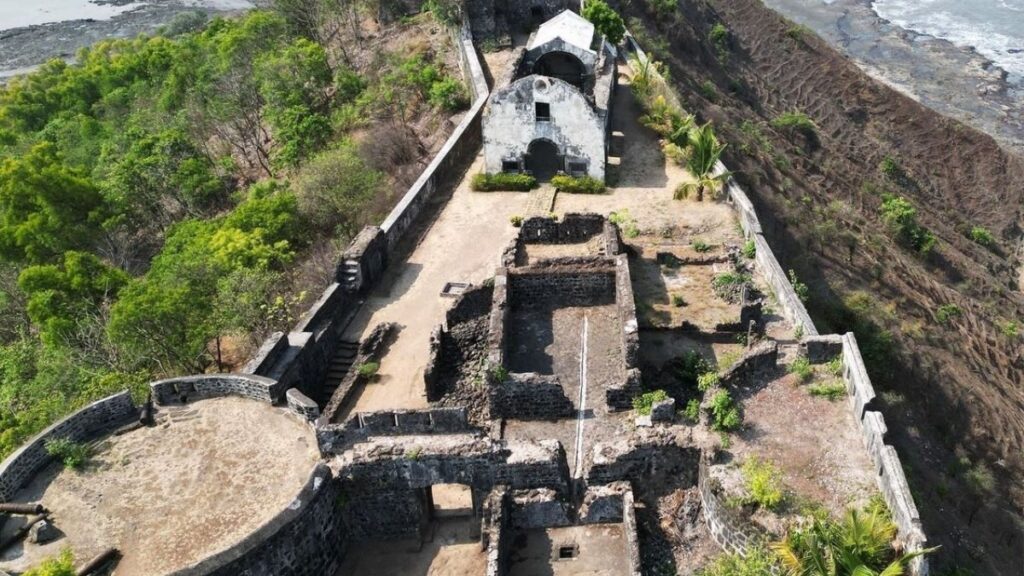
In 1594, Portuguese captain Abranches returned with a larger force and captured the fort after the defending troops were forced to surrender. Although once described by travellers as a “magnificent fortress,” the Portuguese later dismantled much of it because they lacked sufficient troops to defend it, leaving the central tower and a battery standing.
Maratha King Sambhaji Maharaj attempted to capture it in 1687 but withdrew after failing to do so. The Marathas eventually took control of Korlai in 1739 and held it until 1818.
Korlai’s hidden heritage: A church that outlasted an empire
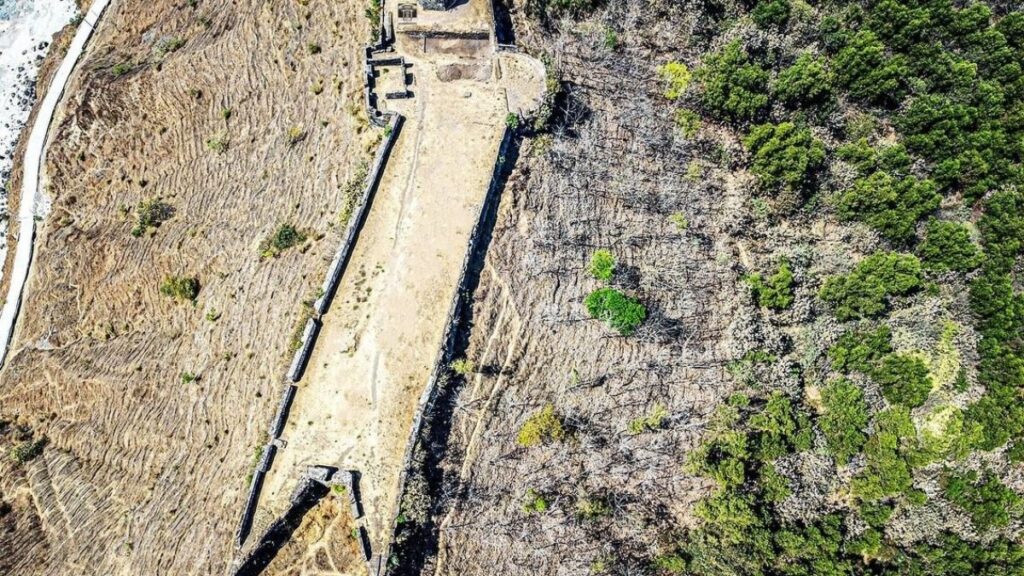
The Korlai Fort stands as a striking reminder of the Portuguese presence along the Konkan coast
One of the oldest buildings in the village is the Korlai Church reflects the Portuguese-era religious heritage of the village, part of the Christian influence that spread along the Konkan coast under Portuguese rule. Set within the historic landscape around Korlai Fort, it remains linked to the local Catholic community that emerged through centuries of Portuguese presence and interaction with residents. This connection to the old settlement highlights how Portuguese legacy went beyond military architecture, shaping the religious and social life of the village.
Also Read: Kongthong: Meghalayas whistling village preserves living heritage through tourism
Revdanda Fort: A strategic legacy
Revdanda Fort is another significant reminder of Portuguese influence along Konkan coast of Maharashtra. Built in the 16th century, the coastal stronghold was designed to protect the Portuguese settlement of Chaul and control maritime movement along the coast.
The surviving stone walls, gateways, bastions and ruins of the fort reveal its defensive character, while its position near the Arabian Sea highlights the strategic importance of the settlement. Though much of the original structure has disappeared, the remaining ruins provide a glimpse into the scale of Portuguese fortification and their efforts to establish a stronghold along the western coast.
Mixed heritage of Korlai Homes
The traditional homes in Korlai give a quieter glimpse into the layered cultural history of the village. Built using locally available materials and adapted to the Konkan climate, these houses reflect local architectural practices alongside influences that developed during the Portuguese period. Their simple forms, sloping roofs and close-knit arrangement within the settlement contribute to the distinctive character of the village settlement.
Also Read: Spiritual tourism puts Uttar Pradesh on path to progress
Beyond their architectural value, the homes are part of a living heritage shaped by generations of interaction between local communities and the Portuguese, they help preserve the everyday story of Korlai in the past.
Language outlasts ramparts
While Korlai has ruins of the architectural monuments of the epoch, visitors may be surprised to learn that the dialect spoken here has preserved the original influences of Portuguese Creole, a language born from centuries of contact between Portuguese settlers and local communities which is still spoken here, making the village one of the rare places where this colonial-era tongue lives on.
Walk further into the settlement, and the legacy deepens, traditional homes, quiet religious influences, and everyday customs all carry fragments of this shared past. Together, they reveal how deeply the Portuguese presence became stitched into daily life, not just in stone, but in speech, faith, and habit. Long after colonial rule faded, Korlai remains a rare living record of that history, hiding in plain sight.
