
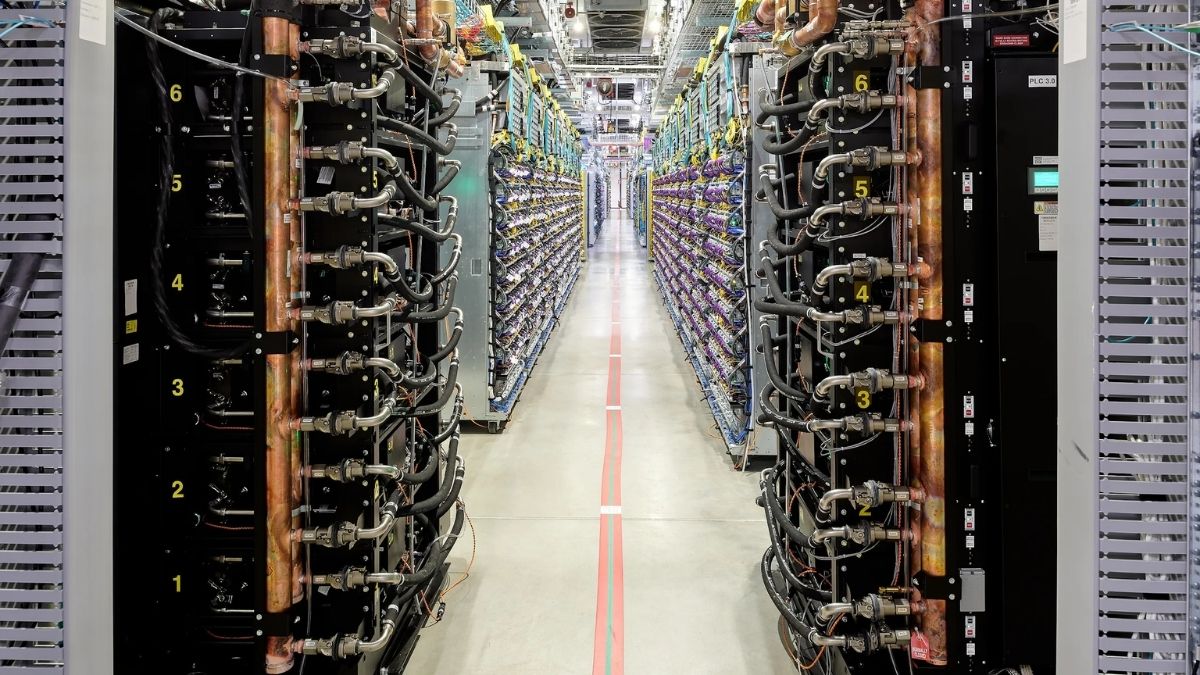
Google data centres in Central Ohio require vast amounts of electricity and infrastructure to power increasingly advanced AI systems (Photo: Google)
There is something profoundly curious happening in the world of Artificial Intelligence ecosystem. For years, the message from the people driving the world’s technology industries to the governments and regulators was simple, to let the industry be and not apply the brakes of regulation to hamper its evolution. Bigger machines, more powerful chips, delivering ever increasing quantum of computing power to store and use more data. More investment. Whoever reached the frontier first would shape the future.
However, in the world of AI, the evolution has followed a dramatically different chart. As AI became more potent and even more crucially, more independent and self-sustaining, the leaders themselves began calling for a framework for regulating the industry and its future direction, in order to ensure that humans have the final say on which direction should AI go in and how fast and how far.
Last year, much to chagrin of Donald Trump, President of the United States, Dario Amodei, CEO of Anthropic, one of the two companies leading the AI race, clashed with the US Department of Defense by refusing to grant the Pentagon unfettered, unconditional access to Anthropic’s cutting edge AI tools, including the advanced Mythos model, over concerns about fully autonomous weapons and mass domestic surveillance.
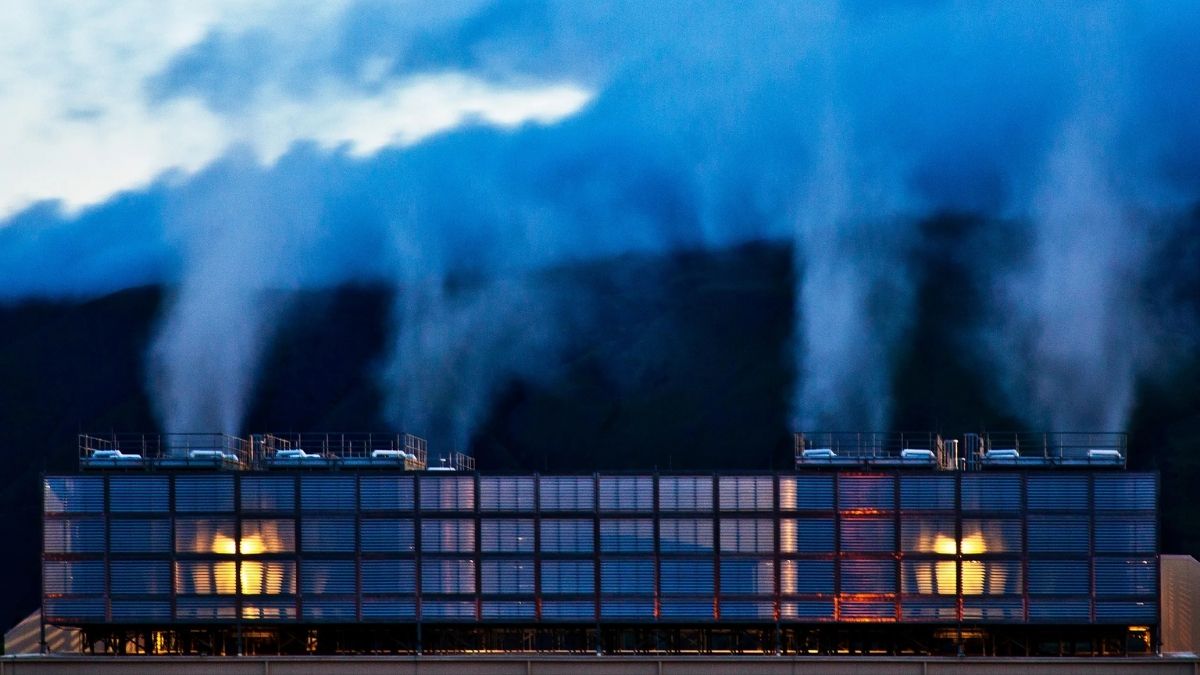
High water consumption to cool Google’s data centre in the Dalles, Oregon, highlights the resource demands of the global AI race (Photo: Google)
The Trump Administration hit back by imposing curbs on Anthropic’s exports, notably for Mythos. Nonetheless, Amodei has continued to ask for proper regulation of AI, instead of allowing the industry and technology to grow unfettered.
Just earlier this month, Amodei called for a deliberate slowing of frontier AI development, proposing stronger independent evaluation and international cooperation. Amodei’s high-profile rival, Sam Altman, CEO, OpenAI, and even Elon Musk, the controversial founder of Tesla and SpaceX, who has long been votary of minimal government, joined hands with Anthropic’s boss on his call for setting limits to the development of AI.
Should we take these warnings seriously? Certainly. Should we also ask what happens when the people who build a technology become influential voices in deciding how fast that technology should scale and be regulated? Certainly. But there is a larger question that is being missed.
Why has the speed of AI become such an urgent question precisely when humanity is already engaged in devising the ways to possibly deploy AI for confronting twin crises on priority, namely geopolitical fragmentation and climate change?
The answer may determine whether AI becomes humanity’s greatest multiplier, or another mechanism through which power becomes concentrated in fewer hands.
Also Read: From Paper Leaks to Climate Breakthroughs: Challenges for Gen Z
The race behind the race
AI is commonly presented as a revolution in software. It is, but not just that. Behind every software, there are dozens of semiconductor factories, hundreds of data centres, large XXL-sized electricity networks, cooling systems carrying more water than lakes and tonnes of critical rare-earth minerals mined from deep inside the Earth. The weightless “cloud” rests upon a very physical geography of mines, factories, power stations and infrastructure.
This matters enormously for geopolitics. China’s dominant position in rare-earth processing illustrates the vulnerability of ‘inclusive’ AI being promoted by United Nations. The AI race is therefore not simply about who writes the most powerful algorithm. It is more about who controls minerals needed for chips, energy needs, talents and markets. The digital revolution is becoming a contest over physical resources as well as intellectual resources, quite what the world saw on nuclear revolution before WWII and later.
This transforms the geopolitical equation. AI may be digital at the interface. Its foundations are physical. The cloud has geology at its heart!
The strange politics of slowing down
This brings back to the calls for restraint for which there appears to be legitimate reasons. AI capabilities may be advancing faster than safety mechanisms, laws and institutions can adapt. Rules requiring expensive testing, auditing, licensing and computing infrastructure can be easier for technology giants to absorb than for small companies, universities or open-source developers.
The possibility of regulation may become a new technological moat. This does not prove that calls for safety are disguised attempts to protect market dominance. It does mean that AI governance cannot be designed exclusively by those with the greatest commercial or geopolitical stake in AI. This is particularly important for India and China as well as the wider Global South.
The Global South cannot remain an audience
India possesses enormous pools of scientific and engineering talent, a vast digital population and bubbling AI ambitions. China possesses mines of rare earth material, extraordinary manufacturing capacity, critical-mineral processing capabilities and a powerful technological ecosystem that can dominate the world . Are ‘slow please, speed-breaker ahead’ signs by Global North are emerging from these obvious realities?
That gives rise to suggestion of strategic cooperation of India and China ‘going beyond borders’. There are obvious areas in which India and China could indeed cooperate. Yet such dreamy-cooperation should not be confused with strategic alignment. The two countries continue to have substantial differences involving trust, security, technology and geopolitical influence. The more realistic prospect is selective cooperation alongside strategic competition, a form of technological cooperation and not competition. That is ‘Third Way’ for Global South. India , for example, need not choose permanently between Washington and Beijing. It can work with both and depend exclusively on neither.
Also Read: Earth Overshoot Day: Urgent need for ‘Ecological Budget’ for Earth
AI as a glue for effective global diplomacy
The more serious scenario is not about speed of development but scary geopolitical implications when AI enters warfare. AI can accelerate intelligence analysis, surveillance, targetting and military decision-making. If machines compress the time between identifying a threat and responding to it, they can also compress the time available for human judgement. But there is another side to the story. AI can help diplomats analyse vast quantities of information, model possible settlement scenarios, monitor ceasefires and identify common ground among populations divided by conflict.
A UN-supported experience in Libya that has been recently published is instructive. AI-assisted digital dialogue enabled mediators to process large numbers of citizen responses across political and regional divisions, helping reveal areas of consensus that conventional elite-led negotiations had struggled to capture. The lesson is important: AI did not make peace. People did. AI helped people hear one another. That should be the model for AI in diplomacy. Machines can become extraordinary diplomatic co-pilots.
And what about Climate Warfare?
Climate change presents perhaps the greatest test of what AI should reorient. Humanity needs faster mitigation , reversing the rising curves of emission , climate forecasting, smarter electricity grids, resilient agriculture, more efficient industries, better disaster preparedness and accelerated scientific discovery. AI can contribute to all of them.
Specialised AI models can improve weather prediction, can detect methane emissions from soil and refineries, balance grids , electricity demand and accelerate the discovery of new materials. The timing could hardly be more consequential than achieving accelerated Net Zero.
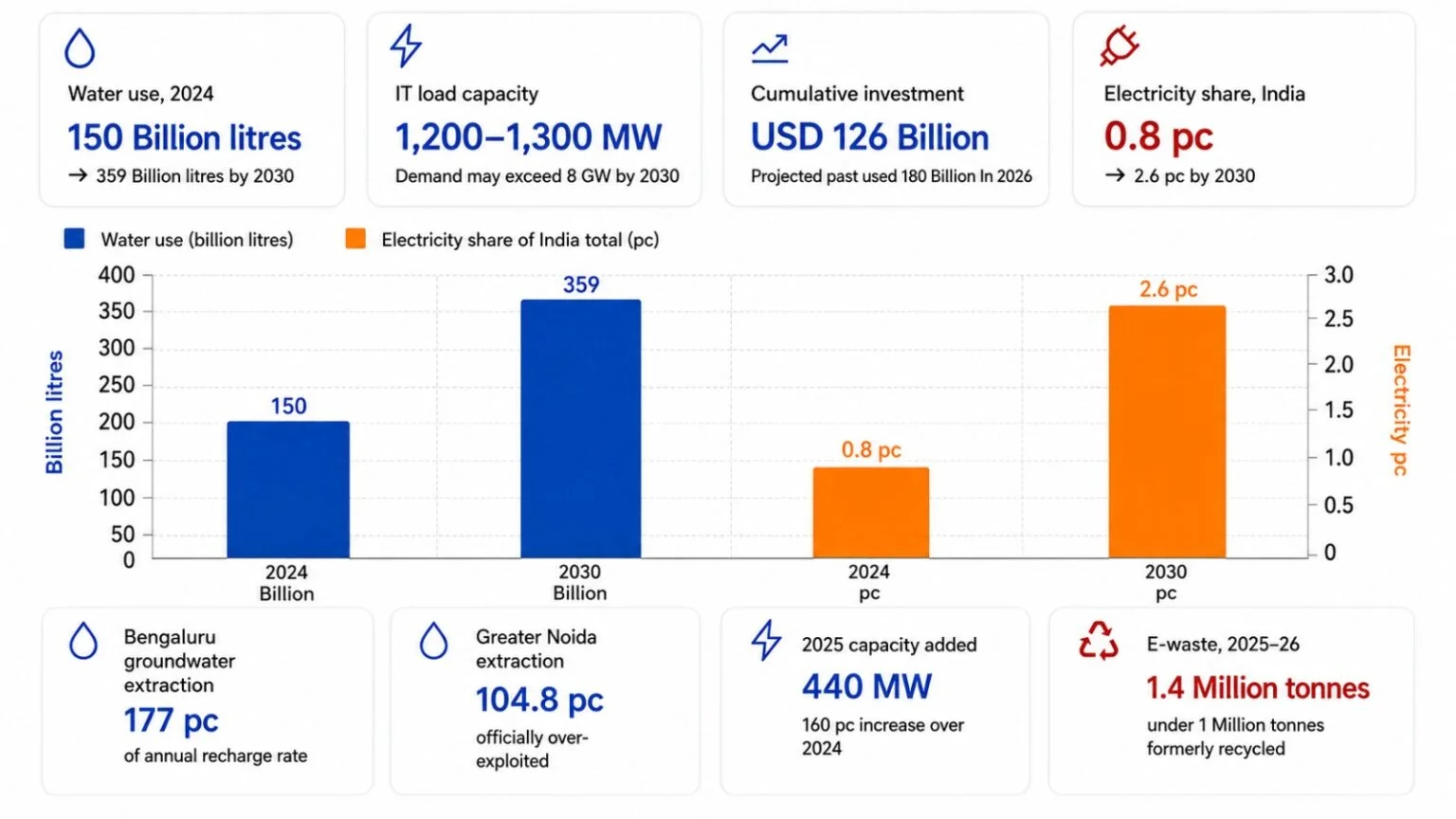
India’s data centre boom is fuelling rising water and power demand, alongside rapid capacity growth and higher e-waste
The World Meteorological Organisation now reports that El Niño is firmly established and expected to strengthen, with an exceptionally high likelihood of persisting through February 2027. Such an event can alter rainfall and temperature patterns worldwide and risks devastation of floods, drought and extreme heat.
For a farmer facing drought, a hyper-local AI forecast delivered to a mobile phone along with list of actions needed may matter more than the world’s most sophisticated chatbot. For a city facing extreme heat, an intelligent electricity grid may matter more than another spectacular demonstration of generative AI. For a community facing floods, an early warning delivered hours earlier can save lives, than fancy demo of male and female robots. This suggests a different measure of AI progress. Not simply, ‘slow down’ but ‘ upgrade’!
The AI climate paradox
There is, however, a warning embedded in this opportunity. AI itself requires enormous infrastructure. Data centres consume electricity and water. Their hardware requires minerals. If AI expands through increasingly resource-intensive systems powered by carbon-intensive energy, the technology intended to help solve climate change could simultaneously increase environmental pressures.
The AI revolution therefore needs its own environmental accounting. Major AI infrastructure should increasingly be evaluated not only by accuracy, speed and computational power, but also by energy consumption, water use, carbon footprint and material dependence.
This is where the concept of selective acceleration and slow down becomes reality. Green AI must move from the margins into mainstream technology policy with speed.
Also Read: Cockroaches not pests, primordial for biodiversity
From AI hardware to humanware
There is, however, an even deeper gap in today’s debate that over-rides the warning of the slowing down. We speak constantly about hardware and software. We speak much less about humanware!. Yet the future of AI will ultimately depend upon human capacity to use, question, govern and redirect technology.
A farmer needs access to useful intelligence, not technological spectacle. A student needs capability, not dependency. A worker needs pathways to acquire new skills. A citizen needs transparency and agency, not invisible algorithms making consequential decisions. A developing country needs technological sovereignty, not another cycle in which raw materials are extracted locally, advanced technology is developed elsewhere and dependence returns in digital form.
This is where universities and R&D institutes can become crucial catalysts. They should not merely teach students how to use AI. They can become living-laboratories for AI, climate action and sustainable development, bringing together engineering, science, management, ethics, public policy and community knowledge. Young people should not be trained merely to become better users of machines. They should become better stewards of the systems in which machines operate. That is humanware!
A prudent forecast
Nonetheless, the development of AI will continue to be fragmented. Some corporations will pursue scale. Some regulators will pursue control. And some powerful enterprises will dictate speed control . And billions of ordinary people , as happened with mobile phones and apps , will increasingly discover that AI is not an external technology. It is becoming part of the infrastructure of everyday life. The central danger is , therefore, not simply that AI will be monstrous if accelerator is pressed hard on speed of technology. It is that accelerator on human institutions also need to be pressed harder to govern increasingly powerful technology.
Third Way ?
I have spent much of my professional life moving between science, industry, international diplomacy, universities and even rural communities, but one lesson has remained constant: No technology, industry, academic institution or even multilateral forum can operate in isolation. Each of them and every technology sits inside an economic system, a political system, an ecological system and, ultimately, a human value system. AI is no exception.
Nature, our oldest teacher, offers another lesson. Evolution does not simply reward the organism that grows fastest. It rewards systems capable of adaptation, diversity, resilience and balance. In short system that is sustainable. Perhaps that is the wisdom we need for AI. We should neither blindly or cunningly slow the technology nor recklessly accelerate it for monetary reasons. We should accelerate what strengthens humanity—and slow what threatens humanity.
The AI revolution has arrived at a crossroads where technology, geopolitics and climate change meet. One road leads towards a race for technological supremacy. Another towards a race for control. But there is a Third Way!
Accelerate AI where it enlarges human capability, protects the planet and strengthens peace. Slow it where machine speed threatens ecological stability, international security and inequality and endangers Sustainable Development Goals . That is not anti-technology. It is pro-humanity. That is the Third-Way.
(Rajendra Shende is a former Director UNEP, Founder Director Green TERRE Foundation, coordinating lead author, IPCC that won Nobel peace prize, Prime Mover SCCN, IIT Alumnus. The views expressed here do not necessarily reflect those of Media India Group.)
