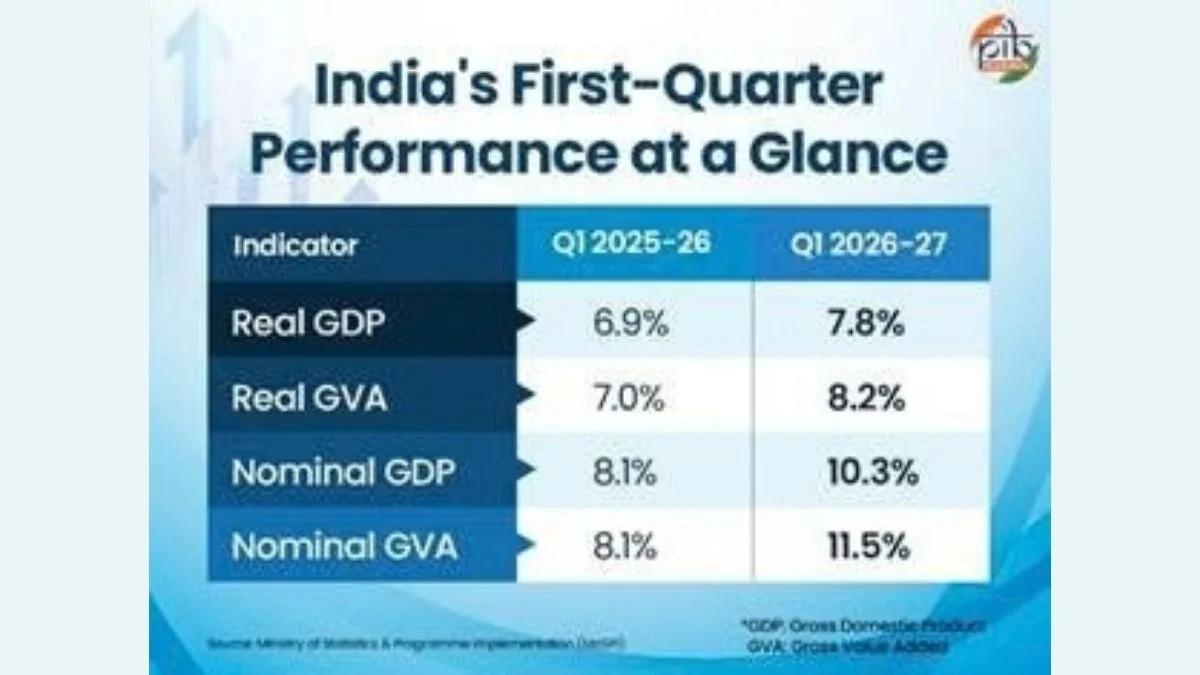
Real GDP was estimated at INR 81,360 billion compared with INR 75,460 billion a year earlier (Photos: PIB)
The 7.8 pc growth in Indian Gross Domestic Product in the first quarter of the current year, announced recently by Prime Minister Narendra Modi, may have given the government another number to celebrate, but for millions of households, the economic reality is far less reassuring.
Rising living costs, uncertain employment and weak purchasing power raise questions about who is actually benefiting from the economic expansion. The growing gap between headline GDP and household budgets is putting the government’s growth narrative under scrutiny.
“Given the controversy it has raised, I think the more transparent we are, the better off we are,” said Pronab Sen, India’s first Chief Statistician, who questioned the lack of transparency surrounding the new GDP series. Sen has argued that the scale of revisions to historical data is unusually large and warrants greater explanation from the government.
Also Read: Infrastructure boost to double tourism share in GDP: Suman Billa
India’s real GDP grew 7.8 pc year-on-year in the April-June quarter of FY2026-27, according to the Ministry of Statistics and Programme Implementation (MoSPI), while nominal GDP grew 10.3 pc. Real GDP was estimated at INR 81,360 billion, compared with INR 75,460 billion a year earlier. Real gross value added grew 8.2 pc.
The government has presented the number as evidence of economic strength. Tweeting about the growth, Prime Minister Narendra Modi said “7.8 pc growth. Strong numbers. Even stronger confidence.”
But the central economic question is less about whether 7.8 pc is a large number and more about what that number means outside the national accounts.
The controversy intensified after the introduction of a new GDP series with 2022-23 as the base year, replacing 2011-12. The new series resulted in significant revisions to earlier estimates.
Sen was not the sole senior economist questioning the data. Former Finance Secretary Subhash Chandra Garg also raised doubts over the latest figures, saying that the revision of the previous year’s GDP altered the base against which the latest growth was calculated. He went as far as to say that the underlying growth picture could look dramatically weaker under an alternative comparison. His interpretation, however, has been disputed by some economists and the government.
In a rebuttal, MoSPI said the comparison made by Garg was not valid because the figures belonged to different GDP series. The ministry explained that Q1 FY2025-26 nominal GDP, initially estimated at INR 86,050 billion under the old series, was subsequently recalculated at about INR 80,320 billion after the new series was introduced and later revised to INR 80,000 billion as additional data became available. It said base-year revisions involve changes in data sources, coverage and methodology and that the old and new series cannot simply be compared.
Sen’s questions are not too different from those of Garg, wondering whether the new methodology and its underlying data were sufficiently transparent. He pointed to the roughly 7 pc downward revision to historical estimates as unusually large, saying revisions of 2-3 pc would normally be expected.
Former IMF Executive Director for India Surjit Bhalla, meanwhile, has rejected claims of political manipulation, saying he found “no evidence” that the numbers had been deliberately exaggerated.
The dispute therefore remains one of methodology, revisions and interpretation rather than a settled finding that the GDP data are fabricated.
Also Read: BIMSTEC: 7 nations, 1.7 billion people, USD 4 trillion GDP
The government’s own Economic Survey points to consumption as an important engine of growth. Private final consumption expenditure accounted for 61.5 pc of GDP in FY2025-26, the highest share since FY2011-12, while PFCE grew 7.5 pc in the first half of FY2025-26. The government has attributed this to improving rural consumption, stronger agricultural performance, low inflation and rising real purchasing power.
Yet GDP does not tell an individual household how much more money it has available after paying for food, rent, education, healthcare, transport and debt.
That distinction matters because an economy can grow rapidly while the benefits are distributed unevenly.
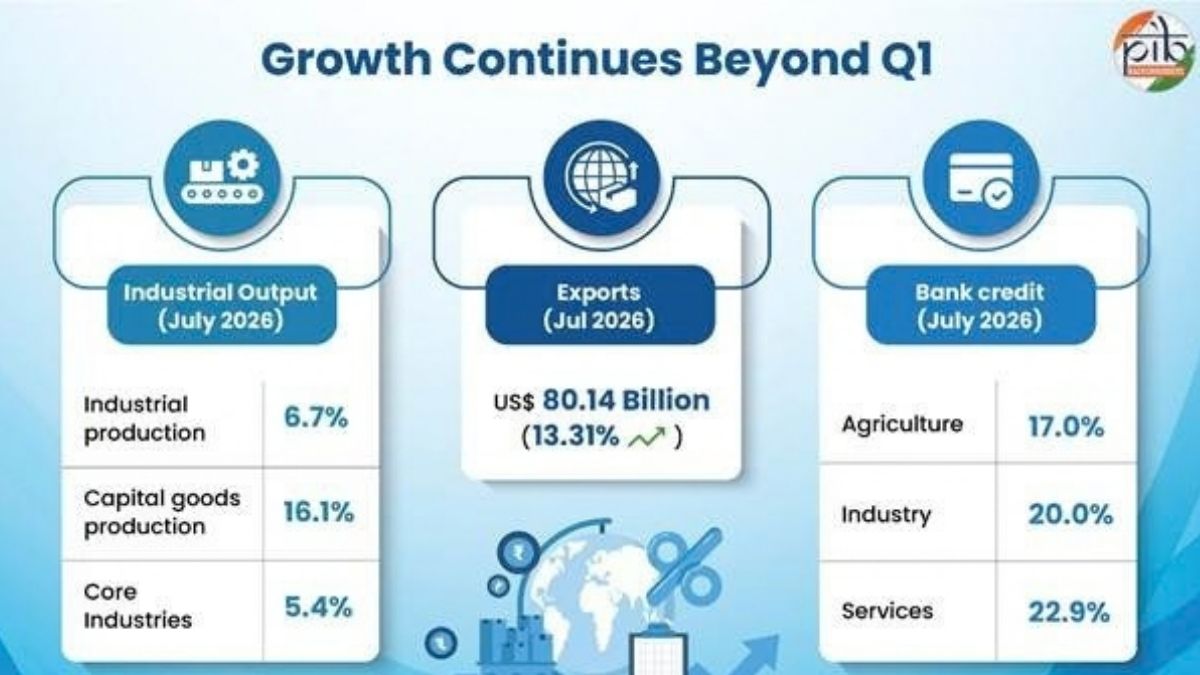
The growing gap between headline GDP and household budgets is putting the government’s growth narrative under scrutiny
The labour-market numbers provide some evidence of improvement. The latest government survey put unemployment at 5 pc in August this year, down from 5.1 pc in July. The labour-force participation rate rose to 55.6 pc, while the worker population ratio increased to 52.8 pc. Female labour-force participation also rose to 34.8 pc.
But urban unemployment remained considerably higher, at 6.8 pc, suggesting that the national unemployment rate alone does not capture the full employment picture.
Former RBI Governor Raghuram Rajan has questioned why strong headline growth has not been accompanied by stronger outcomes in areas such as job creation, domestic investment and foreign portfolio inflows.
The gold and foreign-travel paradox
The questions over the higher-than-expected growth rate were further fuelled when Modi himself again asked Indians not to buy gold or to travel overseas, asking Indians to reduce spending on non-essential activities, linking household spending decisions with the broader objective of strengthening domestic economic activity.
Also Read: GDP growth data hides deep potholes on road to recovery
The headline GDP numbers may point to a strong economy, but at the household level remains more nuanced. Rajiv Bhal, an economist based in Delhi says that the focus should now shift from the pace of economic expansion to whether that growth is translating into higher incomes, better employment and stronger purchasing power for ordinary Indians.
“The government can celebrate 7.8 pc GDP growth, but the real test of the economy is what ordinary households are experiencing. If incomes are not rising strongly, quality employment remains a concern and families are still cautious about spending, then headline GDP growth does not tell the complete story. The government needs to explain not just how fast the economy is growing, but who is benefiting from that growth and whether it is translating into higher purchasing power, stronger consumer confidence and better living standards,” Bhal tells Media India Group.