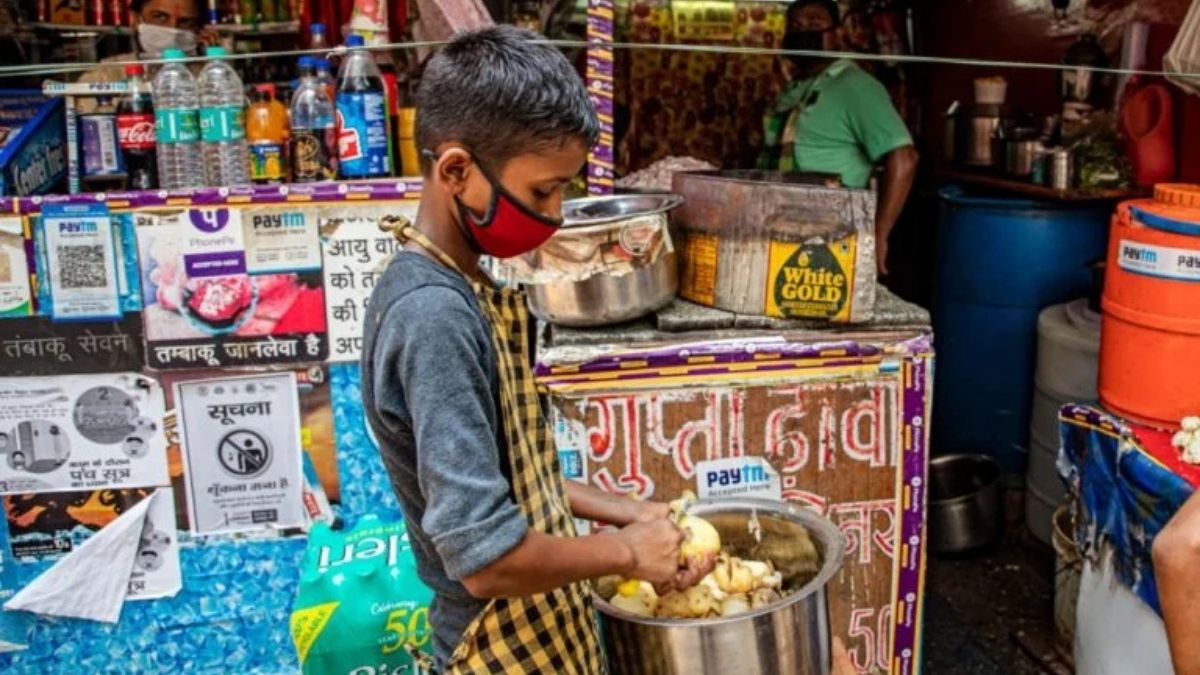
Child labour rescues need sustained rehabilitation, education and protection to prevent exploitation (Photos: Media India Group/Aman Kanojiya)
The National Commission for Protection of Child Rights (NCPCR), a statutory body mandated to safeguard children’s rights, claims that it rescued over 3,800 children during a nationwide drive against child labour from June 12 to August 31, and it has registered more than 575 police cases against the employers.
However, in absence of published figures on rehabilitation, school enrollment and compensation makes it difficult to assess the long-term impact of the campaign.
The 81-day pan-India campaign, coordinated by NCPCR in association with state governments and police, targetted child labour in factories, brick kilns, construction sites, hotels, roadside eateries and other workplaces. While the figures highlight the scale of rescue operations, the government has not released a consolidated account of how many children have since received rehabilitation and educational support.
The campaign focussed on places where children are vulnerable to exploitation, including factories, brick kilns, construction sites, hotels, roadside eateries, workshops, markets and railway stations.
Uttar Pradesh recorded the highest number of rescues, with 1,480 children, followed by Rajasthan with 804 and Gujarat with 630. Bihar reported 183 victims and Andhra Pradesh 147, according to The Tribune. Together, these five states accounted for 3,244 children, with the remaining rescues reported elsewhere.
Also Read: Experts caution against rise in child trafficking post lockdown
However, the number of children rescued is estimated to be only a fraction of the number that are reportedly employed in violation of laws. Even the government’s own figures put that number at over 10.1 million, which itself is criticised as being too low by various child rights organisations.
Moreover, while the nationwide drive to rescue children demonstrates efforts of enforcement, but they do not establish whether children have escaped labour permanently. Without published data on rehabilitation, educational enrollment and follow-up, the campaign’s outcomes remain difficult to measure.
Nishat Hashmi, founder of Blessings Foundation, Delhi-based NGO working on education and vocational training for rescued children, says the existence of child protection institutions does not necessarily mean that rescued children receive sustained support.
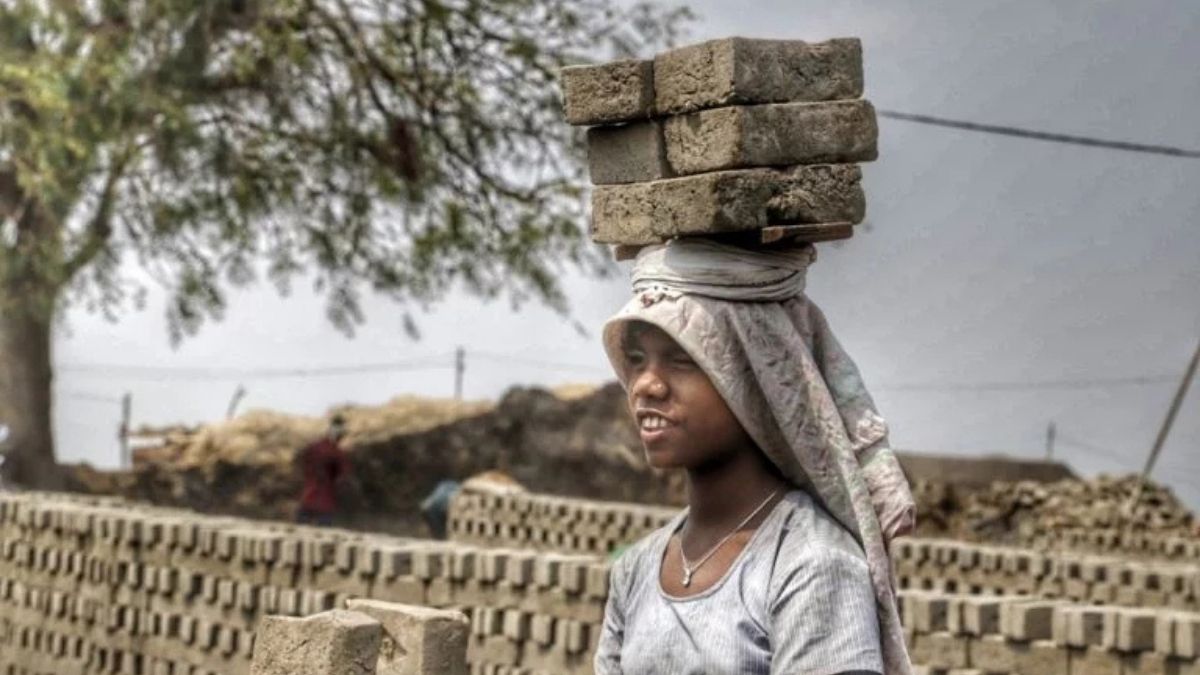
Without proper follow-up, rescued children remain vulnerable to exploitation and re-entering labour
Rescue without rehabilitation cannot break the cycle
Removing children from workplaces does not address the poverty, family debt and economic pressures that often push them into labour. Without sustained support, children remain vulnerable to exploitation, even after being rescued, she says.
On paper, there are several schemes for rehabilitation of the children, including safe restoration to families, shelter, counselling, healthcare, financial assistance and access to education. The Ministry of Women and Child Development’s Mission Vatsalya scheme provides a framework for child protection through district-level units, institutional care and family-based services.
In terms of education, the National Child Labour Project scheme was brought under Samagra Shiksha Abhiyan from April 1, 2021, enabling rescued children to access formal education through special training centres.
However, there is no data on whether the rescued children and families actually benefit from any or all of the above schemes.
Hashmi says rehabilitation also depends on whether children are willing to engage with education and acquire new skills.
“Some children are not interested in studying or learning new skills and want to return to the same circumstances they were rescued from. Out of 50 rescued children, only three or four may be willing to learn something new, while the others may be unwilling to engage seriously and simply pass their time,” she tells Media India Group.
School enrollment alone is also insufficient to establish successful rehabilitation. Attendance, retention and continued protection from exploitation must be tracked to determine whether children remain out of work. Without these measures, rescue figures offer only a partial picture of progress.
Also Read: World Day Against Child Labour: India’s uphill battle
“There should be a follow-up system after the rescue. I think there are only one or two NGOs that rescue and follow-up,” Hashmi says.
Hashmi says regular follow-ups help organisations understand a child’s background, current circumstances and educational needs. “They follow up regularly to find out where the child came from, what they are doing now and what their educational priorities are,” she says.
She warns that returning a child to their family without assessing the risks can expose them to further exploitation. “In some cases, if a mother or father dies, their uncle sells them somewhere. Now that you have rescued him, if you leave him with his family, they will sell them somewhere else. Yes. Or they will start begging,” she says.
Gaps in rehabilitation, NGO support and enforcement
Hashmi says that registering an NGO is easy, but approaching ministries for schemes, funds and projects involves a different process.
“Grassroots organisations often struggle to access these schemes. Many depend on fundings from Corporate Social Responsibility or donations,” Hashmi says, adding that she has seen few organisations doing what she considers genuine work through government-funded programmes.
Hashmi recounts an attempt to move more than 300 roadside workers and people begging in South and Old Delhi into night shelters, but says her team could not move anyone. She believes some preferred to remain on the streets because passers-by provided food, blankets and clothes.
Hashmi also alleges that some police personnel may be aware of networks exploiting children for begging, including cases where children are allegedly trafficked or abducted and brought to the area for this purpose.
She alleges that complaints about local drug-related activity do not always lead to effective action. “Even if you go and complain to the police, they react as if they already know about it,” she says.
She further alleges that people involved in such activities receive regular payments. “They get their weekly payment. They get their money. And somewhere or the other, everyone is a part of the system,” she says.
Hashmi says gaps exist both within the system and among beneficiaries.
Also Read: Child trafficking ring busted in West Bengal
Police cases do not guarantee justice or compensation
Moreover, the fate of legal action against employers accused of violating anti-child labour laws is far from clear. The NCPCR says it has registered more than 575 FIRs in this campaign, but registration of cases only mark the beginning of criminal proceedings, not their successful conclusion. Without figures on chargesheets, prosecutions and convictions, the public cannot assess how many employers have been held accountable.
In its 1996 judgment in M C Mehta vs State of Tamil Nadu, the Supreme Court directed employers found employing children in prohibited work to contribute INR 20,000 per child to a rehabilitation fund. Where alternative employment could not be provided to an adult family member, the state was directed to contribute an additional INR 5,000.
The Child and Adolescent Labour (Prohibition and Regulation) Act, 1986, also provides for a rehabilitation fund under Section 14B and rehabilitation under Section 14C.
However, there is no information from NCPCR about how much money was recovered from employers, how much was paid to children and their families, or how many received financial support. Registering FIRs without reporting the progress of cases and compensation recovery provides only a partial account of enforcement.
NCPCR has sought state-wise and district-wise information on rescues, FIRs, rehabilitation, restoration to families, educational reintegration and compensation. Publishing these figures would allow the campaign’s outcomes to be assessed beyond the immediate removal of children from workplaces.