

Drone warfare has changed the face of modern armed conflict
Ever since they were first prominently used by the United States in its war against the Taliban in Afghanistan, they have fascinated not just military commanders around the world but the general populace as well. Capable of carrying out strategic strikes against any kind of targets, stationary or moving, big or small, human and non-human.
In the past two decades, drone warfare has changed the face of armed conflict and is now a defining characteristic of contemporary military strategy all over the world. The rapid advancement of unmanned aerial vehicle (UAV) technology has enabled both state and non-state actors to conduct precision strikes with minimal risk to their own personnel, altering the calculus of military engagement and lowering the threshold for intervention.
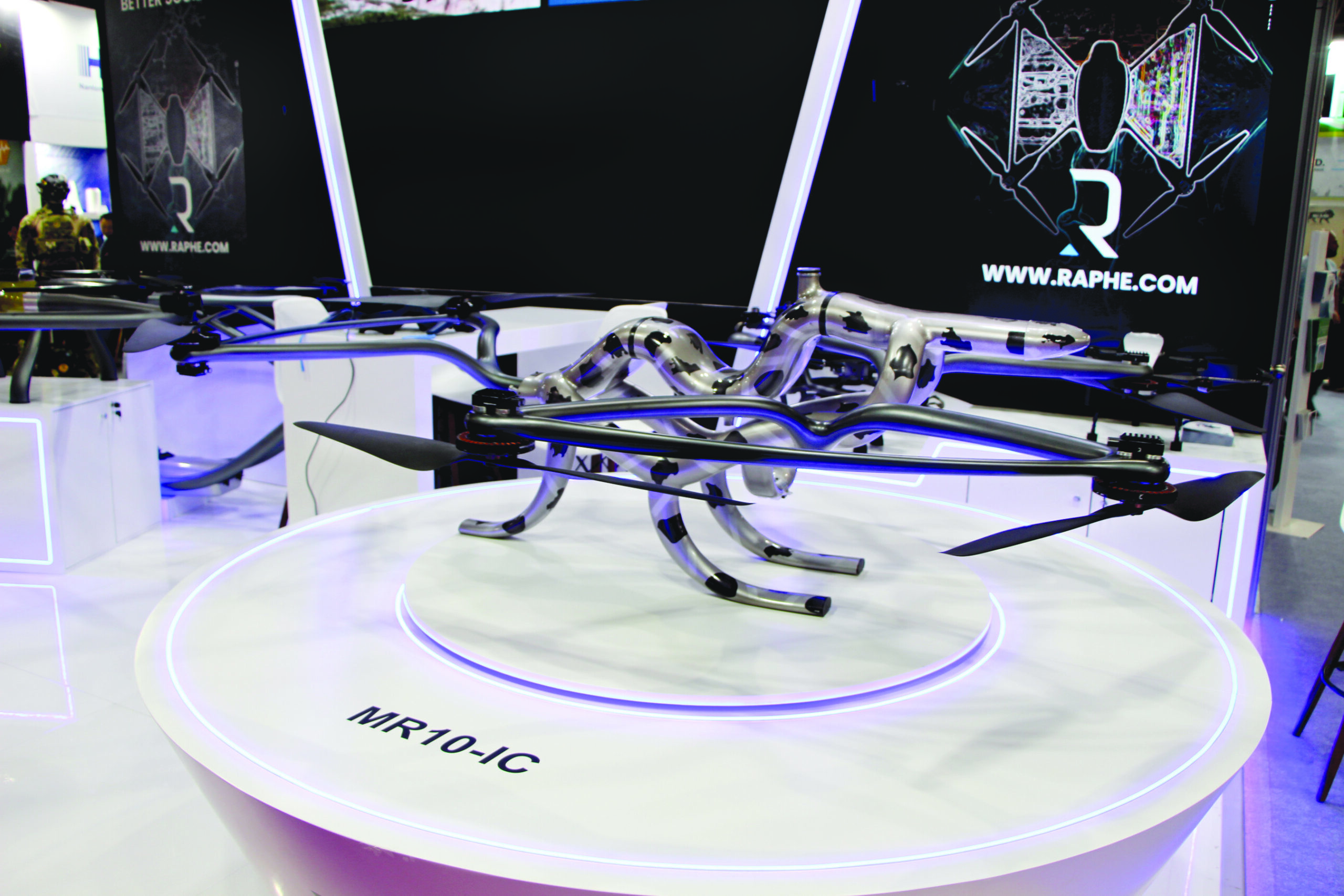
Indian companies like Raphe mPhibr are now unveiling sophisticated UAVs tailored for defence, surveillance and logistics
Though many countries have now developed drone capabilities, the US remains at the forefront and successive American administrations have institutionalised the use of armed drones for targetted killings, with missions ranging from surveillance to high-profile strikes against terrorists and their camps.
Anti-drone systems have proven to be effective in real-world scenarios
Globally, the proliferation of drones has not been limited to the United States. Militaries in China, Russia, Israel and Iran have heavily invested in UAV research and deployment, leading to a technological arms race and the emergence of new tactics on the battlefield. In recent years, the Russia-Ukraine conflict has vividly demonstrated the pivotal role of drones, with both sides launching massive drone assaults to strike military and civilian targets.
Reportedly, Russia recently deployed 90 drones in a single attack across multiple Ukrainian regions. Ukraine, in turn, has leveraged commercial drones for low-cost, effective strikes, showcasing how technological adaptation can level the playing field even against a more powerful adversary.
Middle East has also witnessed developments in drone tactics, particularly with the advent of swarm drone attacks. In April 2024, Iran launched an unprecedented attack on Israel using approximately 170 drones. This event underscored both the potential and the limitations of current drone technology: while such swarms can overwhelm defences and serve strategic political objectives, they remain vulnerable to sophisticated air defence systems.
Middle East has also witnessed developments in drone tactics, particularly with the advent of swarm drone attacks. In April 2024, Iran launched an unprecedented attack on Israel using approximately 170 drones. This event underscored both the potential and the limitations of current drone technology: while such swarms can overwhelm defences and serve strategic political objectives, they remain vulnerable to sophisticated air defence systems.
Meanwhile, Israel, which is a leader in drone technology, has used drones not only for battlefield operations but also for high-profile targetted killings, as seen in the assassination of top Hamas leaders such as Yahya Sinwar, where drone footage documented the final moments of the operation.
The effectiveness of drone swarms has been demonstrated in recent years. The United States Department of Defence (USDD) has conducted successful tests with swarms of over 100 micro-drones, highlighting the potential for large-scale, coordinated UAV operations in future conflicts.
Meanwhile, Israel, which is a leader in drone technology, has used drones not only for battlefield operations but also for high-profile targetted killings, as seen in the assassination of top Hamas leaders such as Yahya Sinwar, where drone footage documented the final moments of the operation. The effectiveness of drone swarms has been demonstrated in recent years. The United States Department of Defence (USDD) has conducted successful tests with swarms of over 100 micro-drones, highlighting the potential for large-scale, coordinated UAV operations in future conflicts.
These global trends have also reached South Asia, where 2025 marked a significant escalation in the use of drones between India and Pakistan. The recent India-Pakistan conflict, that erupted after a deadly terrorist attack in Pahalgam in Jammu and Kashmir, on April 22, claiming 26 lives. On May 7, India launched Operation Sindoor, conducting missile and air strikes on alleged militant camps in Pakistan and Pakistanoccupied Kashmir (PoK), claiming to target terrorist infrastructure, though Pakistan claimed that civilian areas were hit and retaliated with heavy shelling in Jammu and Kashmir.
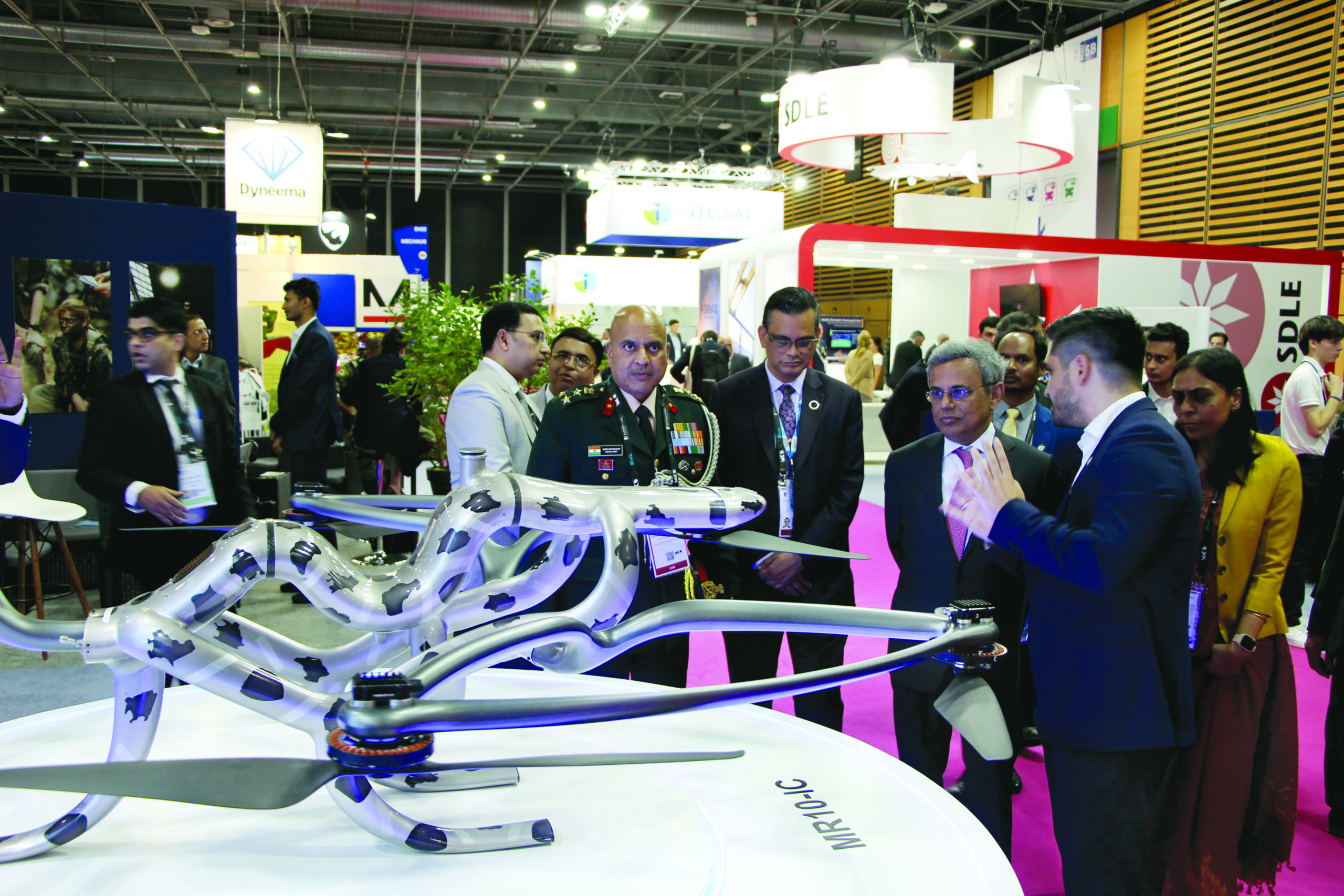
The demands of modern warfare are rapidly outpacing the capabilities of traditional drone systems (Photo: Media India Group)
For four days in May, the skies above the Line of Control (LOC) and beyond were transformed into a battleground for unmanned aerial vehicles (UAV), as both nations unleashed waves of drones. India deployed a variety of drones, such as Harop, Harpy, Nagastra-1, Warmate R and others, targetting Pakistani air defence nodes and critical infrastructure.
Pakistan responded in kind, launching its own drones at Indian military assets, airfields and ammunition depots. This was the first instance of a formal, largescale drone exchange between the two nuclear-armed neighbours and it revealed not only the growing sophistication of drone warfare but also the vulnerabilities and gaps in both countries’ electronic warfare capabilities.
This change did not come about all of a sudden. The Indian military has a long history with drones, having first relied on Israeli-built reconnaissance UAVs such as the IAI Searcher and Heron for intelligence collection and border surveillance. These platforms became essential for both combat operations and monitoring during peacetime due to their high operational altitude and endurance.
With time, India added loitering munitions like the Harpy and Harop, drones that can perform precision strikes as well as surveillance to its inventory of drones. Because it could hover over a battlefield and strike at the ideal time, the Harop in particular represented a shift towards high-value, precision-targeted warfare by weakening enemy air defences without endangering manned aircraft.
For many years, India relied heavily on foreign drone imports to meet its needs across sectors such as defence, agriculture and infrastructure. This dependence was particularly pronounced in the military domain, where advanced UAVs for surveillance and combat were sourced from countries like Israel and the US. However, recent years have witnessed a dramatic shift. The Indian government has implemented policies to promote self-reliance, including restricting the import of foreign drones and launching initiatives like the Production-Linked Incentive (PLI) scheme, which allocated INR 570 million in the 2025-26 Union Budget specifically to boost domestic drone manufacturing.
As a result, the Indian drone market, valued at USD 654 million in 2024, is projected to more than double to USD 1.43 billion by 2029, growing at an annual rate of 17 pc. The number of drones in India is expected to surge from just over 10,800 in 2024 to more than 61,000 by 2029, fuelled by over 200 startups and substantial government and private investment.
This rapid growth in domestic capability is transforming India from a passive consumer to an active producer and exporter of advanced drone technology. Besides Defence Research and Development Organisation (DRDO), an agency under the Department of Defence Research and Development in the Ministry of Defence, many private companies are coming forward for manufacture of drones in India. Indian companies like ideaForge, Airbot Aerospace, Raphe mPhibr and Garuda Aerospace are now unveiling sophisticated UAVs tailored for defence, surveillance and logistics, with features such as AI-enabled autonomy and electronic warfare resistance.

Vivek Mishra
“Our vision is to create, strengthen and accelerate India’s aerospace research and manufacturing ecosystem. We strive for self sufficiency in all domains of aerospace R&D and manufacturing, while also supporting emerging startups and collaborating with PSUs (Public Sector Undertakings) and government agencies to build this ecosystem. In the past 2-3 years, with significant technological advancements, we have accelerated the execution of our vision. As drone warfare evolves, new use cases for unmanned systems are emerging. We stay engaged with all stakeholders to expand applications beyond aerospace, into ground and maritime domains as well,” Vivek Mishra, Co-founder, Raphe mPhibre, a hi-tech aerospace company in Noida, UP, tells Biz@India.
As indigenous drones become central to military strategy, India is poised to leverage homegrown technology for intelligence gathering, border security, and even offensive operations. Indian companies are attempting to get past logistical and technological obstacles, frequently in cooperation with governmental organisations and educational institutions
“Our approach to international collaboration is clear: we seek true partnerships, not mere technology transfers. We collaborate to co-develop state-of-the-art systems, ensuring mutual benefit. By working with global experts in niche technologies, we gain a head start and then further improve these technologies, always aiming to surpass the current state-of-the-art. For example, with HENSOLDT, a German defence company, we are co-developing advanced UAV payloads, including next-generation radar and EO/IR (Electro-Optical/Infrared) sensors, to enhance autonomy and operational effectiveness. We regularly collaborate with the armed forces and organisations like Defence Research and Development Organisation (DRDO) for co-development. DRDO, as a key partner, helps us stay aligned with user needs, ensuring our solutions are relevant and effective,” Mishra adds
The global drone market reflects this shift. According to a 2023 report by the Stockholm International Peace Research Institute (SIPRI), global military spending on drones reached an estimated USD 13.2 billion in 2022, up from USD 9.5 billion in 2020, highlighting the growing prioritisation of UAVs in national defence budgets.
Yet, as the 2025 conflict demonstrated, the demands of modern warfare are rapidly outpacing the capabilities of traditional drone systems. The proliferation of drones on both sides of the border has forced a reevaluation of procurement, development and deployment strategies. Indian defence strategists are now accelerating investments in indigenous drone manufacturing, with projections of up to USD 470 million in spending on UAVs over the next 12 to 24 months, three times the pre-conflict levels. The focus has shifted to mass production of loitering munitions, swarm drones and platforms capable of operating in contested electronic environments.

Smit Shah
“Before the current escalation, a lot of companies were focussed on building drones for capabilities like surveillance, logistics and other peacetime uses. While there were already companies working on artificial intelligence (AI) capabilities and all, mostly that stress upon attack capabilities and other critical capabilities that may be required in wartime scenarios, that was slightly less and slower. So, that has changed completely. There has been a flurry of companies that have come in and they are trying to work and enhance their capabilities in various wartime scenarios like with advanced technology features like jamming-proof communication or GPS-denied navigation or attack drone capabilities, loitering vision platforms and all. That has been a significant change from the industry side,” Smit Shah, President, Drone Federation of India, a Delhi-based association of over 200 manufacturers that promotes development of unmanned aviation, tells Biz@India.
The development of drone warfare has also made it necessary to concentrate on counter-drone technologies concurrently. Threats posed by drones to civilian infrastructure and public safety, in addition to military assets, are growing in frequency.
The heightened level of threats has been evident in recent conflicts. For example, during the 2020 Nagorno-Karabakh war, between Azerbaijan and Armenia, both former Soviet Republics, drones were credited with destroying over 500 armoured vehicles and more than 100 artillery pieces, dramatically shifting the balance of power on the battlefield.
In India, Paras Anti-Drone Technologies, a subsidiary of Paras Defence and Space Technologies, a leading private sector defence company based in Mumbai, is one of the leading private-sector players in anti-drone technology.

Ashutosh Baheti
“Drone threats are evolving fast, from basic surveillance to swarm attacks and payload delivery, and we believe that our systems need to evolve just as quickly to stay ahead. Our approach is built around a mix of Radio Frequency (RF) detection and neutralisation sensors, with a strong focus on soft kill methods like jamming and signal disruption. These allow us to safely bring down or disable drones without causing collateral damage. At the same time, we are also actively working on hard kill options for scenarios where neutralisation through force is necessary. We continuously upgrade our systems to match new drone tactics and technologies. Whether it is protecting borders, critical infrastructure, or high-security events, our goal is simple: detect early, respond fast and neutralise threats effectively,” Ashutosh Baheti, CEO, Paras Anti-Drone Technologies, a significant player in the Indian Defence and Space sector, tells Biz@India.
With uses beyond the military, such as border security, critical infrastructure protection and disaster response, incorporating drones into India’s defence strategy has become a matter of national security. Anti-drone systems have proven to be effective in real-world scenarios when deployed in forward areas, as was the case during recent conflict with Pakistan.

Danish Ghori
“Drones have completely changed how India defends itself right now. Drones provide better surveillance capabilities with live telemetry going on remote control stations where sensors can monitor what is happening in real time and that helps us make better and more effective decisions. Plus, drones are very cost effective because they do the surveillance without putting our soldiers at risk. They provide instant data sharing, better awareness of the situations that are happening. Also, now the new drones that are being developed by various companies are the kamikaze drones which provide us with precision strikes that help in reducing civilian casualties. This is specifically in areas where there are large numbers of crowds or sensitive border areas,” Danish Ghori, Co-founder, Airbot Aerospace, an Indian drones startup, in New Delhi, tells Biz@India.
The future of drone warfare is likely to be defined by autonomy, artificial intelligence and swarming tactics.
“In the future, as well as in the present, drones are going to be working in coordinated groups like a swarm of drones. There will be hundreds of small drones that will be connected with our traditional defence systems. Some will have a payload dropping mechanism of a bomb. Some will have jamming systems. So, they will all work in coordination. These groups will show smart behaviour and changing tactics based on what the conditions are there on the battlefield. So, continuous surveilling around the borders, AI will help in doing these missions seamlessly. However, humans are still going to need to make the final decisions where drones are being used for weapons to ensure an ethical or a legal use,” Ghori adds.
There is no denying drone warfare’s influence on national security, military strategy and technological advancement as it develops further. In addition to changing the battlefield, the quick development of UAVs, counter drone systems and AI-driven autonomy is ushering in a new era of cooperation and independence in India’s defence industry. With a strong network of startups, government agencies and foreign alliances, India is leading this change and is well-positioned to not only protect its borders but also establish new standards in the global drone market.
