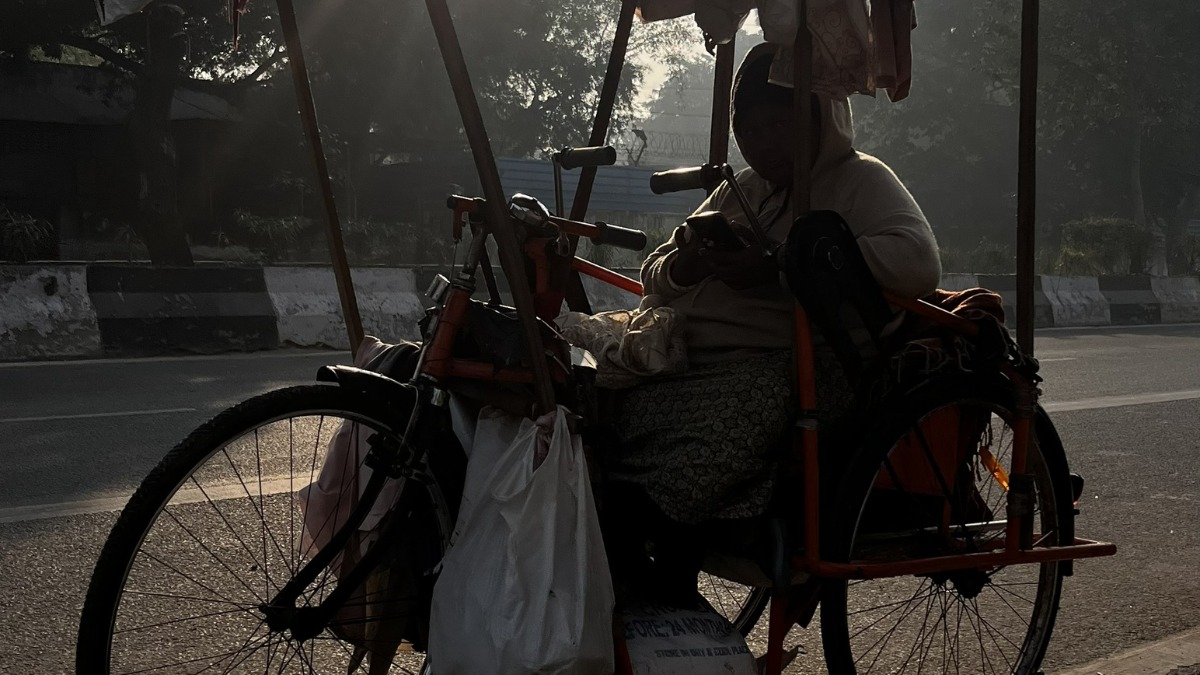
Despite years of corporate pledges on inclusion, data shows that people with disabilities remain largely excluded from India’s workforce (Photo: MIG / Amit Singh)
In 2024, when Anoop Parihar completed his graduation in Mathematics with a rather respectable score of 80 pc, he was certain the degree would open the path to a successful career for him. But Parihar says that almost two years later, he is yet to find a job as his qualifications are frequently overlooked due to the fact that he is 40 pc disabled, making it difficult to secure work that matches his skills despite persistent efforts.
“I have passed with good marks but I am unable to get a job because of my disability,” Parihar tells Media India Group.
Also Read: Persons With Disabilities
In 2021, Parihar worked at a Common Services Centre in Gurgaon, earning his first regular salary until the Covid-19 lockdown shuttered the centre and his income vanished. Since then he has been searching through job portals, employment fairs and referrals for anything that could pull him out of uncertainty.
“It is very difficult for a disabled person to get a job. Every single day I check job portals and LinkedIn. I apply, I follow up, I try through contacts I have tried everything. Still, there is no response. After a point, it starts breaking you from inside. Many people like me are living this reality every day,” he adds.
Parihar’s struggle mirrors a systemic failure in corporate India’s much-touted diversity and inclusion efforts. Despite years of panels, pledges and annual reports celebrating equity, people with disabilities (PwDs) make up less than 1 pc of the workforce across leading Indian companies a figure far below the 4 to 5 pc inclusion target many disability rights advocates and policy experts say should be a minimum standard.
A 2025 Inclusion Index by HR consulting firm Marching Sheep surveyed 876 listed firms in India and found that PwDs account for just 0.65 pc of employees and 37.9 pc of companies employ none at all. These numbers come in spite of India’s progressive Rights of Persons with Disabilities (RPwD) Act, 2016, which mandates equal opportunity and non-discrimination in hiring.
Also Read: New disabilities bill passed in India
What is worse, among those PwDs who do find employment, many are confined to entry-level or blue-collar roles, with little access to career progression or equal pay. According to the PwD Inclusion Index, 73 pc of PwDs surveyed felt they did not receive equal pay for equal work, and 68 pc cited inaccessibility in their workplace.
Experts say that the problem is not a lack of talent as Parihar’s academic record demonstrates but a host of deep-seated barriers. Physical accessibility in offices remains patchy, recruitment processes are not designed to be inclusive and many hiring managers lack awareness or guidance on how to assess and onboard candidates with disabilities. Cultural biases often underpin these challenges, with employers treating inclusion as a box to tick rather than a strategy.
The broader labour market reflects these exclusionary trends PwDs in India have a workforce participation rate of around 36 pc, compared with nearly 60 pc for people without disabilities and the disparity widens for women with disabilities.
While public sector undertakings account for about 72 pc of all PwDs employed in surveyed companies, the private sector’s pace of inclusive hiring lags far behind. A handful of firms have made notable commitments some reporting a modest rise in PwD hiring or setting internal targets but these efforts remain the exception rather than the norm.
Also Read: Only 1 pc of visually handicapped people in India can use Braille
There are emerging signs of progress. States like Karnataka are drafting policies to mandate a 5 pc quota for PwDs in private sector jobs, a move disability advocates say could shift corporate behaviour if implemented robustly. Meanwhile, some companies and NGOs have launched targetted training programmes and inclusive hiring drives, recognising the business case for diversity as well as its moral imperative.
But many hiring leaders still admit they lack clear roadmaps for recruitment and accommodation even when the will exists. Without institutional readiness and accountability mechanisms, inclusion often stalls at the level of aspiration rather than reaching operational reality.
Back in Gwalior, Parihar keeps scanning job listings on his phone. “I want to work and contribute like anyone else. But for people with disabilities, the door rarely opens,” he adds.