
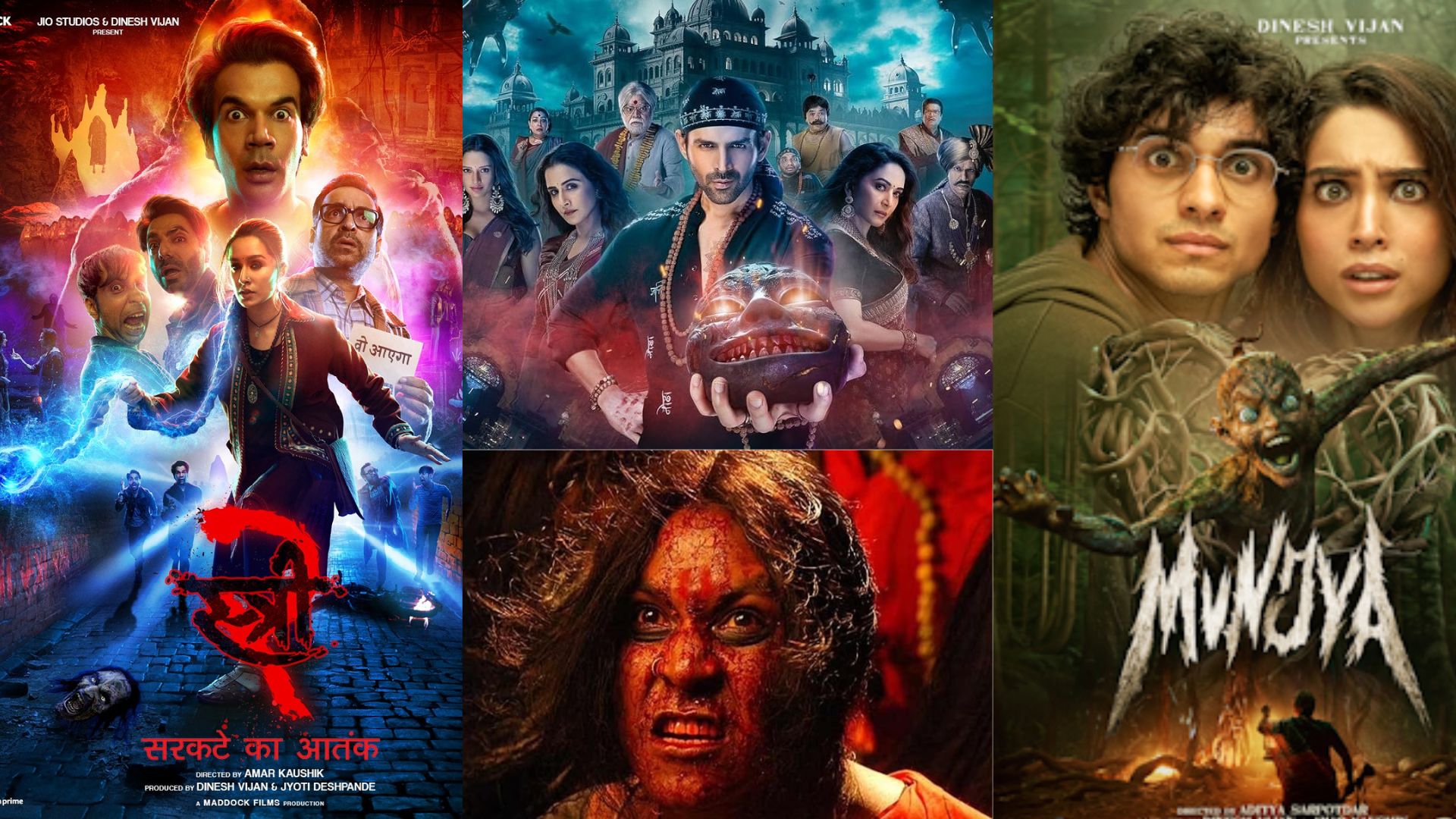
Blending elements of fear and humour, this hybrid format has resonated strongly with Indian audiences in recent years
In the Indian film industry, the horror genre has largely remained on the periphery. Unlike the dystopian or science fiction genres, horror occupies a unique middle ground. It is not as widely popular as romance or action, yet not as niche as dystopia or experimental cinema.
From Gothic-inspired classics like 1949’s Mahal 1949 and 1962’s Bees Saal Baad, which often centred around haunted houses, mysterious women, and haunting music, to the rise of psychological horror in films like the Raaz franchise, bolstered by memorable soundtracks, the genre has seen several phases. More recently, horror rooted in Indian folklore, such as Tumbbad and Pari, has offered darker, more layered narratives exploring the consequences of breaking ancient taboos.
Despite its relatively modest place in the mainstream, horror continues to hold its ground in Indian cinema. In fact, box office figures from Hollywood horror releases suggest a strong and growing audience. According to an Ormax report, The Conjuring 2 remains the highest-grossing Hollywood horror film in India, earning USD 10 million. Similarly, The Nun II (2023), which clashed with Jawan, grossed USD 6.3 million. The Conjuring franchise alone has collected over USD 35 million in India across eight films, an encouraging sign for the genre’s potential.
Rise of horror-comedy genre in Indian films
While traditional horror has maintained a steady presence, a particular subgenre has rapidly gained traction, horror-comedy. Blending elements of fear and humour, this hybrid format has resonated strongly with Indian audiences in recent years.
Though formal data remains limited, the commercial success of recent horror-comedies signals a noticeable shift in audience preferences. In 2024, Stree 2 proved to be a standout example, grossing USD 70 million at the box office within 40 days, on a modest budget of just USD 7 million. With a net profit of USD 63 million, it has become one of the most profitable Bollywood films to date.
Another success story is Munjya, which earned over USD 11.6 million in India and crossed USD 15.1 million globally. The genre’s appeal was further cemented by the release of Bhool Bhulaiyaa 3, which not only became a box office hit but also marked the highest-grossing film of Kartik Aaryan’s career, surpassing USD 46.4 million worldwide.
As Indian cinema continues to experiment, the horror-comedy genre seems to have found its sweet spot—striking a balance between scares and laughs, and delivering commercial results that neither pure horror nor comedy have consistently achieved.
This rise feels even more remarkable when traced back to its early, unintentional roots. Take Bhoot Bungla (1965), directed by noted comedian and supporting actor Mehmood. Though conceived as a comedy-musical, the film inadvertently ticked every box of the horror-comedy formula, featuring a haunted house, mysterious deaths, unresolved murders, and the presence of poltergeists, all delivered with a comedic undertone. At the time, such genre-blending was rare and met with hesitation from both audiences and filmmakers.
Fast forward to 2024, and horror-comedy is no longer a gamble, it is a proven box office winner. From Stree to Bhool Bhulaiyaa 3, the genre has evolved from a fringe experiment to a dominant force, reshaping how Indian cinema approaches fear and laughter on screen.
According to news reports, the rising popularity of horror-comedy films in India can be attributed to their embrace of Indian traditions, family-friendly appeal, and strong storytelling with well-developed characters. These films have become cult favourites by tapping into local folklore, primal fears, and cultural anxieties that resonate deeply with audiences.
These films go beyond jump scares, presenting stories rooted in culture and emotion. Their broad appeal has made them a favourite among families and helped establish horror-comedy as one of the most bankable genres in Indian cinema.
Horror-comedy blooms in South India as well
But it is not just Bollywood that has embraced the horror-comedy wave, the Southern film industry has long shared a strong connection with the genre. Several South Indian horror-comedy films have achieved notable success, with franchises like Kanchana and Aranmanai becoming audience favourites. Kanchana also known as Muni 2, led by Raghava Lawrence, have been especially popular for their seamless mix of humour and horror, earning around USD 12.5 million worldwide.
Films like Prem Katha Chitram, Arundhati, Nagavalli, Chandramukhi, Raju Gari Gadhi, Rajmahal, and Bhaagamathie brought fresh perspectives to the genre by merging supernatural elements with comic relief, making the horror more engaging and accessible.
The momentum continues with upcoming projects like The Raja Saab, a Telugu horror-comedy starring Prabhas. Slated for release on December 5, the film has already generated buzz with its massive 4100 sqm haunted mansion set and a cast that includes Nidhhi Agerwal and Malavika Mohanan.
Even smaller productions have found success. Subham, for example, marked Samantha Ruth Prabhu’s debut as a producer and was well-received by audiences, further proving that scale is not the only factor in winning over viewers in this genre.
With its unique blend of fear, folklore, and humour, horror-comedy has carved out a distinct space in Indian cinema. As both mainstream and regional filmmakers continue to explore and innovate within the genre, its growing popularity signals not just a passing trend, but a lasting shift in how Indian audiences engage with horror and how they laugh through it.
