

India produces 1,500+ films yearly, captivating global audiences with its stories, characters & music
For decades, the Indian film industry, whether Bollywood or the ever-popular southern cinema has captivated audiences with its emotional storytelling, larger than life characters and unforgettable supporting roles that leave a lasting impact. Adding to its charm, the industry’s music continues to dominate the charts, becoming an integral part of mass media and popular culture.
However, one of the industry’s lesser-appreciated strengths is its ability to capture locations so vividly on camera that viewers either feel compelled to visit them or experience their essence simply through the lens of cinema.
Here are five Indian destinations that the film industry has showcased, seamlessly blending their essence into storytelling through the cinematic lens.
New Delhi in Rockstar
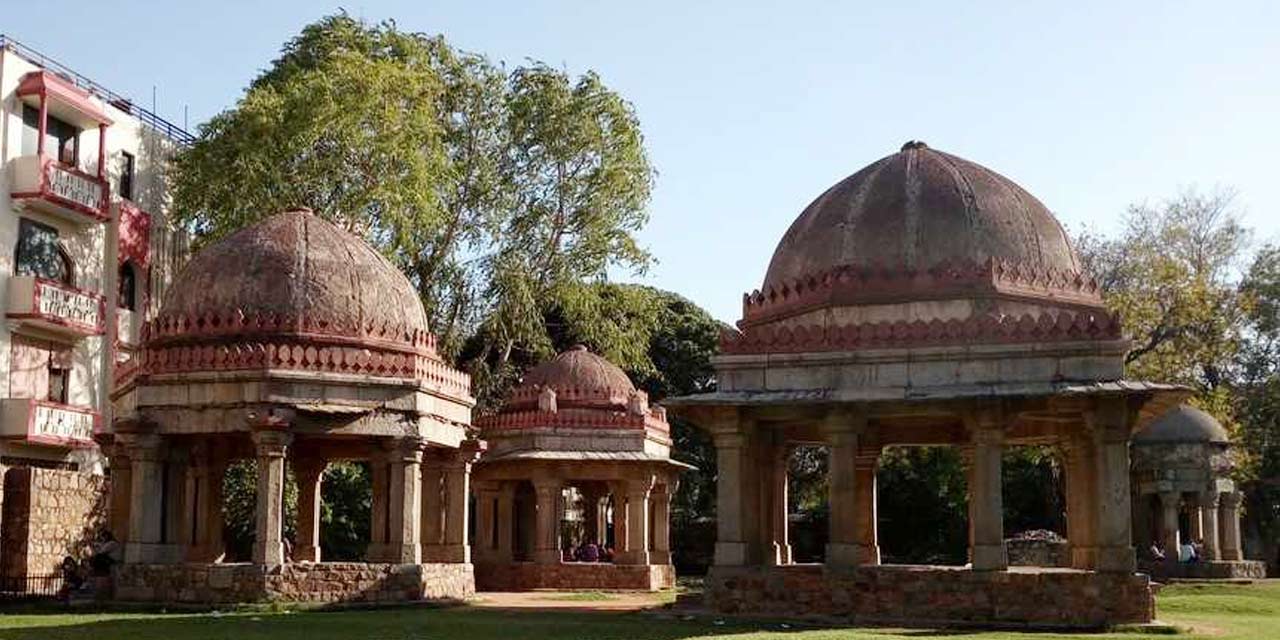
At Hauz Khas Fort, he finds himself consumed by memories of Heer, played by Nargis Fakhri, the city offering him a rare moment of solitude to reflect on his longing.. (Photo: Delhi Tourism)
Much like any Imtiaz Ali-directed film, which brings New Delhi to life in its myriad forms, his works capture the city’s soul in unforgettable ways. In Love Aaj Kal (1 & 2), the film travels through iconic spots like the Red Fort, Old Delhi, and the charming Champa Gali in Saket, along with the artsy vibes of Lodhi Colony. But in Rockstar, Ali goes beyond the surface, exploring the city in all its raw, gritty, and vibrant shades, revealing its complexities and contradictions in a way only he can.
From Janardan’s (Ranbir Kapoor) perspective, Delhi is a city of contrasts, where the old and the new coexist seamlessly. The old is embodied by the narrow lanes and timeless spirituality of Old Delhi, which stand in stark contrast to the structured, modern academic world of St Stephen’s College and Delhi University. Restless and eager for recognition, Janardan feels out of place in the latter, struggling to make his mark as a singer.
However, after being thrown out of his home, he drifts toward Nizamuddin Dargah, where the sacred atmosphere offers him solace and inspiration. As he loses himself in the Sufi melody Kun Faya Kun, he finds a sense of belonging he never experienced before. It is at this transformative moment that the character of Shammi Kapoor notices him, marking a turning point in his journey.
Additionally, in Rockstar’s world, Delhi is more than just a setting, it becomes a quiet companion to Jordan’s journey. At Hauz Khas Fort, he finds himself consumed by memories of Heer, played by Nargis Fakhri, the city offering him a rare moment of solitude to reflect on his longing. In its historic ruins and silent corners, he experiences the ache of love in a way only Delhi allows, giving him space to miss, to remember, and to feel.
All in all, throughout the film, Delhi inadvertently plays a crucial role in shaping who Jordan is and what he ultimately becomes at the end of the movie.
Kahaani of Kolkata

Kahaani brought the City of Joy to life beyond just the iconic Howrah Bridge. (Photo: Shutterstock)
If Delhi functioned as a place that shaped Janardan’s character arc throughout the film, Kolkata was the city that shaped Vidya Bagchi’s journey in Kahaani.
Directed by Sujoy Ghosh, Kahaani brought the City of Joy to life beyond just the iconic Howrah Bridge. The city’s narrow alleys, the festive energy of Durga Puja, and its old-world charm all played a crucial role in the unfolding mystery. Unlike typical landmarks like Victoria Memorial, the real action took place in the Kolkata Metro station, where Vidya Bagchi’s search for her husband began and ended, leading to a twist best left unrevealed.
With its yellow taxis, trams, and a mix of tradition and modernity, Kahaani captured the essence of Kolkata in every frame. More than just a setting, the city itself became a driving force, shaping the story at every step.
Following the success of Kahaani, Kolkata gained renewed attention as a cinematic landscape, encouraging filmmakers to explore locations beyond Mumbai and Delhi. Films like Piku (2015) and Te3N (2016) beautifully captured the city’s essence, Piku highlighting its old-world charm, while Te3N embraced Kolkata’s noir-like atmosphere, reminiscent of the detective fiction tradition rooted in Byomkesh Bakshi and Feluda.
Kapoor & Sons at Coonoor

Shakun Batra’s Kapoor & Sons masterfully captures the picturesque charm of Coonoor, using its misty hills, lush tea plantations, and colonial-era architecture. (Photo: Tamil Nadu Tourism)
Meanwhile, Shakun Batra’s Kapoor & Sons masterfully captures the picturesque charm of Coonoor, using its misty hills, lush tea plantations, and colonial-era architecture as the perfect backdrop for an emotional family drama.
Starring Fawad Khan, Siddharth Malhotra, and Alia Bhatt, the film unfolds within a 100-year-old colonial house that silently bears witness to the unresolved tensions of the Batra family.
Batra, inspired by the house’s unique layout, meticulously crafted key moments around it. “There is a scene where a plumber is in the house while the family is engaged in a heated argument, the layout of the house helped shape that moment. Another scene, where the family comes together for a singing session, was made possible because of the space itself,” said Batra, as per news report.
His words highlight how a well-chosen location does more than set the scene, it breathes life into the narrative, shaping the very soul of the film.
A Death In The Gunj, McCluskieganj

Konkona Sen Sharma’s A Death in the Gunj brought the quiet, lesser-known town of McCluskieganj in Jharkhand into the cinematic spotlight. (Photo: Incredible India)
But amidst the exploration of Indian cities and hill stations, Konkona Sen Sharma’s A Death in the Gunj brought the quiet, lesser-known town of McCluskieganj in Jharkhand into the cinematic spotlight. Starring Vikrant Massey, the film explores themes of grief, isolation, and the fragility of human relationships, all set against the town’s tranquil yet haunting backdrop.
With its abundant wildlife, colonial-era architecture, and serene atmosphere, McCluskieganj becomes more than just a location, it mirrors the emotional turmoil of Shutu, the film’s protagonist. His struggles with grief and his family’s inability to acknowledge his pain contribute to his gradual emotional breakdown.
The film also has deep ties to the town’s real history. Based on a short story by Mukul Sharma, it is inspired by actual events, including a séance conducted by Sharma and his then-wife, filmmaker Aparna Sen, in McCluskieganj. In many ways, the town shapes the film’s identity, making it an essential part of its storytelling.
Namaste London in London
Ending the list with a film, where a city shaped or rather drove the story was the 2007 film was Namaste London. As reflected in the title, the romantic comedy film starring Akshay Kumar and Katrina Kaif, the film story revolved around the city of London, and explored all parts of the city including a montage where actors hung out and explore different places of the city like London Eye, Buckingham Palace, Piccadilly Circus, Queen Elizabeth Olympic Park, the River Thames, the Royal Parks, South Bank and Bankside, the Tower of London, Trafalgar Square, and ZSL London Zoo.
Not just that, through the city it displayed the conflict and differences of culture between British raised woman and Indian Punjabi man and how they navigate both parts of the cultural divide.
