
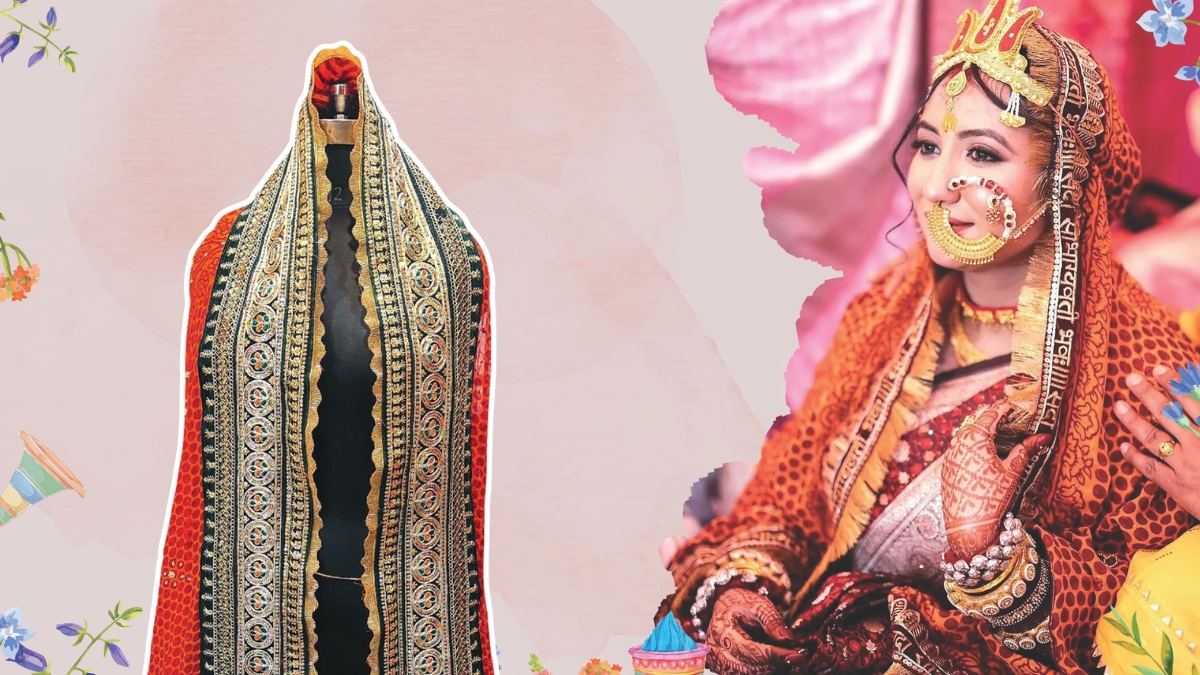
Kumaoni bridal attire featuring traditional pichora and gold jewellery (Photos: Kumaoni Pichora Manufacturer)
India, a land of rich traditions and diverse cultures, is a canvas where customs are beautifully reflected through its clothes, jewellery, and even the food. The country’s cultural tapestry varies from region to region, with each state and community adding its own unique touch to these elements.
The intricate, handwoven saris of Bengal, the vibrant turbans of Rajasthan, the graceful Kathakali costumes of Kerala, and the silver jewellery of the north-eastern states all represent not just artistry but the essence of their respective regions. Indian culture is not merely seen in the attire, but in the details, every stitch, every piece of jewellery, and even every colour used tells a story of history, faith, and identity.
Like every other region of the country, the Kumaon region in Uttarakhand has also its own range of bridalwear reflecting the local roots.
These include vibrant yellow and red pichoras, the exquisite gold jewellery which includes a ponji, a choker neckpiece made of gold and red base, gulobandh, unique gold bracelets crafted on a red base and the large yet stunning naths, nose rings worn by Kumaoni brides.
The bridalwear showcases the region’s deep rooted customs, with the pichora being a particularly iconic element, its bright hues and unique designs.
Also Read: Unusual wedding traditions in India
The stunning hues of yellow and red
The bridal dress typically consists of a bright and vibrant red or maroon saree, which is often paired with an intricately designed blouse and a long, flowing dupatta. The saree is usually woven from fine cotton or silk and adorned with detailed embroidery.
One of the most iconic and symbolic elements of the Kumaoni bridal attire is the pichora, a scarf that is draped over the bride’s head. Traditionally, the pichora was a simple, block-printed piece of cloth with a yellow base and red designs, often featuring motifs like flowers and simple geometric patterns. It symbolises prosperity and marital bliss. The bright yellow base is believed to represent good luck, while the red symbolises love, fertility and strength.
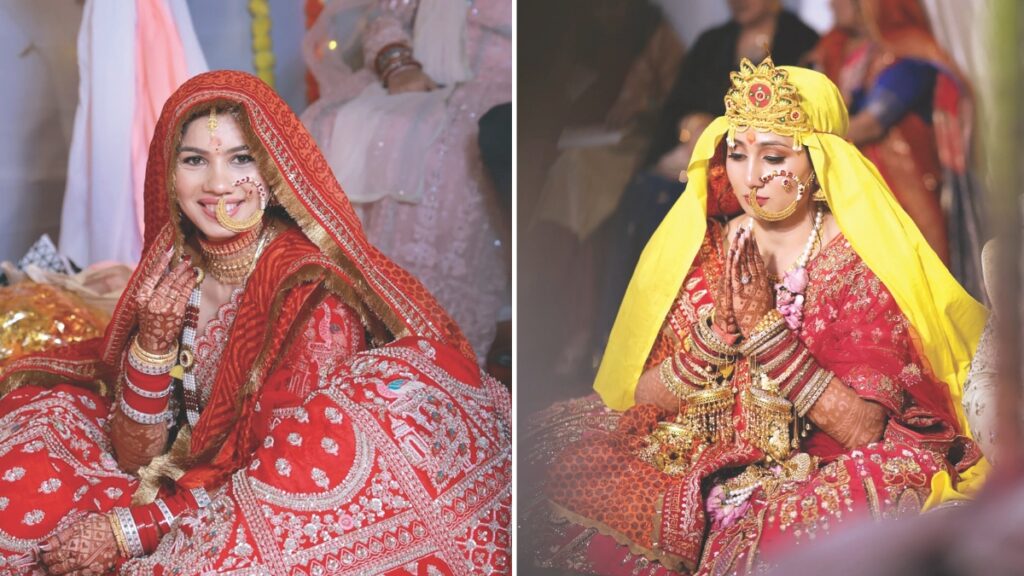
Kumaoni brides dressed in vibrant red and yellow pichoras, adorned with traditional jewellery that reflects the rich heritage of Uttarakhand
“The colour yellow is extremely significant for us, it symbolises good luck and prosperity. The pichoras which are given to the bride at the time of marriage are not just part of the wedding attire but are also worn by us married women at all significant moments in our lives. Some women living in villages wear everything from pichoras to all gold jewellery every day,” Lata Upadhayay, a housewife who belongs to Almora, in Uttarakhand tells India & You.
Over the years, the pichora has evolved. What once began as a simple, block-printed scarf has now transformed into an elaborate piece of art, with intricate designs that include swastikas, floral patterns and other symbolic motifs. These designs have become more elaborate, often incorporating gold or silver threads and more detailed patterns.
In earlier times, pichoras were made by skilled artisans using traditional block-printing methods. Wooden blocks carved with symbolic motifs were dipped in natural dyes and pressed onto cotton or chiffon fabric, typically in vibrant hues like yellow and red. The process required precision and patience, as each section of the cloth was printed by hand. After printing, the fabric was left to dry in the sun and sometimes finished with delicate hand embroidery to enhance its sacred and festive appeal.
“Earlier, we used to make pichora’s by hand. The base has always been yellow. However, like everything these days, machines took over.
Now we use machines to create new designs,” Mohamad Ummar, an artisan who creates pichoras based in Dehradun, Uttarakhand tells India & You.
Also Read: From Misty Trails to Woven Tales: Discovering Naihra’s Pullas
One of the most common and intricate designs seen in the pichoras worn by brides today features a central swastik symbol, surrounded by delicate floral patterns and leaves. The swastik is an ancient and sacred symbol in Hinduism, representing auspiciousness, good fortune and the eternal cycle of life. It is often associated with prosperity, wellbeing and the blessings of divine powers. In this design, the swastik is typically surrounded by motifs such as the sun, the moon, a conch shell and bells.
“We now have pichoras in all sizes, designs. Things have changes, evolved to meet the latest fashion trends.
From swastiks to flowers we can create anything but the essence of the pichoras is still alive in its yellow and red colour,” Varun Sharma, Owner, Kumaoni Pichora Manufacturer, tells India & You.
Other elements of the bridal attire
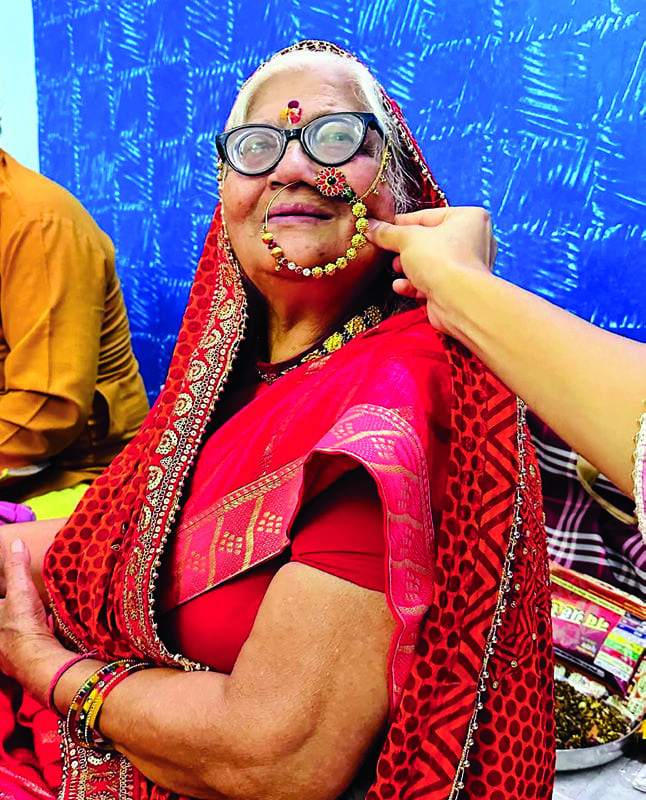
An elderly Kumaoni woman wearing a traditional red pichora and ornate nose ring
Alongside the pichora, the bridal attire includes other significant elements that reflect the region’s heritage. Gold jewellery, particularly large, ornate naths (nose rings), are an essential part of the bridal ensemble. These nose rings, often large and eye-catching, represent both beauty and tradition. In many parts of the Kumaon region, the ring is passed down through generations.
“The nath is very important to us. It is crafted of pure gold and can be extremely huge and heavy, the bigger the better in fact. It is said that the size and weight of the nath symbolises the wealth and heritage of the family,” says Upadhyay.
Also Read: Khovar painting: Mithila’s fading wedding tradition
Another important element of the Kumaoni bridal attire is the traditional headdress known as the mukuth or the crown. Adorned with intricate gold detailing, the crown is deeply symbolic, representing the bride as Goddess Lakshmi and the groom as Lord Narayan, a divine couple in Hindu mythology.
Goddess Lakshmi embodies prosperity, wealth, and happiness, while Lord Narayan is considered the protector and sustainer of the universe. In the context of the marriage, the crown signifies the bride’s role as the embodiment of Lakshmi, bringing prosperity and good fortune into the home, while the groom is symbolised as Narayan, the protector and spiritual partner.
Alongside the crown, the bride wears golubandh, a pair of traditional gold bracelets, which are another significant part of the bridal jewellery. Completing the bridal attire is ponji, a delicate neckpiece that not only enhances the bride’s beauty but also carries spiritual significance.
