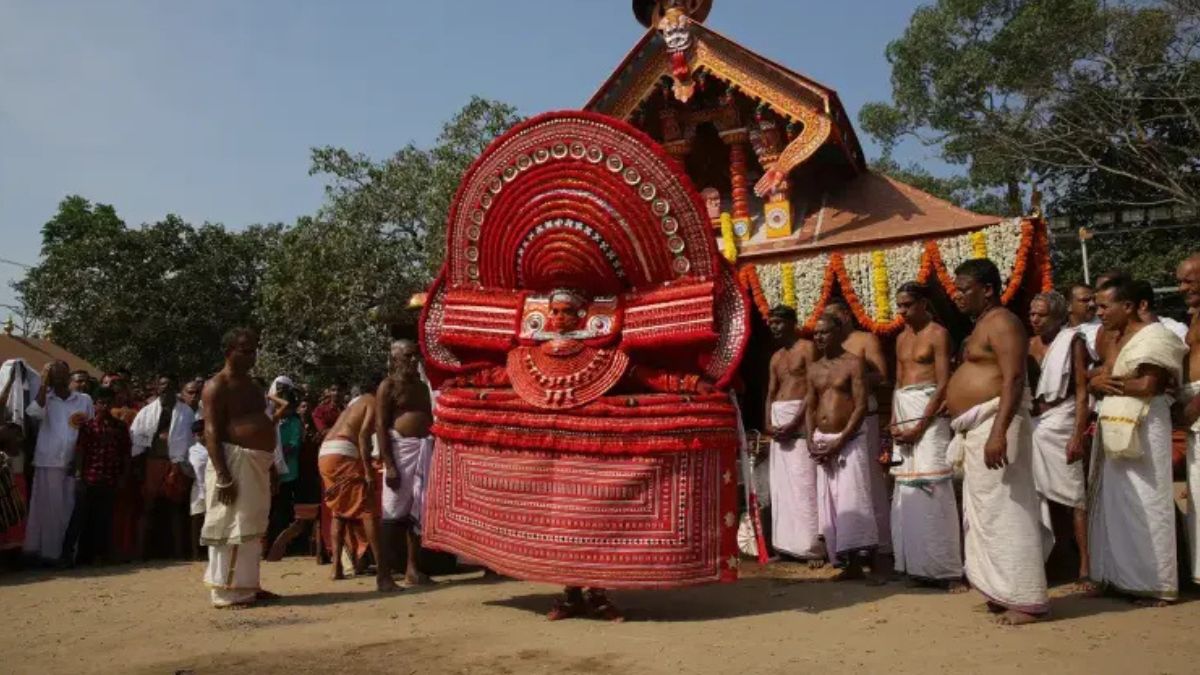
Theyyam turns performers into living gods, connecting devotees with the divine (Photos: Kerala Tourism)
Theyyam, celebrated each year between October and April in the temple groves and ancestral courtyards of northern Kerala, draws communities together for rituals marked by music, dance and intense spiritual devotion. Though rooted in ancient tribal belief systems and local traditions, it has evolved into a distinctive cultural and religious practice where performers are believed to become living gods, allowing devotees to experience and engage directly with the divine.
Practiced mainly in districts like Kannur and Kasaragod, northernmost part of Kerala, Theyyam is not a staged cultural performance but a deeply spiritual act rooted in local belief systems. Unlike conventional forms of worship, it takes place outside large temple complexes, in sacred groves, village shrines and ancestral homes, making it an intimate and community-driven experience.
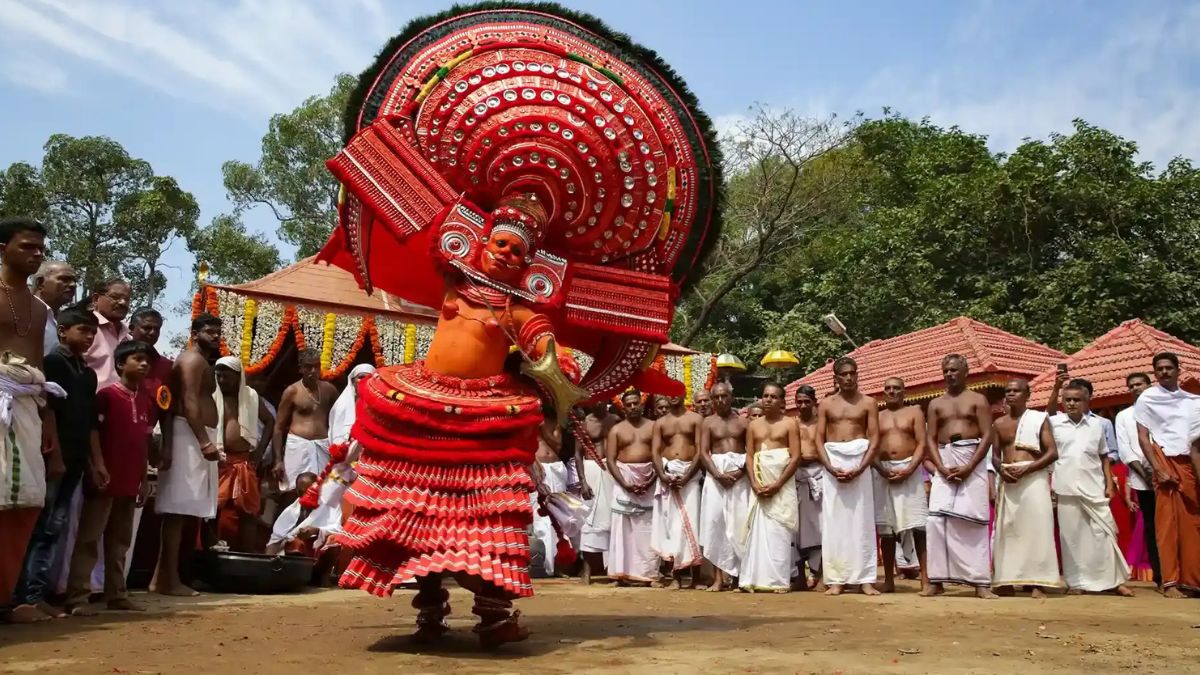
Theyyam in Kerala brings communities together through vibrant rituals of music, dance and deep spiritual devotion
The term Theyyam is derived from daivam, meaning god, reflecting the central belief that the divine is not just invoked but embodied. For devotees, the ritual offers a rare opportunity to interact directly with what they believe is a living manifestation of the deity.
Origins in ancient folk belief and oral traditions
The roots of Theyyam go back over a millennium, evolving from indigenous tribal practices, ancestor worship and nature-based belief systems of North Malabar. Over time, it absorbed elements of Hindu mythology while retaining its strong connection to local legends, heroes and spirits who were gradually deified.
Many Theyyam forms are linked to stories of individuals who were wronged, martyred or revered in life and later transformed into divine figures through collective memory. These narratives are preserved through oral traditions and ritual songs, making Theyyam a living archive of regional history and folklore.
Also Read: Chapchar Kut: Spring festival of community and culture in Mizoram
In its early form, Theyyam was closely tied to agrarian life and seasonal cycles, functioning as both a spiritual practice and a means of preserving cultural knowledge across generations.
Why Theyyam is performed
At its core, Theyyam is performed to invoke divine presence and seek blessings for protection, prosperity and well-being. Communities organise these rituals as part of annual festivals, fulfilling vows and maintaining a spiritual connection with their deities.
Devotees approach the Theyyam performer with personal concerns, ranging from health and family issues to financial difficulties, believing that the deity, speaking through the performer, offers guidance and solutions.
The ritual is also a way of reinforcing collective identity, bringing communities together in shared belief and participation while ensuring continuity of traditions that have been passed down for centuries.
The transformation ritual of becoming the deity
What sets Theyyam apart is its central belief in complete transformation. The performer does not represent the deity but becomes it.
This transformation involves intense preparation. Performers observe periods of fasting, abstinence and mental discipline before the ritual. The process unfolds gradually, beginning with preliminary rites and moving into the application of intricate face painting using natural pigments.
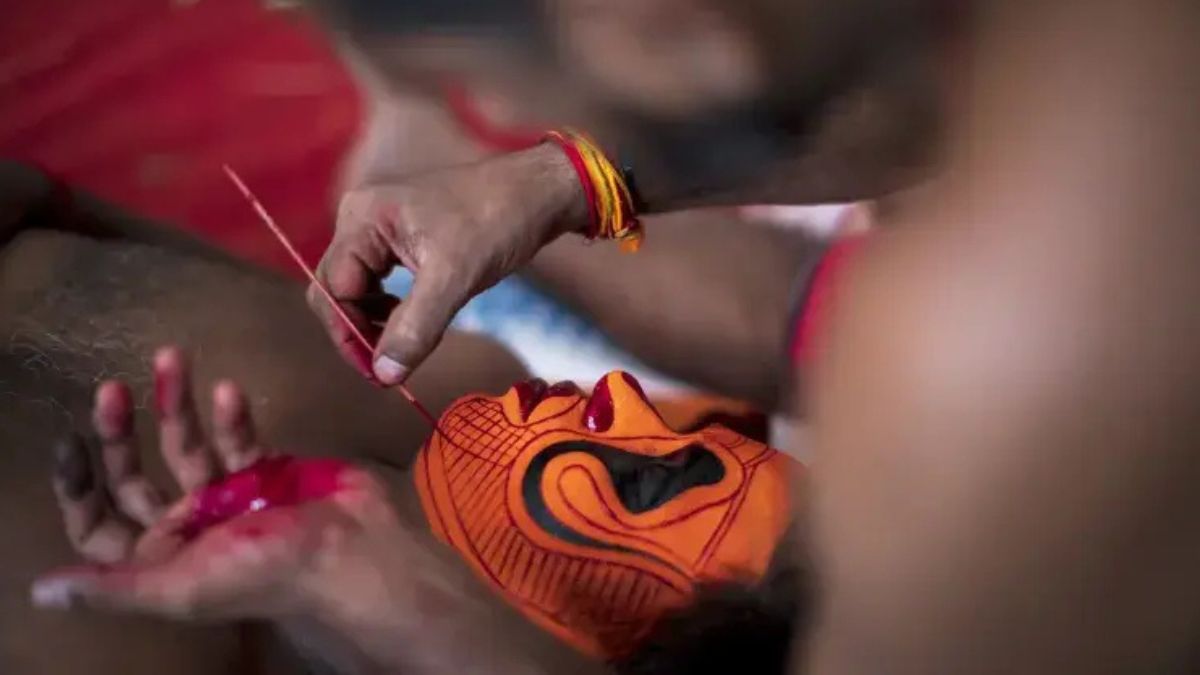
The ceremony progresses step by step, starting with early rituals and culminating in the detailed application of face paint with pigments
Elaborate costumes made of coconut leaves, cloth and metal ornaments are layered onto the body, followed by the final adornment of the towering headgear known as mudi. This moment is believed to mark the arrival of the deity into the performer.
Ritual songs called thottam are sung to narrate the origin and story of the deity, guiding the transformation. Once complete, the performer enters a trance-like state, embodying the divine presence.
During this phase, devotees interact directly with the performer, seeking blessings, asking questions and receiving responses. In some forms, performers walk across fire or engage in intense physical acts, reinforcing the belief in divine power.
A ritual beyond temple structures
Unlike mainstream temple worship, Theyyam exists largely outside formal religious institutions. It is performed in kavus or sacred groves, small shrines and family compounds, spaces that are deeply tied to local ecology and community life.
Also Read: Garasia maintain centuries-old tradition of live-in relationships
This decentralised nature makes Theyyam accessible and participatory. It reflects a form of spirituality where the sacred is embedded in everyday landscapes rather than confined within institutional boundaries.
Communities at the heart of Theyyam
Theyyam is closely associated with specific communities, many of whom have historically been marginalised within the caste hierarchy. Groups such as Vannan, Malayan, Velan and Pulayan have traditionally been the custodians and performers of the ritual.
In a striking reversal of social roles, these performers assume the highest spiritual authority during the ritual. Devotees from all social backgrounds, bow before them, recognising the divine presence they embody.
This aspect of Theyyam makes it not only a religious practice but also a powerful expression of social identity and cultural dignity.
Costumes, colour and symbolic expression
The visual dimension of Theyyam is among its most striking features. Each form is characterised by elaborate costumes, intricate face painting and towering headgear that can rise several feet high.
Natural pigments in bold shades of red, black and white are used to create detailed facial designs, each pattern representing specific deities and symbolic meanings.
The performances are accompanied by rhythmic drumming, particularly the chenda, along with cymbals and ritual chants, creating an intense and immersive atmosphere.
There are over 400 recognised forms of Theyyam, each with its own mythology, costume style and performance structure, reflecting the diversity of local belief systems.
Also Read: Reimagining taboos through faith and tradition
Ritual offerings and culinary traditions
Food in Theyyam is closely tied to ritual offerings rather than elaborate feasting. Offerings typically include rice, coconut, betel leaves and areca nut, reflecting the agrarian roots of the tradition.
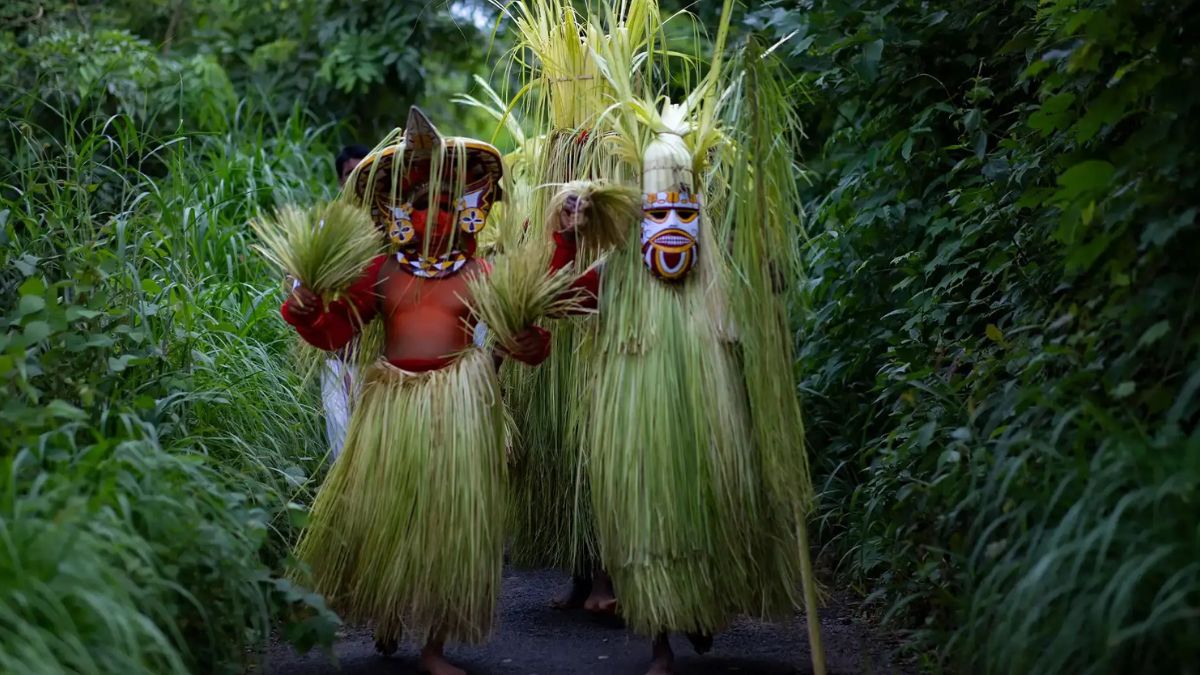
Theyyam reflects its agrarian roots, with figures draped in palm leaves and swaying green cloaks
In some rituals, toddy, a locally brewed palm liquor, is also offered and occasionally consumed as part of the ceremony.
After the ritual, food may be shared among participants and community members, reinforcing social bonds and collective participation. The simplicity of these offerings highlights the connection between ritual practice and everyday rural life.
Community, continuity and living heritage
Today, Theyyam continues to thrive as a vital cultural and spiritual practice in northern Kerala. While it attracts attention from visitors and cultural observers, for the communities that sustain it, it remains a sacred ritual rather than a performance.
The tradition plays a crucial role in preserving oral histories, transmitting cultural knowledge and strengthening community ties. Through its rituals, music and collective participation, Theyyam ensures that centuries-old beliefs and practices remain alive in a rapidly changing world.
In Theyyam, divinity is not distant or abstract. It is immediate, embodied and human, offering a rare glimpse into a tradition where gods are not just worshipped, but encountered face to face.