
As India struggles to hold onto its cultural wealth, much of it is quietly fading due to fast fashion, synthetic alternatives, and a declining interest among artisans.
Just as chocolate comes from cocoa and ice cream from milk, every piece of clothing begins at the loom. Handlooms are not just tools, they are the origin of fabric, shaping the very identity of what we wear.
In India, clothing is more than a necessity. It reflects who we are, our region, our lifestyle, our culture. Every boundary in the country brings a shift in weave, pattern and purpose.
But as India struggles to hold onto its cultural wealth, much of it is quietly fading. Traditional handlooms, once central to everyday life, are now being pushed aside by fast fashion, synthetic alternatives, and a declining interest among artisans.
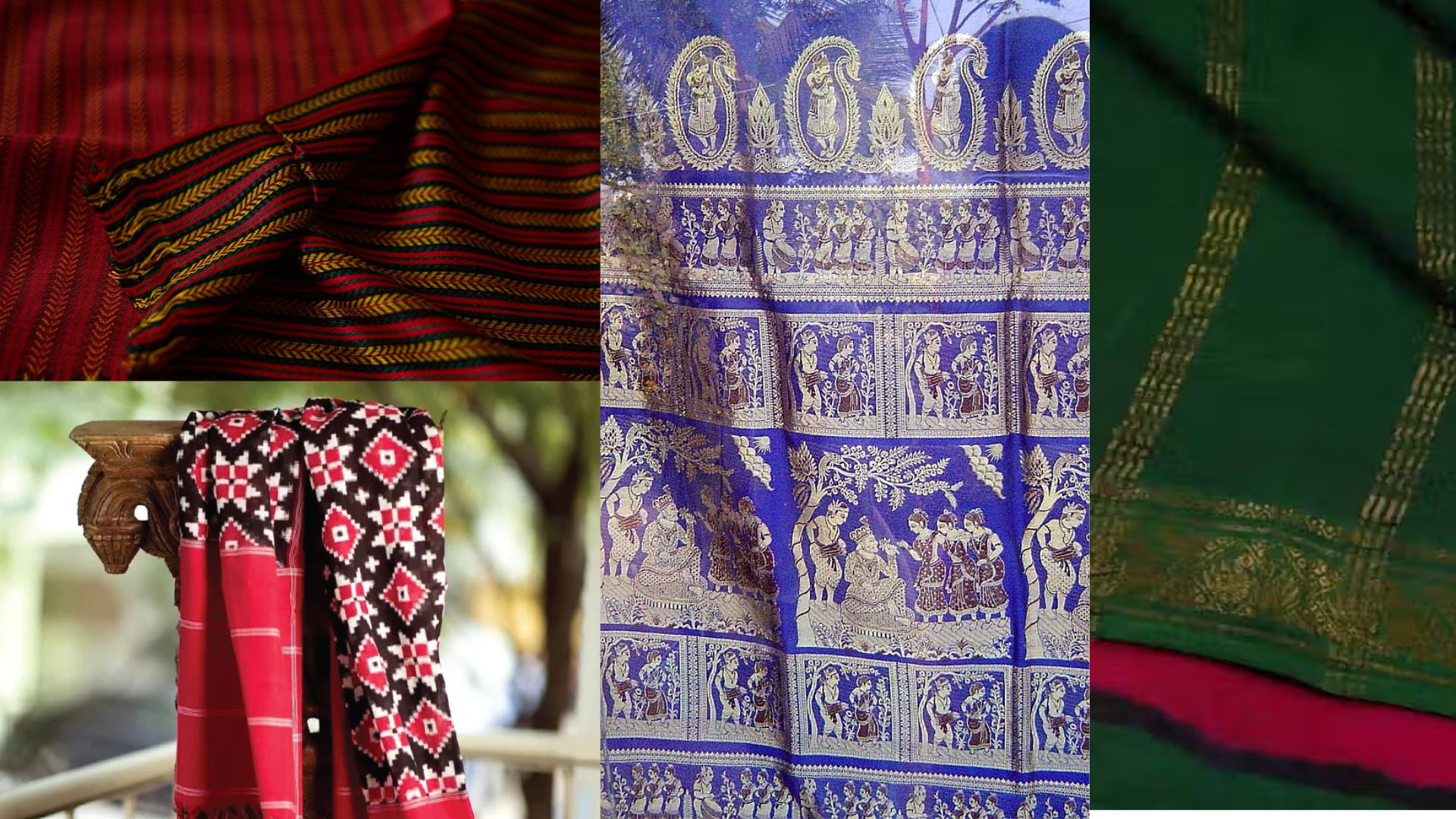
Here are five traditional handlooms that are now on the brink of disappearing.
Mashru, Gujarat
In the western Indian state of Gujarat thrives a rare and exquisite textile tradition, Mashru, a unique handloom fabric that combines silk and cotton. Woven on a pit loom, Mashru features silk threads on the outside and cotton on the inside, creating a warp-faced fabric once considered ideal for Muslim communities, who avoided silk directly touching the skin.
Renowned for its bold colours, ikat patterns, and rich dual-texture, Mashru has been traditionally used in sarees, blouses, trousers, accessories, and even home décor like cushions and quilts.
But despite its cultural richness, the Mashru craft especially in Patan faces a serious decline. The absence of a structured value chain and proper market access leaves artisans dependent on middlemen, who eat into profits and cut them off from evolving trends. Furthermore, the younger generation, lured by formal education and other professions, is moving away from this communal tradition.
Artisans now battle against cheap, machine-made alternatives, making it hard to sustain livelihoods. The once-flourishing craft is today limited to just six families, with only one woman still involved. Its last major use remains among Kutchi women, who stitch Mashru garments as part of their dowries.
Hope for revival flickers at Gujarat’s Tankwada Ni Pol , where a heritage project focusses on traditional designs and quality to breathe life back into this endangered art.
Sungudi, Tamil Nadu
In the southern part of India, in Tamil Nadu, lies another traditional handloom made of cotton, Sungudi characterised by its dotted or ringed designs. Native to Madurai, this art was introduced by the Saurashtrians who migrated from Gujarat to the region centuries ago. The unique patterns on Sungudi sarees are created using a traditional tie-and-dye technique, where small portions of the fabric are either tied with thread or stamped using wooden blocks before being dyed. Once the dyeing is done, the tied sections are untied to reveal the intricate motifs.
Woven from lightweight cotton, these sarees are considered ideal for state’s hot and humid climate, making them both comfortable for daily wear and elegant for special occasions.
However, the craft now survives in just a handful of Saurashtrian homes in Madurai. A few middle-aged women continue the painstaking process, pinching tiny bits of cloth and tightly winding thread around them.
AK Ramesh, secretary of the Madurai Sungudi Javuli Urpathiyalargal and Viyaparigal Sangam, told a news outlet that the community has dwindled from over 30,000 weavers and dyers six decades ago to just 150 today. With power looms producing Sungudi-like sarees faster and cheaper, the market is flooded with imitations, making it difficult for genuine handloom Sungudi to survive. Youngsters, meanwhile, are reluctant to take up the labour-intensive craft.
Kotpad, Odisha
In the eastern state of Odisha, the centuries-old Kotpad handloom renowned for its natural dyes and tribal motifs is slowly vanishing. Woven by the Mirgan community in Kotpad village and nearby tribal belts of Koraput district, these handlooms are coloured with rich, earthy hues extracted from the roots of the Aal or Indian Madder tree. Crafted on pit looms using a three-shuttle technique, the sarees feature intricate patterns woven with extra weft threads, depicting conch shells, boats, crabs, bows, temples, fish, and other symbols drawn from tribal life.
This eco-friendly tradition, rooted in the Koraput district, was the first from Odisha to receive a Geographical Indication (GI) tag in 2005. Yet today, its future hangs by a thread.
Where once 200 families practiced the craft, barely 20–30 remain, working on just 25 looms. The dyeing process suffers from seasonal water shortages between June and September, slashing production and income. Meanwhile, massive deforestation has depleted the Aal trees that once grew in abundance, and forest department restrictions now make it harder for tribal women to collect the root bark.
As elsewhere in India, the younger generations are walking away from the loom, disheartened by low pay and lack of recognition. Most weavers primarily women are left vulnerable to exploitation by middlemen, who offer meagre prices for their labour.
Telia Rumal, Andhra Pradesh
In the neighbouring Andhra Pradesh, home to scenic Visakhapatnam and Lambasingi, the only place in South India with a snow-like atmosphere, lies another fading textile treasure, the Telia Rumal. Known for its bold geometric patterns and distinctive oily aroma, this double ikat weave is steeped in tradition and technique.
Originating in Chirala, Telia Rumal later spread to parts of Telangana like Nalgonda. The name Telia comes from the unique pre-dyeing treatment of yarn with sesame (gingelly) oil and castor-seed pod ash, which helps fix the dyes and lends the fabric its characteristic texture and smell. Using the complex double ikat method, where both warp and weft threads are resist-dyed, the rumals traditionally featured red, black, and white motifs dyed with natural sources like madder and alizarin.
Once highly prized and traded across Africa and Arabia, the Telia Rumal has suffered a steep decline. The rise of mill-made fabrics and cheap imitations crushed export demand. Young generations in weaver families have distanced themselves from the craft.
According to reports, when researchers visited weaving clusters like Puttapaka and Pochampalli, they found that only two or three individuals still remembered the traditional Telia Rumal process. With the Middle East shifting to power loom alternatives, demand for the original handwoven fabric dwindled. As imports ceased, the once-flourishing Telia Rumal trade came to a near standstill, leaving behind only traces of a rich textile heritage.
Baluchari, West Bengal
Ending the list is another exquisite silk textile, Baluchari, known for its rich narrative designs that depict scenes from Indian mythology and history. Originating in the village of Baluchar (now Jiaganj) and now primarily woven in Bishnupur, in west bengal these saris are famed for their elaborate loose end of a saree and borders, crafted using intricate extra weft techniques.
The saris are woven in a brocade style, often featuring contrasting colours outlined in white. Traditionally made with silk, some are enhanced with zari or gold or silver threads, known as Swarnachari. In 2011, Baluchari saris received Geographical Indication (GI) status, officially linking them to the heritage of West Bengal.
Despite their grandeur, Baluchari weaving faces decline. The death of master weaver Dubraj Das, who famously signed his saris, marked a turning point. With his passing, the rare skill of weaving on jala looms began to vanish. Fashion shifts, high production costs, and the time-intensive process have further reduced demand.
In Bishnupur, too, the younger generations from weaving families are turning away from the craft due to poor financial returns and lack of modern strategies. Artisans, relying on primitive techniques, produce limited output and earn insufficient income to sustain their families, putting this storied tradition at serious risk.
Despite their historic and cultural value, these handlooms are fighting an existential battle against market neglect, exploitation by middlemen, low wages, and a lack of interest from the younger generation to continue in the trade.
Whether it is the last six Mashru families in Patan, the vanishing Aal trees of Kotpad, or the forgotten Telia Rumal artisans of Andhra, each craft tells the story of resilience and erosion.If these threads break, India risks losing not just textiles, but living testaments to its heritage.
