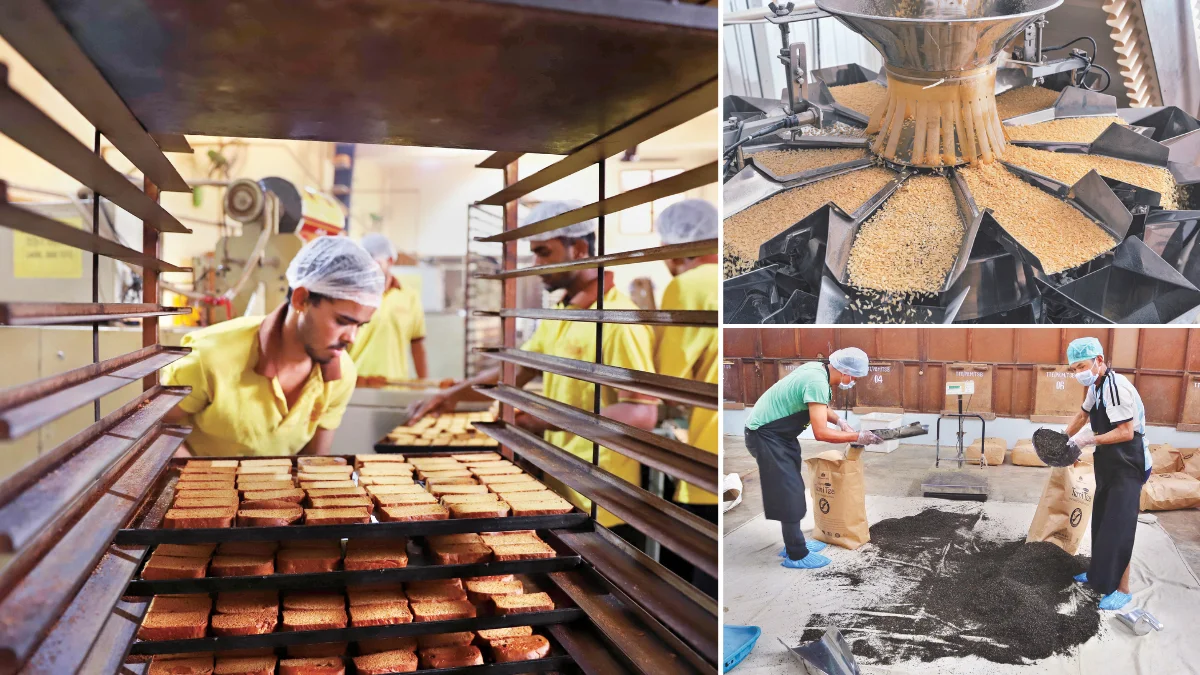
India’s food processing sector has the factories and the workforce, yet appetite for value-added exports remains limited (Photos: Media India Group)
With a growth of 7.8 pc in its nominal Gross Domestic Product reported in the first quarter of the current fiscal year, that ended on June 1, the headline figures of the growth in the Indian economy continue at a blistering pace. While the growth has been attributed to a variety of factors, one of the key reasons is the rise in household consumption, which in turn is driven by food that accounts for nearly half the amount spent every month by an average Indian household, especially in the rural areas.
According to several reports, the size of the Indian food processing industry in FY25 was estimated to be around USD 383 billion, with a steady growth of about 7.2 pc annually in the recent few years. One of the main motors of this rapid growth is the rising population in India, which has grown now close to 1.5 billion and is set to grow to close to 1.7 billion in the next two decades.
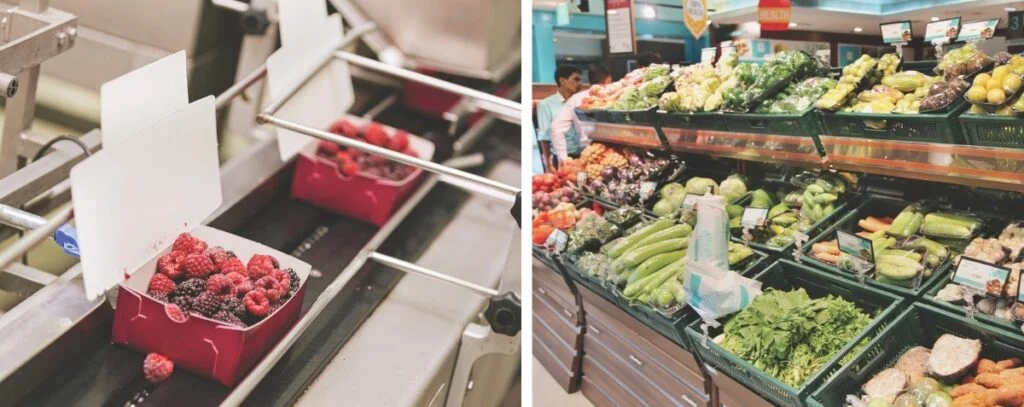
Most of the Indian food exports remain raw materials rather than processed foods
The second reason behind the growth is the rising disposable income, more so in certain urban households, which has allowed Indian families to spend on money not just on essential or basic food materials but also in discretionary purchases of different kinds of food products, including imported foods.
Moreover, a section of the more aware consumer is increasingly seeking a mix of quality, convenience, health and experience. This shift is giving rise to a value-led, consumer-focussed food economy and is projected to create a nearly USD 600 billion processed food opportunity by 2030, says a report jointly released by the Federation of Indian Chambers of Commerce and Industry (FICCI) along with Deloitte, a leading consultancy firm.
As a result of the broad-based growth in the domestic demand, the sector plays an increasingly important role in the national Gross Domestic Product (GDP), employment generation, and industrial investment.
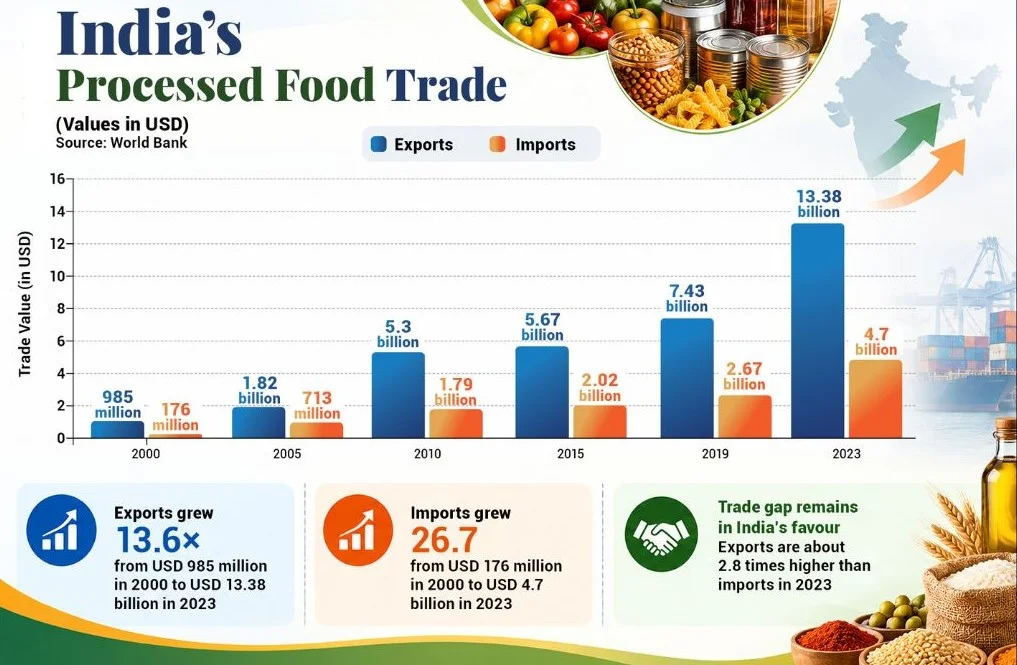
India’s processed food trade value
One of the key components of the food processing sector is milk, of which India is not only the world’s largest producer but also the biggest consumer. Milk production has grown at a Compound Annual Growth Rate (CAGR) of 5.41 pc and stood at 248 million tonnes in 2024-25. Currently, the dairy industry is worth USD 247 billion and is projected to grow to about USD 600 billion by 2034, an annual growth rate of 11.8 pc.
Besides milk, India is also the world’s largest producer of spices, as total spice production is estimated at approximately 12 million tonnes, with exports valued at USD 4.7 billion for exports of about 1.8 million tonnes. India is also the world’s second largest producer of vegetables, fruits and eggs, and is fifth in meat production.
India has access to several natural resources that provides it with a competitive advantage in the food processing sector. Due to its diverse agro-climatic conditions, it has a wide-ranging and large raw material base suitable for food processing industries.
But its large population, the biggest in the world and close to 1.5 billion currently, means that an overwhelming share of Indian production of food, whether in its natural form or processed, is consumed domestically.
Also Read: Supreme Court rap on FSSAI for front of pack label flags persistent failures
Hence, it is no surprise that India’s food and grocery market is one of the largest globally, supported by a retail market exceeding USD 1.1 trillion in 2025, with food and grocery accounting for approximately 60–70 pc of total retail consumption, almost double the share of averages recorded in developed economies and in line with low-income nations.
At home, the Indian food processing industry accounts for around 32 pc of the country’s total food market. The food processing sector contributes about 7.9 pc to the Gross Value Added (GVA) by the country’s manufacturing sector and about 8 pc to agricultural GVA, while accounting for close to 13 pc of India’s total exports and nearly 6 pc of industrial investment.
According to government data, the GVA in India’s food processing sector has increased from USD 24.6 billion to USD 27.06 billion in the past eight years.
Top processed food categories in India
In the domestic market in India, the largest categories of processed foods include milk, edible oils, savouries, snacks, staples and rice as well as tea and coffee.
According to industry estimates, dairy products including milk, ghee, paneer or cottage cheese, curd and butter account for about USD 140 billion of the total market of USD 1.2 trillion. This is also one of the fastest growing categories, with an average annual growth rate of between 8-10 pc, with cooperative brands like Amul, Mother Dairy leading the charge as many other smaller start-ups and players seek to find their place in this lucrative market with various value added products such as flavoured milk, curds or other derivatives.
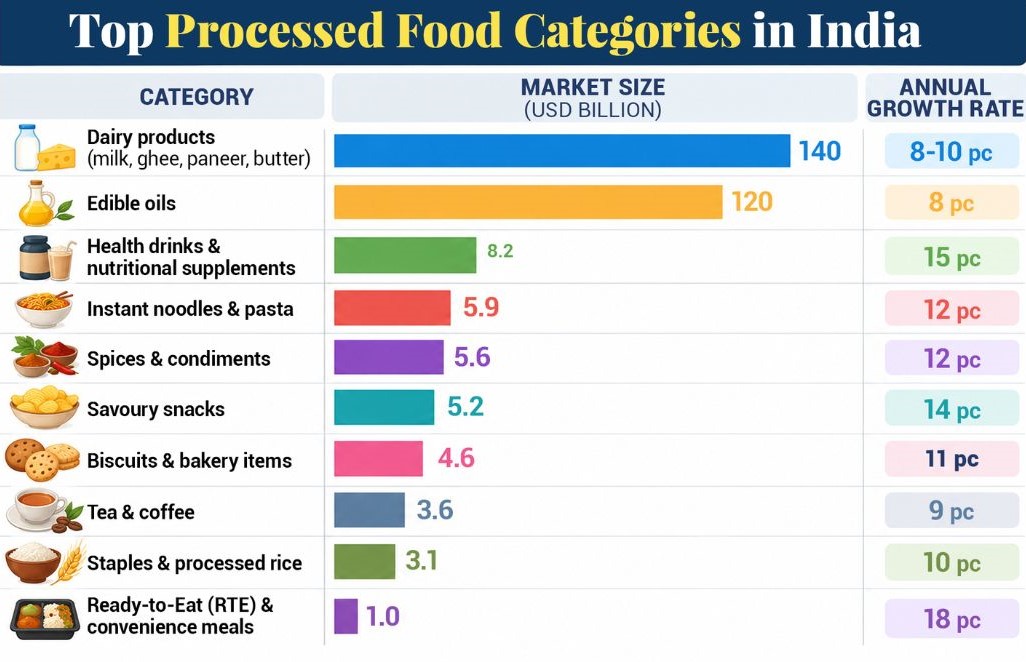
India’s processed food industry is expanding, with dairy, edible oils and packaged snacks accounting for major shares of the domestic market
The second largest category of the food processing sector in the domestic market is edible oil, most of which comes through imports as India is severely deficient in meeting the huge demand of cooking oils and imports almost 60 pc of its total consumption.
India brings in about 16 million to 17 million tonnes of vegetable oil annually. Of this, palm oil accounts for the largest share of about 56 pc of imports, sourced mainly from Indonesia and Malaysia, while India also imports about 5 million tonnes of soyabean oil, imported largely from Argentina and Brazil. Another key oil, sunflower oil, accounts for about 3.5 million tonnes annually and is imported mainly from Russia and Ukraine.
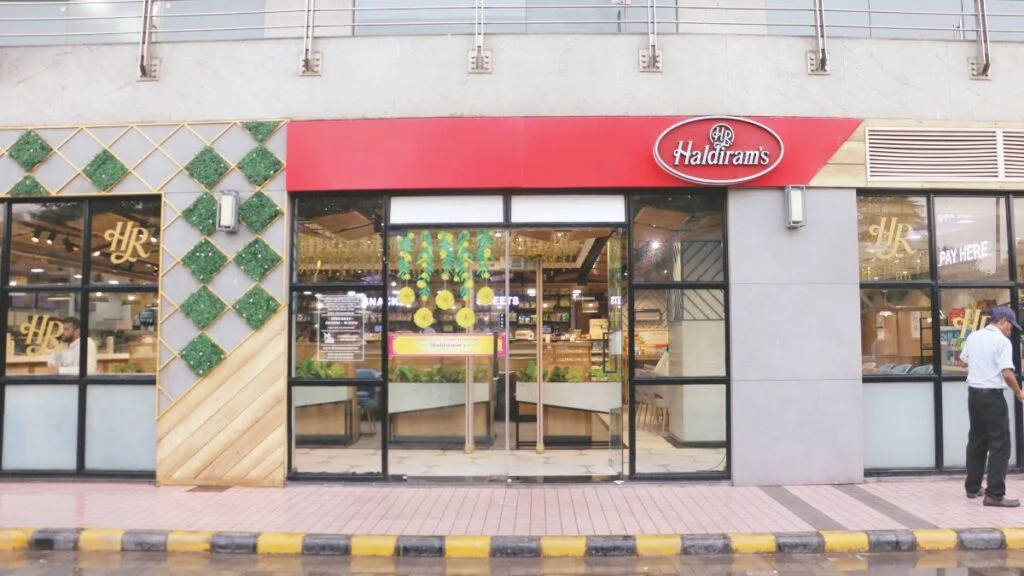
Indian food brands have an opportunity to expand beyond diaspora-focussed stores and reach mainstream consumers in international markets
The total market size, including domestic production, is about USD 120 billion. It has been growing about 8 pc each year and in the domestic market the leading refiners include Adani Wilmar and Emami Agrotech, which both have a very high penetration in both rural and urban kitchens.
Next biggest component of the Indian processed foods market are savoury snacks, that are estimated to be about USD 5.2 billion and which has been growing at a fast clip of nearly 14 pc year-on-year. Though it has millions of companies, big, small and micro enterprises, the market leaders include Haldiram’s and Bikanerwala.
Closely aligned is the segment of sweet biscuits and bakery items that has a market size of USD 4.6 billion and growing at nearly 11 pc, with leading domestic names like Parle and Brittania, besides numerous imported brands.
The next largest segment is packaged tea and coffee, which together account for USD 3.6 billion in sales and a growth rate of about 9 pc. The sector, again fragmented, is led by Tata Consumer Products, Hindustan Unilever and a handful of other domestic brands. In the recent past, some imported coffee brands have also entered the Indian market though they exclusively cater to the high-end niche market.
Another major product segment comprises staples and processed rice, such as branded wheat flour, packaged Basmati or other rice as well as lentils and other similar products. This market is valued at about USD 3.1 billion, with an annual growth rate of nearly 10 pc. This segment is highly fragmented with dozens of brands competing for the consumers. Within this segment, some companies are also pushing ‘organic’ products, though Indian process for certification of organic products remains highly lax, with little credibility attached.
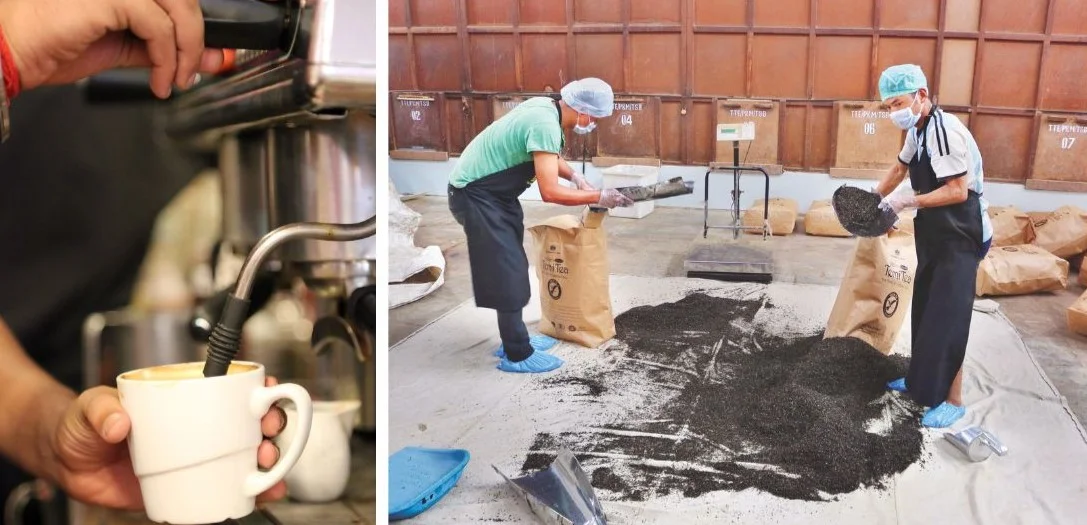
Growing consumption of tea and coffee reflects opportunities for Indian food brands to build stronger value-added product markets
Valued at over USD 5.6 billion, the market for spices and condiments is also growing at a fast clip of close to 12 pc. A highly fragmented market, some brands like MDH, Everest and Catch have been trying to establish a loyal customer following. However, poor quality controls and lax standards governing residual presence of pesticides and chemicals has impacted some of these brands which have seen their products banned in overseas markets.
An emerging segment of processed foods, which is also perhaps the fastest growing is the market for Ready-to-Eat (RTE) and Convenience Meals. This segment is currently valued at close to USD 1 billion, with an annual growth rate of about 18 pc and comprises ready to eat meals, almost entirely Indian cuisine, catering to the urban working professionals and singles. The market leaders here include food and tobacco giant ITC and MTR, a foods company, though the segment’s growth has attracted a number of other players also.
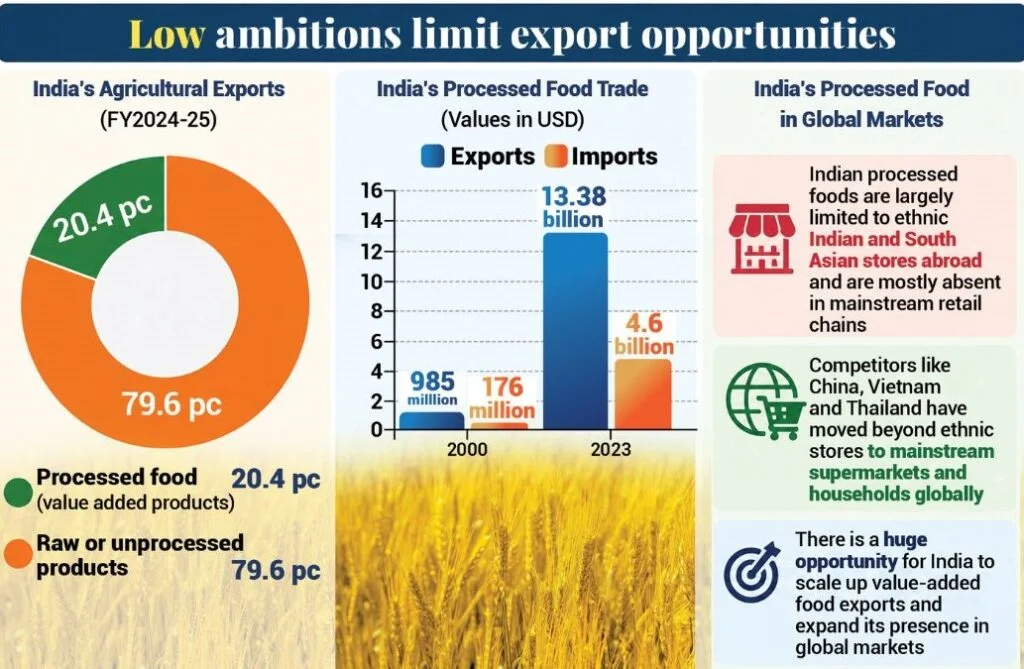
Processed food is only 20.4 pc of India’s agricultural exports
Almost half the size of the RTE and convience meals is the segment of instant noodles and pasta, which is about USD 5.9 billion, with an annual growth of 12 pc. The heavyweight in this segment is the Indian wing of Swiss foods giant Nestlé.
Finally, another rapidly growing segment, which is also bigger than instant noodles and pasta, is the market for health drinks and nutritional supplements, encompassing malted milk drinks, protein powders and functional wellness beverages. It is estimated to be catering to a market that is currently worth USD 8.2 billion and registering a growth rate of up to 15 pc per year.
According to Deloitte-FICCI report, categories such as nutrition and functional foods are already growing two times faster than the broader food market, underscoring the increasing importance of value-added products and consumer-centric innovation.
Low ambitions limit export opportunities
While the domestic market offers ample opportunities, Indian food processing companies have also betrayed extremely low ambition to scale up their exports, especially of the value added products. As a result, an overwhelming share of Indian food exports remain raw materials such as cereals, notably rice and Basmati rice, spices, tea, vegetables and marine products. The share of processed food in total exports is still less than a fifth.
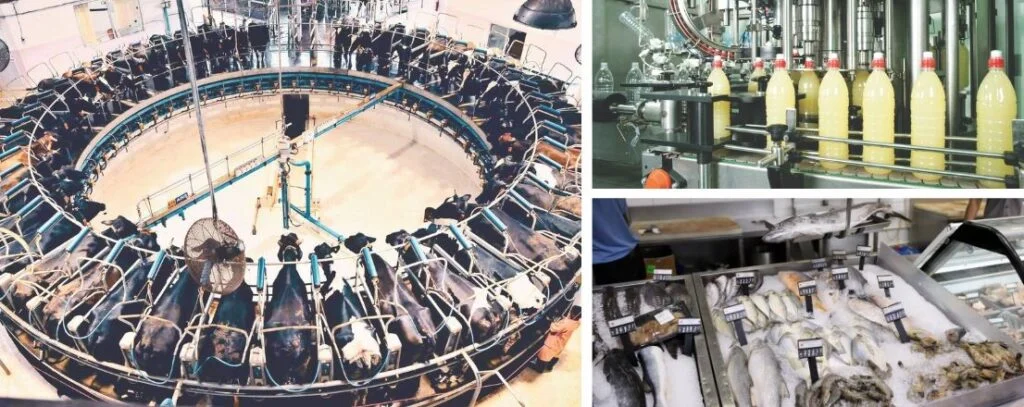
India has vast agricultural potential but needs better quality control, innovation and value addition to boost processed food exports
According to the MoFPI, processed food accounted for approximately 20.4 pc of India’s agricultural exports in FY2024–25, meaning 79.6 pc of Indian exports are with zero value addition, leaving a big gap and an equally huge potential to scale up the overall size of the food processing industries in India. Processed food exports have grown 10 pc year-on-year, with categories such as processed fruits and vegetables, cereal preparations and dairy and poultry products showing strength.
The second and even bigger issue with Indian producers and exporters is their near-total focus simply on the ethnic Indian and South Asian populations in markets around the world.
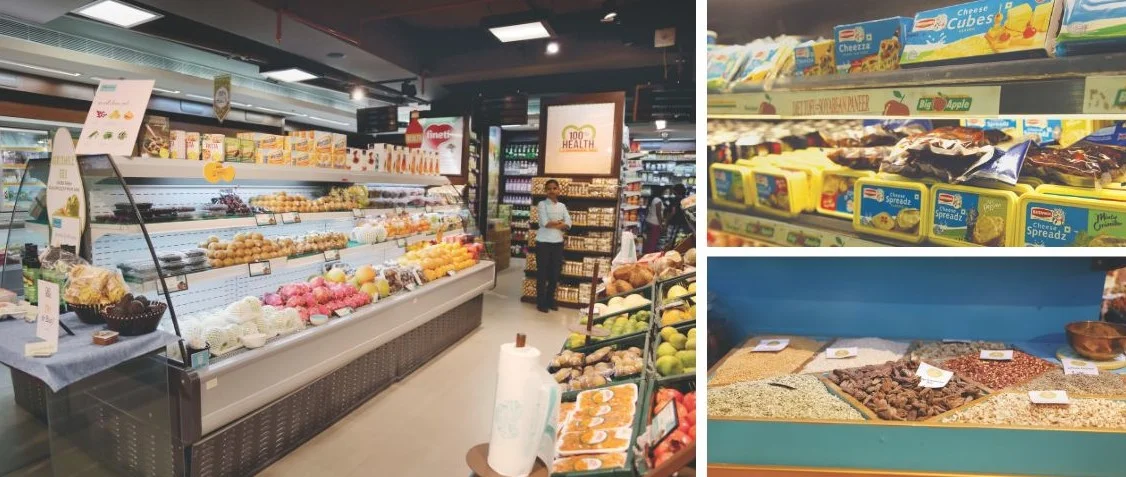
Evolving food retail market reflects growing demand for fresh produce, packaged foods and convenience products
From Paris to Philadelphia and from Sydney to San Francisco, Indian foods are totally absent from hypermarkets or even Mom and Pop grocery stores, except those catering almost exclusively to the diaspora and ethnic communities. At best, stores like Lidl in Europe or Walmart’s in the United States would keep the ubiquitous Basmati rice as the sole Indian product on their shelves, while the shops catering to the diaspora would have over 90 pc of shelf space for semi-processed foods like rice, lentils or spices.
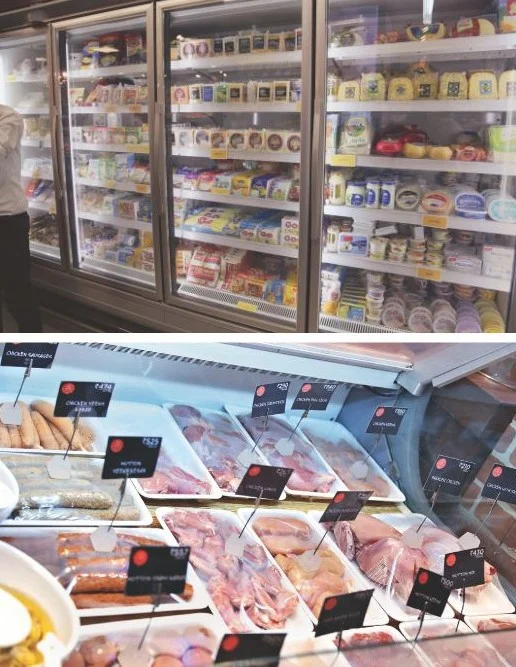
Rising demand for dairy products and packaged foods is creating new opportunities for India’s food processing industry
Meanwhile their rivals from countries like China, Vietnam or Thailand have made a steady headway, moving from their own ethnic shops to the mainstream stores and on to the dinner tables in a European or American household.
This low ambition is reflected in the relatively modest growth in exports of Indian processed foods, that rose from USD 985 million in the year 2000 to USD 13.38 in 2023. On paper, it may sound an impressive growth of about 13.5 times in 23 years, but contrast that with the value of food imports into India and the puff disappears rapidly as India’s imports of foreign food products rose from a mere USD 176 million at the turn of the century to USD 4.7 billion, a rise of almost 27 times in 23 years.
With India signing a flurry of Free Trade Agreements and the rising appetite for imported foods once again amongst Indian consumers, one can only expect the gap between Indian food exports and imports to reduce rapidly over the years. It should be no surprise to anyone if within a decade, India imported more processed foods than it exported.
Rampant rejections
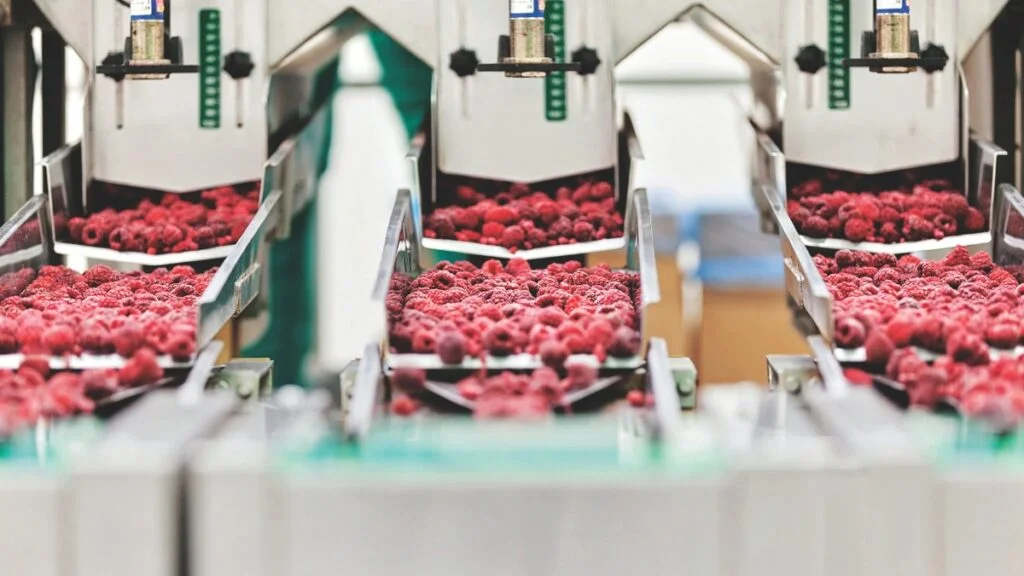
India’s food exporters face growing pressure to meet international quality standards as they seek to expand their presence in global markets
Besides the low ambitions of the Indian processed food producers in expanding their market beyond the Indian and South Asian diaspora, one of the primary reasons behind relatively modest presence of Indian foods on shelves of grocery stores overseas is the high risk of rejection of their products by stringent quality controls conducted at the borders or ports as the case may be.
The biggest culprits behind this are contamination by pathogens like Salmonella and mold-based mycotoxins, presence of chemical residues, notably pesticides such as Ethylene Oxide or Triclazole and banned veterinary antibiotics exceeding strict Maximum Residue Limits (MRLs).
Also Read: Our key objective at SIAL is to help Indian food exporters develop global markets
The Indian producers and exporters are also fairly regularly guilty of mislabelling in terms of nutritional, ingredient, and allergen documentation discrepancies, playing little heed to the fact each country may have a different rule governing labelling requirements.
One of the biggest impacts of rejection of Indian products can be witnessed in the European Union, where over 51 pc of Indian spice exports, valued at USD 2.2 billion, were rejected last year, indicating the poor quality controls by the producers, exporters and especially Indian food safety regulator, Food Safety and Standardisation Authority of India (FSSAI), which is amongst the most lax bodies in enforcing its already weak standards.
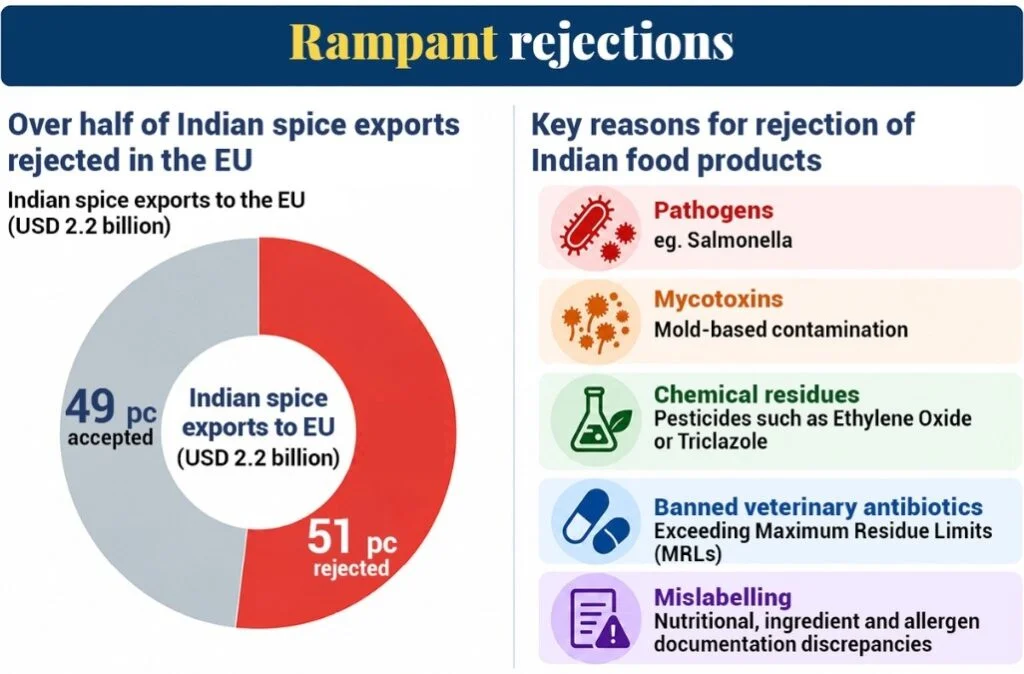
High rejection rates and food safety concerns continue to challenge India’s spice exports to the European Union
As a result, ever since 2010 under European Commission Decision 2010/381/EU, Indian aquaculture shipments have been subjected to continuous emergency mandates, requiring 100 pc pre-export screening in India and a mandatory 50 pc retesting rate upon arrival at EU ports due to lingering antibiotic concerns.
India is the world’s largest or amongst the largest producers of many, if not most food products. Logically, it should be also one of the largest exporters of value-added products. But the poor appetite of Indian businesses to invest in Research and Development, Innovation, quality controls and market development means that the world’s foods heavyweight is left watching the action in the global foods markets from the sidelines or in the ‘best’ case see its raw materials being turned into high-value products by innovators and businesses around the world.