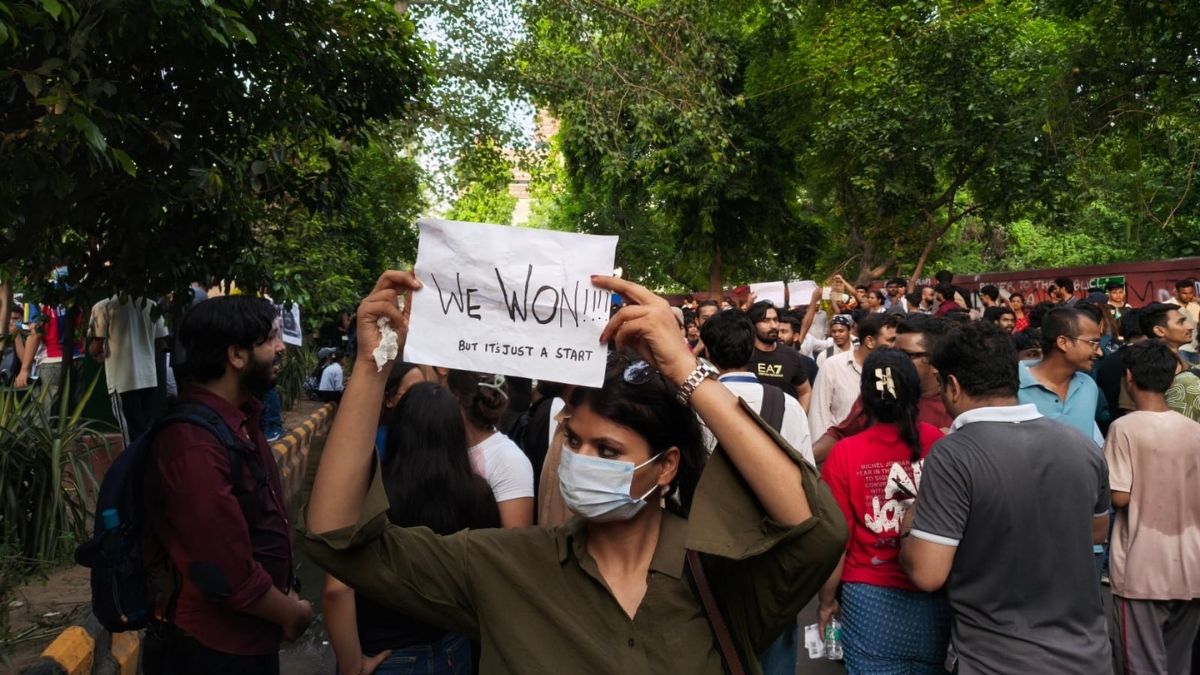
Protesters celebrate Pradhan's resignation at Jantar Mantar (Photos: Media India Group\ Aman Kanojiya)
After over a month of maintaining a total silence on his own responsibility in fiasco of leaks of numerous examination papers of tests conducted by the Union Government, including notably the National Eligibility cum Entrance Test (NEET), Union Education Minister Dharmendra Pradhan finally sent in his resignation to Prime Minister Narendra Modi on Saturday.
The news of Pradhan’s resignation, which the minister himself posted on social media platforms, was received with cheers and prompted celebrations at Jantar Mantar in New Delhi, where thousands of students have been protesting against the lack of accountability in the exam paper leaks and the lack of effective and decisive action by the government.
While students and protest leaders called it a victory for accountability, many insisted Pradhan’s resignation marks only the beginning of their fight for systemic reforms.
Also Read: 30-day NEET protest erupts in violence after police use tear gas and batons
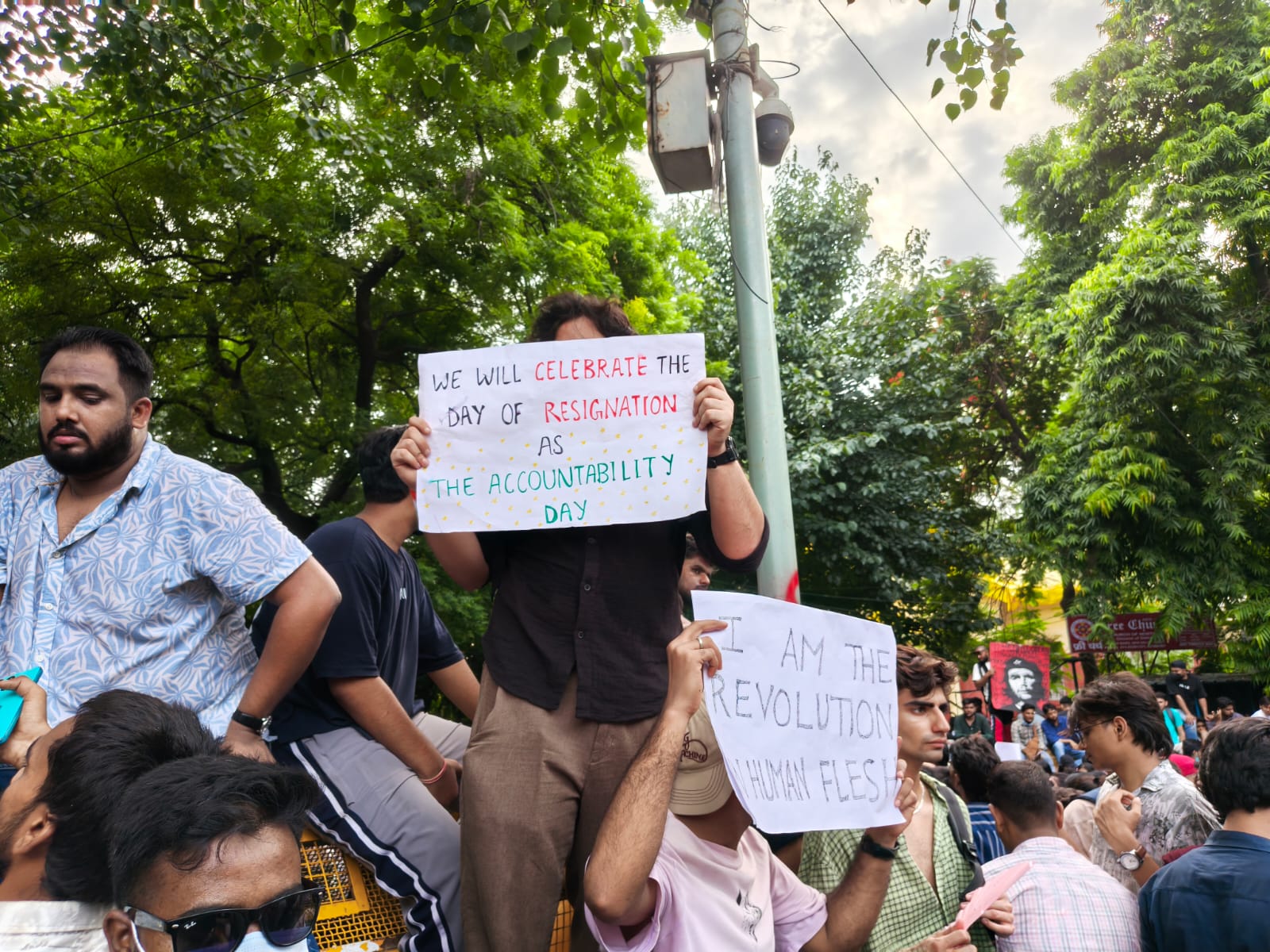
Students and protest leaders called it a victory for accountability
The resignation arrived after weeks of sustained pressure from the Cockroach Janta Party (CJP) and allied student groups, who had turned a small sit-in that began on June 6 into a nationwide youth movement. Sonam Wangchuk’s hunger strike, which started on June 28, pulled thousands more into the protest, along with actors, activists and opposition leaders who lent their voice to the demand for Pradhan’s resignation over the NEET paper leak controversy.
Among those still camped at the site was Neha Kumari, a resident of Chhatarpur in Delhi who has been preparing for NEET since last year. She did not clear the exam this time, but stayed on with the protest anyway, showing up at Jantar Mantar for days on end even after her own attempt had ended in disappointment. When the news broke, she said the first feeling was simply relief, laced with disbelief that the government had actually given in.
“I am so happy that finally Pradhan has resigned. I was not expecting his resignation, really,” Kumari tells Media India Group.
She says, describing how the announcement caught even the most hopeful protesters off guard. But the relief quickly gave way to a demand that she said mattered far more than any one minister stepping down. She said the students want whoever takes over next to build a system where students can trust the process again.
Also Read: Hundreds from across India gather at Cockroach Janta Party protest in Delhi
“I hope now things will get better. From the next education minister, I want there to be transparency and accountability. The things which have been happening, like paper leaks and all, should stop. This is our demand,” says Kumari
Another student Ranjeet Yadav, from Jehanabad in Bihar who had been leading the NEET protest in Patna, said the resignation was unexpected. According to him, the government’s prolonged silence had convinced many students that their demands would not be addressed.
“For weeks, students kept raising their voices, but it felt like no one in the government was willing to listen or even acknowledge our concerns. That silence only made people angrier. We had almost lost hope that our demands would be taken seriously, so when Dharmendra Pradhan resigned, it was completely unexpected. None of us thought the government would take such a step,” Yadav tells Media India Group.
For Yadav, the resignation carries weight beyond just one man losing his post. He calls it proof that a sustained, largely leaderless protest can still move a government that had spent weeks refusing to engage.
“This is not just the resignation of a minister; it is a victory for democracy. If the voices of such a large number of students go unheard, it reflects a failure of the democratic process. Today, it feels like our concerns have finally been acknowledged,” says Yadav.
Despite welcoming the resignation, Yadav cautioned against treating it as the end of the movement. He says that the protests had always been about fixing a broken examination system, not just removing one minister. According to him, meaningful reforms and accountability across the education system remain the students’ primary demands.
“Just Pradhan’s resignation won’t change everything. The real issue is fixing the system. Everyone responsible for such failures must be held accountable, whether they are ministers or officials,” says Yadav.
Yadav also admitted that the government’s decision caught even them by surprise. He said most students had expected the Centre to opt for a political compromise, such as a Cabinet reshuffle, rather than seek Pradhan’s immediate resignation.
“We thought the government would first reshuffle the Cabinet or make some other changes before asking him to step down. A direct resignation was something none of us expected,” says Yadav.
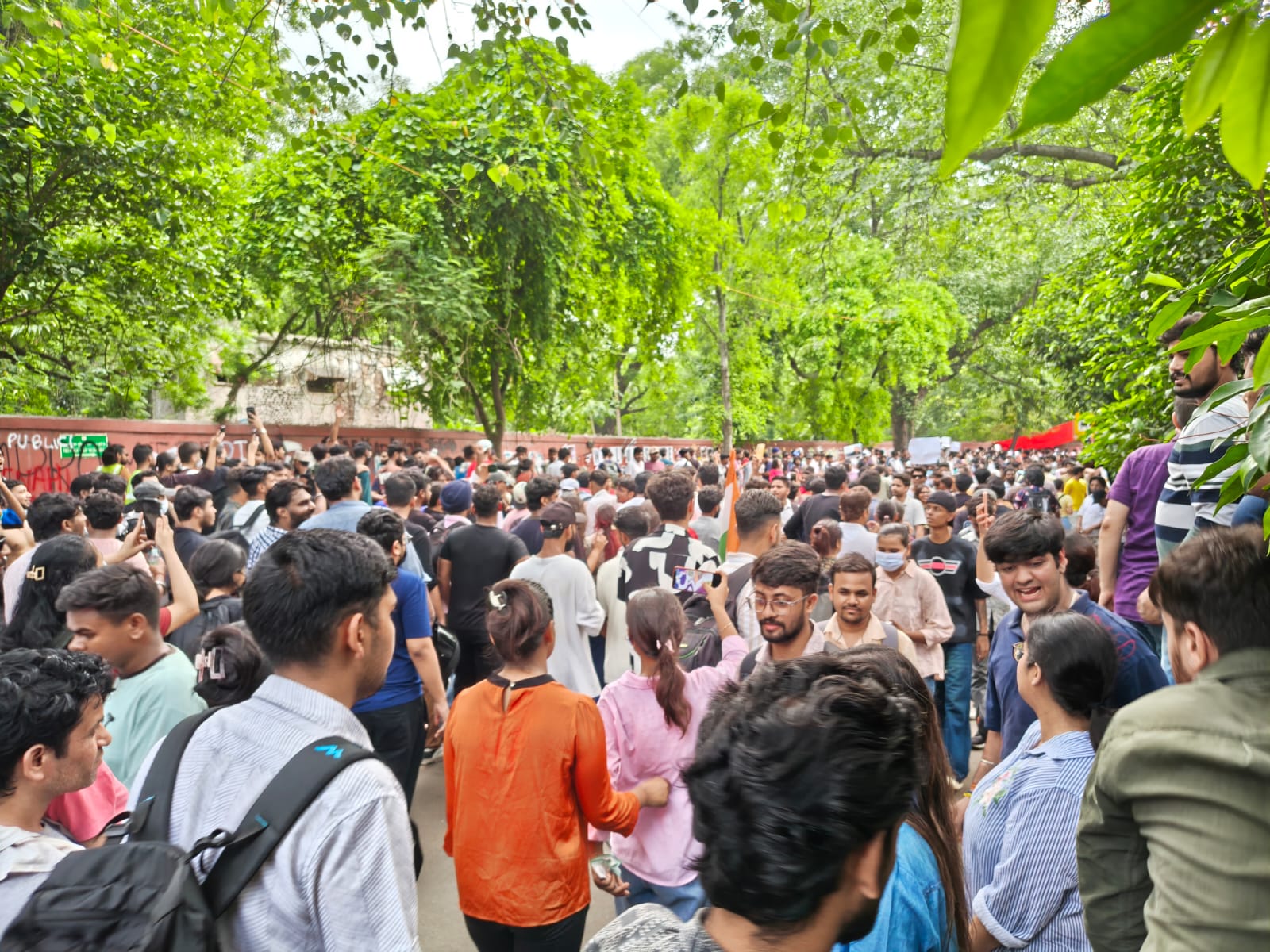
Celebrations are being continuously pierced with appeals of calm as the crowds continue to swell
For Yadav, the demands remain straightforward, with fair examinations, greater transparency, and a system where those responsible for lapses are held accountable. He believes Pradhan’s resignation sends a strong message that public officials cannot escape responsibility when serious failures occur.
“This resignation creates a sense of accountability. It sends a message that if something goes wrong, those responsible will have to answer for it. That is the biggest change we can see from this,” says Yadav.
That sentiment resonated with many students who had been following the protests from afar. Raunit Verma, a B. Tech student from Noida who has appeared for competitive examinations himself, says that the resignation represented accountability finally catching up with those responsible for the alleged NEET paper leak. For him, the resignation wasn’t a political win so much as overdue accountability finally catching up with someone.
“The resignation is a matter of justice. When the papers for a major examination like NEET are leaked, those responsible must be held accountable. It may have taken time, but the resignation was necessary,” Verma tells Media India Group.
Also Read: Protests continue at Jantar Mantar despite police crackdown
Like many students following the protests from outside Jantar Mantar, Verma says that he had stopped expecting the government to act. The announcement, he admitted, came as a surprise, but he believes it should mark the beginning of broader reforms rather than the end of the issue.
“Given everything that had happened, I never thought he would resign. But now that he has, I hope the government focusses on making the examination system transparent so that incidents like this are never repeated. One resignation alone is not enough,” says Verma.
The leadership of the movement was quick to strike a similar note of caution even as it claimed credit for the outcome. Abhijeet Dipke, Founder of CJP, reacting to the resignation, called it a victory for the students who had been agitating over the NEET controversy for weeks, but made clear that the fight was far from finished.
He said the group’s campaign would continue until the families of students who allegedly died by suicide during the crisis received compensation, and until action was taken against police personnel accused by protesters of using excessive force during the clashes on July 20. Dipke also repeated the group’s demand for the withdrawal of all cases filed against students in connection with the protests, insisting the agitation would carry on until every one of these demands was met.