
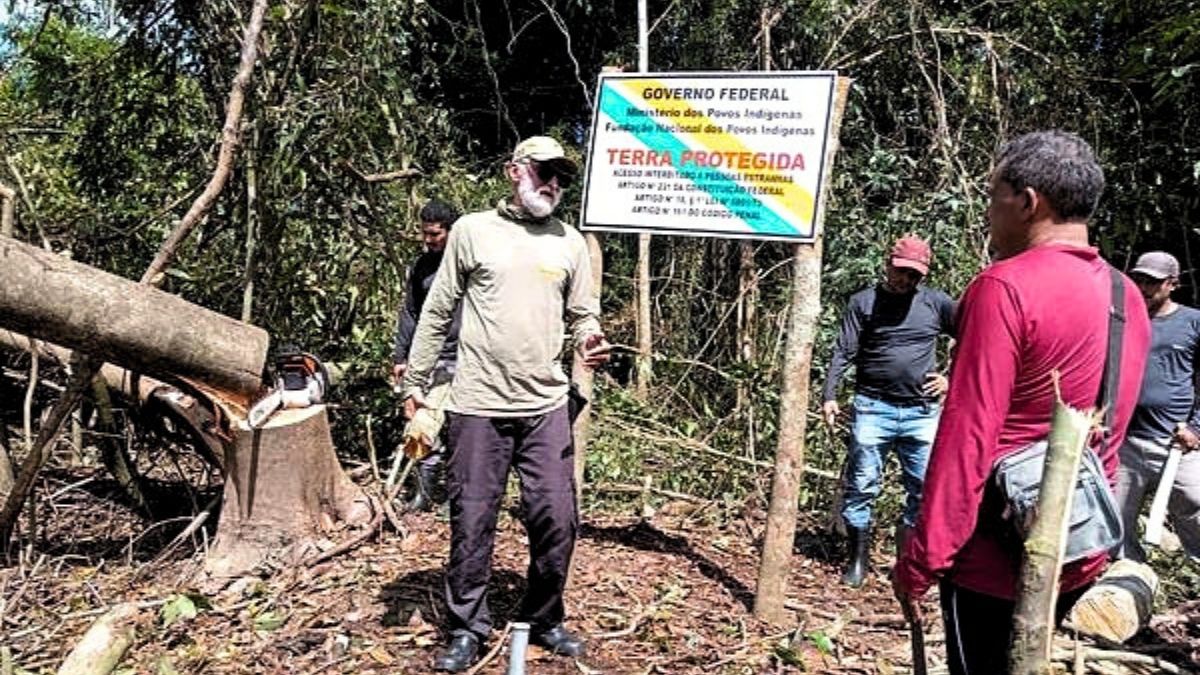
Campaigners today hailed the completion of the physical demarcation of land belonging to the Kawahiva (Photo: FUNAI)
Survival International, a global indigenous rights advocacy firm, has welcomed the completion of the physical demarcation of the Rio Pardo Kawahiva Territory in the Brazilian Amazon, securing critical protection for one of the region’s most vulnerable uncontacted indigenous communities.
In a press statement, Survival International says that Brazil’s National Indigenous Peoples Foundation, Funai, has completed setting boundary markers across the Rio Pardo Kawahiva Territory to safeguard the uncontacted Indigenous population from territorial invasions.
It adds that physically marking the boundaries strengthens territorial monitoring and protection efforts to combat illegal activities, including wildcat mining, logging, and cattle ranching expansion. The agency notes that the measure is particularly significant given the history of violent conflict and the remote geography of the region.
Survival International says that the completion of the boundary marking comes 27 years after authorities officially confirmed the presence of the nomadic hunter-gatherer group in 1999. The organisation adds that armed loggers, land grabbers, and agricultural interests have repeatedly opposed legal recognition of the land through political lobbying, arson, and violent attacks.
Also Read: Richard Gere to launch Survival International report on uncontacted tribes
It adds that team leader Jair Candor spent over two months setting boundary posts and warning signs along the perimeter of the territory. Indigenous rights groups, including the Federation of Indigenous Peoples and Organisations of Mato Grosso and the Observatory for the Human Rights of Uncontacted and Recently Contacted Indigenous Peoples, noted that legal creation now awaits a presidential signature by President Luiz Inácio Lula da Silva.
“The physical demarcation provides greater security because that is how people will begin to understand that this is real: the boundary markers and signs are now there. It is another milestone we have achieved, but the battle continues because now comes the final approval process. And this is vital for the survival of the Kawahiva,” says Jair Candor, Head of the Funai Protection Unit for the Kawahiva.

Caroline Pearce
“The uncontacted Kawahiva have been under threat in their own forest home for decades. Now, finally, we are just one step away from their territory being recognised and protected. It is essential that President Lula quickly takes the final step of full legal recognition,” says Caroline Pearce, Director, Survival International.
