Amid the LPG shortage, vendors’ biggest worry is not customers but cooking gas (Photos: Media India Group/Sunil Yadav)
From mid-morning until late evening, street food vendors line the pavements near office complexes in Delhi’s Jasola area, where the smell of sizzling oil and spices usually fills the air. From egg rolls to chowmein and parathas, hundreds of office workers depend on these small carts for an affordable meal.
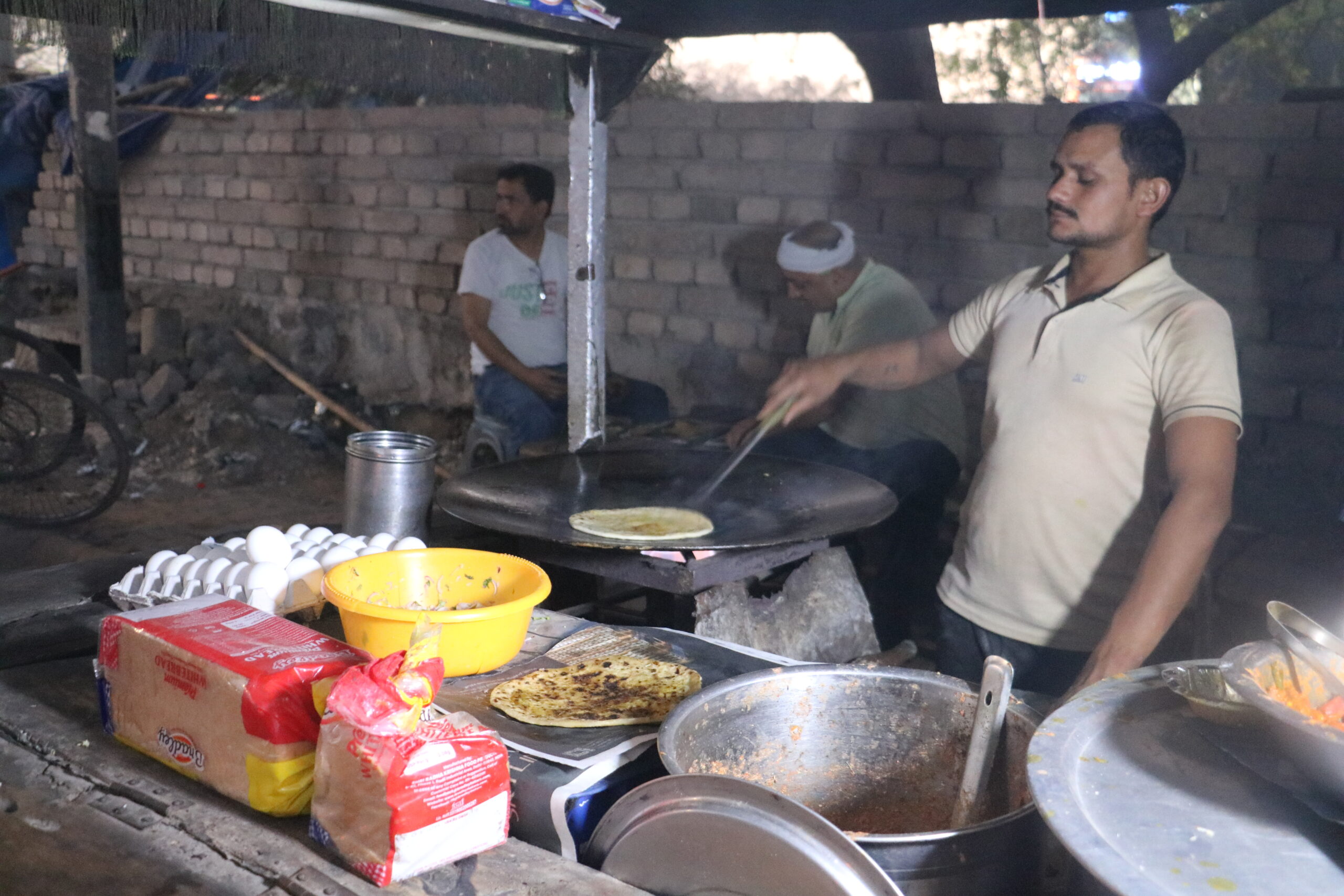
Shortages of commercial LPG cylinders are disrupting street food vendors, who only rely on gas for daily cooking and earning
But in recent days, the usual bustle has been replaced by uncertainty. Behind the counters, vendors are worried not about having enough customers, but about something far more basic, not enough cooking gas.
Across India, a shortage of Liquefied Petroleum Gas (LPG) cylinders, notably commercial cylinders, is beginning to disrupt daily life, particularly for restaurants, canteens and street vendors who rely entirely on gas to cook food. The crisis, triggered by geopolitical tensions in West Asia and disruptions in fuel supply chains, is now threatening the livelihood of thousands of small food businesses.
For vendors like Shankar Yadav, 34-year-old who has been running a food cart in Jasola for several years, the crisis has become a daily struggle.
“We only work because of LPG gas. Without it, our stoves go silent and our livelihood stops. At home we can somehow manage by burning wood, but here on the roadside we are not even allowed to light a fire. For the last few days I have been running from one gas supplier to another, worrying about how I will feed my family. After so much stress I finally managed to get one small cylinder, but every time I light the burner I keep wondering what will happen when this one also runs out,” Yadav tells Media India Group.
He says the price shock has been equally devastating.
“Earlier I used to buy the bigger commercial cylinder for around INR 1,200. Now the same cylinder is being sold in the black market for INR 2,500. How can a small vendor like me survive like this,” he adds.
The crisis affecting vendors like Yadav has its roots thousands of kilometres away. The ongoing conflict involving the United States and Iran has disrupted shipping routes and energy supplies across the Middle East. Almost all of India’s LPG imports pass through the Strait of Hormuz, a key global shipping corridor now facing disruptions due to the escalating conflict.
Also Read: With energy crisis, India real loser in US-Israel attack on Iran
India imports more than 65 pc of its LPG requirement, making the country highly vulnerable to global supply shocks. With tanker movement disrupted and energy infrastructure affected in the region, the availability of LPG and Liquefied Natural Gas (LNG) has come under pressure.
To avoid a domestic cooking gas crisis, the government has prioritised LPG supply for households and essential sectors such as hospitals and educational institutions. This has unintentionally squeezed supply for commercial users like hotels, restaurants, and food stalls.

Hotels, restaurants and street vendors are struggling to get LPG cylinders
Shrinking menus put businesses at risk
The impact of the shortage is particularly visible in urban clusters where food businesses depend entirely on LPG.
In many government colleges and private hostels across India, mess operators have reportedly issued notices warning students about possible disruptions in food services due to gas shortages.
Restaurants too are struggling to cope. Some have cut down menu items, while others are exploring alternative cooking methods such as wood, coal or even induction cooking, a move that many say is impractical in crowded cities.
For small street vendors, however, switching fuels is almost impossible.
Pooja Devi, who runs a small momo and noodle stall in Delhi’s Sarita Vihar market, says the situation is becoming unbearable.
“We cook everything on gas the noodles, the momos, even the soup. If the cylinder finishes and we cannot get another one, we will have to close the stall. Customers may think we are on holiday, but the truth is we just cannot cook,” Devi tells Media India Group.
She adds that even when cylinders are available, the rising prices are cutting into already thin profits.
“Earlier we used one cylinder in five or six days. Now we are trying to use it carefully so it lasts longer. But if prices keep rising, we might have to increase food prices, and then customers will stop coming,” says Devi.
For thousands of migrant workers who operate roadside carts across Indian cities, LPG is not just a cooking fuel it is the backbone of their livelihood.
Also Read: : US-Iran tensions spell trouble for India
In Jasola, where many corporate offices attract crowds of daily commuters, dozens of food carts operate every evening. But the shortage is beginning to take a toll.
Mohammad Irfan, another vendor in the area who sells Parathas or stuffed flatbreads, omelette rolls and tea from a small food truck, says distributors are increasingly reluctant to supply commercial cylinders.
“Earlier we would get a refill within a day. Now they say there is no stock. Some people are selling cylinders privately for double the price,” Irfan tells Media India Group.
He points toward a row of closed stalls nearby.
“Two carts here have already stopped operating this week. If the situation continues, many more will close,” he adds.
The ripple effects extend beyond the vendors themselves. Delivery workers, helpers, and suppliers who depend on these small businesses are also facing uncertainty.
The shortage has been accompanied by a sharp rise in LPG prices across the country.
Domestic LPG cylinder prices have already increased, while commercial cylinders used by restaurants and eateries have seen multiple price hikes this year. Market analysts say the increases reflect the rising cost of global energy supplies and disruptions caused by the ongoing conflict.
The sudden price surge has also triggered hoarding and black-market sales in several cities, further worsening availability for small businesses.
For street vendors operating on narrow margins, even the difference of a few hundred rupees in fuel prices can significantly affect earnings.
Hotel associations in several cities have warned that prolonged shortages could force eateries and canteens to shut operations temporarily.
The crisis has exposed how dependent India’s urban food economy is on LPG cylinders. For thousands of street vendors across India, the future of their businesses may depend not on demand or hard work, but simply on whether the next LPG cylinder arrives on time.