
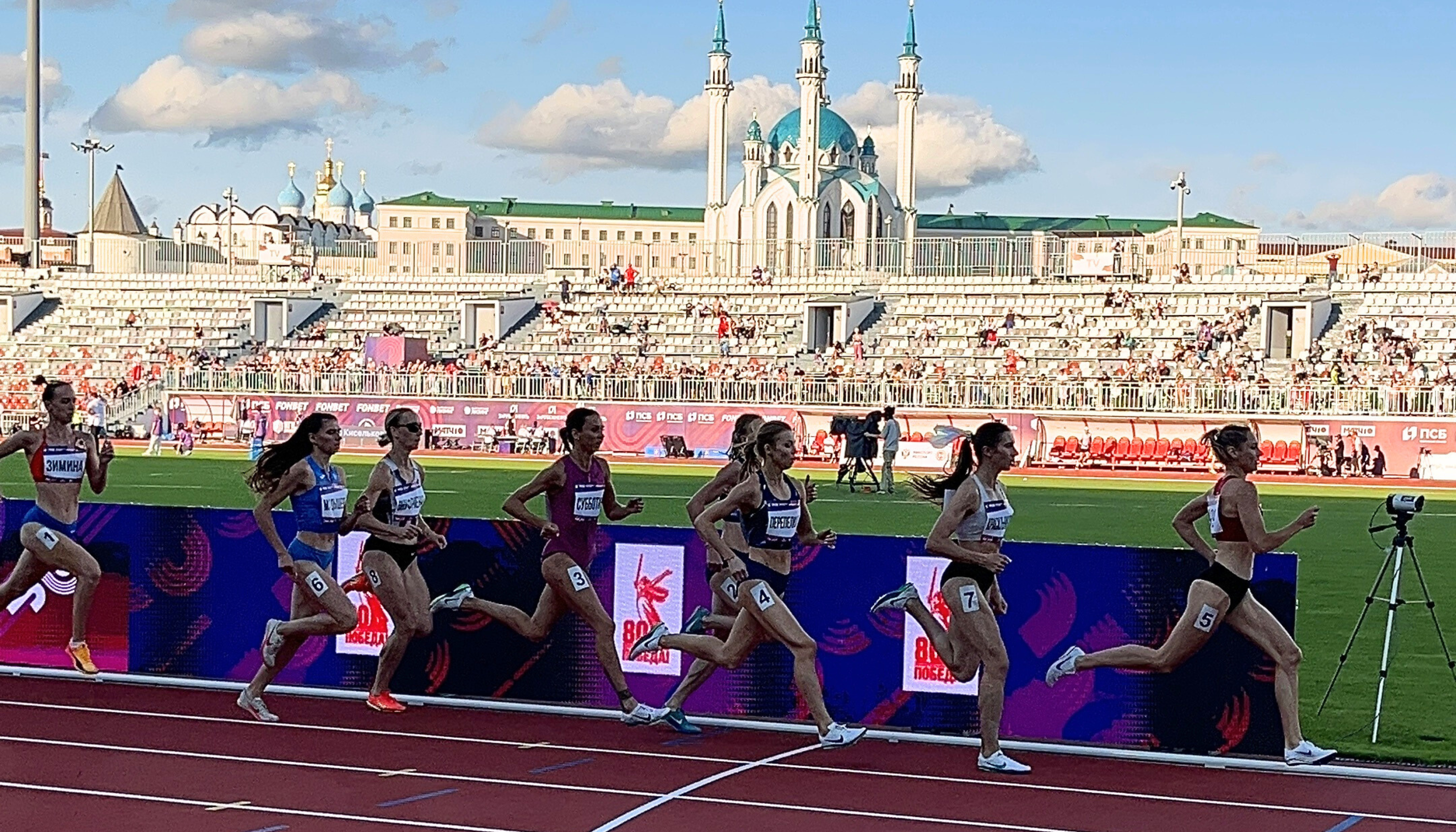
Russian athletes are keen to get back to international competition

Petr Fradkov
Since you took charge as President of the Russian Athletics Federation, what kind of progress has been made in addressing the doping issue?
In my capacity, I focus solely on athletics and the Russian Athletics Federation. I am responsible for its governance, compliance, and restoration. On the anti-doping issue, we are already largely restored and are under the supervision of a dedicated monitoring group led by the Athletics Integrity Unit (AIU).
The AIU has specific roadmaps and reporting requirements which we strictly comply with. In fact, we recently passed a monitoring audit. While the formal report is not yet ready, preliminary feedback has been satisfactory.
As for why Russian athletes are still not competing neutrally in track and field, that is a question for World Athletics, not us. It is their decision. What we can do within our control is continue to follow every requirement, engage constructively, and demonstrate progress in compliance and governance.
How are you addressing the impact of international isolation of Russia on your athletes?
I would like to explain from my perspective as someone who was elected relatively recently, about eight months ago, and who is not originally from politics or professional sport, but from management. When I took on this role, the situation was already in place, and my task became to find solutions within the framework that exists.
On the external track, I have established open lines of communication with World Athletics, trying to reduce tensions and focus on solutions. On the internal track, we recognised that, beyond international issues, there is much work to be done inside Russia. For instance, we need regional development, better infrastructure, and motivation for both coaches and athletes. Many years of isolation have reduced both investment and morale, so restoring that is crucial.
My vision as Chairman is that one day, Russian athletes will be allowed to return fully. When that day comes, our athletes must not only participate but also be competitive on the global stage. So, my responsibility is to prepare them for that moment through development, training support and infrastructure improvements.
Realistically, how soon do you think Russian athletes will be fully reinstated into international competition?
I believe that the dialogue we currently have with World Athletics is genuinely constructive. I also believe that restoring competition rights for at least some athletes is feasible in the near future. However, this remains the decision of World Athletics, so I cannot give specific timelines or personal predictions, it would not be fair to pre-empt my colleagues.
How does the Russian Athletics Federation cooperate with WADA protocols and international anti-doping investigations?
We maintain full cooperation with the AIU, which oversees our compliance and restoration. Anti-doping is our absolute priority, and we operate on the principle of zero tolerance toward violations.
We are one of the very few federations in Russia with a dedicated anti-doping department inside the organisation. Our staff regularly visit regions to conduct training and ensure compliance. We are also ranked number one by Rusada, the Russian anti-doping agency, among all sports federations in the country.
Currently, 40 of our athletes are in the AIU testing list, and around 400 in the wider testing pool. In total, approximately 3,000 tests per year are conducted, and fewer than 10 violations are registered annually, which is a strong record. Importantly, all tests are processed in WADA-accredited laboratories outside Russia, in Europe or Türkiye, ensuring impartiality.
Additionally, we remain under strict external monitoring. The AIU has placed a representative within our federation office, who directly reports to them on issues of governance, transparency, independence, and anti-doping. We submit monthly reports and have undergone independent audits. This kind of oversight ensures full accountability.
In fact, we were among the first to adopt new international testing standards, such as the recent biological regulations regarding X-chromosome testing in women athletes. This shows that we align ourselves with global practice, not just in words but in implementation.
Do you foresee any hurdles or challenges in reinstating Russian athletes internationally?
Our task is to focus, day by day, on doing the work required rather than spending energy speculating on hurdles. We concentrate not only on restoration internationally but also on improving our federation internally, better governance, deeper regional engagement, stronger athlete support and stricter compliance. If we continue on this path, I believe reinstatement will follow naturally.
Regarding potential reinstatement, has there been any discussion about specific events, for example participation in Los Angeles Olympics?
Discussions so far have been more general and athlete-oriented, rather than linked to specific events. The dialogue revolves around the return of groups of athletes gradually to international competition, rather than targeting any single competition.
This approach, I believe, is more systematic and sustainable. While we are conscious that many of our world-class athletes are at risk of losing their prime competitive years, equally important for us is that our younger athletes and youth categories do not lose their entire generation of international experience. Ensuring their pathway is preserved is one of our most critical concerns.
Regarding development at the regional level, do you see a need for education and cultural change, since while leadership at the top may be new, many older structures remain at the grassroots?
Yes, this is one of the core priorities of my role, regional development and education. At the grassroots level, coaches often face problems of underpayment and lack of motivation, which affects their ability to work consistently with young athletes. For the last ten years of sanctions, infrastructure also suffered from underinvestment. Rebuilding that requires resources and collaboration with local authorities, since the Federation itself cannot fund everything.
We are therefore trying to encourage regions to become more active in promoting athletics, both in governance and in physical infrastructure. To avoid repeating mistakes from the past, we emphasise good governance, transparency, and accountability as guiding principles.
In fact, we have outlined five key pillars of our development strategy such as international reintegration, regional development, support and motivation for coaches and athletes, good governance and anti-doping compliance. None of these are easy. Cultural change cannot happen overnight. But we have already introduced mandatory anti-doping courses, over 6,000 athletes and staff per year, from children to professionals, ensuring everyone in the system understands and follows the rules.
One new step we introduced this year is linking financial support for regional athletics to compliance with ethics, code of conduct, and anti-doping standards. If a region does not comply, they risk losing funding. This ensures that good governance is not only policy but tied to real consequences. It is an important step toward long-term change.
How do you see the current sporting ties between India and Russia? Are there any ongoing collaborations?
We can, and should, do better. At the bilateral level, I am confident that we can strengthen ties, sign cooperation agreements, and establish exchanges. There is genuine potential for collaboration between our athletes.
Despite the isolation of Russian athletics, we still have very competitive athletes who are currently among the top three in the world in their disciplines. For example, Polina Knoroz is ranked third globally in pole vault this year, Maria Kuchina is also among the top high-jumpers, and Daniil Lysenko is ranked number one in high jump. We also have young athletes leading the world in junior competitions. This shows that despite challenges, our talent has real international potential.
We are very interested in cooperating with India. In fact, we already sent a formal letter to our counterparts in India, though we have not yet received a reply. But we remain pragmatic and hopeful. We respect Indian athletes a great deal and sincerely wish them all the best in upcoming competitions such as the World Cup.
The trust between World Athletics and Russian athletics is one thing, but is there a difference in how this relationship is perceived by the public on both sides?
I do not really see a difference in perception. There are of course formalities that both sides go through, but I treat them as nothing more than technical processes rather than signs of mistrust. In terms of the relationship itself, I feel no barriers and no hostility. Our dialogue with World Athletics has been open, transparent and constructive. We share information, exchange views and jointly discuss how to bring our athletes back to international competition.
In fact, I believe that progress is possible in the near future. Some decisions might already be on the horizon regarding the restoration of certain athletes. Importantly, throughout this period we have continued to comply with all requirements since the ban, whether in anti-doping, regulations, or other areas. Our athletes are part of the testing pool, and we operate in full compliance with the framework outlined for us.
From the perspective of perception, one thing we must continue to improve is communication. Previously, there was not enough systematic effort to build public communication in English or to keep international audiences regularly informed. Since early this year, we began analysing our social media channels like Instagram and Twitter, and it became clear that we need to post more frequently, in English, and with professional editing. We are taking steps in that direction.
So, when it comes to mistrust, I do not feel it on our side. I recognise, however, that given the painful history of past doping scandals, there may be mistrust from the outside world. But we are new faces, not connected to that past, and we are doing everything as transparently and straightforwardly as possible. I believe over time this will allow trust to be rebuilt.
