
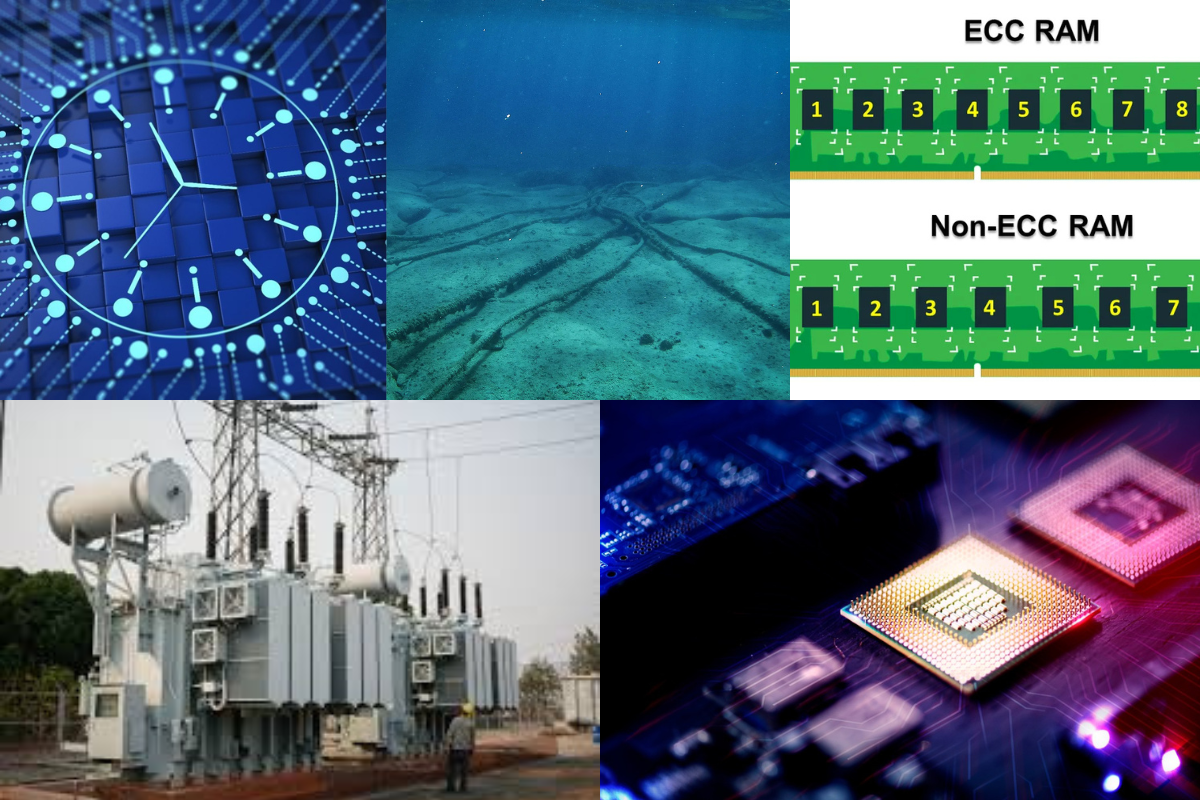
Hidden technologies keep our digital lives running smoothly
We live in a world where smartphones, artificial intelligence and flashy gadgets dominate headlines. But beneath the headlines are several quiet, often invisible technologies working endlessly to keep our digital lives running smoothly. These systems may never make headlines, yet they shape everything from our communications to our safety. Here are five crucial technologies that most of us depend on daily, yet rarely stop to think about.
Time synchronisation systems: Keeping the world in step
If every bank transaction, hospital system, or airport control tower operated on slightly different clocks, entire industries would collapse. That is why time synchronisation systems exist. Using atomic clocks and protocols such as Network Time Protocol (NTP), they keep the digital world in lockstep. From financial markets to social media servers, this coordination ensures millisecond-level accuracy. Without it, payment networks would misfire, navigation systems would desync and even your smartphone alarm might betray you.
Undersea cables: The internet’s hidden highways
When we think “internet,” we imagine satellites and wireless connections. In truth, undersea cables carry about 95 pc of all international data. Spanning oceans with more than 1.5 million km of fibre optics, they transfer everything from social media posts to corporate cloud traffic. They are the unseen but essential veins of global trade and communication. Whenever you stream a show from another continent, hop on a video call, or transfer digital funds, chances are your signal is racing across the ocean floor.
Error-correcting codes: Protectors of digital data
Streaming your favourite movie or saving a work file might seem simple, but both involve mathematical safeguards ensuring accuracy. Error-correcting codes (ECC) quietly detect and fix digital errors caused by interference, storage wear, or weak signals. Without them, Wi-Fi would jitter constantly, video calls would disintegrate, and even space probes would not communicate reliably with Earth. Whether it is your emails sending without corruption or your hard drive storing files intact, ECC is the unsung guardian of digital accuracy.
Power grids and transformers: The silent engine of electricity
We flip a switch and expect instant light, yet powering billions of homes and devices requires a hidden technological ballet. Transformers within power grids silently convert electricity to the correct voltage at every stage: stepping it up for long-distance travel and down for safe household use. Without these conversions, electricity would burn out appliances or vanish before reaching neighbourhoods. From your morning coffee machine to your laptop charger, every flicker of convenience traces back to this largely invisible technology that makes electricity practical and dependable.
Semiconductor microchips: Brains behind the modern world
At the core of nearly every device you own, phones, cars, appliances, even smart thermostats, are semiconductor microchips. These tiny silicon wafers, etched with billions of transistors, run everything from critical hospital machines to simple washing cycles. Chips translate binary code into real-world functions, functioning as the “brains” of modern electronics. Few stop to ponder how much society leans on microchips, until supply chain shortages hit.
From synchronised timekeeping to cables on the seafloor, from error-correcting codes to the hum of transformers and microchips, countless hidden systems quietly power the digital age. They rarely get recognition, but they sustain the reliability, speed and safety of everyday life.
