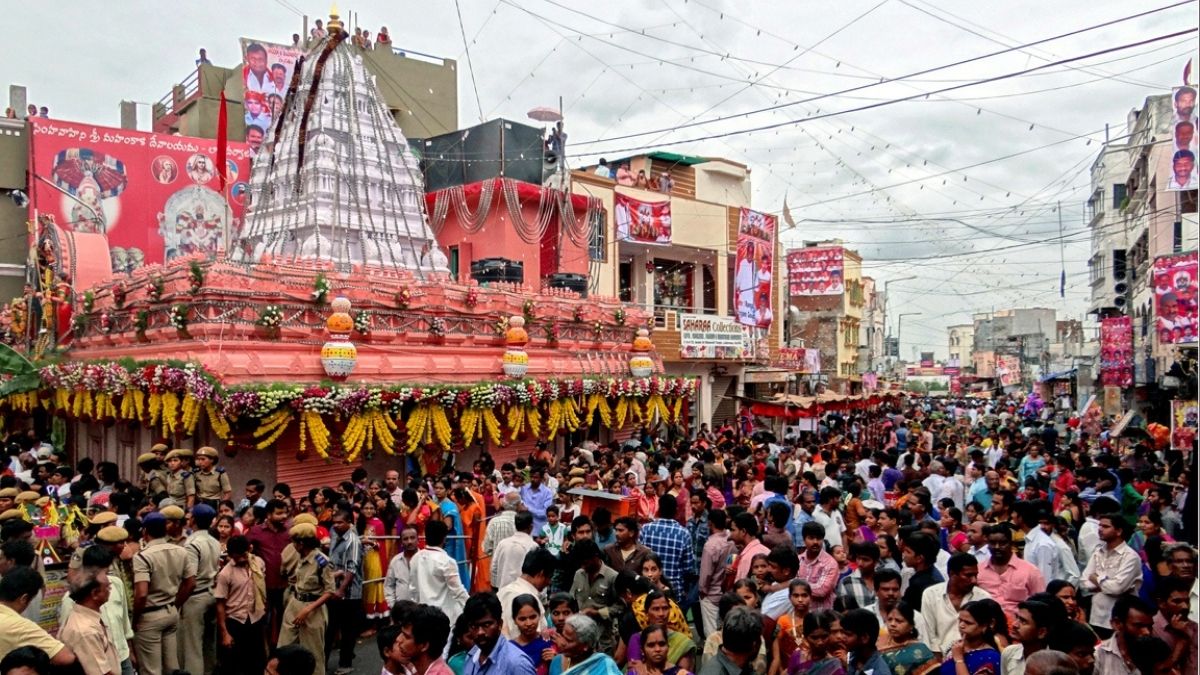
The streets of Telangana come alive with Bonalu, one of the state’s most iconic folk festivals dedicated to Goddess Mahankali (Photo: Incredible India)
Every year during July, the streets of Telangana come alive with Bonalu, one of the state’s most iconic folk festivals dedicated to Goddess Mahankali. Marking a collective expression of gratitude and devotion, the festival brings together women, families, neighbourhoods and local communities through temple offerings, colourful processions, folk performances and traditional rituals that reflect Telangana’s rich cultural heritage and strong community spirit.
Celebrated across Telangana, particularly in Hyderabad, Secunderabad, Golconda, Lal Darwaza, Balkampet, Chilkalguda, Shah Ali Banda and Haribowli, Bonalu is an annual festival in which devotees offer Bonam, a cooked meal of rice, milk and jaggery, to the goddess. Women dressed in colourful traditional attire carry beautifully decorated pots adorned with neem leaves, turmeric, flowers and a lit lamp on their heads as they make their way to temples in devotional processions.
Unlike festivals centred solely on temple worship, Bonalu transforms entire neighbourhoods into vibrant cultural spaces where devotion extends beyond religious rituals into public celebrations. Folk dances, drum performances, traditional music, Pothuraju processions and community gatherings create a unique atmosphere that blends faith with Telangana’s living folk traditions.
Though deeply rooted in Telangana, Bonalu is also celebrated by Telugu communities living in other Indian cities and abroad, allowing migrant families to maintain a connection with their cultural roots and regional identity.
Dedicated to Goddess Mahankali, regarded as the protector against diseases, epidemics and evil forces, Bonalu continues to serve as both a religious observance and a cultural festival that preserves indigenous traditions, local folklore and collective memory across generations.
Also Read: Medak uncovered: Telangana’s hidden forts, temples & nature
Origin and historical foundation
Bonalu is closely associated with the worship of village guardian goddesses that has long formed part of Telangana’s folk traditions. The most widely accepted historical account traces the festival to 1813, when Hyderabad and Secunderabad were struck by a devastating plague.
According to local tradition, a military battalion stationed in Ujjain prayed to Goddess Mahankali, promising that if the epidemic subsided, they would install her idol in Secunderabad and offer Bonam every year in gratitude. After the plague ended, the promise was fulfilled, giving rise to the annual celebrations that continue today.
Recent archaeological findings, however, suggest that Bonalu may have much older origins. A Telugu inscription dating back to 1516 CE references Bonalu and related rituals, indicating that forms of the festival existed centuries before the plague narrative and were already embedded within Telangana’s regional traditions.
The festival’s name is derived from the Telugu word Bhojanam, meaning meal or feast, highlighting the central ritual of offering food to the goddess as an expression of thanksgiving and faith.
Over time, Bonalu evolved into one of Telangana’s defining cultural traditions, preserving folk customs, neighbourhood participation and regional identity while retaining its spiritual significance.
Ritual structure, symbolism and cultural meaning
Bonalu is deeply embedded in Telangana’s traditions of goddess worship, collective participation and folk performance. The festival symbolises gratitude, protection and the enduring relationship between communities and the divine feminine, particularly the belief that Goddess Mahankali safeguards families and villages from disease and misfortune.
The central ritual revolves around the offering of Bonam, prepared by women who cook rice, milk and jaggery before placing the food in decorated brass or earthen pots.
Neem leaves and turmeric hold special significance throughout the festival. Neem is traditionally associated with healing and protection against disease, while turmeric represents purity, prosperity and feminine energy. Their presence reflects both ritual symbolism and centuries-old indigenous knowledge.
Bonalu also functions as an important platform for preserving Telangana’s oral traditions and folk culture. Songs, drum performances, dances and ritual processions transmit stories, customs and local beliefs from one generation to the next while strengthening community participation.
The festival serves multiple cultural purposes. It also reinforces neighbourhood solidarity, preserving folk traditions, celebrating women’s central role in ritual life and strengthening Telangana’s regional cultural identity.
Also Read: Telangana’s Cheriyal scroll paintings: Stories of mythology and village folklore
Key elements of the festival
One of the defining figures of the festival is Pothuraju, believed to be the brother and guardian of Goddess Mahankali. Bare-chested and covered in turmeric with vermilion markings, wearing a red dhoti and ankle bells, Pothuraju leads the processions through energetic dances that symbolically clear the path for the goddess while protecting devotees from evil.
Another important ritual is the Rangam, during which a woman, believed to be possessed by the goddess, delivers prophecies and blessings for the coming year. The ceremony draws large numbers of devotees seeking guidance and divine messages.
The Ghatam procession forms another major highlight. A decorated metal pot representing Goddess Mahankali is carried through the streets accompanied by drummers, musicians and devotees before the ceremonial immersion that marks the conclusion of the celebrations.
Throughout the festival, neighbourhoods resonate with folk dances, devotional songs, traditional percussion performances and colourful street processions, transforming public spaces into centres of cultural expression.
The offering of Bonam itself typically consists of cooked rice, milk and jaggery, though some traditions also include curd. Families prepare the offering at home before presenting it at temples as part of prayers for protection, prosperity and wellbeing.
Preparation and community participation
Preparations for Bonalu begin days before the festival, with families cleaning homes, decorating temples and preparing ritual offerings. Women play the central role by cooking Bonam and decorating the ceremonial pots with flowers, neem leaves, turmeric and vermillion.
Neighbourhood committees coordinate processions, organise cultural performances and decorate streets, while temple authorities oversee religious ceremonies throughout the festival period.
Folk artists, drummers and dancers rehearse performances well in advance, ensuring the continuity of Telangana’s traditional performing arts. Volunteers assist with crowd management, processions and community feasts, reflecting the collective nature of the celebrations.
The festival atmosphere is shaped by continuous participation, with entire neighbourhoods contributing through music, rituals, storytelling and shared celebrations rather than remaining passive spectators.
Although Bonalu has grown into one of Telangana’s biggest public festivals, it continues to retain its strong community-led character, where local participation remains at the heart of the celebrations.