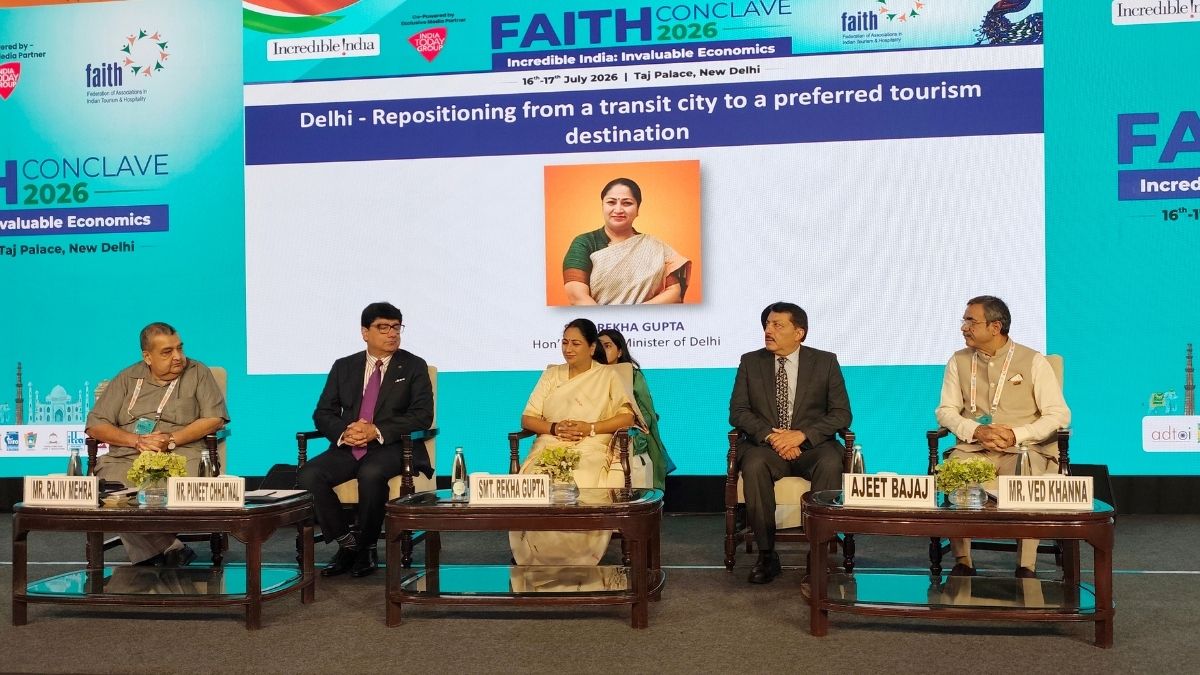
The Tourism Conclave of the Federation of Associations in Indian Tourism & Hospitality (FAITH) concluded in New Delhi on Friday (Photos: India & You)
The Tourism Conclave of the Federation of Associations in Indian Tourism & Hospitality (FAITH) concluded in New Delhi on Friday, with its second and final day bringing together government leaders, hoteliers and industry veterans to discuss what India’s travel and hospitality sector needs to grow, from investment and talent development to Meetings, Incentives, Conferences and Exhibitions or MICE tourism, city-level positioning and policy-led expansion.
The conclave featured a series of panel discussions and presentations focussing on MICE tourism, technology, hospitality and investment, bringing together policymakers, industry leaders and tourism stakeholders to discuss the sector’s future.
Rekha Gupta, Chief Minister, Delhi, opened proceedings of the day with an appeal to see the capital as more than a stopover.
Also Read: FAITH to sign MoU with AWPO for placement of army veterans
“People have always looked at Delhi as a transit hub. They arrive in Delhi, land here and then choose their onward destination,” said Gupta. Adding that her government, in office for about a year and a half, wants tourists to experience Delhi before they leave the country.
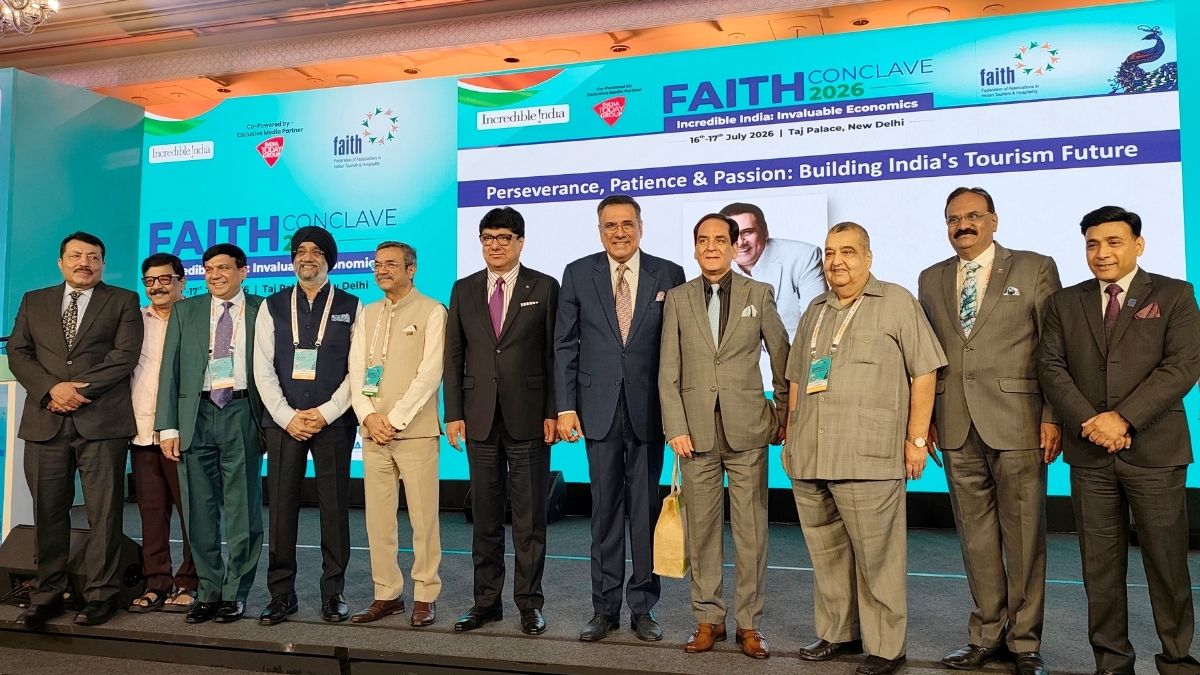
The conclave featured sessions with Boman Irani
Gupta described Delhi as a mini-India and cited migration figures to make her point. “If you talk about Rajasthan, nearly 2 million people from Rajasthan live here. If you talk about Haryana, nearly 2.5 million people from Haryana live here. If you talk about Uttar Pradesh, nearly 3 million people are from UP,” she said, pointing to festivals from Dandiya to Bihu being celebrated in the city.
Rekha Gupta
She listed steps taken by her government to promote tourism, such as streamlined ticketing and booking for monuments, a single-window clearance system for concerts that has pulled major shows away from Gurugram and Noida and into Delhi itself, plans for mega-event venues capable of hosting up to 5,00,000 people, and a new Film Policy that recently produced the city’s first film festival. She also pointed to underused assets such as jungle safari in Delhi with deer, peacocks and leopards, and religious sites including Chhattarpur Temple, Akshardham and the Lotus Temple.
On pollution, Gupta said Delhi’s pollution was steadily decreasing, and the landfill mountains were nearing total elimination.
Kandula Durgesh, Tourism Minister, Andhra Pradesh framed the state as being in the middle of a policy-driven push to attract investors. He described a government working across multiple fronts at once, from event management to tour operations, and said the state had deliberately built out a suite of new policies to back that ambition.
“Andhra Pradesh is in a process of developing so many policies which are very much useful to the investors in Andhra Pradesh,” said Durgesh. Adding that the state has got everything to offer and is very economically helpful to those willing to invest.
Also Read: Andhra Pradesh to become India’s first AI-powered tourism state
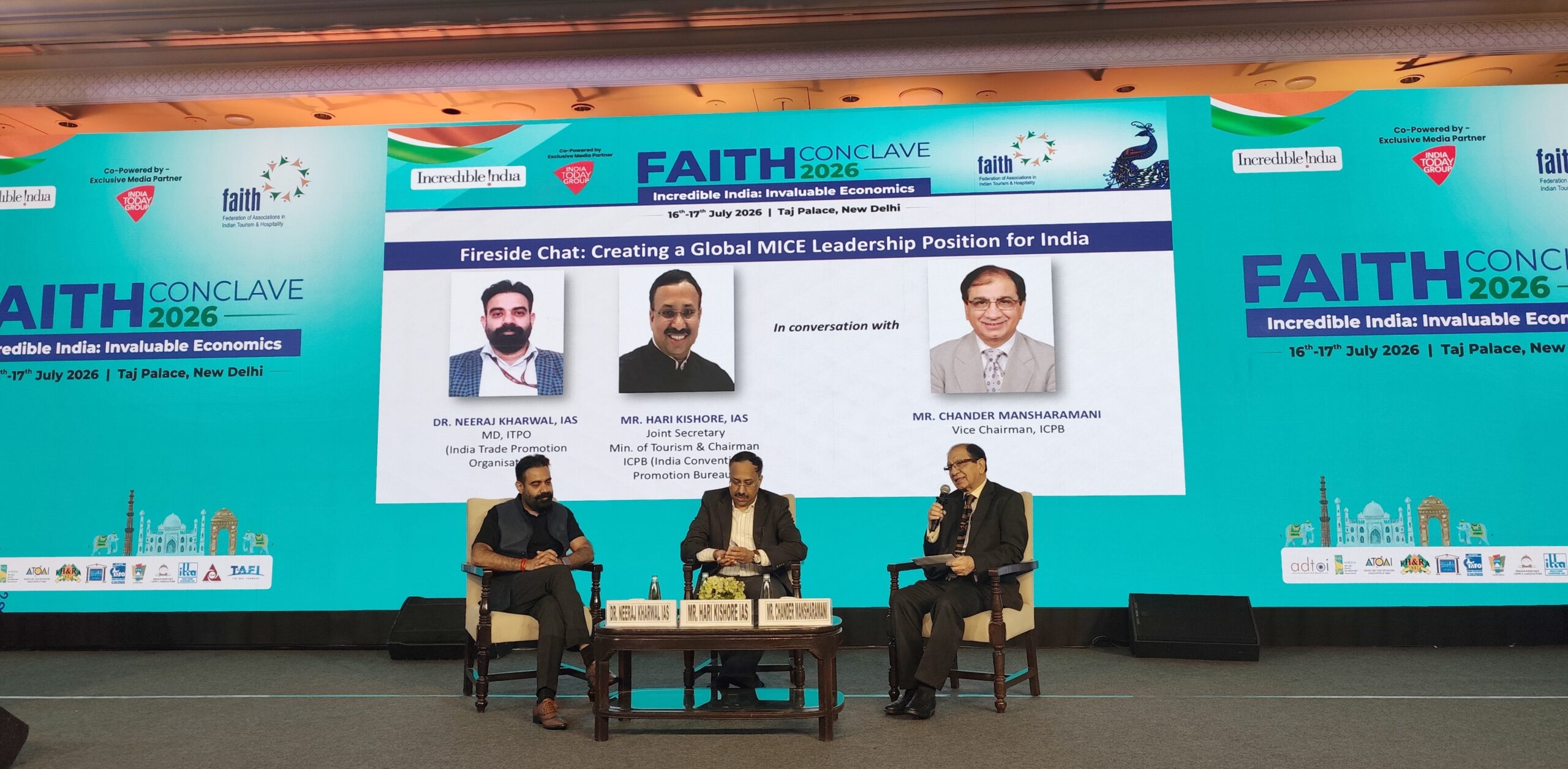
The conclave featured a series of panel discussions and presentations focussing on MICE tourism, technology andhospitality
Durgesh was keen to stress that the state’s promises come with follow-through, promising delegates that bureaucratic friction would not be a barrier. “There won’t be any problem. Single window support will be there for all the activities,” he said, pointing to the upcoming annual convention of the Indian Association of Tour Operators (IATO) in Visakhapatnam in September as the evidence that both domestic and international operators were already engaging with the state directly.
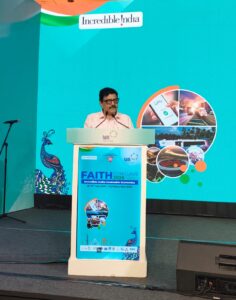
Kandula Durgesh
Ajay Jain, Special Chief Secretary for Housing, Andhra Pradesh, followed with a more granular account of the state’s tourism growth. He opened with the headline figure behind the state’s pitch, noting that domestic arrivals had risen sharply even as foreign arrivals had dipped nationally so far this year. “There has been a 17.7 pc increase in domestic tourism,” he said, while acknowledging that this year, there has been a decline in foreign tourist numbers in line with the wider trend.
Jain also highlighted the various incentives the state had put in place, including a concert policy modelled partly on Assam’s, adventure tourism guidelines, a homestay policy, and a beach shack policy similar to Goa’s. On the financial support available to investors, he said the concert policy alone offers a five-day viability gap funding of up to INR 50 million per event for national or international acts, while separate capital subsidies for tourism projects go up to INR 40 million, alongside stamp duty reimbursement and waived land conversion charges.
He credited this policy push with a visible jump in hotel supply, “The state has added more than 8,000 classified rooms in the past two years, up from around 4,000 as of May 2024,” he said. Jain also described a pilot programme placing multilingual QR codes at heritage sites, offering visitors an interactive guide to nearby history, food and accommodation, which the state plans to extend to all 130 destinations within six months.
Discussion then moved to why India’s MICE segment continues to punch below its weight despite strong returns. Citing World Tourism Organisation figures, delegates noted that MICE travellers were engaged three to four times more than individual travellers, and that sector revenue was projected to reach USD 14,730 billion by 2030 on the back of 30 pc compounded annual growth since 2024.
Hari Kishore, Joint Secretary at the Ministry of Tourism and Chairman of International Conventions Promotion Bureau, described a strategy built around getting states to set up city-level MICE promotion bureaus rather than leaving the segment to national policy alone. He pointed to Hyderabad’s bureau as the model to replicate, noting its record of winning 41 out of 120 international conference bids over the past decade, and said the ministry expects at least 5 city-level MICE promotion bureaus to be established by the end of the year.
Neeraj Kharwal, Managing Director of India Trade Promotion Organisation, added that the organisation now sees itself as more than the operator of Bharat Mandapam. He said ITPO was working with the ministry to establish a Greater Delhi MICE promotion bureau spanning Bharat Mandapam, Yashobhoomi and the India Expo Mart in Noida, and was separately planning a national Bharat MICE Forum once scheduling constraints ease.
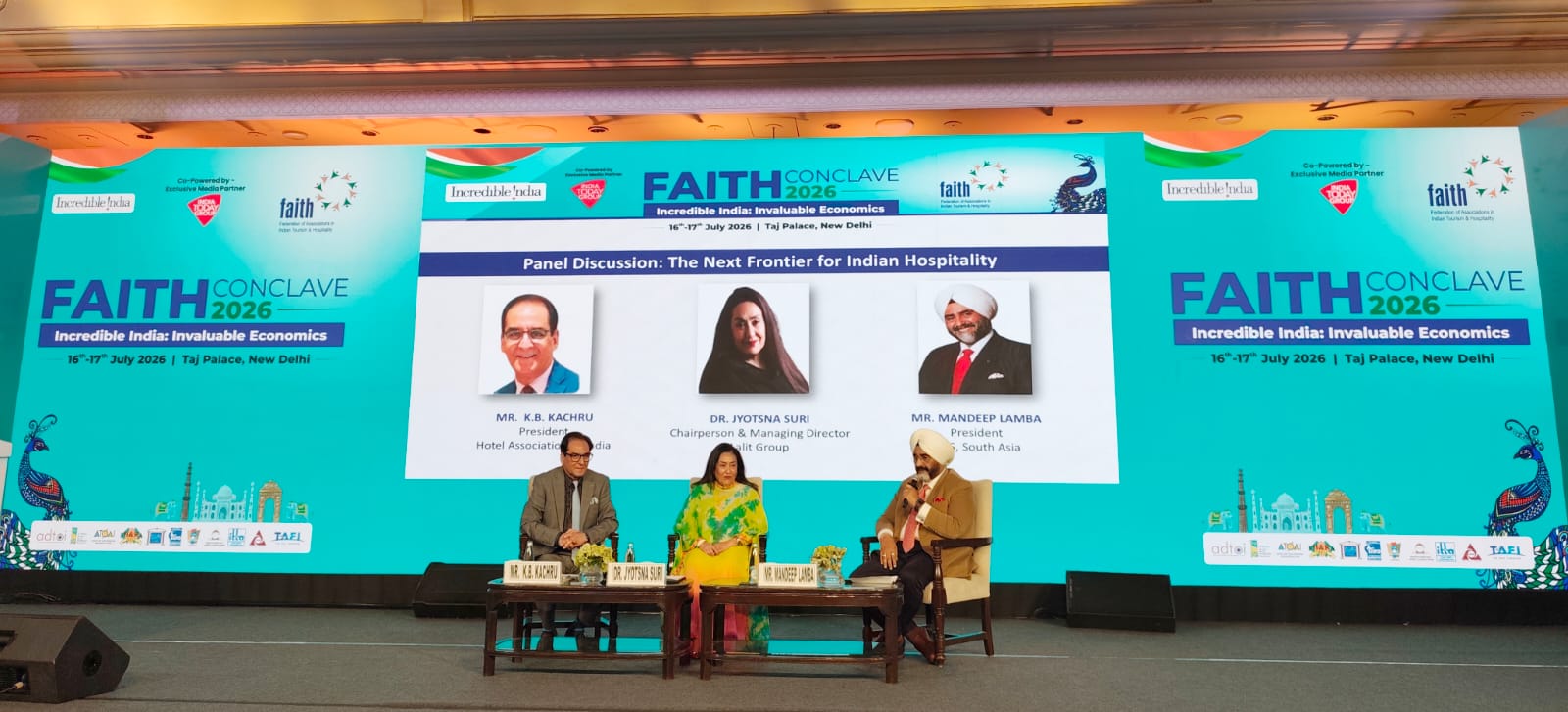
Hospitality leaders deliberate on India’s growing hotel industry, investment trends and future opportunities.
A panel featuring Jyotsna Suri, Chairperson and Managing Director of the Lalit group, and K B Kachru, President of the Hotel Association of India, turned to a familiar grievance, that hospitality’s contribution to the economy went unrecognised. Suri said that the sector’s real value lies in the jobs it creates well beyond its own payrolls.
“The employment generation that this sector actually does is not appreciated at all,” she said, stressing that the figure included indirect jobs and the wider ecosystem the industry supported.
Kachru picked up the same thread on the subject of capital, saying that hospitality has been left out of India’s investment story despite its scale.
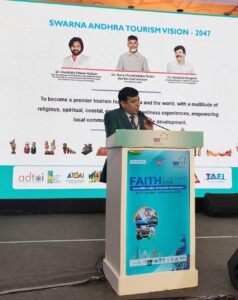
Ajay Jain
“Last year I think it was close to about USD 560 billion came into India as foreign investment overall, only 40 pc actually came from institutional and FDI. The rest was High Net Worth Individuals investment,” he said, a split he read as proof that hospitality was not being positioned to attract serious global capital. He also pointed to how thin the country’s branded hotel stock remains, noting that India today had close to only 200,000 branded rooms, a figure he contrasted with single American states, and said the industry wants eased business conditions rather than subsidies.
Both Suri and Kachru said that Tier II and Tier III were the sector’s next growth engine. Kachru said the industry had already accepted the point. “Over 50 pc of the GDP comes from Tier II and Tier III towns and that share will climb to between 55 and 60 pc in the years ahead, provided last-mile connectivity and talent keep pace,” said Kachru.
Suri said that hospitality has largely created its own image problem. She said young Indians still default to more conventional career paths over hospitality, noting that there is still that mindset that you want to become an IAS officer or an engineer or a doctor, and called for an advertising push to reset that perception around a sector that runs 24 hours, 365 days. She described hiring from marginalised communities as a source of loyalty rather than charity, saying her properties employ 200 transgenders across categories and roles, alongside staff from the LGBTQI community and persons with disabilities.
The Conclave brought together policymakers, industry leaders and tourism stakeholders to discuss the sector’s future
Looking ahead a decade, Suri said she wanted to see the gap between branded and non-branded properties close and more international travellers choosing India for how it makes them feel rather than for any single destination.
“I personally would like to see India as one of the top five hospitality markets in the world,” said Kachru while cautioning the industry against copying Western models wholesale.
Actor, filmmaker and screenwriter Boman Irani opened the second day of the conclave with a motivational address. Irani also closed much of the day’s proceedings by reflecting with an address built entirely around his own career, tracing a path from working in a photo studio and shooting sporting events to a first screen role playing a pig in a stage production choreographed by Shiamak Davar. He credited his mother and his wife with pushing him toward acting later in life, and told delegates that persistence, not raw talent, had defined his career. Reflecting on that first small role, he said simply, There are no small parts, there will be small actors.
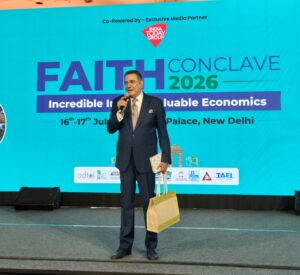
Boman Irani
“I began my career as a photographer, but every time I changed direction, I had to start from scratch. My first stage role was that of a pig, and I embraced it because there are no small parts, there will be small actors. I have learnt that there are no shortcuts or magic words. You have to pay your dues, believe in your story and give every opportunity your absolute best,” said Irani.
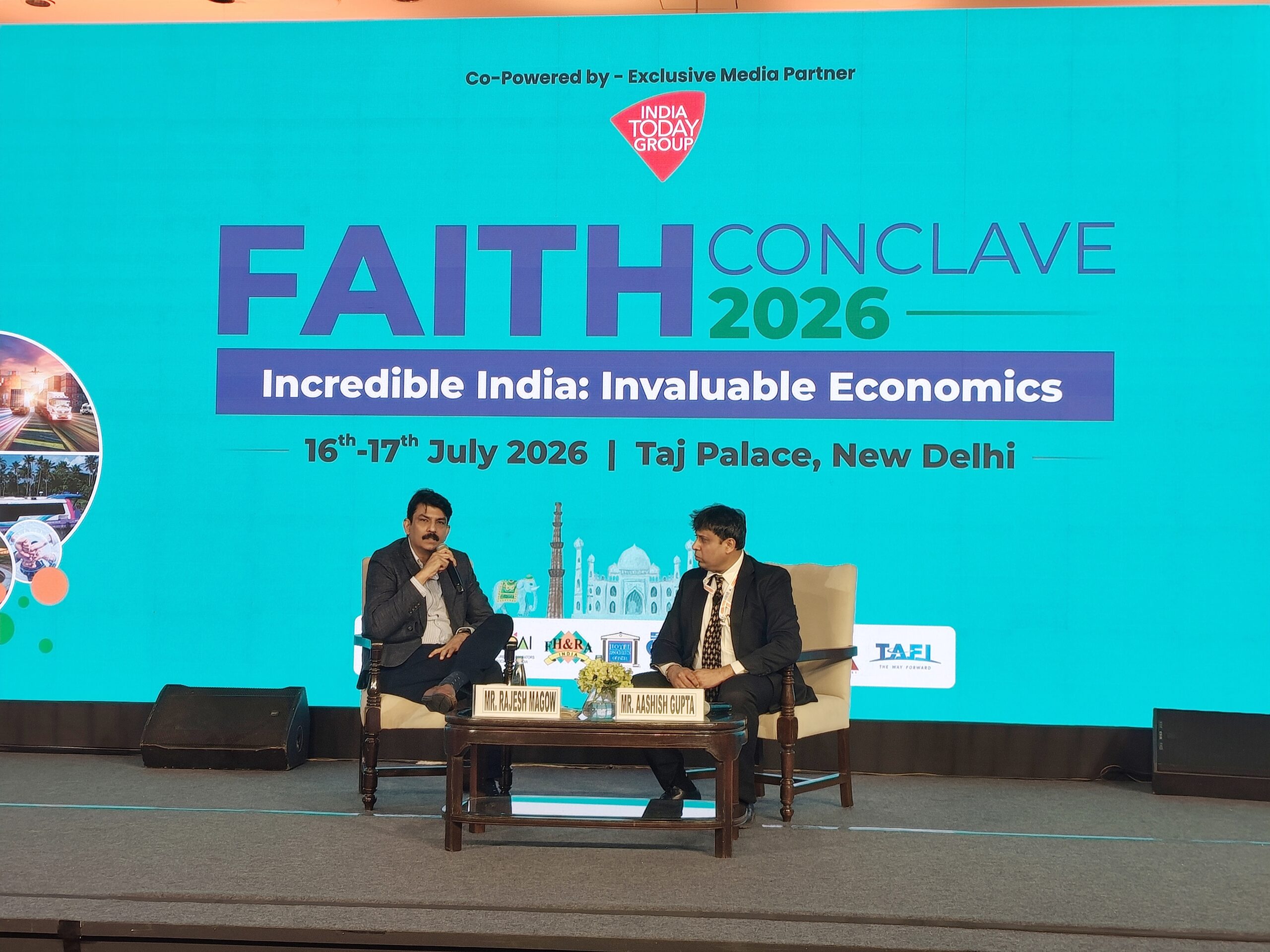
Rajesh Magow, Co-Founder and Group CEO, MakeMyTrip, a leading online travel company, reflected on the company’s origins, recalling how a group of former colleagues decided to build something of their own by betting early on internet adoption in India, long before broadband became commonplace. Recalling the conviction behind that decision, he said, “We thought of potentially internet coming and building this model but there was never a question or a doubt in mind about whether this will happen or not. It was only a question of time,” said Magow.
Magow was candid about how the pandemic tested a company that had grown too large to manoeuvre quickly. Scale, he admitted, made the crisis harder to navigate than it would have been in the company’s early years, though he said MakeMyTrip was never staring down an existential threat because it had reserves on its balance sheet. Out of that period came MyBiz, the company’s corporate travel platform, which he said has since grown into “a billion dollar business.”
The conclave’s second day closed with FAITH members and government representatives agreeing that the sector’s growth now depended less on ambition and more on execution, on connectivity, on branded capacity, and on convincing New Delhi and state capitals alike to treat tourism as core economic policy rather than an afterthought.