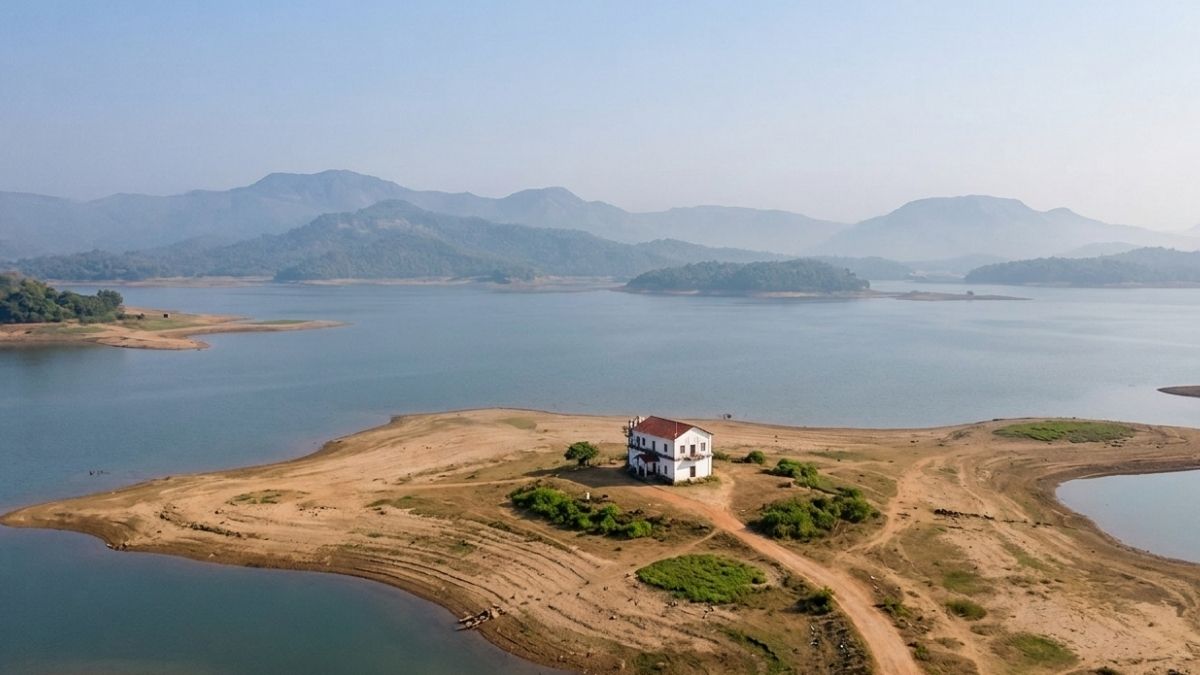
Kurdi in Goa was submerged under a reservoir when a dam was built in 1986 (Photos: Goa Tourism)
Each year between April and May, as water levels in the Salaulim Reservoir fall to their seasonal low, the ruins of Kurdi village reappear from beneath the surface. Stone foundations, pathways, the walls of a chapel, a school, and the structure of the Someshwar Temple come back into view for roughly four to six weeks before the monsoon submerges them again.
What began as an annual ritual of return for displaced families has, over the past decade, developed into a recognisable tourism circuit attracting visitors from across Goa and beyond.
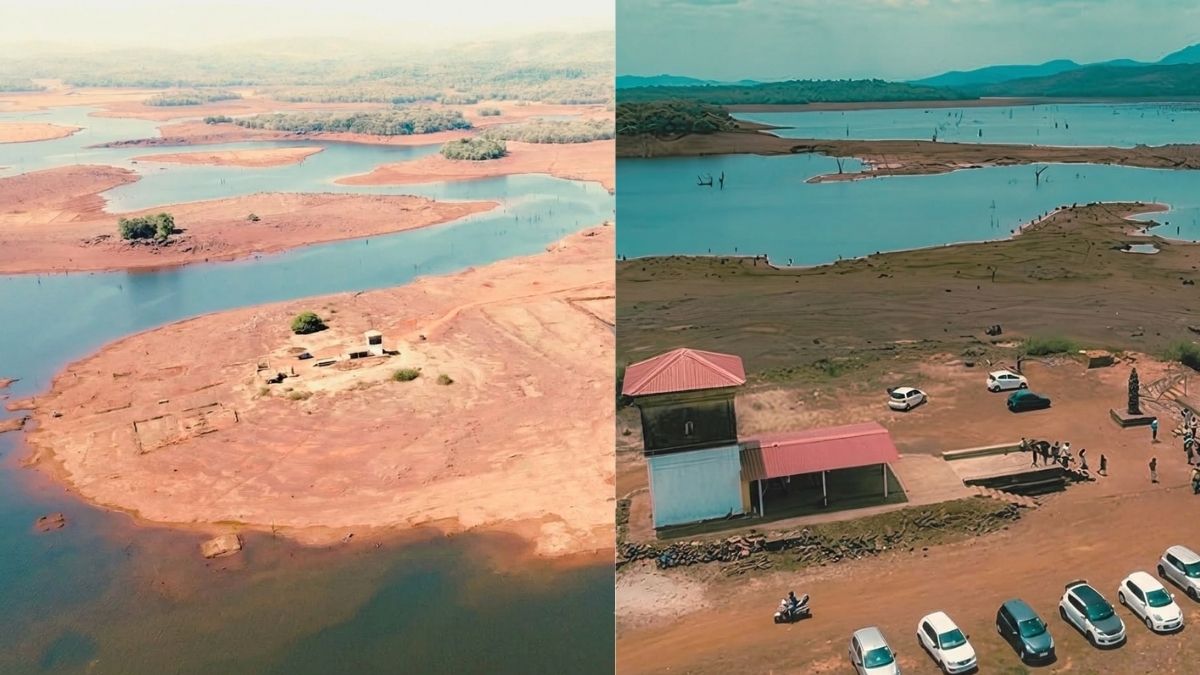
Kurdi village was submerged due to the construction of Salaulim Dam
Construction on the Salaulim Dam began in 1975. Located in Sanguem taluka in South Goa, the dam was built on the Salaulim River, a tributary of the Zuari, to supply irrigation and drinking water to the southern talukas of the state. The reservoir’s submergence zone covered 20 villages, which were partially or fully inundated.
Approximately 3,000 people, belonging to over 450 families, were displaced and resettled. Kurdi was among the villages completely submerged. The villagers were relocated to the neighbouring settlements of Velip and Valkini in 1983 and 1984. The village was fully submerged by 1986.
Also Read: Goa records 6.8 pc rise in railway tourist arrivals in Jan-May 2026
The Salaulim Dam is a composite structure of earth and stonework, standing approximately 42 m in height and 1004 m in length, with a gross water storage capacity of 234 cubic metres. Before submergence, efforts were made to relocate significant religious structures. A Mahadev temple at Kurdi, archaeologically dating to the 10th and 11th centuries of the Kadamba period, was dismantled stone by stone and reassembled at a site 17 km away, with each stone numbered to preserve orientation. The process took 11 years. A 2.5-m figure of the Mother Goddess, estimated to date to the 5th century BC and weighing 16 tonnes, was relocated to Verna.
What remains at the original site is the Someshwar Temple, which stands on a slope above the reservoir waterline and becomes fully accessible only during the summer drawdown. Visitors to Kurdi during April and May can access the Sacred Heart of Jesus Chapel and the 18th-century Someshwar Temple, along with the remnants of approximately 634 households. The site also contains a moon dial, an irrigation canal cut through laterite rock, and the ruins of what was the home of Padma Bhushan awardee and Hindustani classical vocalist Mogubai Kurdikar, who was born in the village.
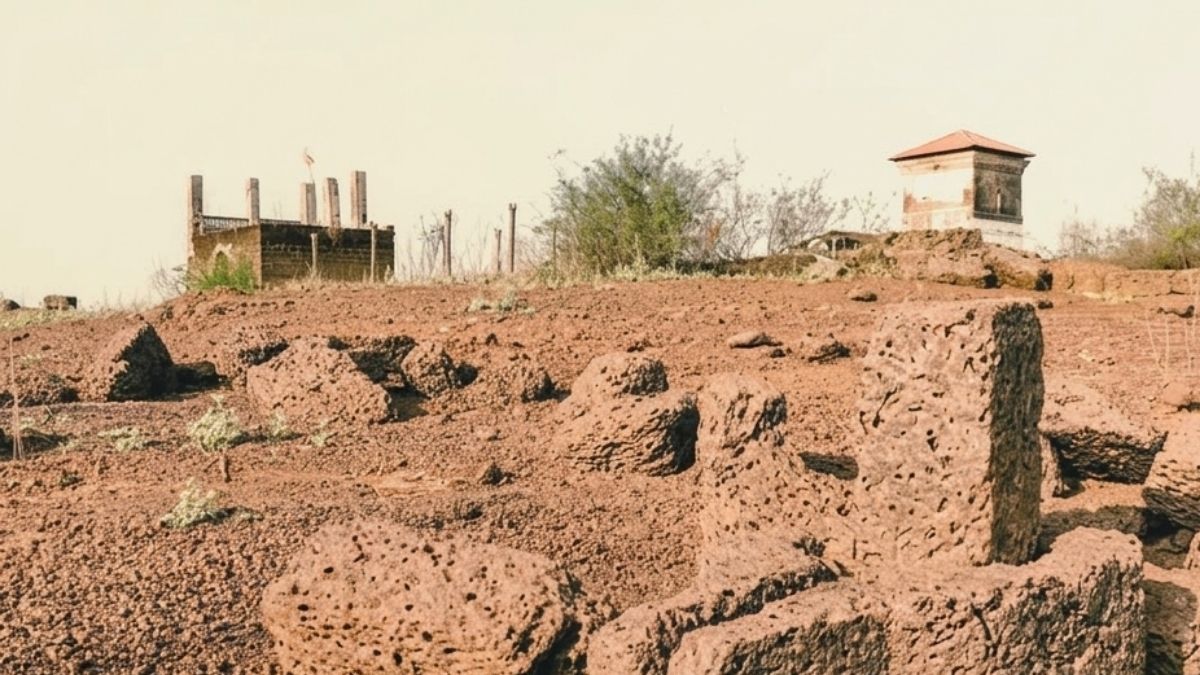
Kurdi was once a thriving agricultural land gradually over taken by progress and submerged
The primary annual event that is still held every here is the Sri Someshwar Utsav, occurring on May 18 each year. Displaced villagers, known locally as Kurdikars, return during this period to perform rituals, offer prayers, and observe the festivities at the Someshwar Temple. The gathering serves as a point of cultural continuity for a community whose social ties were severed by the submergence. A Muslim shrine and a chapel at a hillock above the waterline also draw former residents for their respective observances during the same window. In years of unseasonal rainfall, the temple remains underwater and the festival is cancelled, as it happened in 2022 and at least one subsequent year.
The site draws a visitor profile distinct from Goa’s coastal tourism circuit. Most visitors arrive by road from Margao, approximately 30 km away, or from Panjim, the state capital. Access requires navigating the dried reservoir bed on foot, and conditions at the site no food, no shade, and unstable mud in sections limit the window of practical access to early morning hours. The absence of facilities has so far prevented large-scale commercial activity at the location.
Also Read: Goa Tourism sees 6.23 pc growth with record International arrivals in 2025
In its 2025 strategy, Goa Tourism in 2025 placed explicit emphasis on what it described as the Goa Beyond Beaches campaign, directing attention to the state’s hinterlands, heritage villages, and community-led experiences. Goa recorded 10.41 million visitors in 2024, with an 8 pc increase in tourist arrivals in early 2025 compared to the same period in the preceding year.
The visibility problem at the site is material as well as statistical. Increasing visitor numbers have produced accumulating litter at Kurdi, which displaced villagers and community members clear in advance of the annual festivities. There is no formal authority responsible for the site’s upkeep during the tourism season. The Salaulim Dam project falls under the jurisdiction of Goa’s Water Resources Department, but the submerged village is not classified as a protected monument and receives no official maintenance support.
The families from Kurdi that have been resettled at Vaddem and other rehabilitation sites continue to face deficiencies in drinking water, irrigation access, healthcare, and electricity. The village does not receive water from the Salaulim Dam project it was displaced to construct. For many Kurdikars, the annual return to the site in May is both an affirmation of cultural memory and a reminder of pending obligations that have remained unmet for four decades.
The site’s visibility as a seasonal destination has opened a secondary conversation about documentation and archival preservation. In 2016, filmmaker Saumyananda Sahi produced a documentary titled Remembering Kurdi for the Films Division of India, based in part on a sociology dissertation by Venisha Fernandes, whose family originally came from the village. The film draws on a 1977 recording of the village made by Vinay Dhumale, titled Gana Tapaswini, which captured the Someshwar temple and village life before submergence.