
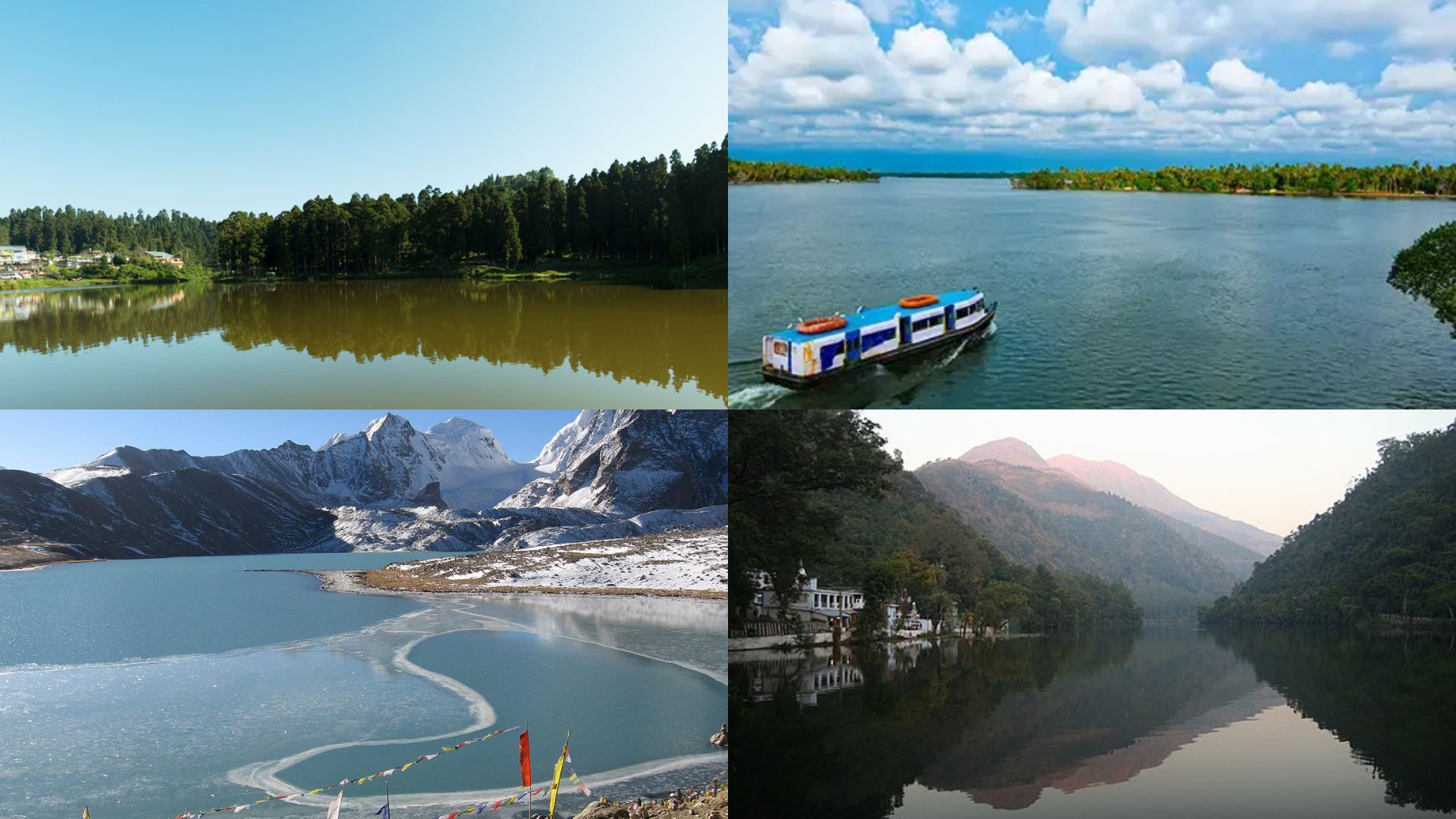
Some lakes stand out, unique in their essence with a spiritual aura or untouched natural beauty
India is a land surrounded with heritage, where every street corner may surprise a visitor with a centuries-old monument, and where royal palaces and lush eco-retreats exist side by side. From the snow-capped Himalayas dotted with quaint hill stations and bustling mall roads, to sun-kissed beaches that stretch endlessly into the sea, the country is a mosaic of diverse climates and dramatic landscapes.
Besides the dramatic landscapes, the country is also dotted with lakes whose waters serve not just as a lifeline to towns, but as leisure spots where people, surrounded by nature, indulge in outdoor activities like boating, mountaineering, and trekking. Yet amidst all this, some lakes stand out, unique in their essence with a spiritual aura or untouched natural beauty. Here are five such lakes that offer a peaceful escape from the hustle and bustle of urban life.
Venna Lake, Maharashtra
About 200 km from the bustling chaos of Mumbai, beyond the highways and cityscapes, lies a serene escape nestled in the hills of Mahabaleshwar, Venna Lake.
Built in 1942 by Appasaheb, the then ruler of Satara, in western Maharashtra, this clear, blue expanse was originally created to serve as a water source for the nearby town. But over time, nature added its own magic. Surrounded by rolling hills, dense greenery, and mist-laced air, Venna Lake evolved from a utility into a beloved retreat.
Today, it stands as a peaceful weekend getaway, where the air feels fresher, the silence is soothing and the pace of life slows to the rhythm of gentle boat rides and quiet reflections. For those yearning to escape the city’s rush, Venna Lake offers the perfect pause.
As tourists drift across the tranquil waters of the lake, the gentle sway of the boat and the crisp mountain air create the perfect setting to relax and unwind. But the experience does not end on the water. Along the lakeside, a burst of flavours awaits, aromatic pav bhaji sizzling on hot pans, crispy corn tikkis served fresh off the griddle, and tangy bhelpuri piled high with chutneys and crunch.
These delightful street food staples not only satisfy the appetite after a peaceful sojourn on the lake but also add a delicious local flavour to the entire experience, making Venna Lake not just a visual retreat, but a feast for all the senses.
Renuka Lake, Himachal Pradesh
Meanwhile, in the northern reaches of India lies a lake unlike any other, Renuka Lake, a Ramsar site that is not just ecologically significant but deeply spiritual. Tucked away in the lush Sirmour district of Himachal Pradesh, around 37 km from Nahan, this serene waterbody spans approximately 2.5 km in area and is believed to be the embodiment of Renukaji, the wife of Sage Jamadagni and mother of Parashurama, Lord Vishnu’s 6th incarnation.
What sets Renuka Lake apart is not just its natural beauty, but also the myth that breathes life into its still waters. Legend says that when the evil demon Sahastrarjuna murdered Jamadagni and tried to abduct Renuka, she leapt into the lake to escape him. The gods, moved by her devotion, restored her to life and the lake, shaped uncannily like a reclining woman, is said to be her living form.
Fed by an underground spring and framed by dense forests, Renuka Lake is a haven of peace. A scenic walking track encircles its calm waters, and along its banks stand a series of temples echoing ancient devotion.
The area around the lake offers much for nature lovers as well. Trekking, boating, and fishing are popular activities, while nearby forests are home to a rich biodiversity. A mini-zoo in the area shelters Himalayan black bears, spotted deer and barking deer among other native species.
Yet, Renuka Lake is more than a tourist retreat. It is a place of pilgrimage. About 100 km from the lake, the Parashuram Tal and Renuka Temple, reportedly built by the Gorkhas in the early 19th century, mark the spiritual heart of the region.
Gurudongmar Lake, Sikkim
High in the windswept heights of Sikkim’s Mangan district lies Gurudongmar Lake, one of the highest lakes in the world and a place where nature, legend, and faith converge. Set at over 5182 m, this glacial wonder is the source of the Teesta River, its icy waters flowing from nearby Tso Lhamo Lake into the valleys below.
Sacred to Buddhists, Sikhs and Hindus, Gurudongmar is wrapped in ancient lore. It is said that Guru Padmasambhava, an avatar of Buddha, journeying through these harsh Himalayan reaches, encountered locals desperate for water. Moved by compassion, he touched a part of the frozen lake, blessing it so it would never completely freeze, even in the dead of winter. That blessed spot remains liquid to this day, a miracle amidst the snow.
Locals believe the lake’s crystal-clear waters hold healing powers, especially for women facing fertility challenges. This place is continued to be visited by pilgrims where they offer prayers at the small temple by the lake. Prayer flags flutter in the thin mountain air, transforming Gurudongmar into a mystical “Wish Lake”, where silence is broken only by the whispers of devotion and the wind.
Ashtamudi Lake, Kerala
In the warm, tropical embrace of southern India lies Ashtamudi lake, a vital part of Kerala’s backwater ecosystem and famed for its distinctive eight-armed shape, a feature that gives the lake its name. Located in Kollam district, Ashtamudi is Kerala’s second-largest lake, sprawling across 170 square km.
Fed by rivers like the Kallada, the lake ultimately drains into the Arabian Sea, its shores are fringed with coconut palms, mangroves, and tropical greenery, while its calm, mirror-like waters provide a haven for nature lovers, photographers and peace seekers alike.
A quintessential way to experience Ashtamudi is aboard a traditional ‘kettuvallam’ houseboat, which glides silently through the lake’s arms, offering luxurious comfort and stunning views of backwater life.
Beyond its natural beauty, Ashtamudi is also a cultural hub. The annual Ashtamudi Lake Festival draws visitors to enjoy Kerala’s vibrant traditions, featuring classical dance performances like Kathakali and Mohiniyattam, making the lake a celebration of both nature and heritage.
Sumendu Lake, West Bengal
Wrapping up the journey in the eastern part of India is Sumendu Lake, commonly known as Mirik Lake, located in the peaceful hill town of Mirik in West Bengal’s Darjeeling district. Created in 1970 by blocking a stream in a meadow, the lake has since become a favourite retreat for travellers seeking calm and scenic surroundings.
Surrounded by lush tea gardens, pine forests, and the charming village of Mirik, the lake offers a serene setting ideal for a quiet escape. A well-paved walking path runs along its banks, perfect for slow strolls and enjoying the cool mountain air. For a shorter route with a view, the graceful Indreni Pull, a 25 m arch footbridge crosses the lake and offers a stunning perspective of the landscape.
Nearby, places like the Gopaldhara Tea Estate, Don Bosco Church, and cosy cafés add to the experience. Additionally, colourful floating gardens on the lake’s surface add a final touch of beauty, making Mirik Lake a tranquil blend of nature, culture and quiet charm.
These lakes are not just destinations, they are reflections of India’s soul, blending nature, mythology, and culture into one seamless narrative.
