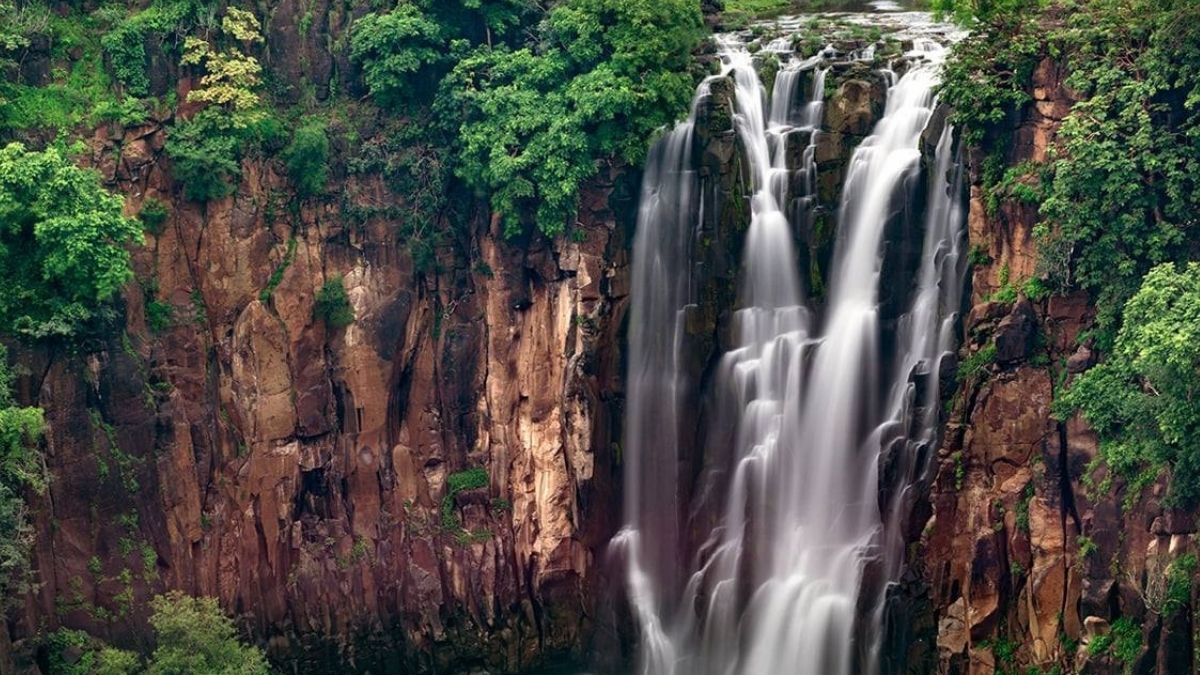
The waterfall is surrounded by thick forest and draws the biggest crowds between July and September (Photo: MP Tourism)
Over 33 km from Indore, situated into the hills of Mhow, Kalakund is a tribal village that most people only discover by accident usually through a train window during monsoon season. That is about to change. The Indore district administration has officially identified Kalakund as a model tourist village, with concrete plans to develop it into an eco-tourism destination. The goal is to bring in proper infrastructure, keep the money inside the village, and do it without wrecking what makes the place worth visiting in the first place.
Any trip to Kalakund begins at Patalpani station. The 9.5-km long metre-gauge stretch between Patalpani and Kalakund is one of the oldest working rail sections in central India. It was first laid in 1878 as part of the Holkar State Railways, absorbed into the Rajputana–Malwa Railway a few years later and somehow survived the gauge conversion decades later only because the terrain was too difficult to upgrade. In 2018, it was officially revived as a heritage section.
Also Read: Five waterfalls in Madhya Pradesh to beat the heat
The engineering is British-era and still holding strong. Four tunnels. Forty-one bridges, six of them major. Twenty-four sharp curves. An average gradient of 1:55, steepening to 1:40 for a stretch of five km. The train moves at around 20 km per hour not because it is broken, but because going faster would be physically impossible on this track.
Last monsoon, a six-coach Vistadome train carried 400 passengers on a single Sunday. The ride takes two hours one way, passing waterfalls, dense forest, rivers and a series of bridges and tunnels. The train leaves Patalpani at 11:05, reaches Kalakund where travellers can spend the afternoon, then heads back at 15:30.
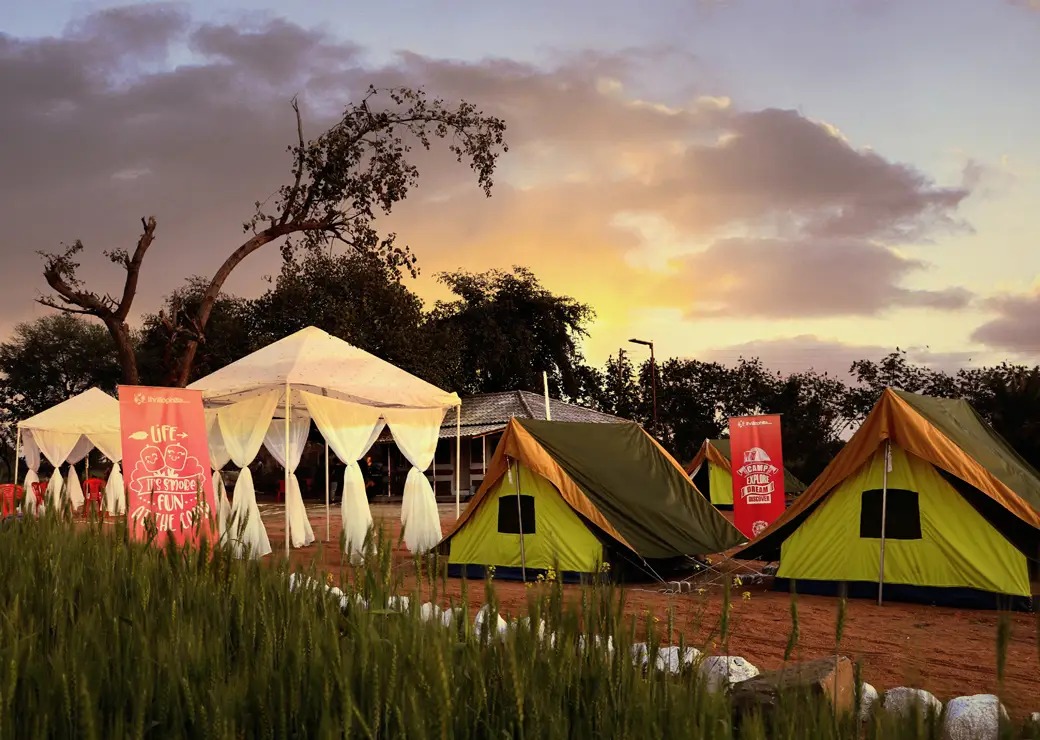
Kalakund is famous for its dense jungle campsites
Before Kalakund, there is the waterfall. The Choral River drops roughly 100 m here and the pool at the base has a reputation locals say it is so deep it reaches Patal, the underworld below the earth. The depth is real enough that swimming has cost lives. The waterfall is surrounded by thick forest and draws the biggest crowds between July and September, when the water is at full force.
Midway between the waterfall and the village, the train makes a stop that doesn’t appear on most tourist itineraries. A small temple, built into the hillside like a cottage, marks the spot dedicated to Tantya Mama, described as the first tribal revolutionary in India to take on the British. Tantya Bhil, sometimes called the Robin Hood of the tribal freedom struggle, is deeply revered by the Bhil community, whose presence defines this entire region. The train stops here and it is certainly worth stepping out.
Also Read: Discovering falls and cliffs in Madhya Pradesh
Kalakund station is ringed by tribal villages, old temples, and forest that has not been cleared. The Bhil community has lived and worked this land for generations farming, collecting forest produce, and lately, selling corn, tea and snacks to the weekend visitors who have been showing up without much formal infrastructure to receive them. The stalls appear on Saturdays and Sundays and disappear with the departing crowds at the end of the day.
There is no hotel in Kalakund. The canteen at the station serves hot food. Vendors from surrounding villages set up temporary stalls with local goods. This loose, informal economy is what the eco-tourism plan is supposed to build on adding homestays, guided treks, and cultural programmes without pricing the community out of what it already has.
One detail most visitors leave without knowing, Kalakand, the milk-based sweet sold across North India, is named after this village. Kalakund is considered to be its place of origin.
The area has more to offer than the train ride and the waterfall. There is a trekking trail on the hill near the village, an ancient Hanuman temple, a check dam with open views over the Choral River and a valley viewpoint that rewards the walk, 3 km off the main road, through teak forest, jungle campsites already operate on weekends for visitors who want to stay longer than a day trip allows. The Choral River runs close enough to hear its roar from camp.