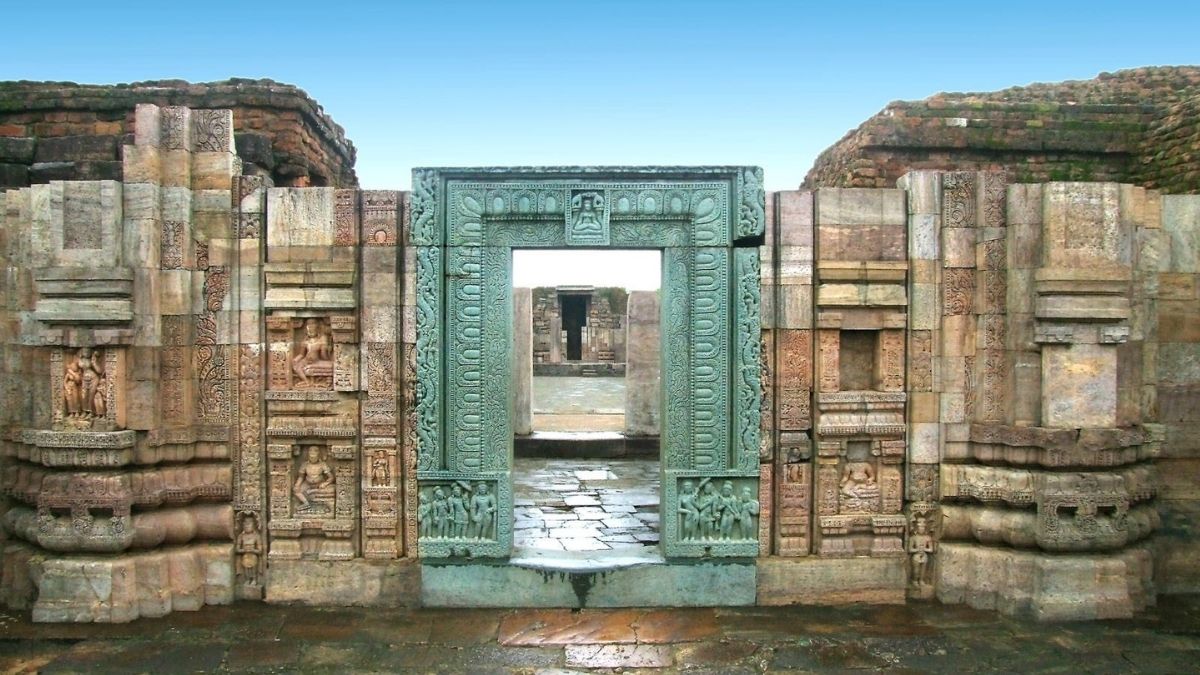
Ratnagiri is the largest and most extensively excavated of the three sites (Odisha Tourism)
Odisha‘s Ratnagiri, Udayagiri and Lalitgiri now have a formal shot at UNESCO World Heritage status, after the Archaeological Survey of India’s nomination secured the three sites a place on India’s tentative list in January. For a circuit that most visitors currently treat as a rushed add-on to a Bhubaneswar temple tour, the listing is a chance to be sold as a destination in its own right.
Lalitgiri, in Cuttack district, is the oldest of the three, with occupation dating to the 2nd-3rd century BCE and Theravada-era stupas containing gold, silver and stone relic caskets. Udayagiri, on the Birupa river, developed under Mahayana patronage before absorbing Vajrayana influence between the 7th and 12th centuries. Ratnagiri, on the Kelua river, became the largest of the three under the Bhaumakara dynasty and a major Vajrayana centre from roughly the 5th to 12th centuries CE. Together they trace roughly 1,500 years of continuous Buddhist history.
Also Read: Deomali: A hidden treasure in the Eastern Ghats of Odisha
Ratnagiri is the largest and most extensively excavated of the three sites, spread across roughly 7.28 hectares on the Assia hill range. Excavations have uncovered two major monasteries and one large stupa, along with numerous smaller votive stupas built between the 5th and 13th centuries. The main monastery is built around a large paved courtyard and houses a central shrine with a colossal seated Buddha in the earth-touching gesture, flanked by standing Bodhisattva figures. Its roof is the only known curvilinear roof on a Buddhist structure anywhere in India.
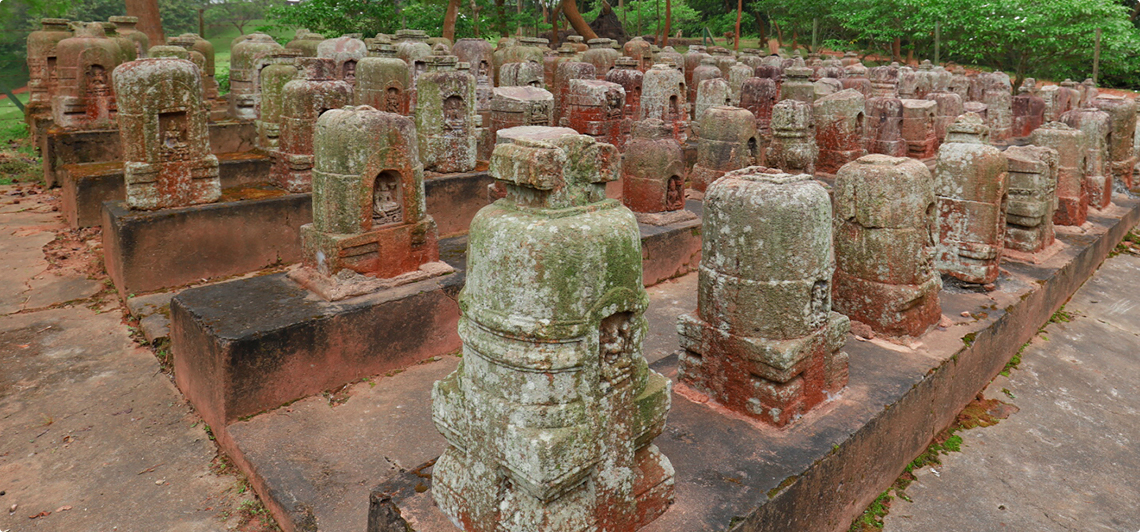
Excavations have uncovered two major monasteries and one large stupa, along with numerous smaller votive stupas built between the 5th and 13th centuries
The buildings combine brick construction with doorways, pillars and sculpture carved from blue-green chlorite and local khondalite, a stone with distinctive plum-coloured overtones. Over two dozen colossal Buddha heads have been recovered from the site, along with a range of Bodhisattva and deity figures, and Ratnagiri’s tantric imagery, including erotic sculpture, is considered unique within Buddhist art worldwide. The site’s turn towards Tantric, Vajrayana practice from around the 7th century onward has drawn comparisons with Nalanda in Bihar. Excavation seasons in 2024 and 2025 added to this record, uncovering inscribed sealings, further votive stupas and a 1.4-m Buddha head.
The Chinese pilgrim Xuanzang recorded visiting Buddhist establishments in the region in the 7th century. Some scholars place these visits at one or more of the three sites, though this is disputed. A separate site at Langudi Hill is now considered the more likely location of the Pushpagiri Vihara mentioned in his accounts.
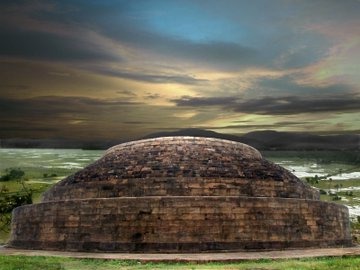
The Lalitgiri Mahastupa is a massive, ancient brick stupa located in Odisha
The three sites sit roughly 90 to 100 km from state capital Bhubaneswar. Ratnagiri and Udayagiri are about 11 km apart, and each is roughly 7 km from Lalitgiri, close enough to cover in one itinerary. In practice, most visitors treat the circuit as an add-on to Bhubaneswar’s temple sightseeing rather than a destination in its own right. None of the three sites has hotel or homestay infrastructure of its own, and visitors base themselves in Bhubaneswar or Cuttack instead.
Also Read: Odisha braces as intensified Cyclone Dana set to make landfall
Tentative listing does not confer World Heritage status. A site must remain on the list for at least a year before the World Heritage Committee can consider it for inscription, and the dossier process from here can take years.
Odisha’s Tourism Department has framed the listing as a milestone for conservation and sustainable tourism, and Jajpur’s local MP had lobbied central culture ministry officials for the sites’ inclusion before the announcement.
The raw material is already there, with a coherent narrative spanning all three major schools of Buddhism, a compact geography, and now an international process underway. What is missing is coordinated investment in transport links between the sites, in visitor interpretation, and in accommodation close enough to allow an overnight stay rather than a rushed day trip. Whether the tentative listing translates into that investment will decide if the triangle becomes India’s next major heritage circuit or stays a detour for the few travellers who already know to look for it.