
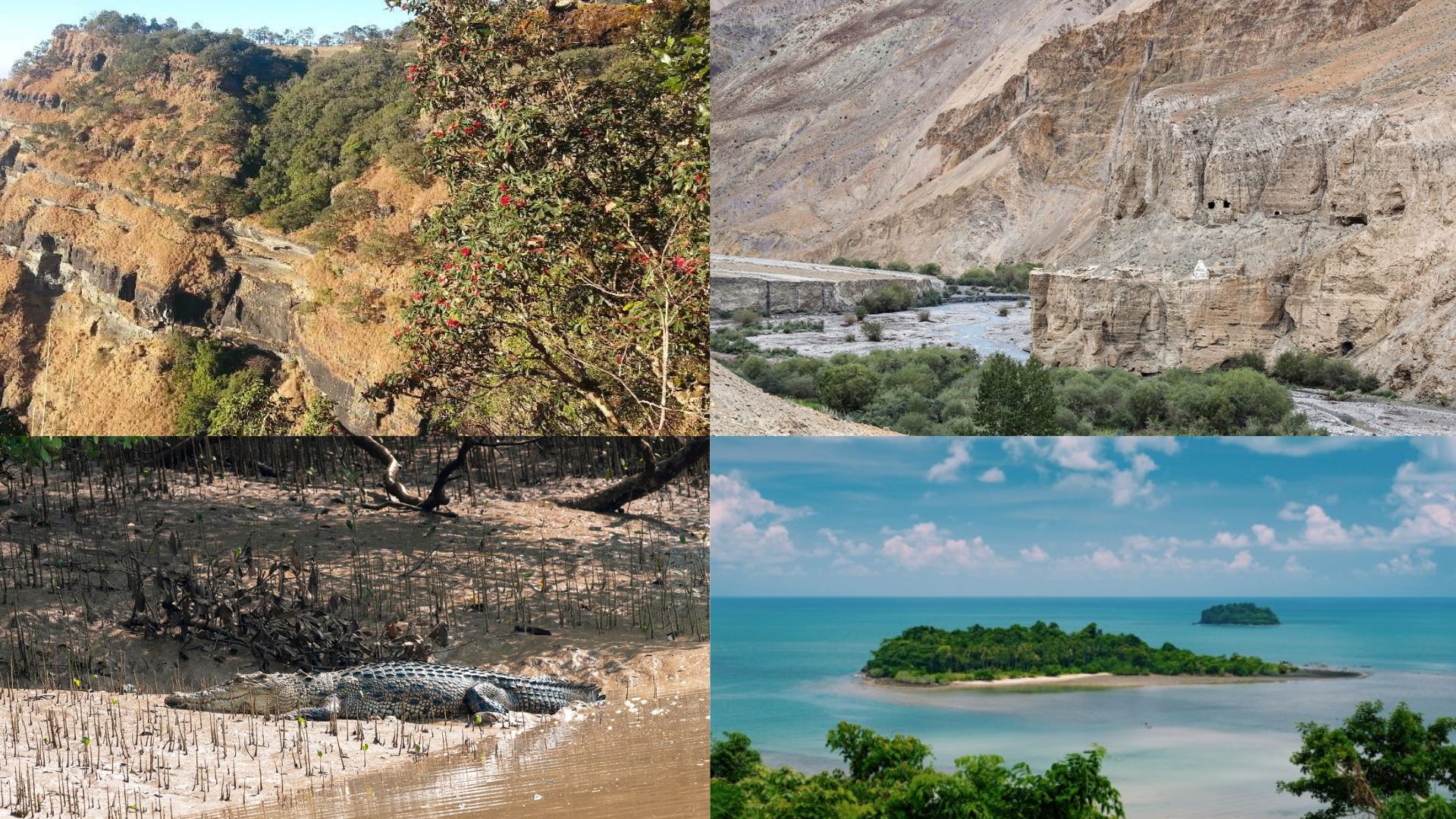
Lush green jungles, a sharp yellow sun and vast open landscape define the essence of national parks
Lush green jungles, a sharp yellow sun and vast open landscapes teeming with wildlife, this is the essence of a national park. Tourists and wildlife enthusiasts capture photographs in quiet admiration, while schoolchildren watch with wide-eyed wonder. In these protected natural spaces, animals reclaim their true, undisturbed existence.
Since the enactment of the Wildlife Protection Act in 1972, India’s national parks have grown into vital strongholds for biodiversity. These protected areas conserve endangered species, shelter fragile habitats, and offer a living classroom in ecological balance. They are not just green pockets on the map they are proof of what is possible when conservation becomes a national priority.
Names like Jim Corbett, Kaziranga, Ranthambore, and Gir have become synonymous with India’s wildlife success stories. Tiger numbers have risen. Eco-tourism has flourished. And the world has taken notice. But there’s more to the story than the famous few. Across the country, lesser-known parks are quietly doing the hard work, safeguarding vanishing species, nurturing dense forests, and giving nature a fighting chance.
Before the monsoon reshapes the landscape, here are five national parks worth discovering places where the wild still whispers and nature still surprises.
Phawngpui National Park, Mizoram
Tucked away in the southeastern corner of Mizoram near the Myanmar border lies Phawngpui National Park, a jewel of the Saiha district that cradles the state’s highest peak, Phawngpui or the Blue Mountain. Cloaked in a mystical hue, thanks to the delicate veil of clouds that often kisses its summit, the park was established in 1992 to preserve a vibrant ecosystem of subtropical broadleaf and tropical evergreen forests.
Phawngpui is a haven for wildlife lovers and birdwatchers. Rare avian gems such as Blyth’s tragopan, Mrs Hume’s pheasant and the elusive dark-rumped swift call this lush expanse home. Among the dense foliage roam the Asiatic black bear, slow loris, stump-tailed macaque, capped langur, tiger, goral, and even the stealthy leopard.
Adding to its fairytale charm are valleys blanketed with orchids and rhododendrons, painting a scene straight out of a postcard. One of the park’s most inviting spots is Far Pak, a wide glade in the north, perfect for a peaceful picnic or an overnight camp under the stars.
The forest, rich with oaks, rhododendrons, and rare bamboos, gives way to small grassy clearings where gorals graze undisturbed. Sunbirds flit over blossoms, peregrine falcons dive in pursuit of cliff swallows, and as twilight falls, the forest echoes with the sharp bark of deer or the haunting calls of a hoolock gibbon family. Phawngpui is not just a national park, it is a living, breathing ode to Mizoram’s untamed beauty.
South Button Island National Park, Andaman & Nicobar Islands
Just a sea voyage away, nestled in the Andaman & Nicobar Islands, lies India’s smallest national park, South Button Island National Park. Established in 1987 and covering a mere 0.03 square km, it forms part of the larger Rani Jhansi Marine National Park, tucked within the Andaman district’s pristine waters.
This tiny island is a marvel beneath the waves, a stunning coral garden scattered with fascinating grottoes. On its western edge, a narrow, submerged wall descends into the deep, providing sanctuary to vibrant marine life like barracuda, big-eye trevally, snappers, surgeonfish, and the majestic Napoleon wrasse.
The island consists of diverse creatures like sea turtles, dugongs, dolphins, blue whales, water lizards, lionfish, devil rays, shrimps, angel fish, butterfly fish, manta rays, octopuses and leopard sharks. The edible nest swiftlet also calls this place home.
But what truly defines South Button are its shallow water coral reefs, which are visible from above and thriving, just two metres below the surface. Thanks to crystal-clear waters and rich marine biodiversity, it is a paradise for scuba diving and snorkelling enthusiasts.
Hemis National Park, Ladakh
From the coral-rich waters of the south to the soaring peaks of the north, the journey leads to Ladakh’s Hemis National Park, a high-altitude sanctuary for rare and endangered wildlife.
Spread across 4,400 sq km, this vast expanse was established in 1981 and stands as one of South Asia’s largest national parks. Tucked away in Eastern Ladakh, the park is framed by alpine meadows, dry forests and rugged scrublands.
At its heart lies the famed Hemis Monastery, one of the oldest and wealthiest monastic institutions in the region. The park also embraces five remote villages, Shingo, Chillinga, Yurutse, Rumbak, and Sku-Kaya, adding to its cultural and human landscape.
Hemis is best known as a haven for elusive and majestic creatures, especially the snow leopard, often called the ‘ghost of the mountains’. It also shelters the Tibetan wolf, Eurasian brown bear, and the nimble Bharal or blue sheep.
The park’s vegetation is made up of hardy alpine and steppe trees, dry birch, juniper, and fir, that thrive with minimal water. With 73 bird species and 16 kinds of mammals recorded, Hemis is not just a place of stark beauty, but a rich reserve of high-altitude biodiversity.
Bhitarkanika National Park, Odisha
Meanwhile, in the eastern corner of the country lies a Ramsar site known for its rich mangrove ecosystem, the Bhitarkanika National Park. Established in 1975 and covering 672 sqkm, it is India’s second-largest mangrove habitat and a vital refuge for a wide variety of wildlife.
This unique coastal ecosystem is crisscrossed by rivers, creeks, and canals fed by the Brahmani, Baitarani, Dhamra, and Patasala rivers. It is best known for its thriving population of saltwater crocodiles, including the rare white crocodile, and is one of the largest breeding grounds of Olive Ridley sea turtles in the world.
Bhitarkanika is also a haven for birdlife, with over 215 species recorded, including the Asian openbill, black ibis, sandpipers, sea eagles, whistling teals, kites and seagulls. The park plays an important role as a breeding site for the endangered lesser adjutant stork.
Designated as a national park in 1998 and declared a Ramsar site in 2002, Bhitarkanika stands as the state’s second Ramsar site after Chilika Lake, a coastal wilderness where water, forest, and wildlife come together in rare harmony.
Blackbuck National Park, Gujarat
Ending the list in the sweeping grasslands of western India is a quiet, yet spectacular sanctuary, Velavadar National Park, located in the Bhal region of Saurashtra in Gujarat’s Bhavnagar district. Established in 1976, this compact park covers just over 34 sqkm, yet offers one of the most unique protected ecosystems in the country.
Once a part of the then Maharaja of Bhavnagar’s private hunting grounds, Velavadar today is a haven for wildlife, especially the graceful blackbuck.
These elegant antelopes can be seen galloping across open meadows alongside herds of blue bulls, or nilgai. The park also supports one of the last remaining populations of the endangered lesser florican, known for its dramatic breeding displays during the monsoon.
The southern wetlands of the park paint a different picture where open grasslands give way to seasonal marshes that attract a rich variety of birds. From pelicans, flamingoes, and sarus cranes to raptors and resident waterfowl, Velavadar is a paradise for birdwatchers, especially during the migratory season.
With its rare mix of dry grassland and wetland habitats, Velavadar offers an experience that is both serene and teeming with life, an understated gem in Gujarat’s wildlife landscape.
As the monsoon prepares to reshape the land, these parks stand as powerful reminders that conservation is not only about the iconic, it is about the overlooked, the remote, and the quietly remarkable. These are not just destinations, they are sanctuaries where the wild still whispers and the natural world continues to inspire awe.
