
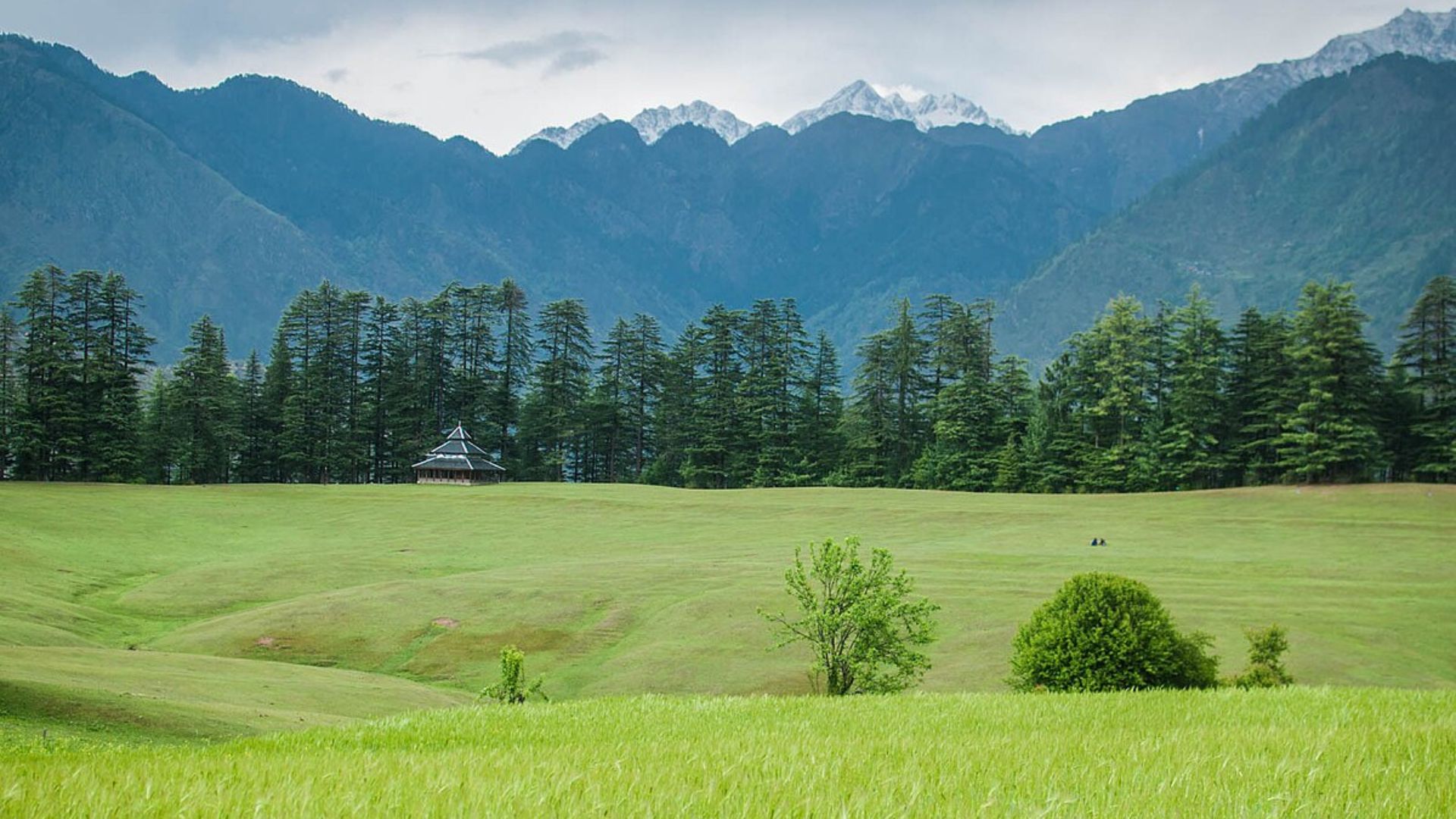
Located in the heart of Sainj Valley, Shangarh is part of the Great Himalayan National Park, a UNESCO World Heritage Site (Photo: Wikimedia Commons)
At 2,103 metres, nestled deep in Himachal Pradesh’s Kullu district, which is better known for its tourist magnets like Manali, Malana and Solang Valley, lies Shangarh, a village that feels untouched by time.
With its vast green meadows, ancient pine forests, and snow-laced Himalayan peaks straight out of a movie frame think Saathiya’s title song, Shangarh is not just a place, it is a mood. A calm, romantic hush seems to hang in the air, seeping into your veins the moment you arrive.
Located in the heart of Sainj Valley, Shangarh is part of the Great Himalayan National Park, a UNESCO World Heritage Site known for its staggering natural beauty and rare biodiversity. It is surrounded by the pristine waters of the Jiwa Nal, Sainj, Tirthan and Parvati rivers, and unfolds across an ecosystem that ranges from lush subtropical forests to breezy alpine meadows.
The park shelters some of the Himalayas’ most elusive creatures like the flamboyant Western Tragopan, the sturdy Himalayan Tahr, a mountain goat that clings to impossible cliffs and the elegant Bharal, also known as the blue sheep. In Shangarh, nature is not a backdrop, it is the main character.
Exploring Great Himalayan National Park’s wilderness
Cradled in the rugged embrace of the Western Himalayas, the Great Himalayan National Park (GHNP) is a sanctuary where nature thrives in its purest form. Established in 1984 and recognised as a UNESCO World Heritage Site in 2014 for its exceptional biodiversity and vital role in conservation, the park is one of India’s most treasured ecological havens.
Sprawling across alpine meadows, snow-capped peaks, and ancient riverine forests, GHNP offers a rare glimpse into a world that remains largely untouched by human interference. It shelters more than 1,000 species of plants, including numerous medicinal herbs used in traditional healing, along with 31 mammal species and 209 bird species, not to mention an astounding variety of amphibians, reptiles, and insects. Every corner of the park bursts with life, much of it endemic to the region, evolving in the shadow of these mighty mountains for millennia.
The park is divided into four main valleys, each with its own distinct character and ecological tapestry. Take, for instance, the Jiwa Nal Valley, where the eponymous river originates from a tiny, crystal-clear glacial pond named Sartoo, nestled high in the snow-laden ranges. Fed by melting snow and ancient glaciers, the Jiwa Nal river snakes its way down through dense forest and rocky terrain, finally merging with the Beas river at the village of Siund, a journey that mirrors the natural rhythm and quiet drama of the Himalayas themselves.
In the Sainj Valley, time seems to slow down. Tucked away in the eastern part of Himachal Pradesh’s Kullu district, this valley exudes an air of serene mystery. Here, meadows roll like green carpets beneath a sky framed by towering deodars, and every path seems to lead to a whisper of the past. The Shangchul Mahadev Temple, dedicated to Lord Shiva, stands proudly amidst the Shangarh meadows, its presence as commanding as the mountains that surround it.
With its distinctive pagoda-style roof, the temple is an exquisite example of traditional Himachali architecture, adorned with intricate wood carvings and stonework that tell stories older than memory. Locally known as the ‘lovers’ temple’, it carries a poignant legend, couples who have eloped come here seeking shelter and blessings, for the temple is believed to grant protection and acceptance to love that defies convention.
During the vibrant Maha Shivaratri festival, the temple comes alive with colours, chants, and celebrations. Devotees from across the region gather to pay homage, their voices rising in prayer as incense drifts through the crisp mountain air. But even in the silence that follows, the temple remains a spiritual anchor, a place where faith, folklore, and the wild beauty of the Himalayas converge.
Nature’s gifts in Shangarh
As the sound of prayers and celebrations from Maha Shivaratri fades away, the calm and beauty of Shangarh continues to charm visitors through its natural wonders. Just around three kilometres from the village, lies peaceful Barshangarh Waterfall, a tall stream of fresh, white water gushing down the rocks. Visitors can walk right up to the base of the waterfall without getting too wet. The short hike to reach the falls is refreshing too, with tall green trees all around and birds singing along the way, making it feel like nature’s own concert.
Not too far away, at a height of 2,100 metres, lies a unique lake, the Pundrik Lake. Unlike most lakes, this one has a thick layer of grass covering its surface. Some locals believe the lake was once a paddy field, later blessed by Sage Pundrik, who is said to have lived and meditated here. Today, the lake is considered sacred, and every year, villagers gather to celebrate the sage’s birthday. Surrounded by tall deodar trees on one side and a beautiful forest trail on the other, the lake has a quiet, peaceful energy that leaves a lasting impression.
Another special place in the area is the Manu temple, a small wooden temple dedicated to Manu Rishi, who is believed to be the first human in Hindu mythology. Unlike most temples that honour later forms of Lord Vishnu, this one is connected to his first form. The temple sits in a scenic spot, with amazing views of the surrounding valleys and mountains. Built in traditional Himachali style, it stands as a peaceful place for both worship and reflection.
A second Manu temple is located in the nearby village of Talyara, offering wide views of the Great Himalayan National Park and its beautiful mountain ranges. It is a quiet, less-visited spot where you can enjoy the fresh mountain air, take in the natural beauty, and connect with the local stories and traditions.
Whether it is waterfalls, lakes, or temples, Shangarh is full of hidden treasures. Each spot tells a story of nature, of faith and of the deep bond people here share with their land. It is a place where people can slow down, take in the silence and truly feel the magic of the Himalayas.
