
Passenger traffic at domestic airports is projected to grow at a compounded annual growth rate (CAGR) of 7 pc between FY25 and FY27
Despite several domestic and international challenges, the Indian airport sector is set to witness steady growth over the next three years, though at a slightly moderated pace, according to a report by CareEdge Ratings, a rating agency based in India.
In a press statement, CareEdge Ratings says that passenger traffic at domestic airports is projected to grow at a compounded annual growth rate (CAGR) of 7 pc between FY25 and FY27, moderating from earlier pre-pandemic projections of around 9 pc.
The statement adds the ratings agency attributed this moderation to delayed deliveries of wide-bodied aircraft, global safety concerns and ongoing geopolitical disruptions impacting international travel.
Nonetheless, passenger footfall is expected to rise from 412 million in FY25 to nearly 470 million by FY27, underscoring the resilience of India’s aviation sector.
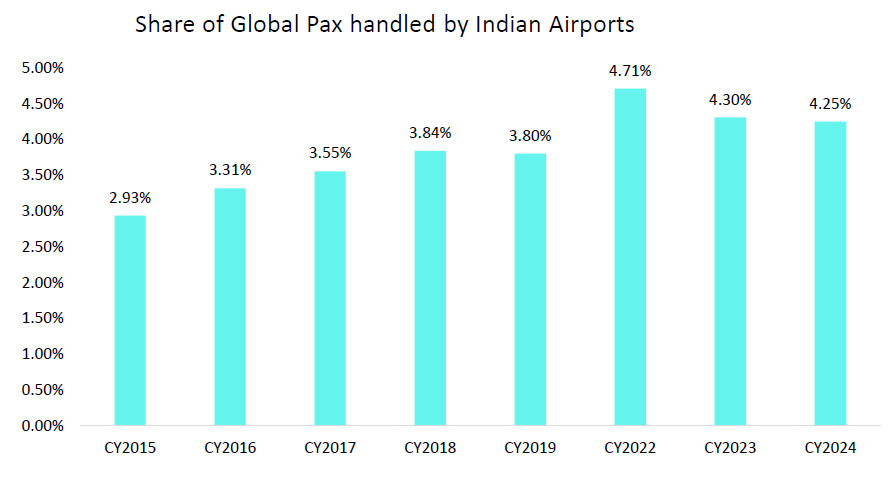
CareEdge Ratings says that globally, India holds its position as the third-largest aviation market after the United States and China. Its airports continue to cater to a sizeable share of global traffic, highlighting the structural demand underpinning the sector.
According to the statement, long-term growth prospects remain intact, supported by favourable demographic trends, supportive regulations and growing private sector participation. India’s large youth population, expanding middle class and rising travel propensity are expected to drive passenger growth in the years ahead.
In addition to passenger traffic, non-aeronautical revenues, generated from retail, food and beverage outlets, parking, and other commercial avenues, are strengthening airport profitability and reducing dependence on aeronautical charges.
“The aviation sector in India is currently experiencing a transformative phase, fuelled by its status as home to the world’s fastest-growing air passenger markets. The strategic investments in airport infrastructure, capacity expansion, and rising private participation are set to drive the next phase of infra growth. We expect investments in key infra sector such as roads, ports, airports and logistics are set to act as a multiplier for GDP and urbanisation, renewable energy, backed by policy support and declining storage costs, will drive the next phase of capacity addition. Together, these sectors will not only fuel economic growth but also ensure resilience and sustainability in the years ahead,” says Rajashree Murkute, Senior Director, CareEdge Ratings.
