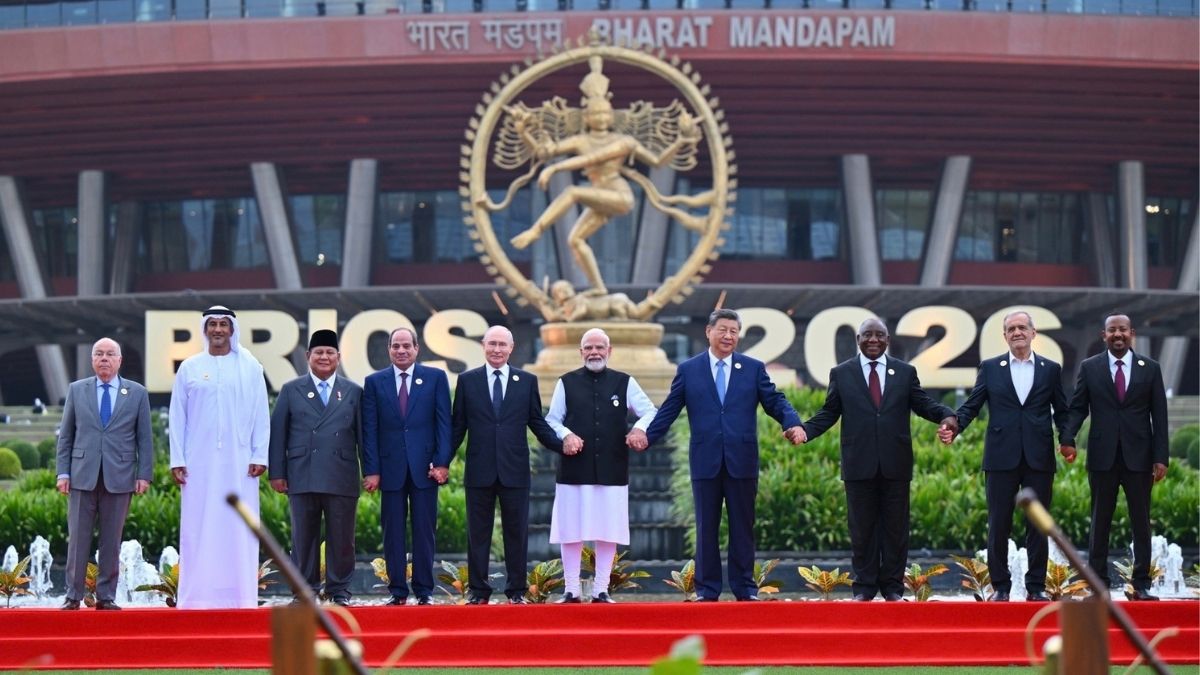
BRICS leaders gathered in New Delhi as India sought consensus on a joint declaration (Photos: PIB)
Indian diplomacy has a lot to be content about the outcomes of the BRICS Summit 2026, that concluded last week in New Delhi. First of all, they managed to pull off a diplomatic coup of sorts by getting Iran and the United Arab Emirates together in the Summit, despite the tense bilateral relations due to Iranian attacks on military assets of the United States in the UAE.
So, by having high-level delegations from both the nations to attend a multilateral meeting at a time when their relations are historic lows, the mandarins of the Indian Foreign Affairs Ministry certainly displayed their old, time-honed skills of getting differing groups to gather in the same room for fruitful discussions.
While getting them was a major win, an even more consequential outcome achieved by India as a host nation was to get all the 11 member nations to agree on a common declaration.
While India can claim credit on getting the agreement on a common declaration, but most surprisingly, the real victor in many ways at the Summit was Iran, which had been facing criticism and isolation at the global level ever since the conflict with the United States and Israel had begun.
Also Read: BRICS+ Summit 2024 explores alternatives for cross border payments
Rehabilitating Iran
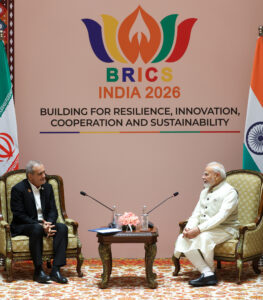
Iran secured stronger diplomatic visibility as the joint declaration addressed attacks on nuclear facilities and civilian infrastructure
Looking back at the declaration, there is no doubt that the leader who had gained by far the most from the Summit was Iranian President Masoud Pezeshkian as the final declaration reflected and effectively endorsed Iranian position on several issues.
First, it clearly and unequivocally criticised the deliberate attacks on civilian infrastructure and peaceful nuclear facilities protected by the atomic energy safeguards of the United Nations, in a direct reference to the repeated attacks by Israel and the US on Iranian nuclear facilities not just since the war began in March but even earlier. “We express serious concern over deliberate attacks on civilian infrastructure and peaceful nuclear facilities under full safeguards of the International Atomic Energy Agency (IAEA), in violation of international law and relevant resolutions of the IAEA. Nuclear safeguards, safety, and security must always be upheld, including in armed conflicts, to protect people and the environment from harm,” reads the declaration.
This marks a dramatic u-turn for Indian foreign policy direction in the past decade or so, which strangely, had abstained from making any such clear statement on the conflict, despite long-standing Indian policy. In the past decade, India has refused to condemn even the ongoing violence by Israeli settlers and the Israeli Defence Forces in Palestine and occupied territories. This stance was in complete opposition to the stance adopted by India for over five decades. However, it took the BRICS Summit for India to rediscover its long-held beliefs, especially vis-a-vis Israel and its neighbours.
On the issue of Palestine, again the declaration was extremely strong-worded, with as many as three substantive paragraphs devoted to the issue and calling for the maintenance of ceasefire and full and unhindered humanitarian access in the Gaza Strip. It also expressed deep concern on the continued violence in Gaza despite the ceasefire agreement of October 2025 and asked for halting any policies aimed at forced displacement of Palestinians from Gaza Strip. The BRICS nations also expressed their concern regarding arrangements that may prejudice the inalienable rights of the Palestinian people and legitimise or prolong occupation.
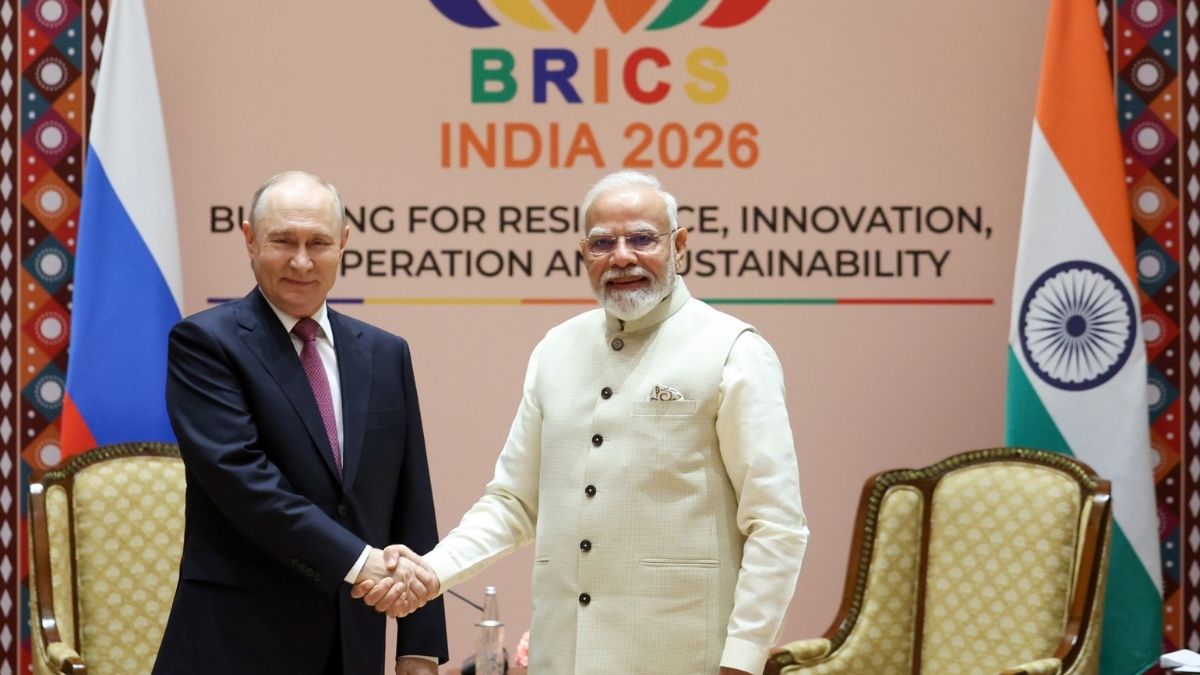
Modi-Putin meeting highlighted Russia’s continued engagement with the BRICS grouping
The statement highlighted that a just and lasting solution to the Israeli-Palestinian conflict can only be achieved by peaceful means and depends on the fulfilment of the legitimate rights of the Palestinian people, including the rights to self-determination and return.
“We reaffirm our support for the State of Palestine’s full membership in the UN in the context of the unwavering commitment to the two-state solution, in accordance with international law, including relevant UN Security Council and General Assembly resolutions, and the Arab Peace Initiative, that includes the establishment of a sovereign, independent and viable State of Palestine within the internationally recognized 1967 borders, which included the Gaza Strip and the West Bank, with East Jerusalem as its capital, in order to achieve the vision of two States living side by side, in peace and security,” it said.
While this part of the statement is more or less in alignment with Indian position even today, the next para of the statement is by far the sharpest rebuke of Israel that India has ever signed on to, at least ever since Narendra Modi became the Prime Minister.
Also Read: BRICS Expansion: A New Global South Bloc Takes Shape
“We express our firm opposition to the forced displacement, temporary or permanent, under any pretext, of any of the Palestinian population from the Occupied Palestinian Territory, as well as any geographic or demographic changes to the territory of the Gaza Strip. We reiterate that international law and international judicial bodies demand the end of the illegal occupation and the immediate cessation of all practices that undermine legal norms and obstruct a just and lasting peace,’’ said the BRICS joint communique, powerful words that India has refrained from using against Israel for over a decade and reflecting the way the host of the Summit was forced to change boats midstream in order to prevent a total collapse of the Summit.
Romancing Russia
Beyond Iran, Russia and China, too, have multiple reasons to be more than satisfied with the outcome of the Summit. For Russian President Vladimir Putin the meeting was as crucial symbolically as it was in substance. For starters, it was the first global multilateral forum that Putin had participated in for a long time and allowed him to not only interact with a clutch of global leaders but also dominate global newsheadlines with news other than of the difficult war with Ukraine.
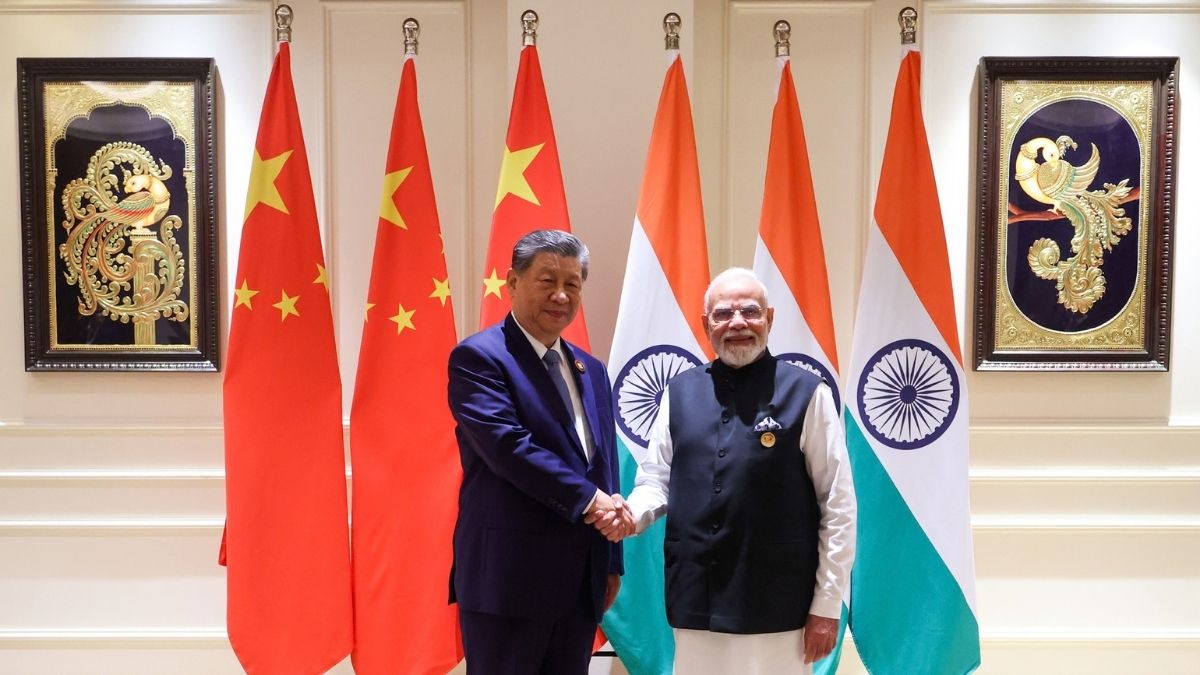
China, along with Russia, emerged satisfied with the outcome of the BRICS Summit
And more substantially, it showed to the western nations that they may have shrunk away from Russia since the war with Ukraine began, but a large number of countries from around the world are more than happy to do business with him.
Two weeks after the Summit, Modi and his foreign policy advisors would do well to ensure that whether or not the wordings of the declaration fully reflect Indian views, India should stay course now and not try to take another sudden u-turn in its approach to the affairs in the Middle East.