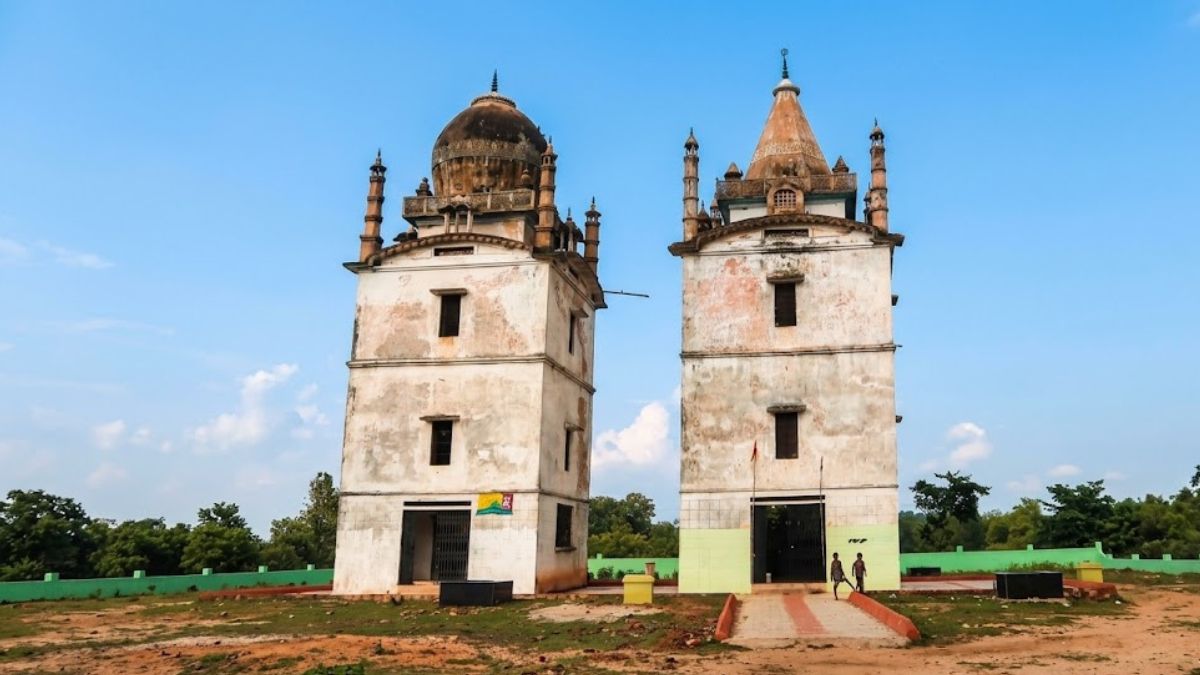
McCluskieganj has drawn attention from visitors, researchers, and former residents (Photo: Jharkhand Tourism)
In the forests of McCluskieganj, a settlement once planned as a homeland for a community now stands at a point of transition. Established in the 1930s by Ernest Timothy McCluskie, an insurance agent, the town, about 60 km north of Ranchi, capital of present-day Jharkhand, was envisioned as a space where Anglo-Indians, a tiny community formed by British-Indian marriage, could live with land ownership and social stability. Decades later, its story reflects migration and change.
The idea took shape during a period when Anglo-Indians across British India faced limits in employment and social mobility. McCluskie, an entrepreneur, proposed a cooperative model through the Colonisation Society of India. Members could purchase land and settle in what was then part of Bihar. The plan drew interest from Anglo-Indian families working in railways, postal services and other colonial institutions.
Also Read: Top 5 must-visit tourist destinations in Jharkhand
Plots were sold and families began to arrive. Houses were built across the landscape, often with features drawn from British building practices and local methods. Churches and schools were set up, forming the basis of a community network. The settlement grew into a social space where residents marked festivals, held gatherings and maintained a shared identity linked to both colonial and Indian contexts.
By the 1940s and 1950s, the settlement had a population that supported local institutions. Schools functioned, and community halls hosted events. Agriculture and small-scale activity sustained many households. The layout of the town, with bungalows set within compounds, reflected a pattern seen in other colonial settlements, adapted to local conditions.
However, after India’s independence in 1947, structural changes began to affect the community. Employment opportunities shifted, and many Anglo-Indians migrated to cities such as Kolkata, Mumbai, and Delhi, or moved abroad to countries including the United Kingdom, Australia, and Canada. This movement reduced the population of McCluskieganj.
As families left, properties were either sold, leased, or left unoccupied. Some houses were taken over by local residents from nearby villages. Others fell into disuse. The institutions that once anchored the community faced declining participation. Schools closed or changed management, and churches saw fewer congregants.
The transformation of ownership altered the social composition of the town. Local communities integrated into the area, bringing different practices and livelihoods. Agriculture continued and some houses were converted into guest accommodations. The railway connection, once a factor in the town’s accessibility, remained a link to nearby urban centres, though it did not reverse the trend of outward migration.
In recent years, McCluskieganj has drawn attention from visitors, researchers, and former residents. Some Anglo-Indian families return for short stays, especially during community gatherings and festivals. These visits often include reunions, church services, and visits to ancestral homes. However, such returns are temporary and do not translate into long-term resettlement.
Of late, tourism has also emerged as a source of revenues. A number of bungalows have been adapted into homestays, offering visitors a chance to experience the layout and history of the settlement. Local residents participate in this activity, providing services and maintaining properties. However, tourism remains seasonal and does not fully address economic needs.
Also Read: Exploring the unexplored places of Jharkhand
Documentation efforts by writers and filmmakers have sought to record the history of the settlement and its community. Oral histories collected from former residents describe life during the mid-20th century, including schooling, social events and everyday routines. These accounts provide insight into how the settlement functioned at its peak and how it changed over time.
The question of preservation remains central. Some structures retain their original form, while others have undergone significant modification. Without formal conservation measures, many buildings face deterioration. There have been discussions among heritage groups about documenting and protecting key sites, but sustained initiatives have been limited.
Local governance structures oversee the area as part of Jharkhand’s administrative system. Development efforts focus on basic infrastructure, including roads, electricity, and water supply. While these measures support current residents, they do not specifically address the heritage aspect of the settlement.
Education institutions in and around McCluskieganj have taken on a new role. Boarding schools and training centres have been established in some properties, bringing students from different parts of India. This has introduced a new population to the area, contributing to its current function as an educational hub in a limited sense.
The town’s present condition reflects overlapping histories. The original vision of a dedicated Anglo-Indian settlement no longer defines its demographic reality. Instead, it functions as a mixed community with layers of ownership and use. Houses built during the 1930s stand alongside newer constructions, indicating shifts in occupation and purpose.
Efforts to revive interest in McCluskieganj often centre on cultural events and storytelling. Community organisations, both local and diaspora-based, organise gatherings that bring attention to the settlement’s past. These events also raise questions about future direction whether through heritage tourism, conservation, or continued adaptation to current needs.
As India continues to urbanise and communities shift, places like McCluskieganj offer a record of earlier attempts at settlement and identity formation. The town’s history remains embedded in its layout, its buildings, and the accounts of those who lived there. Whether this history will be preserved in a structured way or continue through informal memory remains uncertain.