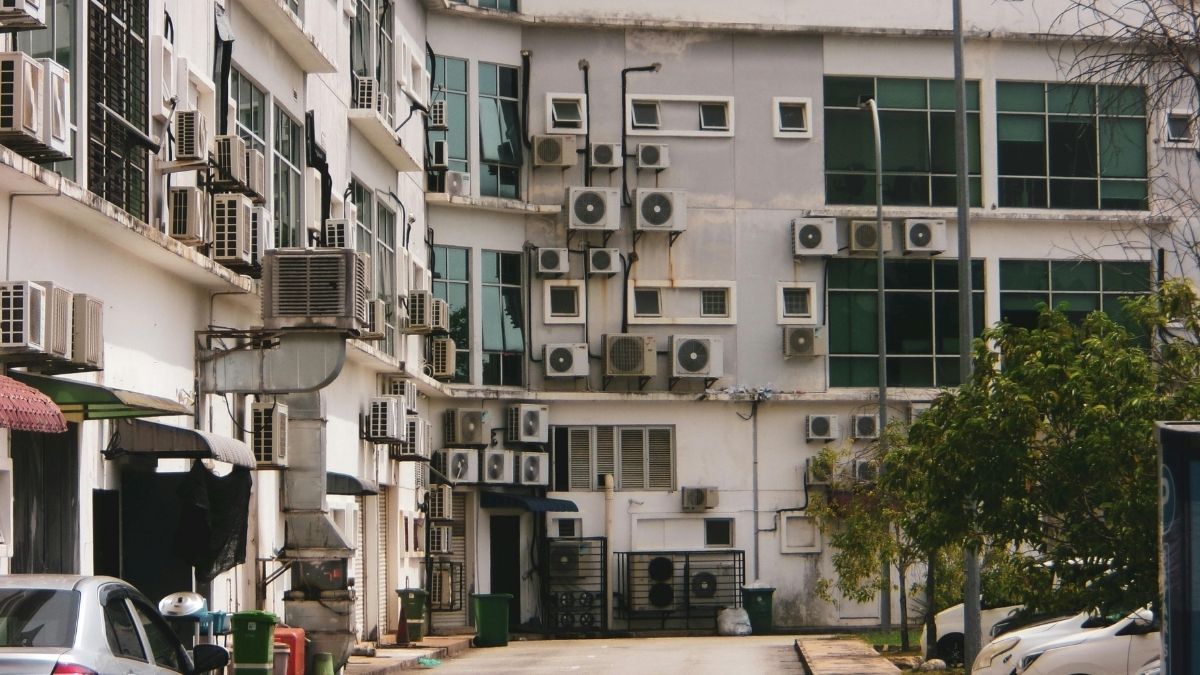
India’s heatwave economy fuels cooling boom
The Indian Meteorological Department has issued a warning for severe and prolonged heat-wave across large parts of northern and central India for the next 10 days as temperatures during the day and night are likely to stay well above the average for this period of the year.
With the temperatures staying stubbornly high even during the nights, the need and the consequent demand for cooling solutions has reached record levels across the country, transforming air conditioning into one of the country’s fastest-growing business sectors.
“What is unfolding in India is a structural shift where climate stress is directly translating into consumption demand. Cooling is no longer a restricted good, it is becoming a basic urban necessity. But the ability to access that necessity is deeply unequal, which means the market is expanding on one side while vulnerability is deepening on the other,” Anirudh Saxena, a Social-Economist at Deloitte, a consultancy in the Gurugram in the National Capital Region tells Media India Group.
Rising temperatures, rapid urbanisation and expanding real estate construction are the primary growth drivers. Room ACs dominate the market with a 48.05 pc share in 2025, while residential applications account for 44.05 pc. North India leads regional demand with a 29 pc share, due to extreme summer conditions and growing middle-class demand.
The scale of expansion is also visible in unit sales. According to Statista, a data provider, around 13.3 million AC units were sold in India in 2024, generating USD 7.5 billion in revenue, while sales are projected to rise to 15.4 million units in 2025. Long-term projections indicate annual volumes could nearly double to around 28-30 million units by the end of the decade.
This surge is closely linked to India’s worsening heatwaves and rising electricity consumption. India’s peak power demand reached a record 256 GW on April 25, after touching 252 GW a day earlier amid temperatures climbing to 47.4°C in several regions. Average daytime temperatures across much of the country remained between 40°C and 45°C during the period.
Also Read: Increasing threat of heatwaves on Indian economy
The actual peak electricity demand during April 20-26 exceeded official grid projections by around 16 GW, highlighting how rapidly cooling needs are increasing. Cooling already contributes 40-60 pc of peak summer electricity demand in many Indian cities and is estimated to be growing at 15-20 pc annually. Household electricity consumption can rise by nearly 36 pc after adopting air conditioning, creating recurring demand not only for appliances but also for power generation and transmission infrastructure.
“Cooling demand in India behaves like a feedback loop. Higher temperatures drive AC adoption, which increases electricity demand, which in turn strains infrastructure and worsens urban heat emissions. Without structural intervention, this loop will intensify both energy inequality and climate stress,” says Saxena.
As a result, companies are making aggressive investments in the sector. Japanese air conditioners manufacturer Daikin announced a INR 10 billion investment in 2026 to establish its first global research and development centre outside Japan in India, focussing on advanced High Volume Air Conditioning (HVAC) technologies. Domestic manufacturer Blue Star unveiled a INR 2 billion capital expenditure plan to expand manufacturing, research and development and marketing while also indicating AC price hikes of 13-15 pc due to rising commodity costs and stricter energy-efficiency norms.
India’s broader power sector is also preparing for a cooling-led energy surge. Installed power generation capacity reached around 520 GW by early 2026, more than doubling over the past decade. However, projections by the Central Electricity Authority indicate peak demand could climb to 459 GW by 2035-36, requiring installed capacity of over 1,121 GW and annual additions of nearly 60 GW.
Climate change is increasingly becoming a structural demand driver for India’s consumer and energy markets. Cooling is no longer a seasonal product category but an essential part of urban living and one of the country’s fastest-growing consumption segments.
Yet the rapid growth of the cooling economy also exposes a sharp divide in access to protection from extreme heat.
Despite the market boom, AC ownership in India remains extremely low. National penetration averages only around 5 pc, rising to about 13 pc in urban areas and barely 1 pc in rural India. The richest 10 pc of Indians own nearly 72 pc of all air conditioners in the country.
“We are witnessing what can be called thermal stratification. Access to cooling is increasingly determined by income class, creating a situation where climate adaptation itself is commodified. Those who can pay adapt; those who cannot are left exposed,” adds Saxena
In comparison, around 90 pc of households in the United States and Japan have access to air conditioning, while China’s AC penetration has crossed 80 pc. Even within urban India, penetration averages only around 10 pc overall, rising to roughly 20-25 pc among higher-income metro households.
Also Read: Green Homes: How residents are turning plants into indoor air allies
The inequality becomes most visible during severe heatwaves. During Delhi’s extreme heatwave in June 2024, nearly 192 homeless individuals reportedly died over nine days, highlighting the extreme vulnerability of the city’s unhoused population. Recent 2025-26 heat assessments and mortality analyses continue to show rising heat-related deaths across India during prolonged heatwave spells, with national studies recording hundreds of fatalities during peak summer periods and Delhi consistently among the worst affected urban centres.
Many designated shelters, including temporary porta cabins, remain built using heat-absorbing materials such as tin sheets and continue to suffer from poor ventilation and limited cooling access, making indoor temperatures unbearable and forcing residents outside in search of shade and relief during extreme heat conditions.
The impact extends beyond health into livelihoods and productivity. According to the 2025 Lancet Countdown on Health and Climate Change, India lost 247 billion potential labour hours in 2024 due to heat exposure, marking a 124 pc increase compared to 1990-1999 levels, underscoring the sharp rise in heat-driven productivity losses in recent years.
A 2025 multi-city urban heat analysis based on Indian mortality data further shows that heatwave conditions are associated with nearly 15 pc higher daily mortality, contributing to over 1,100 excess deaths annually in urban centres, with the burden concentrated among outdoor workers, informal labourers and low-income populations exposed to extreme daytime temperatures.
Poor households remain the most exposed because of overcrowded housing, heat-retaining roofs, limited water access and unaffordable healthcare.
“Heat is now functioning as a regressive economic shock. It reduces income at the bottom of the pyramid while simultaneously increasing consumption opportunities at the top. That divergence is what makes it structurally unequal,” Saxena adds.
Also Read: India turns to King Coal again as heatwaves lead to power demand surge
The burden is also highly gendered. The Asian Development Bank estimates that women in Asia and the Pacific are significantly more likely than men to lack access to cooling, with an estimated gap of around 60 pc. In India, this vulnerability is intensified by labour market realities, where around 92 pc of women in paid employment work in the informal sector without paid leave or social security protections.
Informal workers, gig workers, delivery personnel and construction labourers remain among the most vulnerable groups. A 2025 district-level assessment found that 57 pc of Indian districts, accounting for 76 pc of the population, face high-to-very-high heat risk. Yet many workers continue to face income losses during heat alerts without compensation mechanisms or legal safeguards such as hazard pay, mandatory rest periods or penalty waivers.
At the same time, the expansion of air conditioning itself contributes to rising temperatures. AC units increase electricity demand and worsen urban heat island effects by exhausting heat outdoors, disproportionately affecting low-income communities that often lack access to cooling systems themselves.
This creates a vicious cycle where those who can afford cooling protect themselves from extreme temperatures, while poorer populations remain exposed to worsening heat and rising energy stress.
India’s cooling economy is therefore emerging as both a major business opportunity and a growing social challenge. While companies across appliances, energy and real estate stand to benefit from rising demand, access to cooling remains heavily unequal, leaving millions vulnerable to the economic and health consequences of extreme heat.