
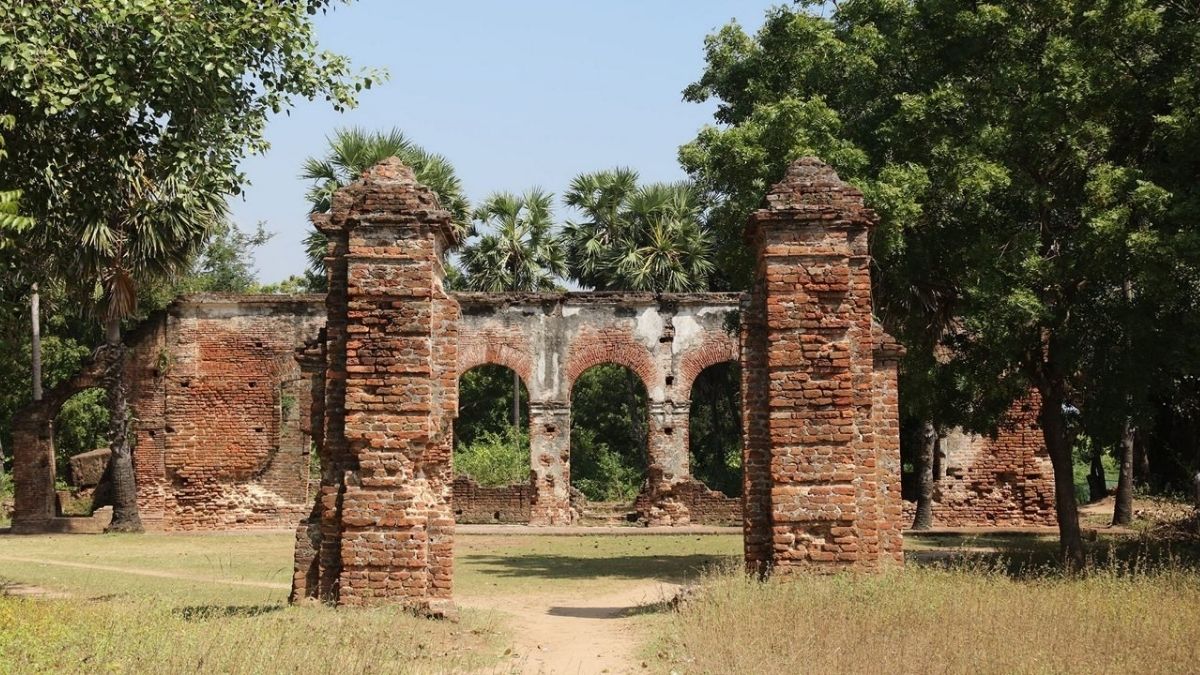
Arikamedu was not just a trading stop but also a hub for exchanging goods and developing local craft production (Photos: Incredible India)
Along the quiet banks of the Ariyankuppam River, near Puducherry, lie the remains of a settlement that once formed part of a much larger maritime world. Known today as Arikamedu, the archaeological site preserves evidence of trade between South India and distant regions, including the Roman world, during the early centuries of the first millennium.
The discovery of Roman pottery, coins, glassware and beads at the site has made Arikamedu one of the most significant archaeological locations for understanding ancient Indo-Roman trade. Yet its story extends beyond Rome, revealing how the south-eastern coast of India was connected to a wider network of merchants, craftsmen and seafarers moving across the Indian Ocean.
Today, Arikamedu offers visitors a glimpse into a period when goods, people and ideas travelled across thousands of kilometres by sea, linking the Tamil coast with ports and communities far beyond India.
Also Read: Korlai: Where Konkan meets a forgotten Portugal
A settlement shaped by the sea
Close to the coast and set beside the Ariyankuppam River, the settlement grew into an important point on the maritime routes that connected traders along the eastern coast of India.
At the beginning of the first millennium, sailors used seasonal monsoon winds to travel across the Indian Ocean. These routes connected ports in South India with Sri Lanka, Southeast Asia, the Arabian Peninsula and the Red Sea, eventually linking the region with the Mediterranean world.
Arikamedu appears to have been part of this commercial network, functioning as a place where goods were exchanged and craft activities developed. Its remains suggest that the settlement was more than a simple stopping point for foreign merchants and was also involved in local production.
Roman pottery reveals distant connections
Also Read: Bicycle tourism in India: Pedalling to popularity
Among the most important discoveries at Arikamedu are fragments of pottery associated with the Roman world. Archaeologists found pieces of terra sigillata, a fine red-slipped Roman tableware, along with fragments of amphorae, large ceramic containers used to transport commodities such as wine and other products over long distances. Other imported finds, including Roman glassware and coins, further point to sustained commercial contact between the Tamil coast and the Mediterranean world.
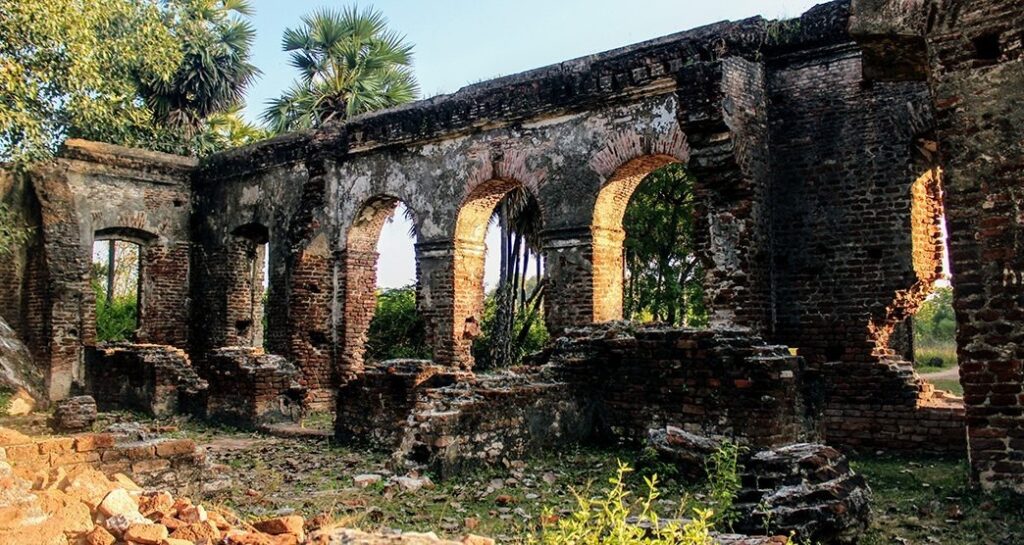
Arikamedu was part of a wider Indian Ocean trading network, connecting South Asia with the Middle East, Southeast Asia and the Mediterranean
The pottery is particularly significant because some of the amphora fragments and Roman tableware can be linked to Mediterranean production centres. Alongside these imports, archaeologists found locally made pottery and objects, showing that Arikamedu was a place where foreign and local goods came together. The finds provide tangible evidence of merchants and trading communities participating in an established maritime network rather than an isolated exchange.
The presence of Roman objects does not mean that Arikamedu was a Roman settlement. Instead, the discoveries point to commercial exchanges between local communities and overseas merchants, with South Indian products moving outward and imported goods arriving by sea. Together with evidence of bead-making and other crafts, the pottery and coins help reveal Arikamedu as an active trading and production centre connected to the wider Indian Ocean and Mediterranean trading networks of antiquity.
Also Read: Meghalaya launches INR 32.14 billion highway projects to boost tourism
From beads to everyday goods
Arikamedu was not only a destination for imported goods. Archaeological evidence indicates that the settlement was also a centre of craft production, particularly bead making.
Excavations have uncovered large quantities of glass and stone beads, as well as materials and remains associated with their manufacture. The evidence suggests that skilled craftspeople produced ornaments that could be exchanged locally or transported to other markets.
Beads were particularly suitable for long-distance trade because they were small, durable and valuable. Their presence at Arikamedu provides an insight into the industries that supported the settlement and its connections with other trading centres.
The archaeological remains therefore reveal two sides of ancient commerce, goods arriving from distant lands and locally produced objects travelling outwards through the same maritime networks.
Also Read: MP Tourism to promote Kalakund as eco-tourism hub
What travelled through Arikamedu
The trade that connected South India with the Roman world involved a wide range of commodities. South Indian products such as spices, textiles, beads, precious and semi-precious stones and other valuable goods were sought by overseas markets.
In return, imported ceramics, glassware, coins and other manufactured products reached the Indian coast.
The archaeological evidence at Arikamedu offers only fragments of this larger story, but together these discoveries show how coastal communities participated in an international economy long before the emergence of modern global trade.
The settlement was part of a network in which merchants depended on knowledge of the sea, seasonal winds and established coastal routes to move goods between distant regions.
An ancient Indian Ocean crossroads
While Arikamedu is widely remembered for its Roman connections, its history was not limited to trade with Rome. The settlement existed within the much broader Indian Ocean trading world, which connected communities across South Asia, the Middle East, Southeast Asia and the Mediterranean.
Also Read: FAITH Conclave concludes with focus on tourism growth
Merchants travelled between ports, while goods and ideas moved along the same routes. Coastal settlements such as Arikamedu became important points of interaction where different commercial traditions met.
This wider context makes the site significant. Its Roman artefacts are not isolated curiosities but evidence of South India’s participation in a maritime system that stretched far beyond the subcontinent.
Excavations uncover a forgotten port
Arikamedu came to wider archaeological attention during the 20th century, particularly through excavations led by British archaeologist Mortimer Wheeler in the 1940s. The excavations uncovered Roman amphorae, terra sigillata pottery, glass vessels, coins and other imported objects, providing evidence of the settlement’s links with the Roman trading world and helping establish its importance in the study of ancient maritime trade.
The site also revealed brick-built structures, walls, pottery kilns and areas associated with bead-making, offering clues about the daily and commercial life of the settlement. Large quantities of glass and stone beads, semi-precious stones, shell objects and locally produced pottery suggest that Arikamedu was not only a place where overseas goods arrived but also a centre of specialised craft production.
Subsequent investigations added to the evidence, revealing different phases of occupation and a combination of locally made and imported artefacts. Together, these discoveries transformed Arikamedu into an important archaeological site for understanding ancient South Indian craftsmanship, trade and its connections with the wider Indian Ocean and Mediterranean worlds.
Also Read: Hunderman: Exploring Borderland Legacy of Ladakh
Where small objects tell a larger story
Unlike the grand temples, palaces and forts that dominate many heritage destinations in India, Arikamedu tells its story through fragments. A piece of pottery, a bead, a coin or a fragment of glass can provide evidence of a connection between communities separated by thousands of kilometres.
The significance of Arikamedu lies precisely in these small remains. Together, they reveal how people living along the Tamil coast were connected to a world of maritime commerce that extended across the Indian Ocean to the Mediterranean.
For visitors, Arikamedu offers a different way of experiencing history. Its story is not simply about Roman objects found on Indian soil, but about the merchants, craftspeople and coastal communities who participated in a complex network of exchange.
Today, the remains of Arikamedu preserve memories of a time when the sea was not a barrier but a route connecting distant worlds. The site stands as a reminder that South India was part of long-distance international trade more than two thousand years ago, and that the foundations of cultural and commercial exchange were already being laid along the Indian Ocean centuries before the modern world took shape.
