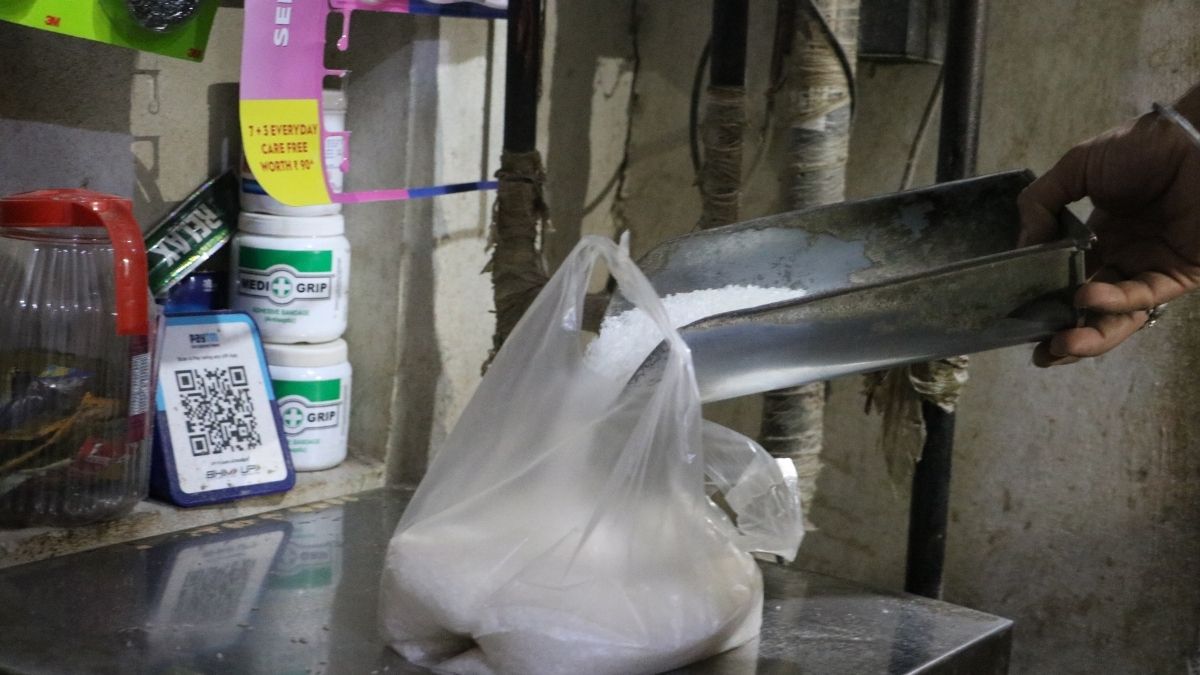
Sugar prices across the country have risen by 40 pc (Photos: Media India Group)
India is set to import sugar for the first time in a decade as the government tries to moderate retail prices that have risen sharply from INR 48.18 per kg in July to INR 55.70 per kg in August, a nearly 16 pc increase. Compared to the same period last year, sugar prices across the country have risen by 40 pc.
The decision to import sugar, which comes months after India exported over 2 million tonnes of sugar, about 7 pc of the total production of about 30 million tonnes, exposes a series of serious failures on the part of the government as well as the sugar industry, represented by Indian Sugar & Bio-energy Manufacturers Association (ISMA) the apex trade organisation and leading consortium representing private sugar mills and bio-energy producers in India.
It has highlighted persistent gaps in production forecasts and supply planning, as stocks tighten ahead of the festive season. Despite repeated assurances by ISMA and the government that availability remains adequate, the need to import sugar now points to a market that was badly misread.
A large share of the blame for the price rise lies at the doorstep of ISMA, whose own numbers for the 2025-26 season have moved downwards at least four times already this year.
Also Read: India’s hotel business is bouncing back with occupancy nearing 70 pc: HVS Anarock
In July 2025, ISMA projected ethanol diversion at 5 million tonnes for the season. By November 11, 2025, it had cut that to 3.4 million tonnes, while simultaneously raising its production estimate to 31 million tonnes from 30 million tonnes, a jump it advertised as 18.8 pc year-on-year. In December 2025, the food secretary told an ISMA gathering that the government’s own estimate, 34.3 million tonnes, was converging with the industry’s number and called that convergence ‘a positive development for policymaking’. By February this year, ISMA had cut its gross output estimate by 2 million tonnes, to 32.4 million tonnes. Now, the net production figure mentioned by ISMA is 27.9 million tonnes, down from a first advance estimate of 30.95 million tonnes. That is not a rounding error. That is a forecast that has fallen apart with four revisions within 13 months, and every revision has moved in the same direction, downwards.
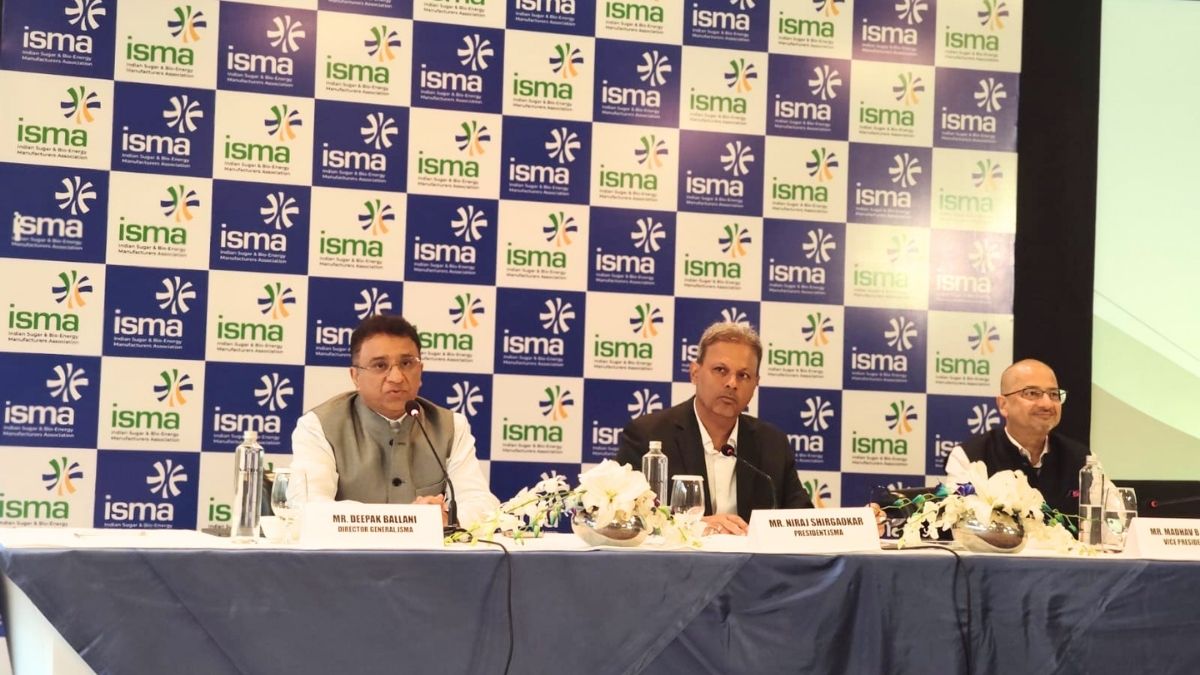
The Indian Sugar and Bio-Energy Manufacturers Association held a press conference in New Delhi to address the recent surge in domestic sugar prices
The export record makes the reversal worse. In November 2025, based entirely on the overtly optimistic forecast by ISMA, the food ministry allowed mills to export 1.5 million tonnes of sugar for the 2025-26 season. By February, the government added another 500,000 tonnes on top of that, taking the export allowance to 2 million tonnes, with mills required to ship 70 pc of it by June 30 or face penalties.
A country does not sanction 2 million tonnes of exports in February and then need a decade’s first import in August unless something was flawed right in the beginning. ISMA and the food ministry both signed off on that export volume. Neither has explained why the number looked safe seven months ago and looks reckless now. Incidentally, normally sugar exports are allowed once the festive season, from September to January, is over. However, in this season, egged on by ISMA, eyeing fat profits, the government allowed exports to begin before the domestic demand was adequately catered to.
Besides exports, as much as 9 pc of total sugar output has been diverted by the government for its highly controversial and unpopular decision to produce ethanol, adding to the price pressure.
Also Read: Mandatory local guardian rule of Jamia Millia Islamia sprouts new businesses
The price data tells a similar story of numbers not lining up. The Ministry of Consumer Affairs, Food and Public Distribution’s own Price Monitoring Division recorded retail sugar climbing from INR 48.18 per INR on July 20 to INR 55.70 per kg on August 20. Separately, the same ministry put the year-on-year national average at INR 52.30 per kg on August 18, a rise of 13 pc from INR 46.34 a year earlier. That 13 pc national figure sits next to a very different regional reality. Odisha’s price rose from INR 46.89 per kg on August 23, 2025 to INR 67.4 per kg on August 23, a rise of nearly 44 pc, the highest in the country. Sugar prices in eight states, including Uttarakhand, Punjab and Madhya Pradesh, have crossed INR 65 a kg. In Bhopal, grocers quoted INR 70 per kg, up from INR 65 a week earlier, according to an agency report.
A national average of 13 pc, published by the government’s own price division, is not the number a consumer in Odisha or Bhopal is living with. Averaging in cheaper states to produce a softer headline figure is not transparency; it is arithmetic doing public relations.
There is also a stock number the government is sitting on. The Centre ordered physical verification of sugar stocks at mills on July 24, with the exercise due to finish by August 14. As of this week, those verified figures have not been released. Industry estimates in the meantime put India’s closing stock, as of September 30, at 3 to 3.3 million tonnes, lower than the 3.5 million tonnes ISMA has been citing publicly, and among the lowest closing stocks in several decades by trade estimates. If the number were as comfortable as ISMA and the government keep saying, there is no obvious reason to delay releasing it.
Despite the repeated failures in projections and in the way exports have been handled, ISMA maintains that there is no shortage of sugar. “India has adequate sugar availability and the measures being taken should be seen in that context. With closing stocks estimated at around 3.5 million tonnes and fresh-season production being brought forward, we remain confident about domestic availability,” Niraj Shirgaokar, President of ISMA, tells Media India Group.
He also blames bulk buyers for stocking one and a half to two months of requirement in advance. “That behaviour has pulled sugar out of circulation and it stays in the godowns, creating an artificial tightness which has nothing to do with actual availability,” he says adding that the country held nearly three and a half months of stock as of August 1.
Also Read: Biodiversity: Businesses can either lead change or risk extinction, says IPBES
But if hoarding by traders were the whole story, tightening stock limits once should have worked. It has not. The government capped dealer inventory at 30 days in July. By August 19, it cut that cap to 15 days, the second tightening in under a month, alongside physical verification, weekly disclosures and GST cross-checks. That is not the posture of a market managing sentiment. That is the posture of a market the government does not fully trust its own data on.
Madhav B Shriram, Vice President of ISMA, calls the import a warning to traders. “These are called preventive measures to stop the speculation and the hoarding. People who are hoarding and speculating will get a threat perception that the government is not sitting and watching them idly,” Shriram tells Media India Group.
He says the impact on mills and farmers once the 2026-27 season begins is still being assessed, and that prices could fall to INR 48-52 per kg within seven to 10 days. But that is when the festive season starts and when buying accelerates, not when it eases. He points to a forecast for October production reaching 1 million tonnes, against a usual 0.4 million tonnes, from early crushing in Tamil Nadu and Karnataka. That projection rests on a cane crop ISMA itself says has not been fully assessed.
On ethanol, ISMA’s Director General Deepak Ballani insists diversion carries no blame. “The data does not support the suggestion that ethanol is responsible for the current movement in sugar prices. Sugar diversion is determined only after assessing domestic requirements and the overall sugar balance,” Ballani tells Media India Group.
Around 2.9 million tonnes have gone to ethanol this season, within a stated historical range of 2-4 million tonnes. Set against that defence: market reporting this week indicates the government itself is considering restricting cane use for ethanol from October, to boost sugar supply and contain record prices ahead of the festive season. If ethanol diversion genuinely had nothing to do with tight supply, the government would not be weighing a cut to it. Opposition parties have already blamed the ethanol blending policy of adding to the burden on consumers; the government’s own apparent reconsideration gives that charge more weight than ISMA’s denial does.
Also Read: India’s LPG shortage threatens small food businesses
The four-year pattern underlines how poorly managed this has been. Net production ran at 35.8 million tonnes in 2021-22 with exports of over 11 million tonnes. It fell to 32.82 million tonnes in 2022-23 with 6.1 million tonnes still exported and slid further to 32 million tonnes in 2023-24 with no export quota granted at all and stayed near 32 million tonnes in 2024-25 with exports cut to 1 million tonnes, of which only 0.8 million tonnes were shipped and for 2025-26, after approving up to 2 million tonnes of exports mid-season, the country now needs its first import in 10 years, against a production estimate that has been cut three times since July 2025.
The pattern going into past festive seasons was different. In October 2016, even as production fell to 23.37 million tonnes from 25.1 million tonnes the year before, the Ministry of Consumer Affairs called the retail price of INR 40-42 per kg stable and held the import duty at 40 pc rather than cut it. In August 2023, going into Onam, Raksha Bandhan and Janmashtami, the ministry cited a national average near INR 43 per kg and sugar inflation under 2 pc a year over the preceding decade, even as international prices had risen 25 pc that year.
In October 2023, ahead of Diwali, the food secretary said prices would stay stable, with opening stock at 5.7 million tonnes on October 1; prices that season held broadly steady. This year breaks that pattern on every count. Opening stock for October 1 is projected at around 3.5 million tonnes by ISMA and as low as 3-3.3 million tonnes by trade estimates, levels some traders call the lowest in more than three decades. Retail prices in eight states had already crossed INR 65 per kg before September, before Ganesh Chaturthi, Dussehra or Diwali demand has even peaked. The last time India needed an import to get through a festive season was 2016-17, and even then the government called prices stable. This is the first festive season in a decade it has not been able to say that.