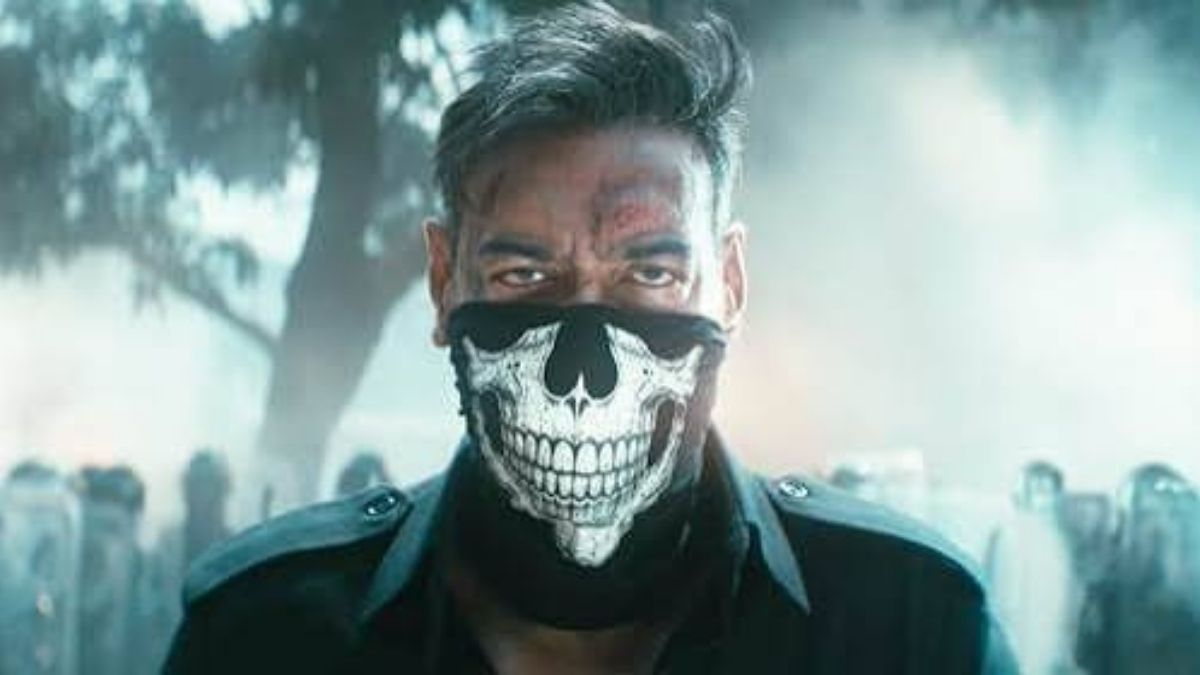
Chauhaan has faced intense criticism from activists and politicians for downplaying pellet gun injuries in Kashmir as limited damege
A teaser lasting just over a minute has become the subject of a national debate. More than a year before its release, Ajay Devgn’s Chauhaan is under fire for portraying that pellet guns caused ‘limited damage’ in scenes depicting protests in Pulwama. The dialogue has sparked criticism from politicians, rights advocates and Kashmiris, who say it overlooks the weapon’s devastating human impact.
A short teaser has brought back one of Kashmir’s most painful memories. Chauhaan, made by Neeraj Yadav, and produced by Aanand L Rai, Jyoti Deshpande and Himanshu Sharma under Jio Studios and Colour Yellow Productions is slated for release on October 1, 2027. The teaser that was released on June 25, shows a protest in Pulwama, with police using pellet guns, tear gas and water cannons on stone-throwing crowds.
One line in a voice over caused all the anger. In the teaser, Devgn’s voice says that pellet guns and water cannons cause “limited damage” and that they only provide “temporary solutions.” He also says tear gas does not work because gas masks are easy to buy online. The teaser ends with a line about “Pathans,” which many people online say targets Kashmiri Muslims.
Also Read: Pellet Guns: A lethal way to control protesters in Kashmir
People reacted fast. National Conference leader Imran Nabi Dar said the teaser is propaganda that could cause more anger in Kashmir. He said the film makes fun of children and young people who lost their eyesight, and some who lost their lives. He said it hurts families who still live with this pain.
Actor Swara Bhasker also spoke up online. She called pellet guns a serious human rights violation. She said calling Kashmiris “Pathaans” was wrong. She asked people to read more about the topic and compared it to old propaganda methods used by Nazi Germany. She called her post the Vivek Agnihotri-fication of Bollywood, a reference to a filmmaker known for his nationalist films. So far, Devgn and the film’s makers have not replied to any of this criticism.
The numbers tell a clear story. In 2010, after months of unrest in which over 100 people died in police firing, the Jammu and Kashmir Police asked for a non-lethal weapon and was provided with pellet guns. These were first used in Sopore on August 14, 2010. One cartridge from a pellet gun releases 360 to 600 small metal balls. No one can control where these pellets land.
The injuries grew a lot after 2016. That year, big protests broke out after the killing of militant Burhan Wani on July 8, 2016. Many people died in the unrest. Hundreds more were blinded, including women and children, including an 18-month-old infant.
Amnesty International India reported that 88 people had lost their eyesight due to pellet gun shots fired by police and the CRPF between 2014 and 2017. A 2022 study in the Indian Journal of Ophthalmology looked at 777 patients with pellet gun eye injuries. It found that while pellet guns kill less than other weapons, they cause serious, long-term eye damage.
Also Read: Bollywood film endings shape how audiences remember stories
Two cases come up again and again. Hiba Nisar was only 18 months old when pellets hit her eye while she was inside her own home in 2018. Insha Mushtaq was 14 years old when pellets blinded her as she looked out of a window. She had more than 100 wounds, broken facial bones, and lost her eyesight forever.
Major rights groups have also spoken about this weapon. Amnesty International calls the pellet gun cruel and unsafe. It says there is no way to use this gun for crowd control that follows human rights rules. The United Nations human rights office calls it one of the most dangerous weapons used in Kashmir. It has asked India to stop using it.
People from Kashmir have shared their own stories too. Feroz Aslam lost his eyesight years ago in Sopore while going to buy fruit. He told a popular television channel that he could not watch the teaser. He said if the filmmakers covered their own eyes for just one day, they would understand what it feels like to be blind.
This case also shows a bigger problem. Years ago, Bollywood films showed Kashmir mainly for its beauty its lakes, mountains, and love stories. That has changed. Now, most films show Kashmir only through fighting, militants, and security forces. Local people are shown as background characters in someone else’s story, not as real people with their own lives. Writer Aakar Patel said calling pellet injuries “limited force” goes against clear facts and history. He said 30 years of using force is what caused Kashmir’s problems today, not too little force.
“For many Kashmiris, pellet guns are not a political talking point but a lived reality. When a film describes them as causing ‘limited damage,’ it overlooks the lifelong physical and emotional scars carried by survivors and their families. Cinema has the power to shape public opinion, and with that comes the responsibility to portray such painful chapters with care and accuracy,” Saqib Wani, a teacher from Baramulla district in Kashmir tells Media India Group.
The critics say that this is why teasers like this matter so much. A teaser is just a few lines, but it comes with a famous actor, a big banner, and a real place name Pulwama. So people believe it. When a movie character calls a weapon that blinded hundreds of people limited damage, many viewers may believe this is true, since they don’t know much else about Kashmir. Medical reports, UN papers, and rights group studies exist, but very few people read them. A big Bollywood film reaches far more people than any of these reports. This gap between what films show and what facts say is the real issue here, more than just one line of dialogue.
The film is still more than a year away from release. It is not yet clear if the makers will keep this line, change it, or remove it completely. That decision will decide if this stays a small teaser controversy, or becomes a bigger problem when the film finally comes out.